Welding Accessories: What They Are, How They Work, and How to Choose
Table of Contents
- What Counts as a Welding Accessory
- How Welding Accessories Work
- Positioning, Handling, and Pre-Weld Accessories
- How to Choose Welding Accessories
- Inspection and Maintenance Checks
- Plan Your Welding Accessory Package
- FAQ
- Are welding accessories the same as welding consumables?
- Do I need positioners and turning rolls for small jobs?
- How do I know whether a workholding accessory is rated for my part?
- What is the first maintenance check for welding accessories?
Welding accessories are the supporting tools, consumable parts, and workholding devices that keep a welding process stable, safe, and repeatable. They do not create the arc themselves, but they control how current, shielding gas, filler metal, and joint position work together. A well-matched accessory package shortens setup time and reduces the small variations that become spatter, misalignment, or incomplete fusion. This article explains what welding accessories include, how they work in a weld cell, and which checks matter before buying or replacing them.
What Counts as a Welding Accessory
A welding accessory is any reusable or replaceable device that supports the welding process without acting as the primary power source. The category includes process-side parts, workholding and positioning equipment, edge preparation tools, operator protection, and inspection devices.
| Accessory category | Main function | Key selection check |
|---|---|---|
| Process accessories | Carry current, wire, gas, and arc shape | Match size, thread, material, and duty cycle to the torch and power source |
| Workholding and positioning | Hold, rotate, tilt, or move the part | Load rating, clamping range, speed range, backlash, and center of gravity |
| Preparation and alignment | Bevel, clean, bend, straighten, and fit up before welding | Edge condition, material thickness, required angle, and tolerance |
| Operator safety and extraction | Protect the operator and remove fumes | Shade rating, frame fit, airflow, and compliance with the application |
| Measurement and inspection | Confirm fit-up, weld size, and surface quality | Gauge accuracy, calibration, and acceptance criteria |
A contact tip is a useful example. In GMAW equipment, the contact tip is the final electrical contact for the filler wire. A worn or loose tip changes current transfer and arc position even when the power source settings have not moved. Accessory condition therefore affects weld quality as directly as the main machine does.
How Welding Accessories Work
Most welding accessories work by controlling one of three conditions: the electrical and gas path, the position and movement of the joint, or the operator’s ability to reach and see the weld pool.
A gas nozzle shapes the shielding gas column around the arc. A collet holds the tungsten electrode in a GTAW torch and carries current while allowing gas to flow through the torch. Clamps and fixtures control root gap and alignment, and a positioner rotates the part so the weld can be made near the flat position instead of overhead.
These devices cannot fix a mismatch in the main process. A high-quality positioner does not compensate for an incorrectly sized contact tip, and a stronger clamp does not make an undersized torch perform beyond its duty cycle. The welding accessories work as part of a system, and the weakest element in that system usually decides how stable the result will be.
Positioning, Handling, and Pre-Weld Accessories
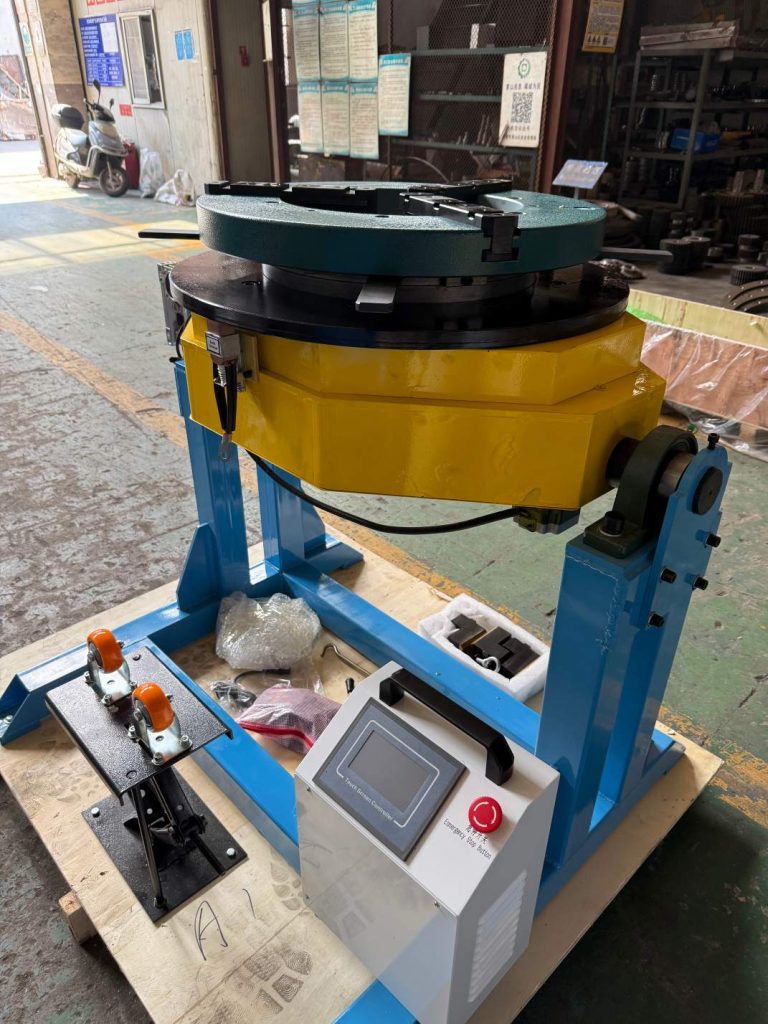
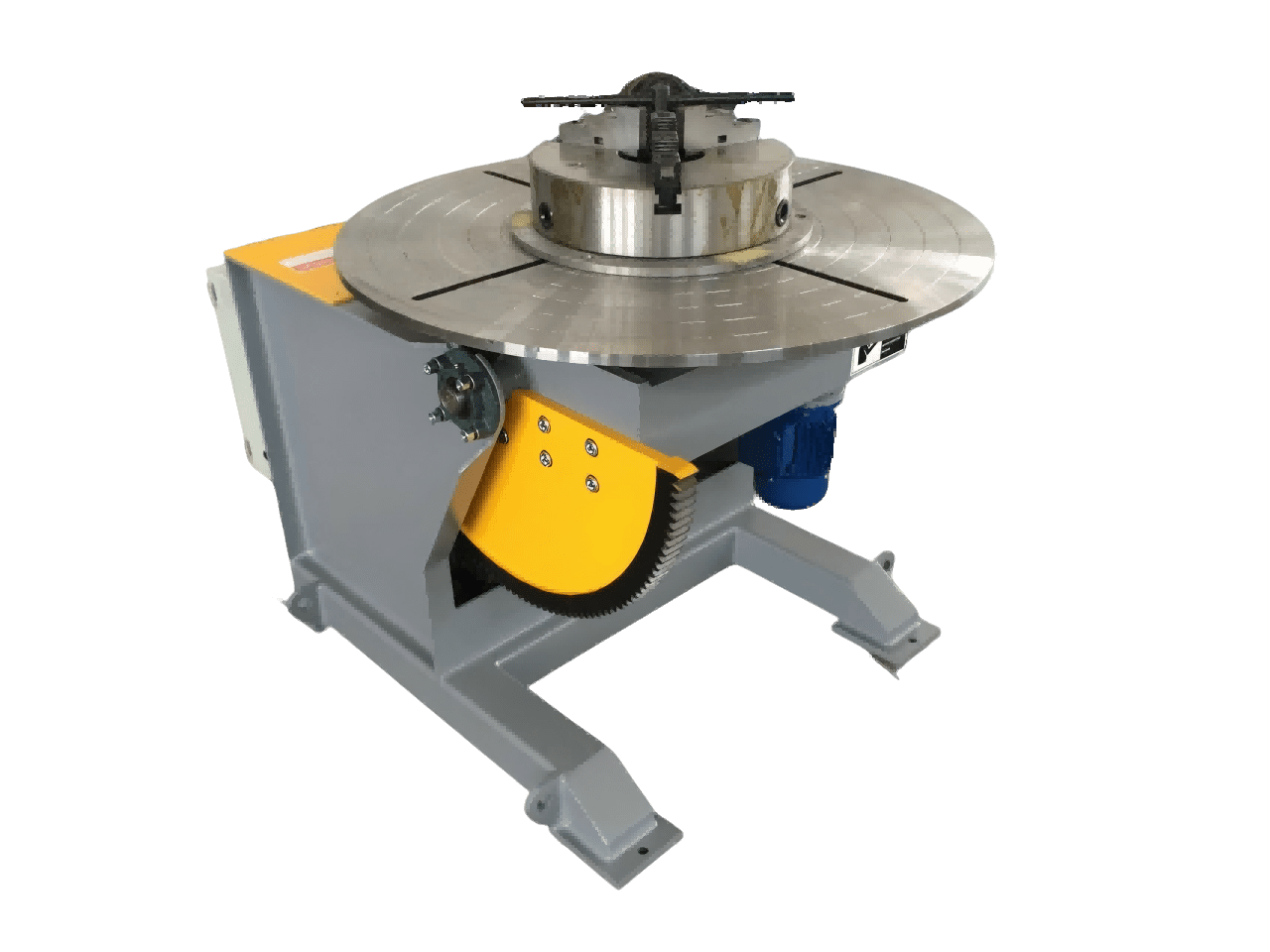
Workholding accessories turn a difficult joint into a controlled weld position. A fixed-height positioner keeps small workpieces at a consistent working height and rotates them for circumferential welds.
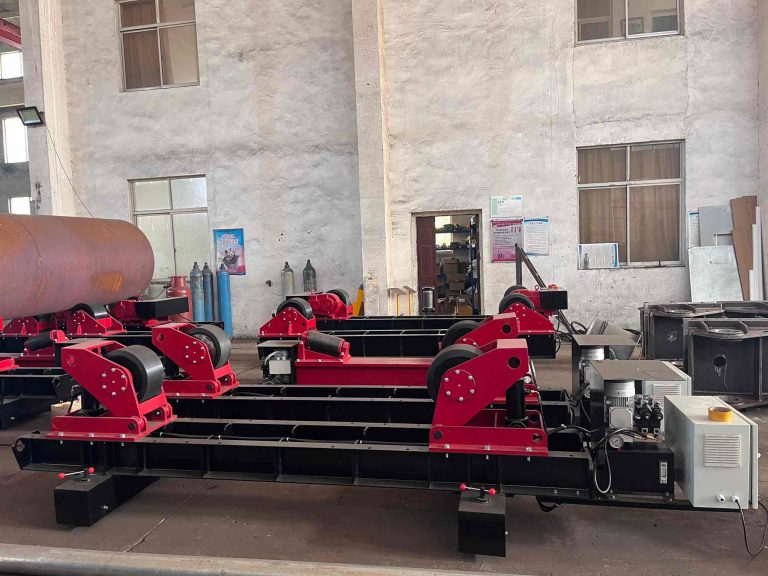
Long parts such as shafts, cylinders, and vessel sections often need support at both ends. A head-and-tail positioner uses a driven headstock and an adjustable tailstock to hold the part in line while rotation or tilt is applied.
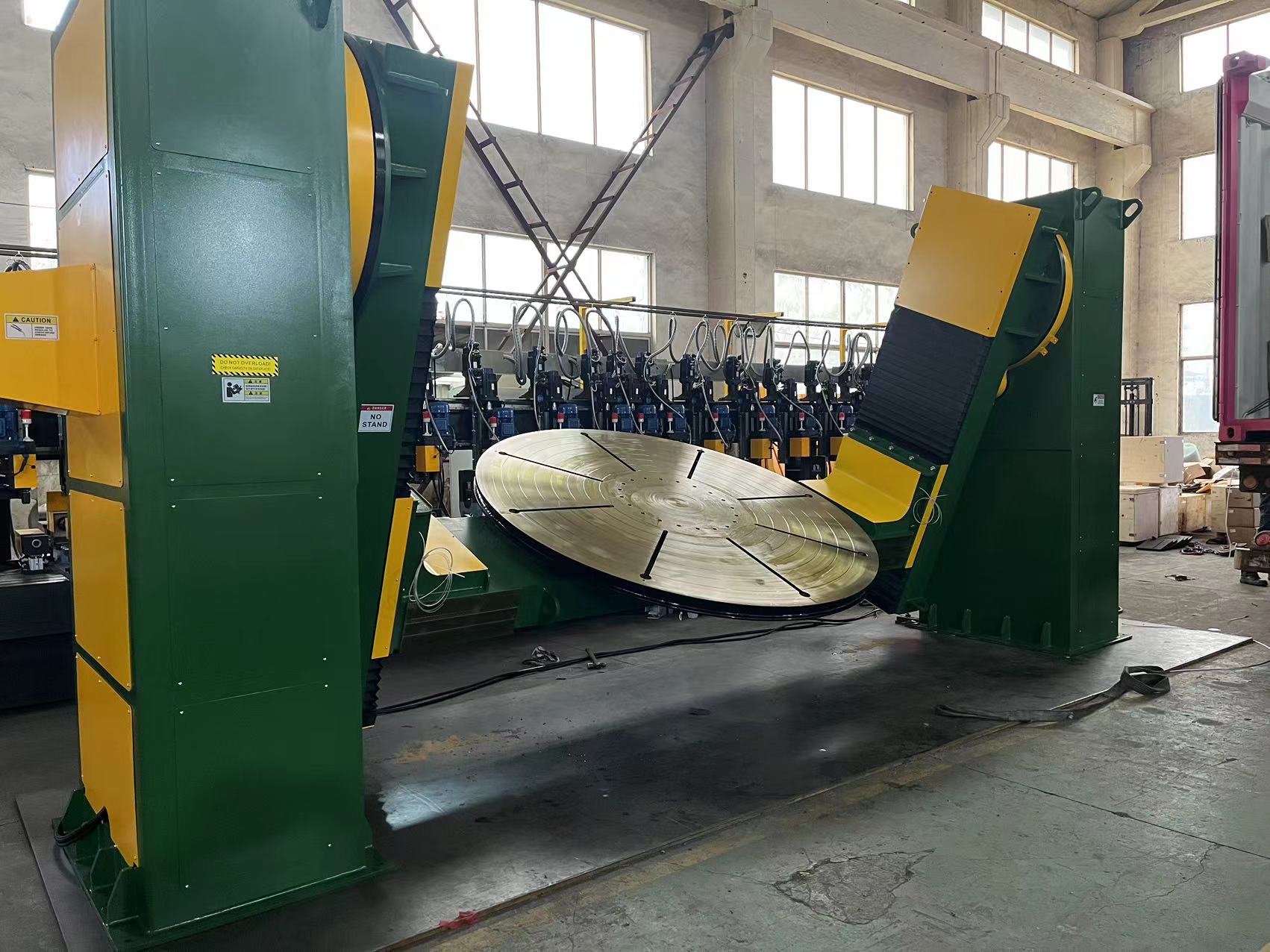
Positioner selection matters most when the part is heavy, long, or must be rotated while the torch remains steady. <Precision Positioning for Pipe and Shaft Welding Workpieces> covers how pipe and shaft positioning supports cleaner joint alignment and easier torch access.
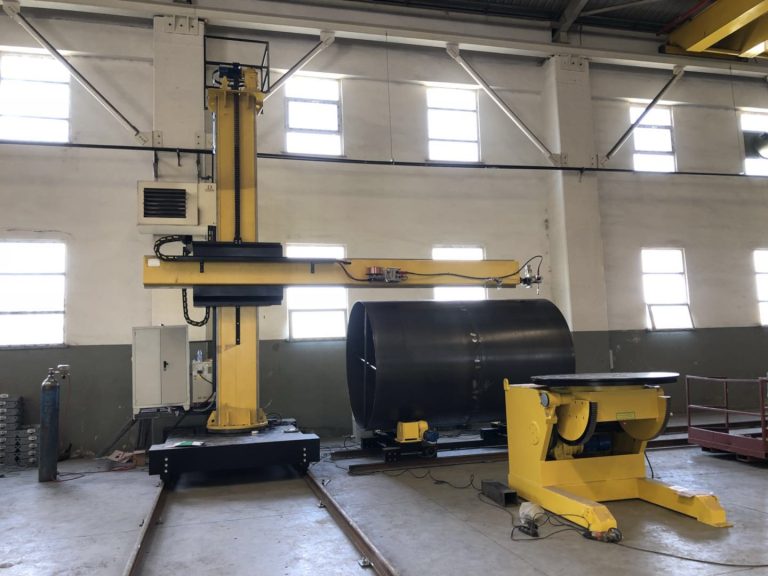
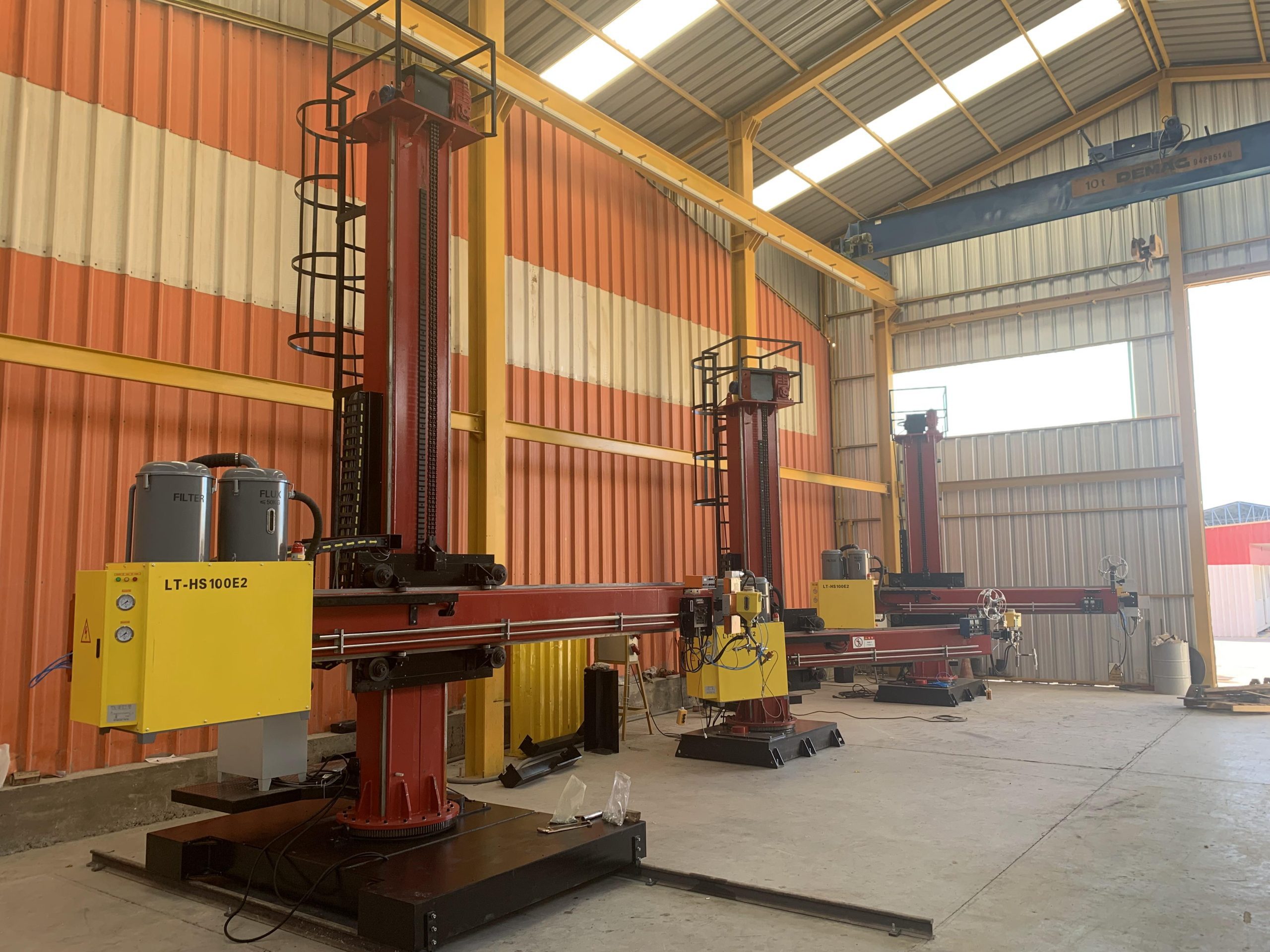
When the torch must travel over a long seam or reach inside a large vessel, a welding manipulator positions the welding head on a column and boom. The operator sets height, extension, and travel speed instead of carrying the torch by hand.
For tube and pipe work, a bending machine creates the bend angles and radii needed before welding so the joint lands in the planned position.

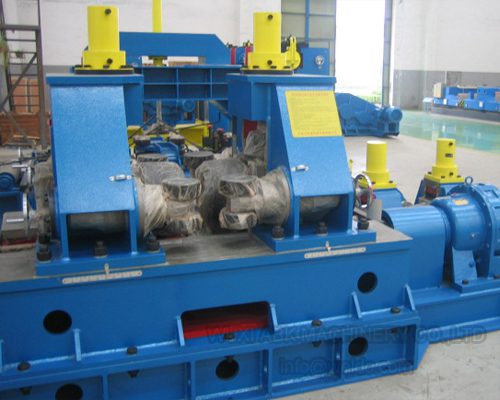
For structural sections and plate, a straightening machine removes the small distortion that can pull a joint out of tolerance before or after welding.
How to Choose Welding Accessories
Begin with the welding process. GMAW and FCAW equipment depends on contact tips, liners, nozzles, and drive rolls. GTAW torches require collet bodies, collets, gas lenses, and tungsten electrodes in the correct size. Mixing compatible electrical and gas-path parts creates fewer faults than adapting whatever is in stock.
Then check mechanical limits. The holding device must support the part weight plus tooling and any offset load. Look at clamping range, rotation speed, backlash, and whether the fixture can hold the part without blocking the weld. A positioner that is rated for the load but cannot reach the required angle still does not solve the cell layout problem.
No single accessory package fits every shop. A small job shop may choose a fixed-height positioner for simplicity, while a contract fabricator with varied diameters may need an adjustable model. The decision usually concerns changeover time and workpiece range, not only purchase price.
Selecting between a fixed and adjustable positioner is really a choice about changeover time and the range of workpieces a cell can accept. <Fixed vs Adjustable Welding Positioners: How to Choose the Right Tool> covers the main decision points for matching positioner configuration to production requirements.
Inspection and Maintenance Checks
Start every inspection with the arc path. Check contact tips for keyholing or oval bores, liners for kinks and wire shavings, collets for arc marks, and nozzles for spatter build-up. Replace small parts before the arc becomes unstable.
Then inspect the mechanical path. Clamp jaws should close without lost motion. Positioner gears should rotate smoothly without backlash at operating speed. Ground clamps should have clean contact faces and a secure cable connection.
Record the checks that catch a fault, not only the ones that pass. A simple log showing when a contact tip, liner, or collet was changed helps separate normal wear from a deeper issue such as incorrect feed pressure, poor gas coverage, or inadequate storage.
Plan Your Welding Accessory Package
Specify the welding process, base material, thickness, joint type, and whether parts need rotation or tilting before you request a full package. WUXI ABOKE Machinery can review those inputs and propose compatible workholding, preparation, and control accessories for the project. Contact Jan at [email protected] or +86 13616174307 with the workpiece size, load, and weld positions, and we will recommend a practical configuration.
FAQ
Are welding accessories the same as welding consumables?
No. Consumables are consumed during welding, such as contact tips, nozzles, tungsten electrodes, and filler wire. Accessories also include reusable support equipment such as clamps, positioners, turning rolls, fume extraction arms, and inspection gauges. Some process-side parts sit between the two groups because they wear out but are not filler material or shielding gas.
Do I need positioners and turning rolls for small jobs?
For short, simple welds on flat work, a stable bench and basic clamps may be enough. Add a positioner or turning roll when joint access, repeated positioning, or operator fatigue becomes the limiting factor. If the part must be rotated while the torch stays in a comfortable position, a workholding accessory usually improves both speed and consistency.
How do I know whether a workholding accessory is rated for my part?
Check the load capacity, center of gravity limit, clamping range, rotation speed, and torque at the stated duty cycle. Use the total weight of the part plus tooling and any offset arm, not only the nominal workpiece weight. On long parts, confirm that the headstock and tailstock can support the full length without excessive deflection.
What is the first maintenance check for welding accessories?
Inspect the electrical and gas path first. Check the contact tip, liner, collet, and nozzle for wear, arc marks, or debris. Then check grounding connections and workholding clamps. A worn contact tip or blocked nozzle changes arc stability before most operators notice an obvious visible fault.
If you’re interested, check out these related articles:
Boiler Production Lines: Tube to Panel Manufacturing Explained
Column and Boom Manipulators for Large Vessel Precision Weldin
Heavy-Duty Welding Rotators with 200 Ton Load Capacity