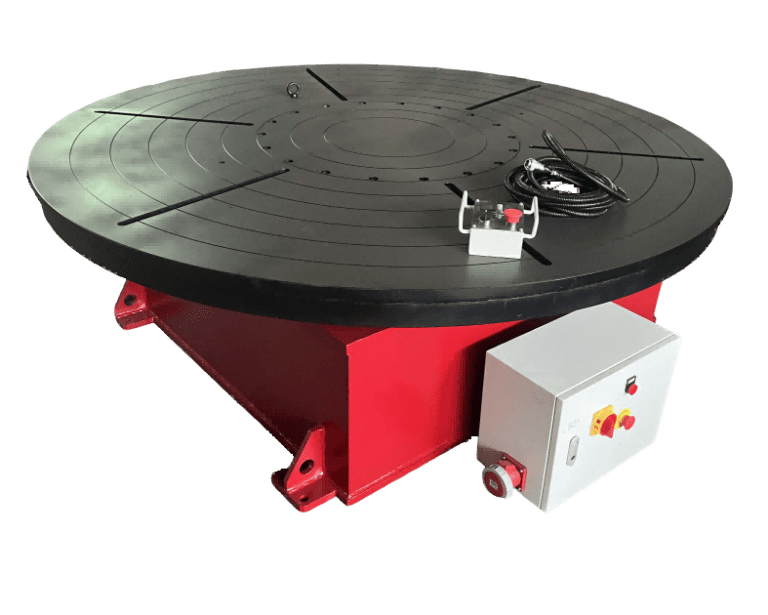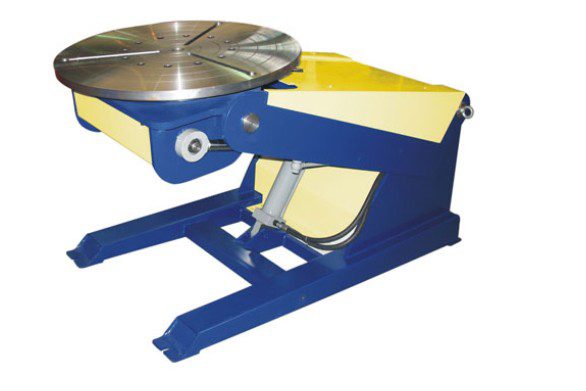
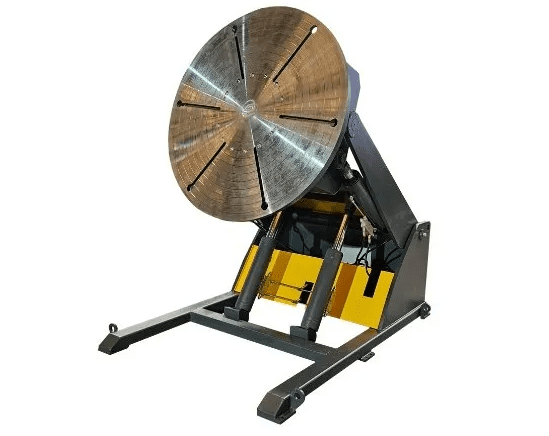
Heavy-Duty Welding Rotators with 200 Ton Load Capacity
Table of Contents
- What Makes a Welding Rotator “Heavy-Duty” at the 200-Ton Level
- Why Fabricators Specify 200-Ton Capacity for Wind Towers and Pressure Vessels
- Selecting the Right Specifications for Your Application
- How Rotator Design Affects Weld Quality and Production Rates
- Integration with Welding Automation Systems
- Maintenance Practices That Extend Equipment Life
- Customization for Non-Standard Applications
- Certification and Compliance Considerations
- Frequently Asked Questions About Heavy-Duty Welding Rotators
Heavy-duty welding rotators rated for 200-ton capacity address a practical problem in large-scale fabrication: how to position and rotate massive cylindrical workpieces without compromising weld quality or operator safety. These machines, sometimes called tank turning rolls or welding positioners, support components that manual handling or standard cranes cannot safely manage during continuous welding operations. WUXI ABK MACHINERY CO., LTD. has manufactured this class of equipment for over two decades, supplying fabrication shops across more than 40 countries.
What Makes a Welding Rotator “Heavy-Duty” at the 200-Ton Level
The term gets used loosely in the industry, so it helps to be specific. A 200-ton welding rotator typically consists of a powered drive unit and one or more idler units, each fitted with steel or polyurethane rollers sized to distribute the load without deforming the workpiece surface. The drive unit controls rotational speed, usually through a variable frequency drive that allows operators to match rotation to welding travel speed. At this capacity, frame construction matters: the base structure must absorb dynamic loads as the workpiece rotates, not just static weight. Most 200-ton units use fabricated steel frames with reinforced bearing housings rather than cast components, which can crack under cyclic stress.
The distinction between a 100-ton and a 200-ton rotator is not simply a matter of scaling up. Higher capacity machines require larger diameter rollers, wider roller spacing, and more powerful drive motors. Gearbox ratios change to maintain torque at low rotational speeds, which is where most heavy welding occurs. These engineering decisions affect not just load handling but also the precision of rotation, which directly influences weld bead consistency on circumferential seams.
Why Fabricators Specify 200-Ton Capacity for Wind Towers and Pressure Vessels
Wind tower sections, offshore platform components, and large pressure vessels routinely exceed 100 tons. A single wind tower base section can weigh 180 tons before any internal components are installed. Attempting to weld such a component on an undersized rotator creates several problems: roller slippage, uneven rotation, and excessive wear on the drive system. More critically, an overloaded rotator introduces safety risks that no fabrication manager wants to explain after an incident.
Pressure vessel fabrication presents a different challenge. These components often require multiple weld passes with strict interpass temperature controls. Consistent rotational speed allows the welder or automated welding head to maintain arc length and travel speed, which affects penetration depth and heat input. A rotator that cannot hold steady speed under load produces welds that may pass visual inspection but fail radiographic testing. Rework on a 150-ton pressure vessel is expensive in both time and material.
Boiler manufacturing follows similar logic. The cylindrical drums and headers in power generation boilers demand precise weld quality to meet ASME code requirements. Fabricators working on these components specify rotators with documented load capacity and speed stability, not marketing claims.
Selecting the Right Specifications for Your Application
Choosing a 200-ton welding rotator involves more than confirming the load rating. The following specifications determine whether a particular unit fits your production requirements:
| Specification | What to Evaluate | Practical Impact |
|---|---|---|
| Actual load capacity | Verify rated capacity accounts for dynamic loads during rotation, not just static weight | Prevents overloading and premature component failure |
| Workpiece diameter range | Confirm minimum and maximum diameter the roller spacing can accommodate | Ensures proper contact angle between rollers and workpiece |
| Rotational speed range | Check both minimum and maximum RPM; most heavy welding occurs below 1 RPM | Affects weld travel speed and heat input control |
| Drive system type | Friction drive versus gear drive; friction is simpler but may slip under high loads | Determines torque transmission and maintenance requirements |
| Roller material | Steel rollers for heavy loads; polyurethane for surface-sensitive applications | Affects workpiece surface condition and roller wear rate |
| Control interface | Manual, pendant, or PLC integration; remote control options for operator positioning | Influences workflow efficiency and safety |
Speed control deserves particular attention. Variable frequency drives allow fine adjustment, but the gearbox and motor combination must deliver consistent torque across the speed range. A rotator that hunts or surges at low speed creates weld defects that show up during inspection.
How Rotator Design Affects Weld Quality and Production Rates
The connection between rotator performance and weld quality is mechanical, not abstract. When a workpiece rotates at constant speed, the welding arc maintains consistent travel speed relative to the joint. This consistency produces uniform bead width, penetration, and heat-affected zone characteristics. Variations in rotational speed, even small ones, cause corresponding variations in the weld deposit.
Anti-creep systems address a related problem. Cylindrical workpieces tend to walk axially along the rollers during rotation, especially if the workpiece is slightly tapered or the rollers are not perfectly parallel. An anti-creep mechanism detects this movement and corrects it, keeping the workpiece centered under the welding head. Without this feature, operators must stop periodically to reposition the workpiece, which interrupts the weld and creates potential defect locations.
Production rates improve when operators can run continuous welds without repositioning. On a large pressure vessel with multiple circumferential seams, the time saved by eliminating manual handling adds up quickly. A 200-ton rotator that holds position and speed allows the welding crew to focus on weld quality rather than workpiece management.
Integration with Welding Automation Systems
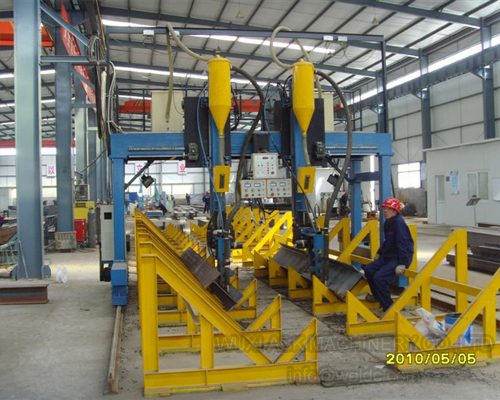
Many fabrication shops pair heavy-duty rotators with column-and-boom manipulators or automated welding heads. This combination creates a semi-automated welding cell where the rotator controls workpiece position while the manipulator controls torch position. The two systems must communicate, either through synchronized controls or a common PLC platform.
WUXI ABK rotators include options for integration with external control systems. This allows the rotator speed to match the programmed travel speed of an automated welding head, maintaining consistent weld parameters throughout the joint. For shops moving toward higher automation levels, this integration capability reduces the engineering effort required to build a functional welding cell.
Remote control operation serves a different purpose. When welding large components, the operator may need to observe the arc from a position that is not convenient to the rotator control panel. A pendant or wireless remote allows the operator to adjust speed or stop rotation without leaving the welding position. This improves both efficiency and safety.
Maintenance Practices That Extend Equipment Life
A 200-ton welding rotator represents a significant capital investment. Protecting that investment requires attention to maintenance that goes beyond occasional lubrication. The following practices apply to most heavy-duty rotators:
Daily checks should include visual inspection of roller surfaces for damage or debris, verification that all safety interlocks function correctly, and confirmation that the drive system operates smoothly without unusual noise. Rollers that develop flat spots or surface damage will transmit vibration to the workpiece, affecting weld quality.
Weekly maintenance involves checking electrical connections for tightness and signs of overheating, inspecting drive belts or chains for wear, and verifying that lubrication points have adequate grease. Motor and gearbox temperatures during operation indicate whether the drive system is working within normal parameters.
Monthly inspections should cover gearbox oil levels and condition, bearing condition in the roller assemblies, and calibration of speed control systems. Catching a failing bearing before it seizes prevents damage to the shaft and housing that would require more extensive repair.
If your maintenance team lacks experience with this class of equipment, WUXI ABK provides technical guidance and can arrange on-site support for commissioning and training.
Customization for Non-Standard Applications
Standard rotator configurations work well for common workpiece geometries, but many fabrication projects involve components that do not fit standard parameters. Offshore structures, submarine hull sections, and specialized process equipment often require modified roller arrangements or control systems.
WUXI ABK’s engineering team designs custom configurations for these applications. This might include extended roller spacing for unusually long workpieces, special roller profiles for non-cylindrical shapes, or control systems that integrate with existing shop floor automation. The goal is a rotator that fits the specific production requirement rather than forcing the production process to accommodate standard equipment limitations.
Custom projects begin with a technical review of the workpiece specifications, production volume, and integration requirements. The engineering team then proposes a configuration and provides detailed drawings for customer approval before manufacturing begins. This process takes longer than ordering a standard unit, so fabricators planning custom equipment should allow adequate lead time in their project schedules.
Certification and Compliance Considerations
Fabrication shops serving regulated industries need equipment that meets applicable standards. WUXI ABK rotators comply with European CE marking requirements and hold ISO certification. These certifications confirm that the equipment meets documented safety and quality standards, which matters when your customer’s inspector asks about the equipment used in production.
For shops working under ASME, AWS, or other code requirements, the rotator itself is not typically a code item, but its performance affects code compliance of the welds it supports. Documentation of rotator capacity, speed calibration, and maintenance history may be requested during quality audits. Maintaining these records demonstrates that the equipment operates within its rated parameters.
Frequently Asked Questions About Heavy-Duty Welding Rotators
What workpiece diameter range can a 200-ton rotator accommodate?
Most 200-ton rotators handle workpiece diameters from approximately 500mm to 6,000mm, depending on roller spacing configuration. The minimum diameter is limited by the contact angle between rollers and workpiece; too small a diameter causes the workpiece to sit too deep between the rollers. Maximum diameter depends on the spread between drive and idler units. Confirm the specific range with the manufacturer for your intended applications.
How does roller material choice affect workpiece surface quality?
Steel rollers provide maximum load capacity and durability but may mark soft or finished surfaces. Polyurethane-coated rollers reduce surface marking and provide better grip on smooth surfaces, but they wear faster under heavy loads and may not be suitable for full 200-ton capacity. For applications where surface condition matters, such as stainless steel vessels that will not be painted, polyurethane rollers on a properly sized rotator offer a reasonable compromise.
Can a 200-ton rotator be used for workpieces lighter than its rated capacity?
Yes, but with attention to roller contact. Very light workpieces may not provide enough friction for the drive rollers to rotate them reliably, especially with polyurethane rollers. Some rotators include adjustable roller pressure to accommodate a wider weight range. Discuss your full range of workpiece weights with the manufacturer to ensure the selected configuration handles both ends of your production mix.
What power supply requirements apply to heavy-duty welding rotators?
Most 200-ton rotators require three-phase power, typically 380V or 480V depending on the market. Motor sizes range from 5kW to 15kW or more depending on the design. Confirm voltage, frequency, and current requirements before installation, and verify that your facility’s electrical infrastructure can support the load. Starting current may be higher than running current, which affects breaker sizing.
For fabrication projects requiring 200-ton welding rotator capacity or custom configurations, contact WUXI ABK at [email protected] or +86 13616174307 to discuss your specific requirements.
If you’re interested, you may want to read the following articles:
Welding Rotator vs Manual Pipe Welding: Productivity & Cost Efficiency