Column and Boom Manipulators for Large Vessel Precision Weldin
Table of Contents
- What Column & Boom Manipulators Actually Do in Heavy Vessel Fabrication
- How the Control System and Mechanical Components Affect Weld Outcomes
- Where the Productivity Gains Actually Come From
- Which Industries Require This Level of Welding Control
- How to Match Manipulator Specifications to Your Vessel Dimensions
- Frequently Asked Questions
What Column & Boom Manipulators Actually Do in Heavy Vessel Fabrication
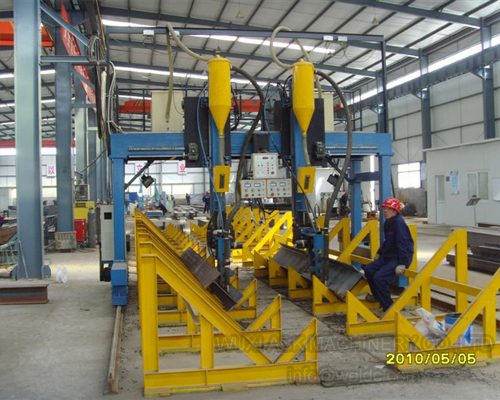
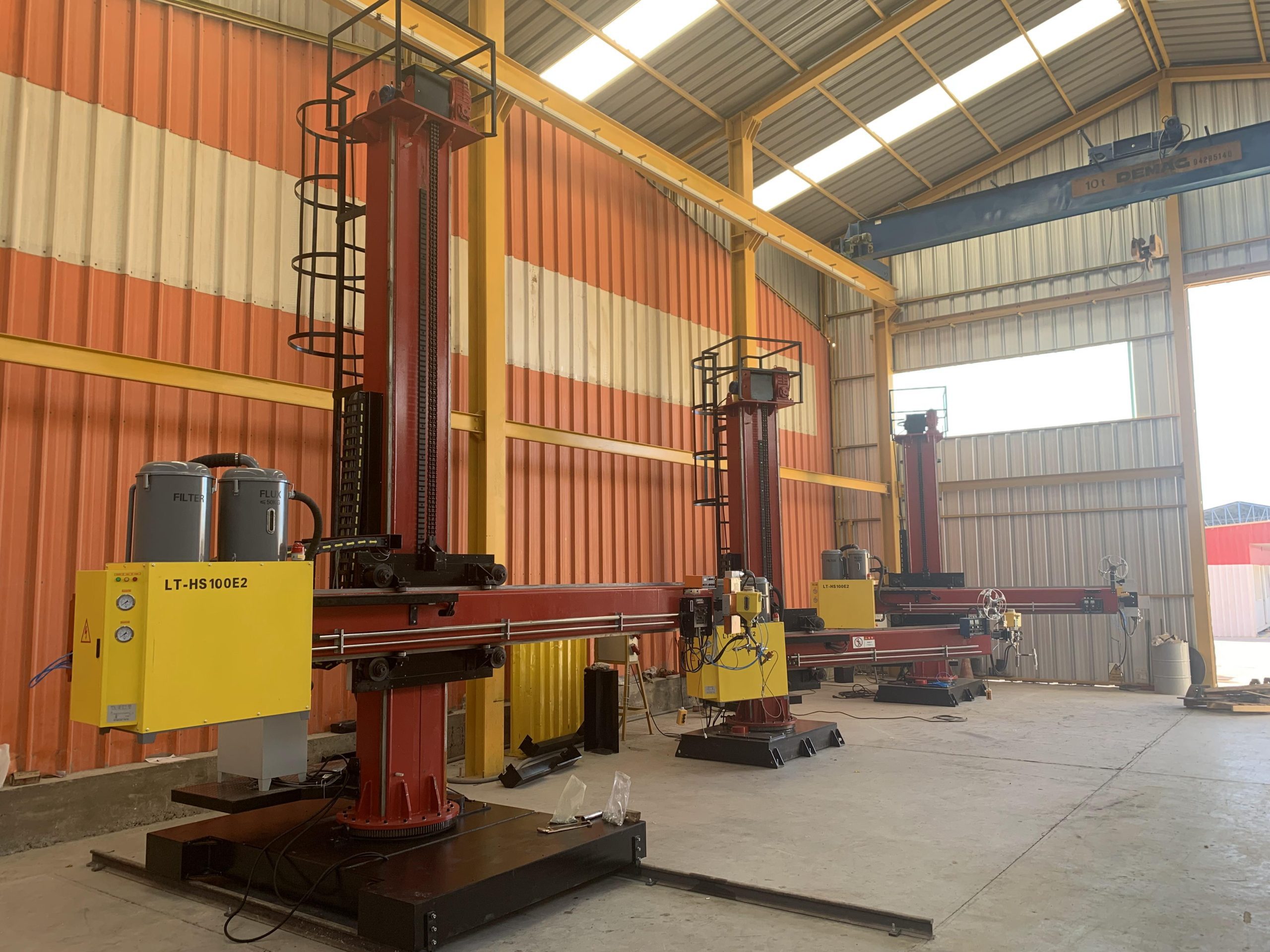
Column & boom welding manipulators position a welding torch with mechanical precision across large cylindrical workpieces—pressure vessels, storage tanks, wind tower sections. The system mounts a vertical column to the shop floor and extends a horizontal boom outward, with the welding head fixed at the boom’s end. This arrangement lets the torch travel along seams that can run several meters without repositioning the workpiece or the operator.
The column handles vertical adjustment. The boom handles horizontal reach. Together they cover the full surface of a vessel while maintaining the torch-to-work distance, travel speed, and angle that the welding procedure specification requires. For submerged arc welding or gas metal arc welding on thick-walled sections, that consistency matters more than speed—though you get both when the system runs correctly.
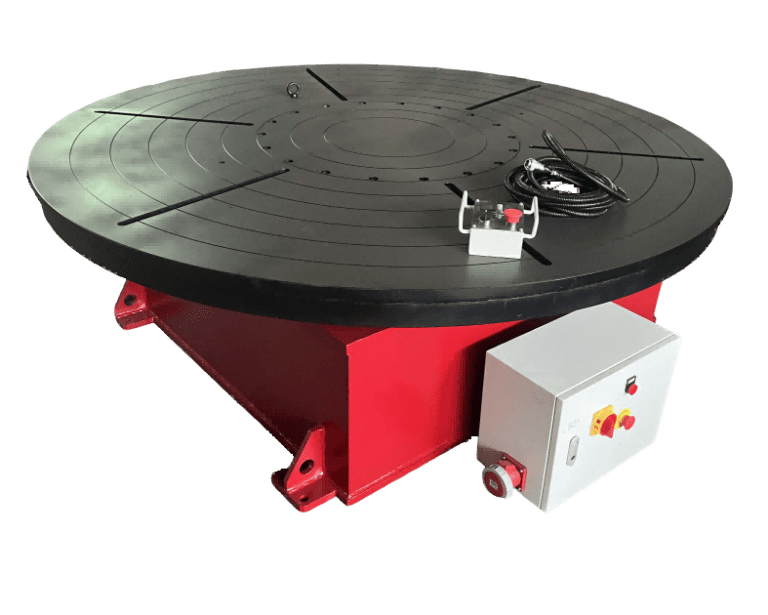
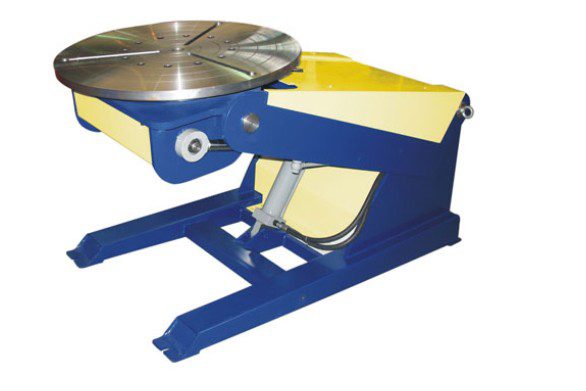
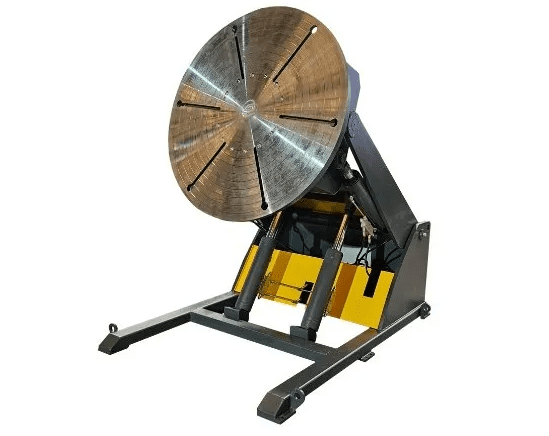
These manipulators pair with welding positioners and rotary tables to rotate the workpiece while the boom holds position. The combination keeps the weld pool in flat or horizontal position throughout girth seams and longitudinal seams, which reduces the skill dependency that manual welding introduces. The operator monitors parameters and intervenes when something drifts, but the machine holds the baseline.
How the Control System and Mechanical Components Affect Weld Outcomes
The manipulator’s performance depends on what sits inside the column and at the end of the boom. A programmable logic controller manages travel speed, boom extension rate, and synchronization with the positioner. The operator interface—usually a touchscreen HMI on current models—displays real-time parameters and stores weld recipes for repeatable setups.
Mechanical rigidity determines whether the boom deflects under load. A 6-meter boom carrying a 150-kilogram welding head and wire feeder will sag at the tip unless the structure compensates. Deflection changes the contact-tip-to-work distance, which changes arc length, which changes penetration. Manufacturers address this with counterweights, box-section boom construction, or motorized compensation that adjusts as the boom extends.
Seam tracking adds another layer. Laser or camera-based systems detect the joint position and send corrections to the boom’s cross-slide motor in real time. On pressure vessel work where fit-up varies along a 10-meter seam, tracking keeps the arc centered without operator intervention. We specify laser tracking on most vessel projects now because the reduction in sidewall fusion defects justifies the added cost within the first year of production.
| Feature | Standard Configuration | Advanced Configuration |
|---|---|---|
| Control System | Pendant with preset speeds | PLC with HMI and recipe storage |
| Seam Tracking | Manual adjustment via handwheel | Laser or vision-based automatic correction |
| Welding Process Support | SAW, GMAW | SAW, GMAW, FCAW, TIG |
| Boom Extension Control | Fixed speed, single direction | Variable speed, motorized with position feedback |
| Safety Systems | Emergency stop | E-stop, anti-collision sensors, anti-fall device |
| Data Logging | None | Weld parameter recording for QA documentation |
Flux recovery systems on SAW setups recycle unfused flux back to the hopper, which cuts consumable costs on long seams. Oscillation units widen the bead for single-pass coverage on groove welds that would otherwise require multiple passes. These features add complexity, but they also reduce the total arc time per joint.
Where the Productivity Gains Actually Come From
The productivity argument for manipulators rests on three factors: higher deposition rates, fewer stops, and reduced rework.
Deposition rate increases because the machine maintains optimal wire feed speed and travel speed simultaneously. A skilled manual welder adjusts constantly to compensate for fatigue, visibility, and access. The machine does not fatigue. On submerged arc welding with 4-millimeter wire, a manipulator running at 400 millimeters per minute deposits more metal per hour than a manual setup running intermittently at 300 millimeters per minute with breaks for repositioning.
Fewer stops come from the boom’s reach. A manipulator with 6 meters of horizontal travel can complete an entire longitudinal seam without resetting. Manual welding on the same seam requires scaffold repositioning, lead changes, and restart sequences that add non-arc time.
Rework reduction follows from parameter consistency. When voltage, current, and travel speed hold steady, the weld profile holds steady. Radiographic rejection rates drop because the process does not drift between the start and end of a seam.
A wind tower fabrication project we supported last year illustrates the scale of change. The client had been welding girth seams manually with two operators per shift. Penetration varied along the circumference, and they were grinding out and re-welding roughly 8% of total weld length. After installing a manipulator synchronized with a self-aligning rotator, their cycle time per section dropped by 30%, and their rework rate fell to under 3%. The operators still monitored the process, but they spent their time on inspection and setup rather than holding a torch.
Which Industries Require This Level of Welding Control
Pressure vessel manufacturing drives most manipulator demand. ASME Section VIII and PED requirements specify weld quality standards that manual processes struggle to meet consistently on thick-walled, large-diameter shells. The manipulator’s ability to document parameters—voltage, current, travel speed, heat input—supports the quality records that code compliance requires.
Wind tower fabrication uses manipulators for the same reasons, with the added constraint of section height. A tower section can stand 20 meters tall with wall thicknesses exceeding 40 millimeters at the base. Welding those girth seams manually would require extensive scaffolding and introduce variability that affects fatigue life under cyclic wind loading.
Shipbuilding applies manipulators to hull panel assembly and internal structure welding. The sections are large, the access is often awkward, and the classification societies—DNV, Lloyd’s, ABS—audit weld quality closely. Offshore platform fabrication follows similar logic, with the added requirement that welds survive corrosive marine environments and dynamic loading.
In each case, the manipulator earns its place by delivering welds that pass inspection the first time, on a schedule that manual methods cannot match.
How to Match Manipulator Specifications to Your Vessel Dimensions
Selecting a manipulator starts with the workpiece. Measure the largest vessel you expect to weld: diameter, length, wall thickness, and weight. The boom must reach the centerline of the vessel with enough margin for torch angle adjustment. The column must elevate the boom to cover the full height of the workpiece when mounted on a positioner.
Load capacity matters at the boom tip, where the welding head, wire feeder, and flux hopper concentrate mass. A manipulator rated for 200 kilograms at 3 meters of extension may only support 120 kilograms at 6 meters. Check the load curve, not just the headline specification.
Welding process compatibility determines the head configuration. Submerged arc welding requires a flux delivery system and a larger wire spool capacity than GMAW. If you run both processes, specify a manipulator with quick-change head mounting.
Integration with existing equipment affects installation cost. If your shop already uses a specific positioner brand, confirm that the manipulator’s control system can synchronize with it. Mismatched communication protocols create workarounds that slow setup and introduce error sources.
Maintenance access should factor into the decision. Boom drive motors, column bearings, and cable carriers wear over time. A manipulator designed for easy component replacement minimizes downtime when service intervals arrive.
WUXI ABK builds manipulators to match specific vessel dimensions and process requirements. If your application falls outside standard configurations, a custom solution often costs less than adapting a stock unit.
Frequently Asked Questions
Which welding processes work with column & boom manipulators?
Submerged arc welding and gas metal arc welding cover most heavy fabrication applications. The manipulator’s stable travel speed and consistent torch positioning suit both processes. Flux-cored arc welding and TIG welding are also compatible with appropriate head configurations, though TIG is less common on thick-section vessel work due to lower deposition rates.
How does vessel size determine manipulator selection?
Vessel diameter sets the required boom reach—the torch must access the seam centerline with room for oscillation. Vessel length determines whether a single manipulator position covers the full seam or whether the column must travel on a rail system. Wall thickness and weight influence the positioner selection, which in turn affects synchronization requirements with the manipulator.
What cost reductions should I expect from automating vessel welding?
Labor cost per weld meter drops because one operator monitors a process that previously required two or more welders. Rework cost drops because consistent parameters reduce defect rates. Throughput increases because arc-on time as a percentage of shift time rises. The payback period depends on production volume, but shops welding more than 20 hours per week on suitable workpieces typically recover the investment within two years.
What safety systems should a manipulator include?
Emergency stop buttons at the operator station and on the manipulator itself are baseline requirements. Anti-collision sensors prevent the boom from contacting the workpiece or fixtures during travel. Anti-fall devices on the column arrest uncontrolled descent if a drive component fails. Guarding around the work zone keeps personnel clear of moving equipment during automatic operation. Operator training on lockout procedures and safe access protocols completes the safety framework.
How do I determine the right manipulator configuration for my shop?
Start with your largest and most frequently welded workpiece. Define the boom reach, column height, and load capacity those dimensions require. Identify your primary welding process and confirm head compatibility. Evaluate whether your existing positioners can synchronize with the manipulator’s control system. If standard configurations do not fit, discuss custom options with the manufacturer—WUXI ABK engineers manipulators to match specific production requirements, and a tailored solution often performs better than an over-specified stock unit. For projects that fall outside typical parameters, reach out to [email protected] or +86 13616174307 to review your specifications.
If you’re interested, check out these related articles:
Welding Rotator vs Manual Pipe Welding: Productivity & Cost Efficiency