Broken Aluminum Repair: How to Fix Cracks and Fractures
Table of Contents
- Alloy Identification and Failure Cause in Broken Aluminum Parts
- Repair Method Selection for Broken Aluminum by Function and Thickness
- When Is Epoxy Repair Acceptable?
- When Does Replacement Beat Welding?
- Aluminum Welding Preparation and Filler Selection for Crack Resistance
- Positioner and Fixture Support for Aluminum Distortion Control
- Repair Decisions to Confirm Before You Commit to a Process
- Common Questions About Broken Aluminum Repair
- Can you weld broken aluminum without removing the part?
- Is epoxy strong enough for a broken aluminum bracket?
- How do you know if broken aluminum is weldable?
- Why does aluminum crack again after repair?
Broken aluminum repair is a decision process, not a single procedure. Before selecting a method, identify the alloy, the load condition, and the reason the part cracked. If the component carries structural load or sees repeated stress, welding with the correct filler and controlled heat input is usually the only repair that restores useful life. Epoxy and mechanical patches can close a gap, but they rarely recover fatigue strength in a loaded section. The goal is to match the repair to the failure mechanism instead of treating every crack the same way.
Alloy Identification and Failure Cause in Broken Aluminum Parts
Broken aluminum parts fail for three main reasons: overload, fatigue, or casting and weld defects. The alloy series changes how each failure behaves and how it should be repaired. 5xxx and 3xxx alloys weld well in most conditions. 6xxx alloys weld but lose strength in the heat affected zone unless post-weld aging is considered. 7xxx alloys and many cast grades crack easily and sometimes are better replaced than welded. Before any repair, inspect the crack root and surrounding section. In aluminum housings I have evaluated, a visible crack at a mounting ear was often the second failure; the first was a sharp corner concentrating stress at the same spot. The repair decision starts at that stress point, not at the visible gap.
| Alloy series | Weldability | Repair note |
|---|---|---|
| 1xxx | High | Soft; rarely structural repair |
| 3xxx | High | 4043 filler works in most cases |
| 5xxx | High | 5356 filler for structural strength |
| 6xxx | Moderate | Heat affected zone strength loss; consider re-aging |
| 7xxx | Low | Crack sensitive; replacement often the better path |
Repair Method Selection for Broken Aluminum by Function and Thickness
Not every damaged aluminum part needs welding. A cracked cover, a non-structural cover plate, or a lightly loaded enclosure can sometimes be repaired with adhesive bonding or mechanical fastening. But a part that carries bending, torque, pressure, or safety load needs a welded repair with proper joint preparation and filler. Material thickness changes the choice as well. Sheet under 2 mm burns through easily with TIG unless the operator uses low amperage and a tight arc. Thick castings retain heat and need preheat plus controlled interpass temperature. The decision should follow the load path first and the part geometry second.
When Is Epoxy Repair Acceptable?
Epoxy is a narrow path for broken aluminum. It works when the cracked section is non-load-bearing, the joint is lapped for surface area, and service temperature stays moderate. It does not restore bending or fatigue strength in a butt joint. Use epoxy only after confirming the part is not structural and the crack is closed.
When Does Replacement Beat Welding?
Replacement usually wins for 7xxx structural parts, high cycle fatigue locations, and dirty castings with unknown alloy. If the part has already cracked twice at the same point, the design or load has not changed, so another weld will likely fail. For these cases, a new machined part or a revised bracket is the more durable fix.
Aluminum Welding Preparation and Filler Selection for Crack Resistance
Aluminum oxide melts near 2060 degrees Celsius while the base metal melts around 660 degrees Celsius. That gap explains most aluminum weld prep problems. If the oxide stays on the joint, it floats in the puddle and becomes porosity or lack of fusion. Use a stainless steel brush dedicated solely to aluminum, clean the surface with acetone or a suitable degreaser, and wipe the brush marks before welding. A brush used on steel carries iron particles into the joint. Surface cleaning before welding matters more than a perfect bevel angle.
Filler selection is the second common cause of repeat cracking after poor cleaning. 4043 is a forgiving general purpose filler for many 3xxx and 6xxx applications; it flows well but can form brittle intermetallic at the weld face on 5xxx structural plate. 5356 offers higher shear strength and better ductility for 5xxx and some 6xxx parts, yet it can crack in high restraint joints. Cast aluminum repair often responds better to 4043 or 4047 than to 5356. Match the filler to the base alloy, not to what is already on the shelf.
Preheat thick castings and large sections to 100 to 150 degrees Celsius, and keep interpass temperature below 120 degrees Celsius for most repairs. Too much preheat on 6xxx can overage the heat affected zone and reduce strength. Temperature crayons are the simplest control; do not guess by touch.
If your aluminum repair involves a rotating housing, a multi-pass fillet, or a long seam, it is worth confirming positioner speed stability and load capacity before you finalize the setup. Send the workpiece diameter, weight, and required weld position to [email protected].
Positioner and Fixture Support for Aluminum Distortion Control
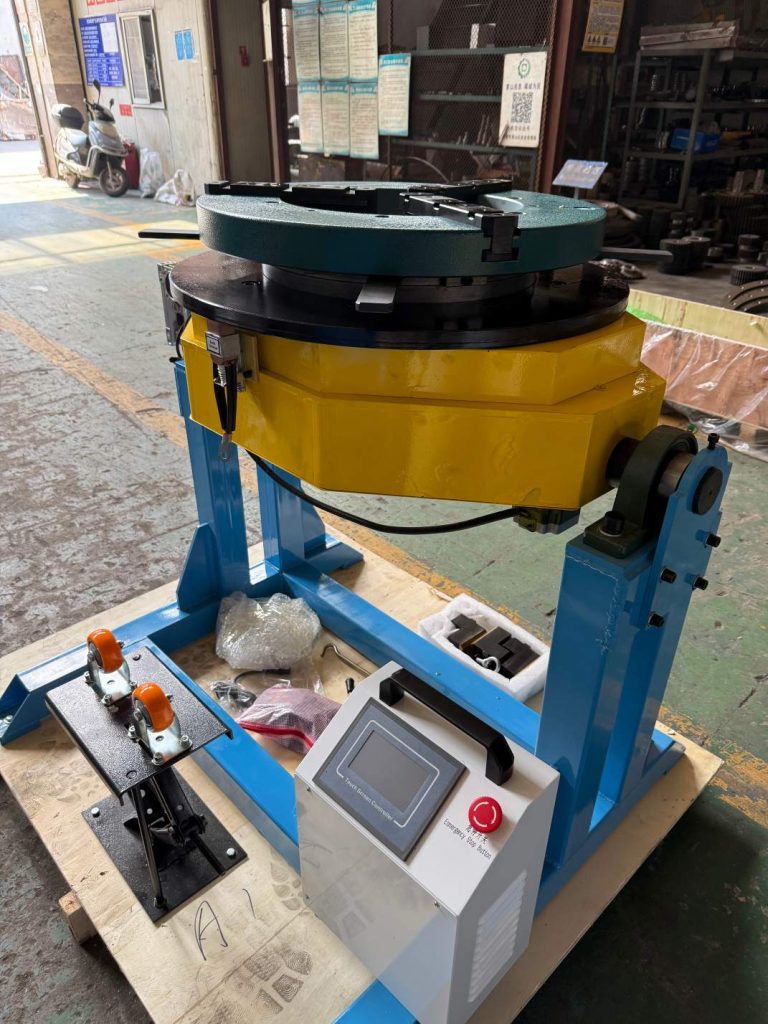
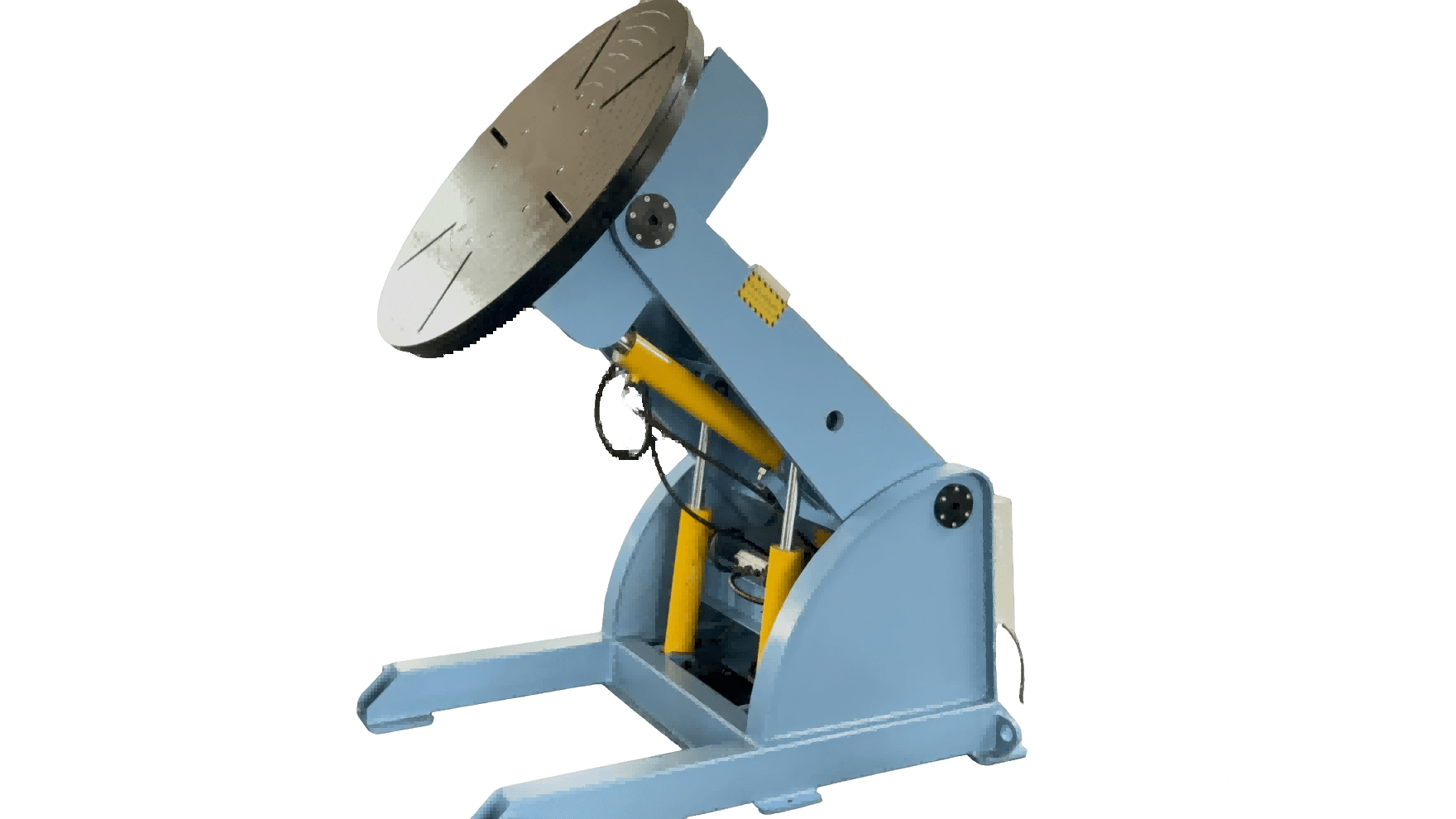
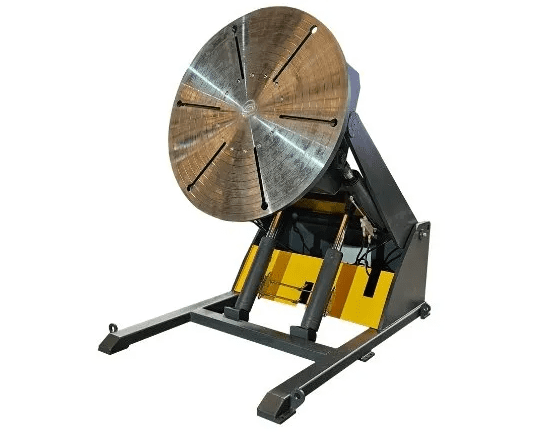
Aluminum expands roughly twice as much as steel for the same heat input, so distortion control is a larger part of broken aluminum repair than many shops expect. Clamping, backing bars, and intermittent stitch welding all reduce movement. When the part is round, a welding positioner or rotator lets the operator weld in the flat or horizontal position while rotating the part, which makes travel speed and heat distribution more consistent. For long seams or multiple holes, a turntable reduces the number of stops and starts that create crater cracks.
Tooling should hold the work without over-constraining it. A fixture that locks a casting rigidly while the weld shrinks can create a new crack at the toe. Use enough points to hold position but leave the final pass free to shrink. On thin sheet, an aluminum or copper backing bar pulls heat out and braces the root. On thick sections, a head and tail positioner or adjustable welding rotator keeps weld orientation steady.

Repair Decisions to Confirm Before You Commit to a Process
Most repeat aluminum repair failures come from a missed material detail, not from operator skill. Before you commit to welding, adhesive, or replacement, confirm the alloy, the exact load direction, the required weld position, and the available tooling. A turbo housing, a cast gear case, and a thin sheet cover may all be aluminum but need different handling. At Wuxi ABOKE Machinery, we configure positioners, turntables, and fixtures around the repair problem. If you are not certain about filler compatibility or fixture requirements, the next step is specific: send your part number, alloy grade, crack location, wall thickness, and workpiece weight to [email protected]. Or call +86 13616174307 for urgent production decisions. We will confirm whether a positioner, turntable, or custom fixture is the right fit for the repair.
Common Questions About Broken Aluminum Repair
Can you weld broken aluminum without removing the part?
Yes, in many cases you can weld cracked aluminum in place if the part can be safely repositioned and there is enough access for torch angle and filler feed. In situ welding works for heavy castings and large assemblies that are difficult to remove. The operator still needs clean joint access and, for round parts, a rotator or positioner to maintain flat position. If the crack is buried behind another component or oil soaked, removal may still be the more efficient path.
Is epoxy strong enough for a broken aluminum bracket?
Many people treat epoxy as the simple fix for a broken aluminum bracket, but that assumption misses how the load is applied. A lapped joint with large bond area can handle shear, but a butt crack in a structural bracket sees peel and bending. Epoxy cannot match weld strength in that configuration. Reserve adhesive for non-structural covers and light enclosures, and weld or replace anything that carries moment or vibration load.
How do you know if broken aluminum is weldable?
It depends on the alloy, the crack location, and the load path. 5xxx and 3xxx aluminum weld readily. 6xxx can be welded with the right filler and heat control. 7xxx structural grades and oil-contaminated castings are often not worth welding. Before deciding, clean the fracture, identify the base alloy or at least the series, and inspect the root for grinding marks, threads, or secondary cracking. A small test weld on a non-critical area can reveal porosity before the full repair.
Why does aluminum crack again after repair?
In aluminum parts I have reviewed, the repeat crack usually comes from one of three decisions made before welding: the wrong filler for the base alloy, excessive heat input, or a fixture that restrained the part too tightly during cooling. Sometimes the original stress concentration was never addressed. If your part has cracked twice, send the alloy, crack location, and service load to [email protected] and we will confirm whether a different filler or fixture arrangement is the better path.
If you’re interested, check out these related articles:
Fixed vs Adjustable Welding Positioners: How to Choose the Right Tool
Automating Wind Tower Welding: Boost Productivity and Quality
Column and Boom Manipulators for Large Vessel Precision Weldin
Automatic Girth Welding Machines: Boost Efficiency for Pipeline Projects
Heavy-Duty Welding Rotators with 200 Ton Load Capacity