Automated Welding for Wind Towers: Improve Efficiency & Weld Quality
Table of Contents
- Why Wind Tower Fabrication Demands Automated Welding
- Which Automated Welding Systems Work Best for Wind Towers
- How Automation Improves Weld Quality and Consistency
- What ROI Looks Like When You Automate Wind Tower Welding
- What Challenges to Expect and How the Technology Is Evolving
- Frequently Asked Questions
- How long does it take to implement automated welding systems for wind tower production?
- What are the primary safety considerations for automated wind tower welding?
- Can existing wind tower manufacturing facilities integrate automation easily?
Global demand for renewable energy is pushing wind tower manufacturing toward new levels of efficiency and precision. Automating wind tower welding processes is no longer optional for manufacturers who need to meet stringent quality standards and accelerate production cycles. This shift allows companies to overcome labor shortages, reduce operational costs, and consistently deliver high-integrity structures.
Why Wind Tower Fabrication Demands Automated Welding
Wind tower manufacturing presents unique challenges due to the immense scale and structural integrity requirements of the components. Manual welding processes often struggle with inconsistencies across long seams, leading to potential defects and costly rework. The sheer size of wind tower sections, such as the conical shells and flanges, demands precise, repeatable welding to ensure structural soundness and longevity. Increased welding productivity is a primary driver for adopting automation, allowing manufacturers to keep pace with project deadlines and market demands.
Skilled labor shortages in welding further complicate production schedules and drive up operational expenses. Relying solely on manual labor for such specialized, large-scale projects becomes unsustainable. Automation directly addresses this by reducing the dependency on a large, highly specialized workforce for repetitive tasks, allowing existing skilled personnel to focus on more complex oversight and quality control. This strategic move contributes to a significant reduction in labor costs in welding over time. The future of wind tower production hinges on adopting advanced manufacturing techniques that guarantee both speed and unwavering quality.
Which Automated Welding Systems Work Best for Wind Towers
Achieving high levels of efficiency and precision in wind tower welding requires specialized automated welding solutions. Robotic welding for wind towers offers unparalleled repeatability and speed, especially for repetitive tasks like circumferential and longitudinal seam welding on tower sections. These systems integrate advanced sensors and control software to maintain optimal welding parameters throughout the entire process.
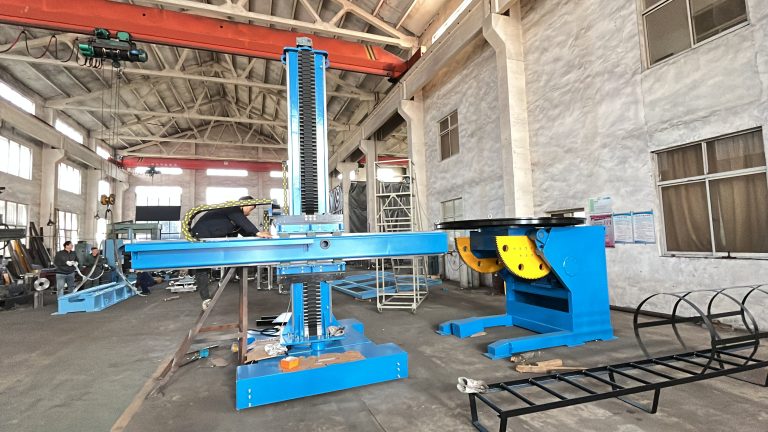
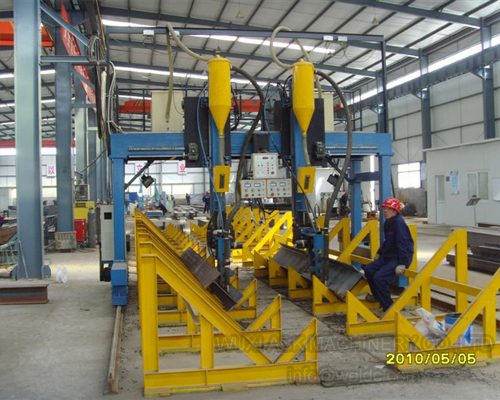
CNC welding machines are another cornerstone of modern wind tower fabrication. These machines, often gantry-style or column-and-boom setups, precisely control the welding torch’s position and movement along complex geometries. Integrating CNC cutting machines with welding systems ensures that components fit together perfectly, minimizing gaps and reducing the amount of filler material needed during welding. This precision is critical for maintaining structural integrity.
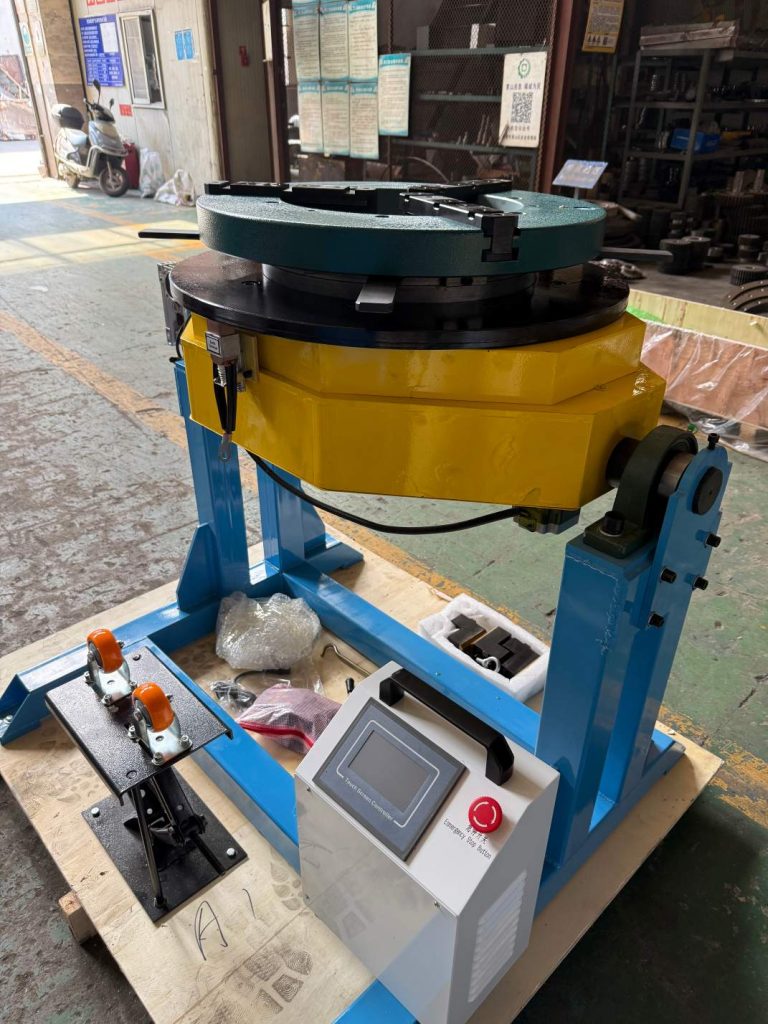
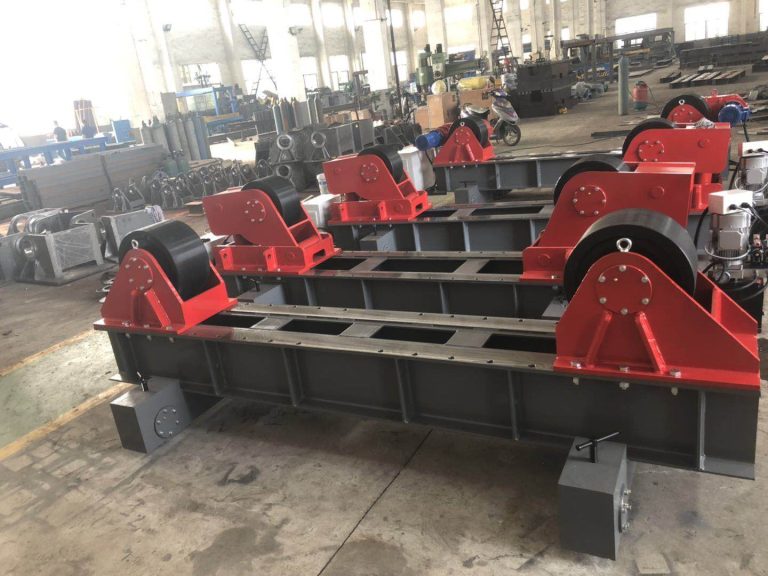
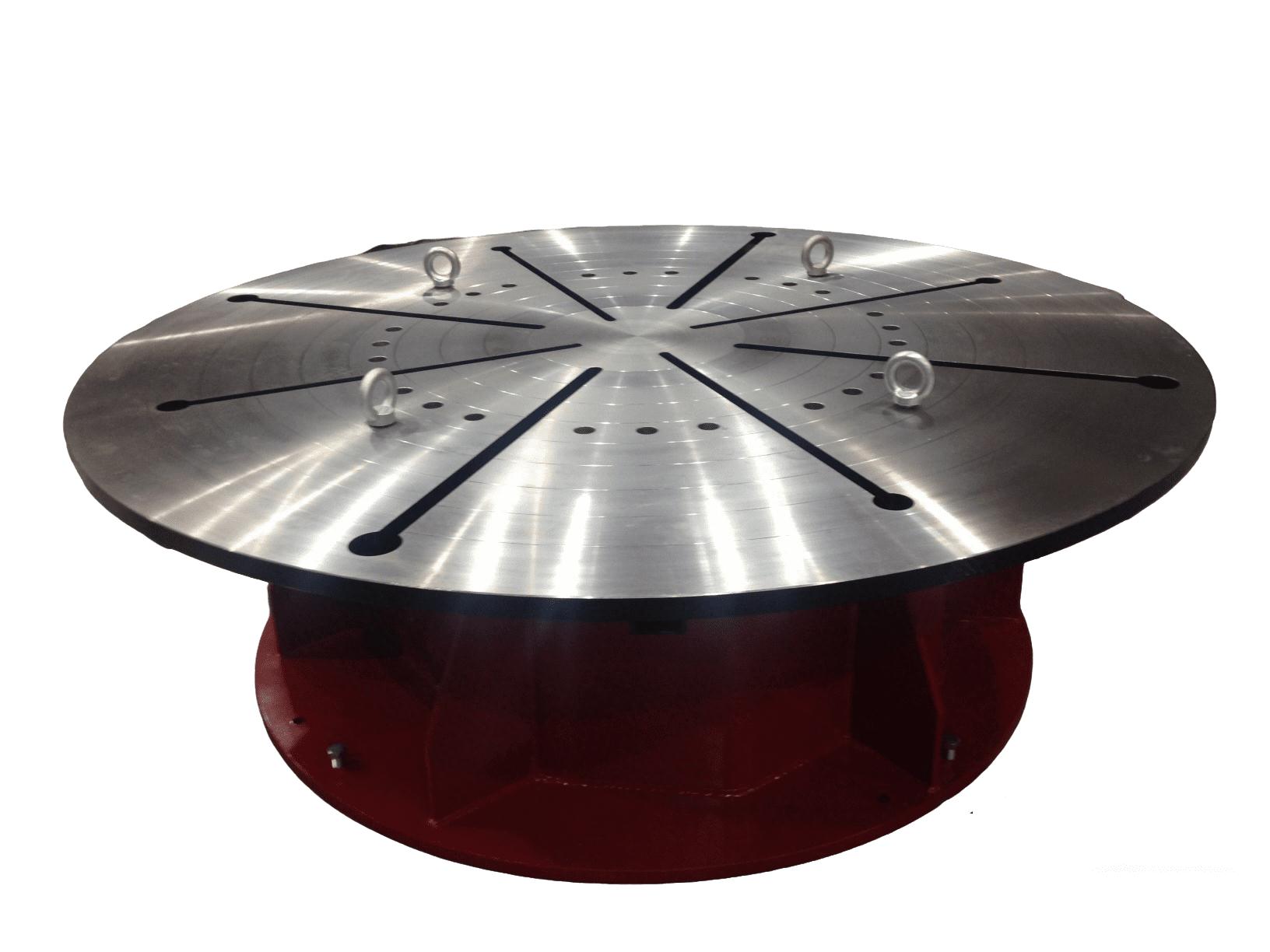
Positioners and manipulators are also indispensable. They orient large, heavy wind tower sections, such as a 30 Ton Rotary Welding Turntable, allowing for optimal downhand welding positions, which improves weld quality and deposition rates. Specialized welding equipment and CNC cutting machines from experienced manufacturers ensure both precision and durability, which are non-negotiable for wind tower components.
Typical Automated Welding Equipment for Wind Towers
| Equipment Type | Primary Application | Key Benefit |
|---|---|---|
| Gantry Welding Machine | Longitudinal and circumferential seams on shells | High speed, consistent long welds |
| Robotic Welding System | Flange welding, repetitive small sections | Repeatability, precision, reduced labor |
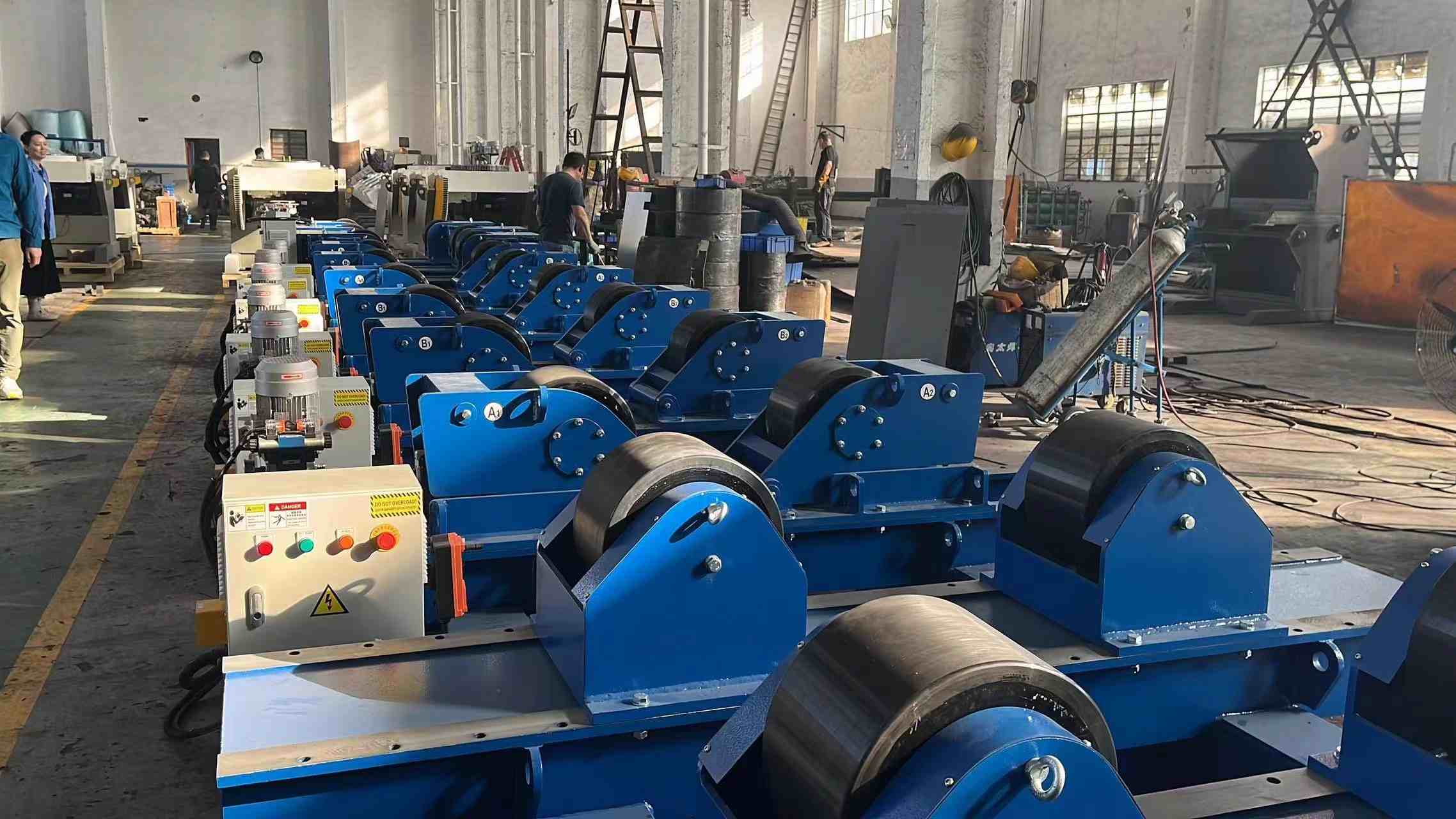
| Welding Positioners | Orienting large components for optimal welding | Improved weld quality, operator safety |
| Column & Boom Manipulators | Supporting welding heads for internal/external seams | Extended reach, stable torch positioning |
| Seam Trackers | Real-time adjustment to weld path deviations | Enhanced accuracy, defect prevention |
For wind tower flange welding, robotic welding systems with multiple axes of motion are highly effective. They can precisely execute complex weld paths around the flange circumference, ensuring consistent penetration and bead geometry. For shell welding, especially the long longitudinal and circumferential seams, gantry welding machines or column-and-boom manipulators equipped with submerged arc welding (SAW) or gas metal arc welding (GMAW) processes are ideal. These systems handle the large scale and provide the necessary speed and deposition rates.
How Automation Improves Weld Quality and Consistency
Automated welding significantly improves weld quality by eliminating human variability from the process. Digital welding control systems monitor and adjust parameters like current, voltage, and travel speed in real time. This ensures that every weld pass adheres to predefined specifications, leading to uniform penetration, consistent bead appearance, and minimal defects. Adaptive welding technology further refines this by using sensors to detect variations in joint fit-up or material thickness, automatically adjusting welding parameters to compensate.
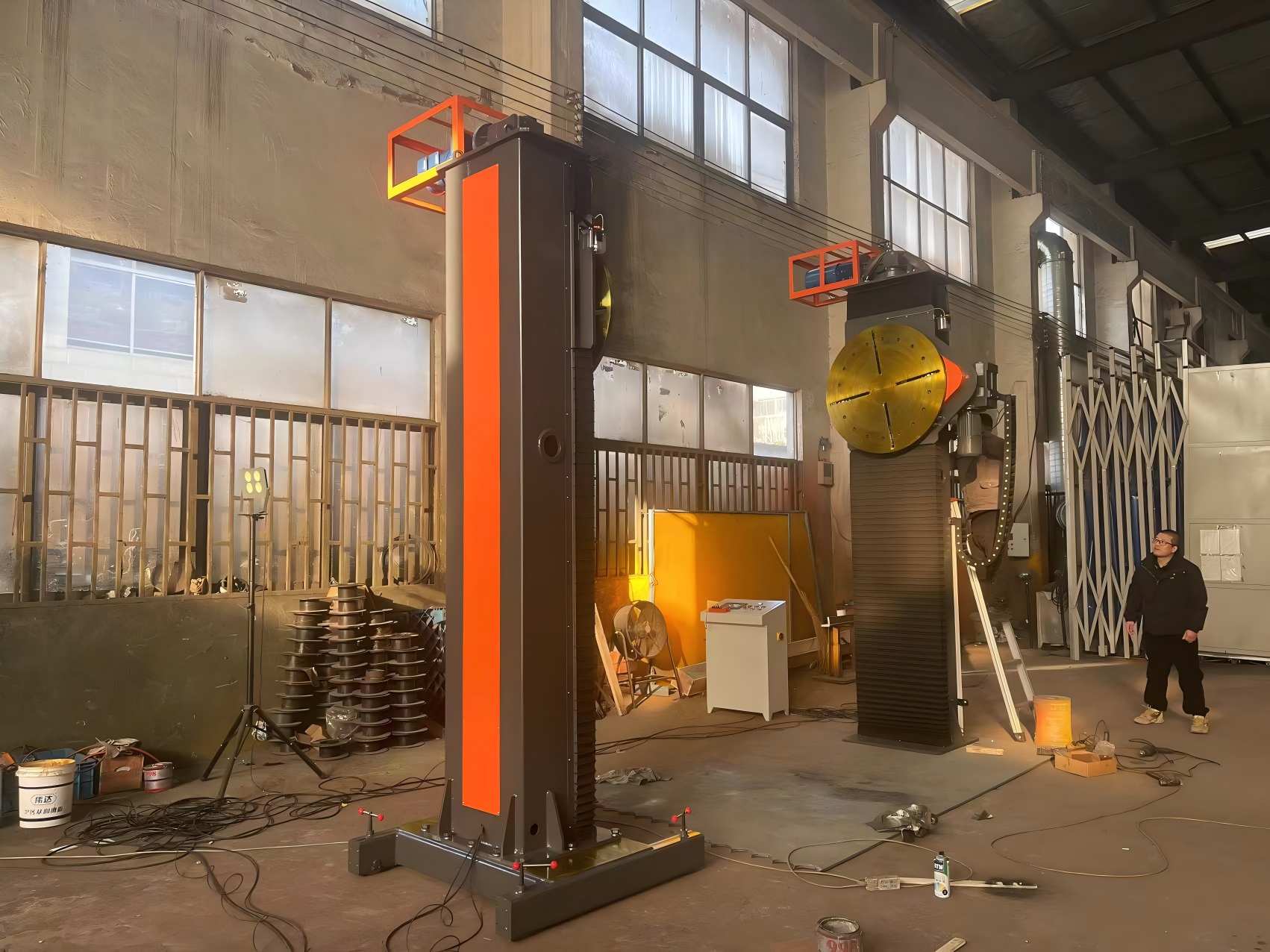
One project involving automated shell welding for a client in Northern Europe illustrates this point clearly. Their previous manual process yielded an average defect rate of 3.5%, primarily due to inconsistent weld passes. After installing a gantry welding system with adaptive control, the defect rate dropped to under 0.8% within three months, significantly cutting rework costs and accelerating their production schedule by 15%. This demonstrates how quality control in automated welding is built into the system itself.
Preventing welding defects is paramount in wind tower construction, where structural failure can have severe consequences. Automated systems reduce common issues like porosity, lack of fusion, and distortion by maintaining tight control over the welding environment and parameters. Advanced welding equipment contributes directly to meeting European standards and ISO/CE certifications, which are critical for market acceptance and structural safety.
Automated welding ensures consistent quality through precise control over every aspect of the welding process. Digital programming eliminates human error, maintaining exact travel speeds, wire feed rates, and arc voltages. Integrated seam tracking systems compensate for minor variations in component fit-up, ensuring the weld path remains accurate. This level of precision and repeatability guarantees uniform mechanical properties and aesthetic quality across all welds, meeting the rigorous demands for large wind tower components.
What ROI Looks Like When You Automate Wind Tower Welding
Implementing welding automation requires careful planning to maximize its benefits and ensure a strong return on investment (ROI) for automation. The initial investment in automated systems can be substantial, but the long-term savings in labor costs, reduced rework, and increased throughput quickly offset these expenses. Cost-effectiveness of robotic welding becomes apparent when considering the entire lifecycle of the equipment and the consistent quality it delivers.
A phased approach to integration of welding automation often works best, starting with automating the most labor-intensive or critical welding operations. This allows the production team to adapt gradually and gain experience with the new technology. Training for automated welding is a critical component of successful implementation. Operators and maintenance staff need comprehensive instruction to effectively run and service the new equipment.
Partnering with a reliable equipment provider can accelerate ROI through efficient setup and ongoing support. Detailed project planning and technical solutions ensure a smooth transition, including not only equipment installation but also calibration, programming assistance, and operator training. This approach minimizes downtime and helps manufacturers quickly realize the productivity gains promised by Industry 4.0 in welding.
Initial costs for automating wind tower welding can range significantly, depending on the scale and complexity of the system, from several hundred thousand to over a million dollars for a full production line. These costs include equipment, installation, software, and training. The ROI is typically strong, driven by reduced labor costs, increased production speed, improved weld quality leading to less rework, and enhanced safety. Many manufacturers see a payback period of 18 to 36 months, with ongoing savings thereafter.
What Challenges to Expect and How the Technology Is Evolving
While the benefits of automating wind tower welding are clear, manufacturers must also address potential challenges. Maintenance of automated welding systems requires a different skill set than traditional equipment. Regular preventative maintenance schedules and access to specialized technicians are vital to ensure continuous operation and minimize unexpected downtime. Safety in automated welding is also a paramount concern. Robust safety protocols, including physical barriers, light curtains, and emergency stop systems, must be in place to protect personnel working near robotic cells.
Material handling in welding large wind tower sections also requires careful consideration. Automated systems often integrate with overhead cranes, conveyors, and specialized manipulators to move heavy components efficiently and safely. Pre-heating and post-weld treatment processes, which are critical for managing residual stresses and ensuring material integrity, must also be seamlessly integrated into the automated workflow.
The future of wind tower production is moving towards greater integration and intelligence. Further advancements in adaptive welding technology, artificial intelligence for defect detection, and more flexible robotic systems that can handle a wider variety of component geometries are on the horizon. These innovations will continue to push the boundaries of what is possible in terms of speed, quality, and cost-efficiency in wind tower manufacturing. If your facility is evaluating automation options, it is worth discussing your current defect rates and throughput targets before committing to a specific system configuration.
Frequently Asked Questions
How long does it take to implement automated welding systems for wind tower production?
Implementation timelines vary based on system complexity and integration needs. A full setup, including equipment installation, calibration, and training, typically ranges from a few weeks to several months, significantly impacting overall welding productivity.
What are the primary safety considerations for automated wind tower welding?
Safety in automated welding is paramount. Key considerations include robust guarding, emergency stop systems, proper operator training, and adherence to international safety standards to prevent accidents and ensure a secure working environment.
Can existing wind tower manufacturing facilities integrate automation easily?
Many existing facilities can integrate automation through modular systems and strategic planning. Assessing current infrastructure, material handling, and production flow is crucial to a seamless integration of welding automation without major overhauls. To discuss how automation might fit your current setup, contact WUXI ABK MACHINERY CO., LTD at [email protected] or +86 13616174307.
If you’re interested, check out these related articles:
Welding Rotator vs Manual Pipe Welding: Productivity & Cost Efficiency