Petroleum Tank Construction: Welding, Codes and Equipment
Table of Contents
- Petroleum Tank Construction Starts with API 650 Design Control
- What API 650 Controls Before Fabrication
- Material and Joint Design Decisions
- Shell Plate Preparation and Fit-Up Dictate Final Geometry
- Plate Roundness and Fit-Up Gap Control
- Shell Course Sequencing and Tack Welding
- Welding Methods and Mechanized Equipment Shape Petroleum Tank Shell Seams
- Vertical Seam Process Choices
- SAW Girth Welding and Rotator Setup
- Why Mechanized Equipment Reduces Weld Rework
- Petroleum Tank Applications Span Refining, Terminals and Storage
- Petroleum Tank Welding Equipment Belongs Before Shell Erection
- Procurement Teams Ask These Petroleum Tank Construction Questions
- Does petroleum tank construction require API 650 even for smaller tanks?
- Is submerged arc welding always the right choice for petroleum tank shell seams?
- How long does petroleum tank construction take?
- What should I confirm before buying petroleum tank construction equipment?
Petroleum tank construction succeeds or fails long before the first weld is made. The practical outcome depends on shell fit-up, roundness control, and mechanized welding setup, not just design code theory. I have reviewed petroleum tank projects where the gap between the drawing and the erected shell is where cost and schedule are lost. This article covers the standards, shell preparation steps, welding methods and equipment decisions that determine whether a tank meets API 650 requirements and stays on schedule, with practical guidance for procurement and production teams.
Petroleum Tank Construction Starts with API 650 Design Control
API 650 is the first standard I check on any petroleum storage tank project. It governs welded steel tanks for oil storage, including design, fabrication, erection and testing. For tanks already in service, API 653 controls evaluation and repair. The welding procedures themselves are qualified under ASME Section IX, which API 650 references. The code drives decisions that many petroleum tank construction teams treat as secondary: plate thickness by shell course, joint category, allowable stress, and the extent of radiography or ultrasonic examination. If those decisions are not fixed before material is ordered, the project absorbs the cost later in rework or extra inspection.
What API 650 Controls Before Fabrication
API 650 spells out minimum shell thickness, tank diameter and height limits, and the weld joint designs that apply to atmospheric and low pressure storage. The standard also defines nozzle reinforcement, shell openings and roof type. I ask fabricators to submit the design datasheet, joint details and NDE map before cutting starts. This is not paperwork. It tells the welding team which seams need full penetration, which need fillet welds and which require post weld inspection.
Material and Joint Design Decisions
Joint design determines how much fit-up equipment the shop needs. A tank with butt welded vertical seams and fillet welded bottom laps will not use the same edge preparation as a tank with full penetration annular ring joints. I have seen procurement teams buy a general purpose rotator based on tonnage alone, only to find the shell course edge mismatch still required manual correction. Weight capacity matters, but edge preparation, root gap and shell roundness tolerance matter just as early.
Shell Plate Preparation and Fit-Up Dictate Final Geometry
In petroleum tank construction, shell quality is set before welding begins. Shell plates arrive flat, get rolled to the tank radius, then must hold that radius without springback. If rolling is uneven, the vertical seams will not close with a consistent root gap. I have seen crews use strongbacks and dogs to force a poorly rolled shell into alignment, and the weld later records more distortion and more repair hours. The better path is to check the radius at each end and at mid plate before the plate leaves the rolling station.
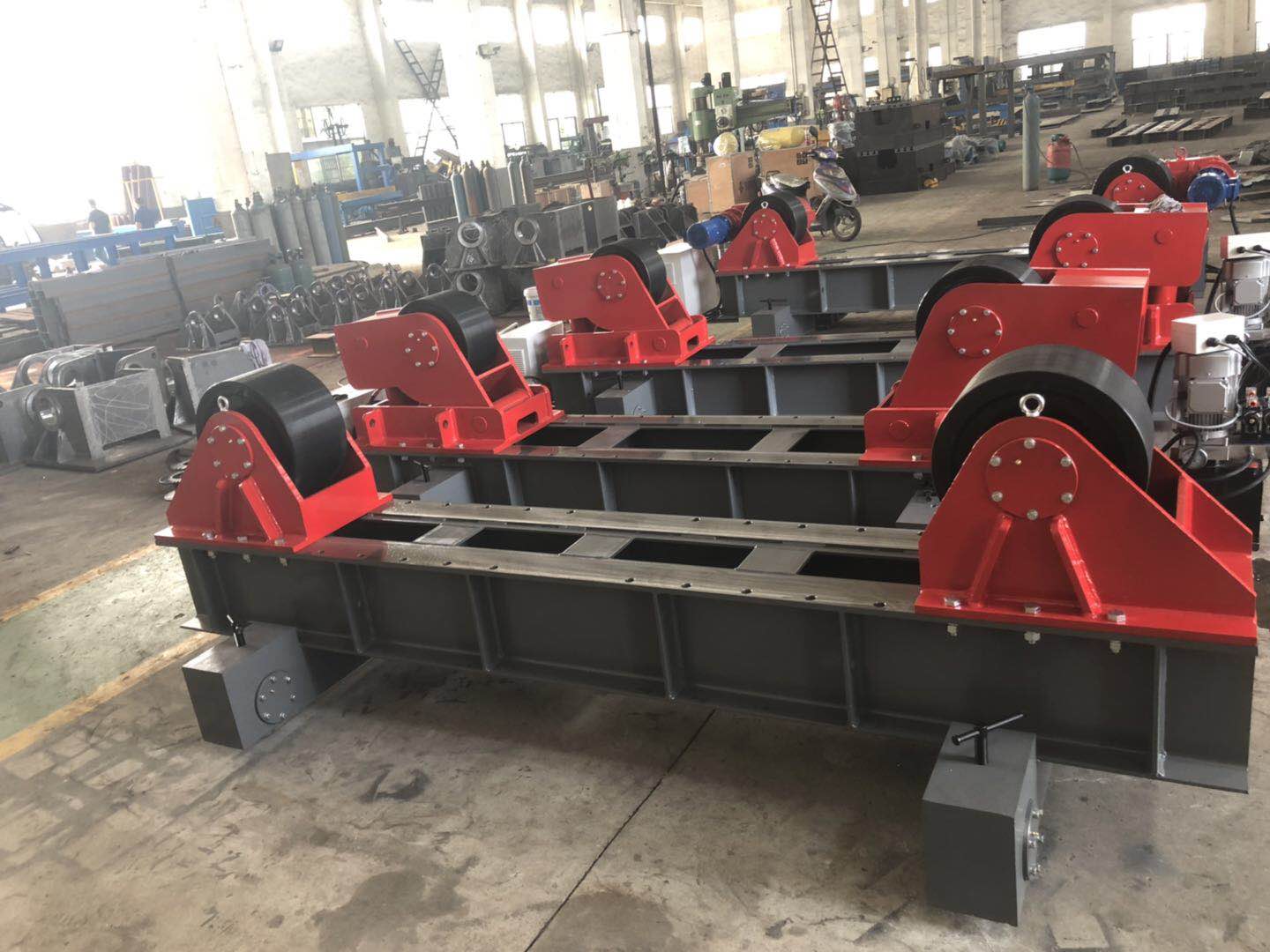
Plate Roundness and Fit-Up Gap Control
Fit-up gap tolerance on a petroleum tank shell is a small window, normally stated on the welding map. For butt welds, the gap must stay within the qualified range in the welding procedure specification, not what the fitter can pull with a bar. I prefer adjustable fit-up rotators for this stage because the shell course can be turned in controlled increments while rolling bands keep the edge alignment stable.
Before welding starts, I use this sequence:
1. Confirm the rolled radius against the approved template.
2. Set the vertical seam root gap and lock the shell course with tacks.
3. Check vertical seam mismatch at the bottom, middle and top.
4. Rotate the course and inspect the opposite seam before final tacking.
Shell Course Sequencing and Tack Welding
Shell course sequencing affects roundness more than most project managers expect. On a large tank, the bottom course goes up first, then each upper course is stacked and tacked. If the lower course is out of round, every course above inherits the error. I check the bottom to shell annular ring fit before any upper course erection. Tacks should be short and placed at uniform intervals, long enough to hold the joint but not so long that they create hard spots in the final weld.
Welding Methods and Mechanized Equipment Shape Petroleum Tank Shell Seams
In petroleum tank construction, welding is usually split into vertical seams, horizontal girth seams, bottom plate seams and roof seams. The process selection should follow joint geometry, position and deposition need, not shop habit. I use submerged arc welding on horizontal girth seams whenever the tank diameter and workshop access repeat the same rotational weld path. Submerged arc welding produces a deep, consistent bead with high deposition, and the flux protects the arc without the spatter common in open arc processes.
Vertical Seam Process Choices
Vertical seams are less forgiving. Because the weld is made in the vertical or near vertical position, the process must control the weld pool with either a flux cored wire or a stick electrode. I have used both SMAW and FCAW-G on petroleum tank vertical seams. FCAW-G is faster on 12 mm and thicker plate when the workshop has stable gas shielding, while SMAW is easier to manage in the field or on site where wind disturbs shielding gas.
The table shows the seam types and process choices I see most often in petroleum tank construction.
| Seam type | Typical process | Main advantage | Equipment note |
|---|---|---|---|
| Vertical shell seam | SMAW or FCAW-G | Controlled pool in vertical position | Column and boom travel keeps the torch steady |
| Horizontal girth seam | SAW | High deposition and repeatable bead shape | Welding rotator with adjustable rollers |
| Bottom plate lap seam | SMAW or GMAW | Good access and simple joint geometry | Manual or tractor setup |
| Roof plate seam | SMAW or FCAW | All-position capability on slopes | Light positioner or manual handling |
SAW Girth Welding and Rotator Setup
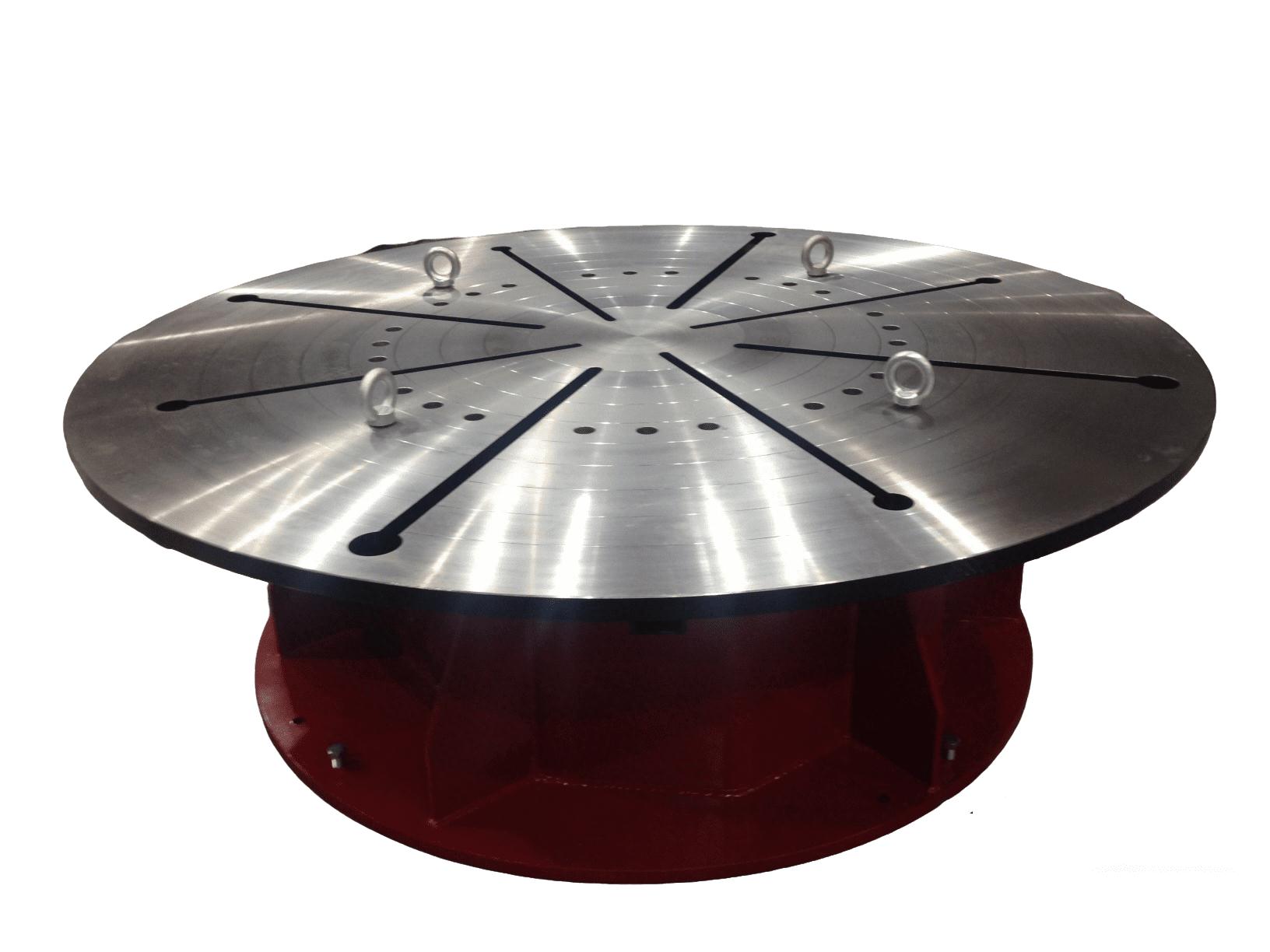
Submerged arc welding only pays off when the shell rotates at a controlled speed. I set the rotator speed to match the wire feed and voltage so the weld metal carries the same profile around the full circumference. Roller spacing matters more than many buyers expect. If the rollers are too close, a large diameter shell can sag. If they are too far apart, the shell may slip. The rotator capacity should be selected against the maximum shell weight per course, not the total tank weight.
Why Mechanized Equipment Reduces Weld Rework
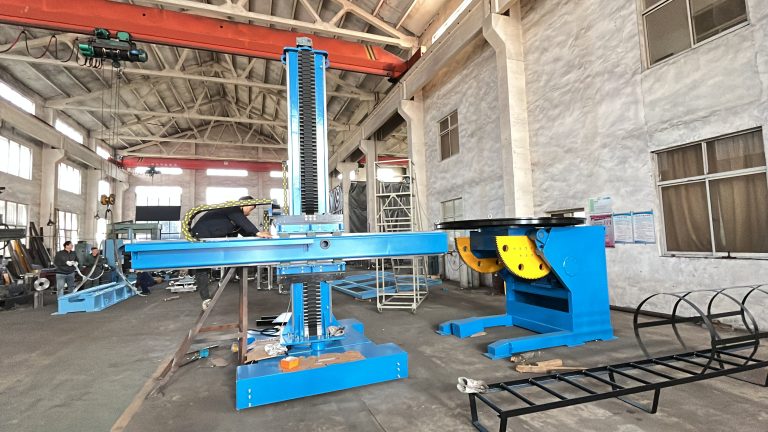
Mechanized equipment removes several variables that cause rework in petroleum tank construction. A column and boom manipulator keeps the weld head travel steady, so the operator manages the torch angle and arc length instead of dragging a tractor or climbing. Welding rotators keep the circumferential travel constant, which reduces stops and starts where defects often begin. The result is a more uniform bead and fewer grindouts. That is the benefit a workshop owner can measure in repair hours, not in catalog claims.
If your project involves shell diameters above 10 m or vertical seams in the field, it is worth confirming rotator capacity and boom travel before finalizing the weld procedure. Share the shell diameter, plate thickness and seam process with [email protected], and we will confirm the equipment configuration.
Petroleum Tank Applications Span Refining, Terminals and Storage
Three project types drive most petroleum tank construction: refinery tank farms, bulk liquid terminals, and strategic or commercial storage. Refinery tanks often carry the tightest specifications because the stored product may be at elevated temperature or contain corrosive fractions. Terminal tanks are usually larger and simpler, but schedule pressure is high because the tank must enter service for a shipping window. Storage terminals and tank farms reward standardization: repeating the same shell diameter and course height makes the fit-up and welding equipment earn back its cost quickly.
Across all three application types, the schedule driver is the same: how fast the shell courses move from rolling to fit-up to final weld. I recommend deciding on the tank diameter, shell course height and seam process before purchasing rotators or manipulators. Without that, the equipment may be sized for total tank weight and miss the course weight and diameter range that actually governs daily production.
Petroleum Tank Welding Equipment Belongs Before Shell Erection
Most petroleum tank construction delays are created when equipment is selected after shell erection has already started. Fit-up gaps widen, out-of-round shell courses become harder to correct and the weld team loses time waiting on manual positioning. That is the wrong time to source rotators and manipulators. WUXI ABOKE MACHINERY CO., LTD supplies welding manipulators, welding rotators and tank welding equipment matched to the shell diameter, plate thickness and seam sequence. Send your tank diameter, shell course height and welding procedure details to [email protected], or call +86 13616174307 to confirm the equipment layout and delivery schedule before erection starts.
Procurement Teams Ask These Petroleum Tank Construction Questions
Does petroleum tank construction require API 650 even for smaller tanks?
For most petroleum storage applications in the oil and gas supply chain, yes. API 650 applies to welded steel tanks for oil storage, and many terminal and refinery specifications call for it even on tanks as small as a few hundred barrels. If a tank stores water or a non petroleum liquid, another standard may fit, but for petroleum service the safe default is API 650. The earlier this is confirmed, the easier it is to align plate thickness, welding procedures and inspection records.
Is submerged arc welding always the right choice for petroleum tank shell seams?
Not always. Many teams assume SAW is automatically best because it deposits metal quickly, but that advantage depends on position. For horizontal girth seams with a rotator, SAW is often the right choice. For vertical seams and roof plates, the weld position makes SMAW or FCAW more practical. The correct process follows the seam position, joint design and equipment available, not speed alone.
How long does petroleum tank construction take?
It depends on diameter, shell height, site access and how much welding is automated. A small shop built tank can go from plates to hydrotest in weeks, while a large terminal tank can span several months. The schedule is shaped less by total tonnage than by how fast each shell course moves through rolling, fit-up and seam welding. If a contractor can run girth welds on rotators instead of climbing tanks, the schedule compresses most on the largest diameters.
What should I confirm before buying petroleum tank construction equipment?
In projects I have reviewed, the three facts that matter first are maximum shell course weight, shell diameter range and the seam processes you plan to use. Tonnage alone does not tell you whether the rollers will fit the tank radius or whether the rotator speed will match the weld procedure. Confirm those three details, then add vertical seam access and site power. Share your tank diameter, shell course height and weld process requirements, and we will recommend the right welding rotator or manipulator configuration. Email [email protected] with the project data.
If you’re interested, check out these related articles:
Automatic Girth Welding Machines: Boost Efficiency for Pipeline Projects
Custom Welding Automation Solutions for Industrial Manufacturing
Welding Positioner Selection for Pressure Vessels: Key Best Practices
Boiler Production Lines: Tube to Panel Manufacturing Explained