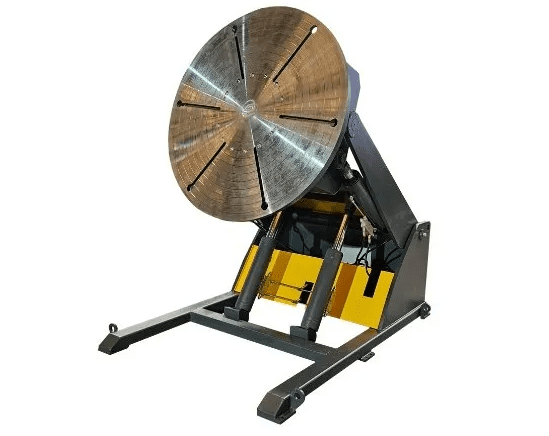
Welding Positioner Selection for Pressure Vessels: Key Best Practices
Table of Contents
- Why Welding Positioners Matter for Pressure Vessel Work
- What Technical Specs Should Drive Your Positioner Selection
- How to Configure Your Positioner for Maximum Weld Quality
- When Does Automation Make Sense for Your Production Volume
- What Certifications and Support Should You Expect from a Supplier
- Frequently Asked Questions
- What factors determine the right welding positioner for a pressure vessel?
- What are the common types of welding positioners used in heavy-duty applications?
- How do welding positioners improve the quality and safety of pressure vessel fabrication?
Fabricating pressure vessels demands precision, consistency, and safety, especially when handling large, heavy components. Proper welding positioner selection for pressure vessels is not merely an equipment choice; it is a strategic decision impacting every stage of production. This choice directly influences weld quality, operational efficiency, and the overall integrity of the finished vessel. By understanding the critical factors involved, manufacturers can optimize their fabrication processes.
Why Welding Positioners Matter for Pressure Vessel Work
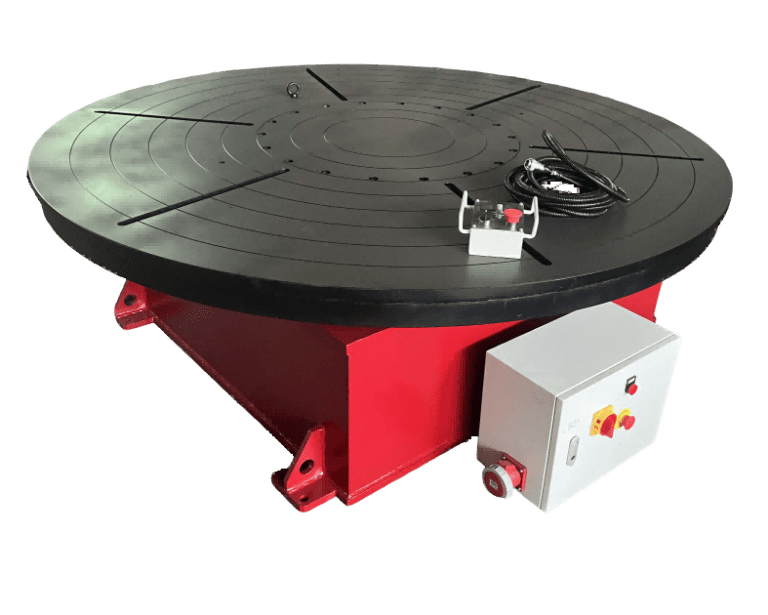
Welding positioners are fundamental tools in the fabrication of pressure vessels, providing the means to manipulate workpieces into optimal welding positions. These devices allow welders to perform downhand welding, which is generally faster and produces higher quality welds with better penetration and reduced defects compared to out-of-position welding. For heavy-duty applications involving large pressure vessel components, the ability to precisely control workpiece manipulation is invaluable. This significantly reduces operator fatigue, as manual handling of such massive structures becomes unnecessary.
I recall a project where our team was tasked with improving the welding efficiency for large cylindrical pressure vessel sections. Before implementing a dedicated rotary welding table, welders struggled with overhead and vertical welds, often requiring multiple passes and extensive post-weld grinding. After integrating a 20-ton rotary welding turntable, we observed a 30% reduction in welding time per section and a noticeable decrease in weld defect rates. This direct improvement stemmed from the consistent downhand welding access the positioner provided, proving its tangible impact on productivity and quality.
Beyond quality and efficiency, these positioners enhance safety by securely holding components, preventing accidental movement or drops. They also facilitate better access for inspection and non-destructive testing. The rotation and tilting capabilities of modern positioners ensure that every weld joint can be presented in the most ergonomic and effective orientation for the welder or automated welding head. This capability is particularly important for complex pressure vessel geometries where consistent weld quality across all seams is paramount.
What Technical Specs Should Drive Your Positioner Selection
Selecting the appropriate welding positioner for pressure vessel fabrication requires careful consideration of several technical and practical factors. The primary criteria include the workpiece’s size, weight, and geometric complexity, alongside the specific welding processes employed. Understanding these parameters ensures the chosen equipment can safely and effectively handle the demands of your projects.
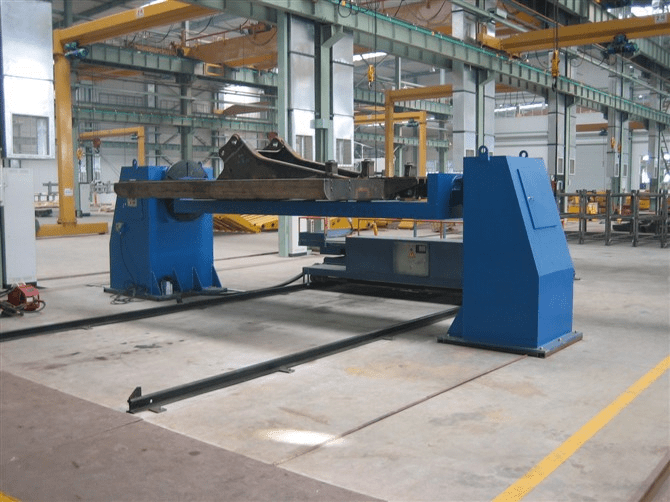
| Feature | Standard Fixed-Height Positioner | Tilting Rotary Positioner | Head-Tail Positioner |
|---|---|---|---|
| Load Capacity | Up to 10 tons | Up to 20 tons | Up to 50 tons |
| Rotation Speed | Basic fixed/variable | Precise variable control | High precision, variable |
| Tilting Range | None | 0-135 degrees | None (fixed height) |
| Workpiece Type | Small to medium vessels | Medium to large vessels | Long, heavy vessels |
| Primary Benefit | Cost-effective, simple | Versatility, ergonomic | Stability, length |
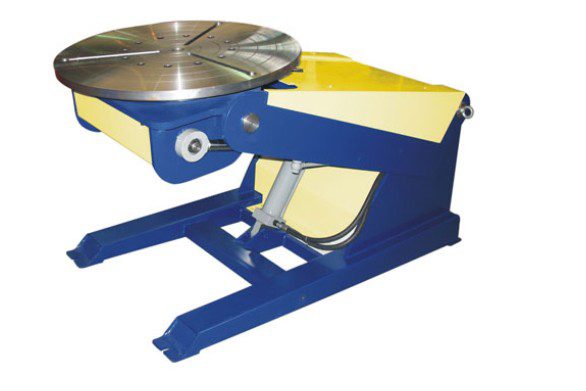
Load capacity is perhaps the most immediate concern; the positioner must safely support the maximum weight of your pressure vessels, including any fixtures. Rotation speed and control are also vital, especially for automated welding processes like submerged arc welding (SAW) or gas metal arc welding (GMAW), where consistent travel speed directly affects weld quality. Tilting welding positioners offer additional flexibility, allowing the workpiece to be angled for optimal downhand welding on circumferential and longitudinal seams.
Customization options play a significant role for unique pressure vessel designs. We understand that standard solutions do not always fit every specialized requirement. For instance, a client fabricating unusually long pressure vessels required a synchronized head-tail positioner system with extended bed lengths. Our team designed a bespoke solution that not only met the required load capacity but also integrated with their existing SAW automation, significantly improving their production throughput. WUXI ABK MACHINERY CO., LTD offers customized solutions meeting specific load capacities and rotation needs, backed by over 20 years of experience. This experience allows us to tailor equipment to precise project specifications, ensuring optimal performance.
Welding process integration is another key criterion. The positioner should work with your chosen welding method, whether it is manual, semi-automatic, or fully automated. Considerations such as grounding capabilities, remote control options, and compatibility with welding power sources are important for efficient operation. Supplier selection is equally important; a reliable partner provides not only quality equipment but also expertise and ongoing support.
How to Configure Your Positioner for Maximum Weld Quality
Proper configuration of a welding positioner is as important as its selection. To maximize performance, precision, and safety in pressure vessel welding, several aspects require careful attention. This includes ensuring correct grounding, optimizing the welding current path, and implementing robust safety features.
- Ensure proper grounding: Establish a direct and low-resistance welding current path from the workpiece through the positioner to the welding power source. This prevents arcing on bearings and gears, which can cause premature wear and damage. Use heavy-duty grounding cables and ensure all connections are clean and secure.
- Balance the workpiece: Distribute the weight of the pressure vessel evenly on the positioner’s table or chuck. An unbalanced load can strain the positioner’s drive system, leading to inconsistent rotation speed and potential safety hazards. For irregularly shaped vessels, use counterweights or specialized fixtures to achieve balance.
- Set optimal rotation speed: Adjust the rotation speed to match the welding process and material thickness. Precision control over rotation speed ensures consistent weld bead geometry and penetration, which is critical for pressure vessel integrity. Modern positioners offer variable speed control for fine-tuning.
- Utilize tilting capabilities: For tilting welding positioners, adjust the tilt angle to achieve the most favorable downhand welding position for all seams. This improves weld quality, reduces spatter, and enhances operator comfort.
- Implement safety protocols: Always verify that safety features, such as emergency stops, overload protection, and interlocks, are fully functional. Ensure operators are trained on safe loading, unloading, and operation procedures to prevent accidents. Ergonomics also plays a role in safety; positioning the workpiece at a comfortable working height reduces operator strain.
Consistent rotation is necessary for achieving high-quality circumferential welds on pressure vessels. Any jerky or inconsistent movement can lead to weld defects. I once consulted on a project where a client experienced inconsistent weld quality on large tank sections. Upon inspection, I found their older positioner had worn gears, causing erratic rotation. We recommended an upgrade to a positioner with a more robust drive system and precise speed control, which immediately resolved their quality issues and reduced rework by 15%. This demonstrates how the mechanical integrity of the positioner directly impacts welding outcomes.
When Does Automation Make Sense for Your Production Volume
Integrating automation and advanced features into welding positioners can dramatically boost productivity and reduce labor costs in pressure vessel fabrication. The shift from manual to automated processes minimizes human error, increases throughput, and ensures consistent quality, which is particularly beneficial for repetitive tasks or large production volumes.
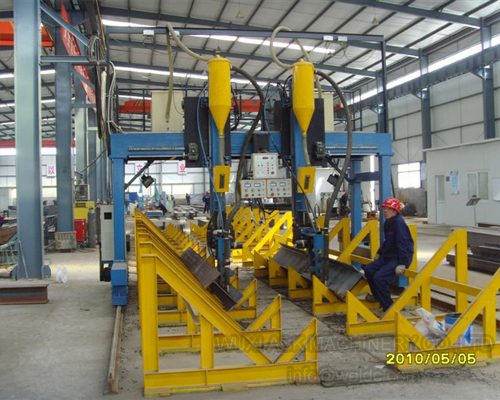
Automated welding positioners can be synchronized with robotic welding arms or column and boom manipulators to create a fully automated welding cell. This setup is ideal for processes like orbital welding or submerged arc welding (SAW), where precise, continuous movement is essential. The benefits of welding automation extend to significant productivity gains, as automated systems can operate continuously with minimal supervision, often at higher speeds than manual welding.
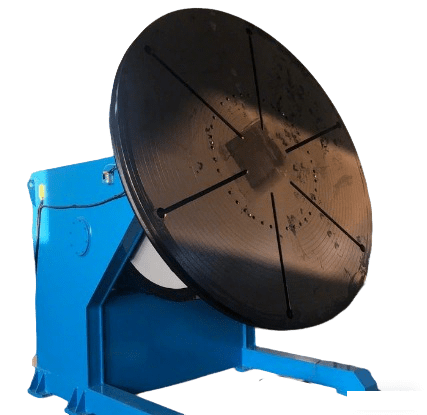
Consider the return on investment (ROI) from such an upgrade. While the initial capital outlay for automation solutions might be higher, the long-term savings from reduced labor, decreased rework, and increased production capacity often justify the expenditure. For example, a fabricator of large storage tanks might invest in a heavy-duty positioner with integrated controls for SAW. This allows them to complete circumferential welds in a single, continuous pass, drastically cutting down fabrication time per tank. WUXI ABK’s advanced welding equipment and automation solutions are designed to significantly improve safety and efficiency in pressure vessel fabrication, providing measurable benefits to our clients.
Advanced features such as programmable logic controllers (PLCs), remote diagnostics, and digital readouts offer enhanced precision control and ease of operation. These features allow operators to pre-program welding sequences, monitor parameters in real-time, and make adjustments quickly, further optimizing the welding process. The cost-effectiveness of these solutions becomes evident through consistent output, lower operational expenses, and a competitive edge in the market.
What Certifications and Support Should You Expect from a Supplier
Ensuring the quality and longevity of welding positioners for pressure vessel fabrication involves adherence to stringent standards and selecting equipment built for durability. Regulatory compliance, particularly with international standards, is a non-negotiable aspect for equipment used in critical applications like pressure vessel manufacturing.
Our products comply with European standards and hold ISO/CE certifications, ensuring reliability and trustworthiness. This commitment to quality means that our welding positioners are designed and manufactured to meet rigorous performance and safety criteria. For clients involved in tank fabrication equipment or pipeline welding, this compliance offers peace of mind, knowing their equipment will meet project specifications and regulatory requirements.
Beyond initial compliance, considering the long-term value of a welding positioner involves evaluating its maintenance requirements and the availability of after-sales support. Equipment that is easy to maintain, with readily available spare parts and responsive technical assistance, minimizes downtime and extends operational life. A reliable supplier acts as a one-stop partner, offering comprehensive support from installation and training to ongoing service and troubleshooting. This partnership ensures that your investment continues to deliver optimal performance over many years.
When selecting equipment, I always advise clients to look beyond the purchase price and consider the total cost of ownership. This includes energy consumption, expected lifespan, and the cost of maintenance and repairs. A well-built positioner, even with a higher initial cost, often proves more economical in the long run due to its reliability and reduced operational interruptions. If your current fabrication setup involves frequent repositioning or out-of-position welding on pressure vessels, it may be worth evaluating whether a dedicated positioner could reduce cycle times and defect rates.
Frequently Asked Questions
What factors determine the right welding positioner for a pressure vessel?
The right welding positioner depends on the pressure vessel’s weight, dimensions, and shape, along with the required welding processes. Key factors include load capacity, rotation speed accuracy, tilting capabilities, and integration with automated welding systems. Considering the workpiece’s center of gravity and desired welding positions helps determine the most suitable type, whether it is a rotary table, tilting positioner, or a head-tail system.
What are the common types of welding positioners used in heavy-duty applications?
For heavy-duty applications, common types include tilting rotary welding positioners, which offer both rotation and angular adjustment, and head-tail positioners designed for long, heavy workpieces like large tanks or pipes. Fixed-height rotary tables are also used for simpler, robust rotation of cylindrical or disc-shaped components. Each type provides specific advantages for manipulating large pressure vessel sections safely and efficiently.
How do welding positioners improve the quality and safety of pressure vessel fabrication?
Welding positioners significantly improve quality by allowing welders to consistently perform downhand welding, which yields stronger, more uniform welds with fewer defects. They enhance safety by securely holding heavy, awkward pressure vessel components, eliminating manual manipulation risks. This stability also reduces operator fatigue, leading to more focused work and fewer errors, ultimately contributing to a safer and more efficient fabrication environment. To discuss specific requirements or learn more about our range of welding equipment, contact us at [email protected] or +86 13616174307.
If you’re interested, check out these related articles:
Welding Rotator vs Manual Pipe Welding: Productivity & Cost Efficiency