Main Types of Welding Positioners: 3-Axis, L-Type and Head & Tail Models
Table of Contents
- How Do 3-Axis, L-Type, and Head & Tail Positioners Differ?
- What Key Factors Determine Your Positioner Selection?
- How Does Positioner Choice Impact Your Production Line Setup?
- What Are the Cost and ROI Implications of Each Type?
- How to Make the Right Choice for Your Shop
- Getting Started with Your Welding Positioner Specification
- Common Questions About Welding Positioner Types
- Can a head and tail positioner handle short workpieces?
- What maintenance does a hydraulic 3-axis positioner need?
- Can I retrofit an existing positioner with a different chuck or fixture?
- How do I justify the cost of a positioner to management?
- Can I use one positioner for both pipe and structural steel?
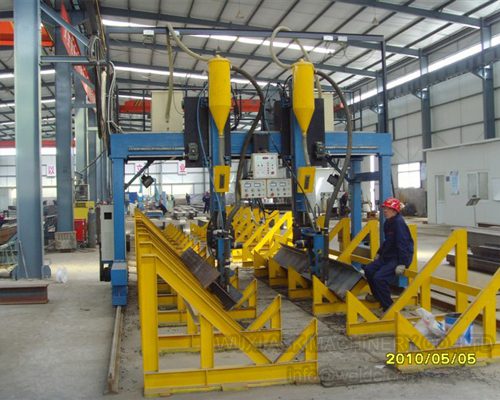
Welding positioner types directly shape production throughput and integration cost because each configuration imposes unique floor space, handling, and control requirements. After twelve years of configuring automated welding cells, I’ve found that the L-type positioner offers the best balance of cost, versatility, and integration simplicity for most medium-sized fabrication shops. But long or heavy workpieces demand a head and tail setup, while complex geometries requiring multi-axis coordination call for a 3-axis machine. Picking the right type early prevents costly rework and production delays.
How Do 3-Axis, L-Type, and Head & Tail Positioners Differ?
A welding positioner’s job is to rotate and tilt the workpiece so the torch can reach every joint in the flat position. The three main types achieve this differently.
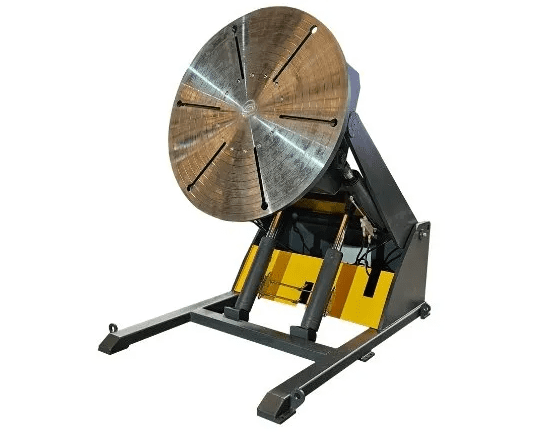
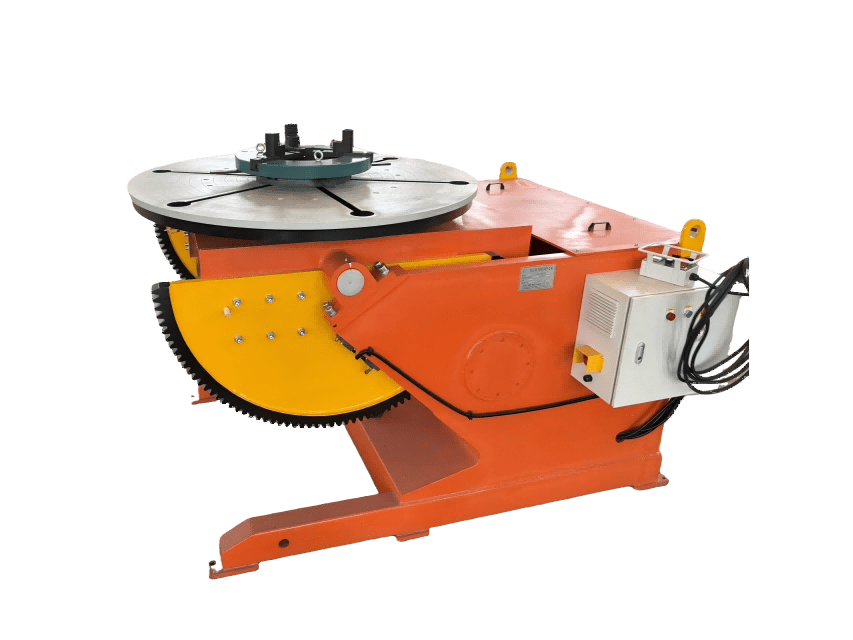
The L-type positioner has a tilting arm that moves the table from horizontal to vertical. Capacities typically start at a few hundred kilograms and go up to ten tons or more. It is compact, straightforward to operate, and handles plates, flanges, and small vessels well.
The head and tail positioner uses a powered headstock and an adjustable tailstock, with the workpiece suspended between them. This design excels with long cylindrical sections like pipe spools, wind tower segments, and pressure vessel shells, where capacities can exceed one hundred tons. Because the part must span the gap between head and tail, very short pieces are not suitable.
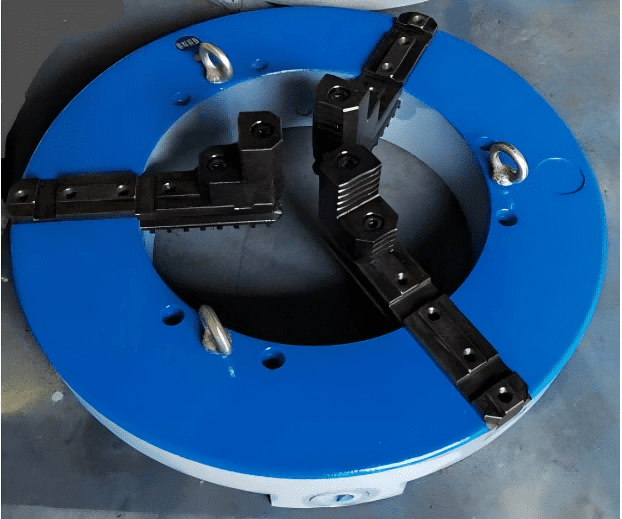
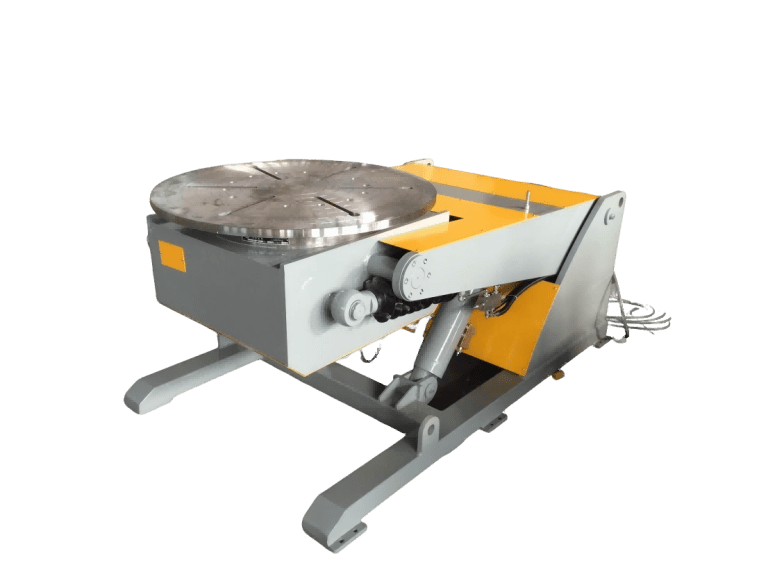
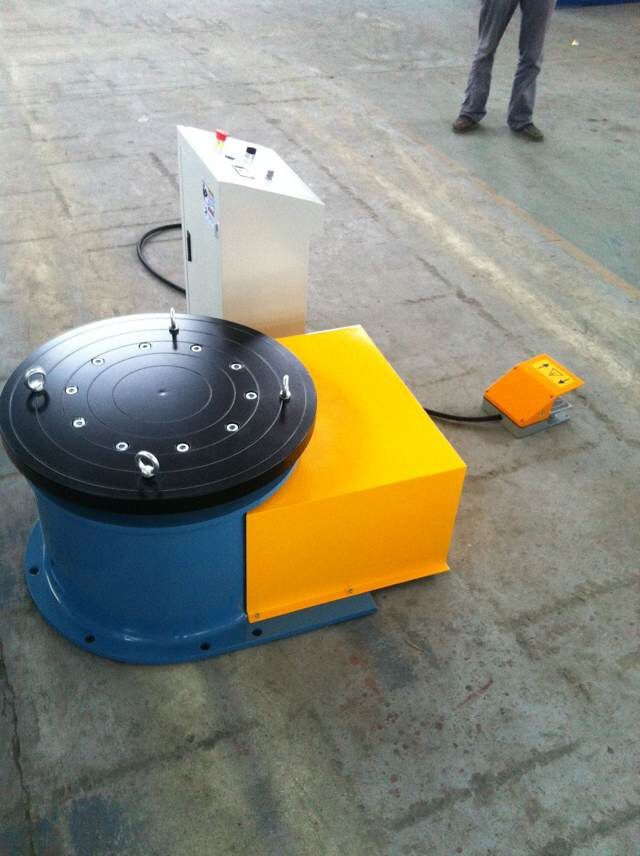
The 3-axis positioner adds a rotating table to the tilt and rotation axes, giving full orientation control. Hydraulic or servo-driven models tackle complex castings, fittings, and irregular weld paths. I’ve seen shops buy 3-axis machines for simple plate welding because the extra axis seemed “future-proof,” only to find the added programming complexity and maintenance cost never paid off.
| Feature | L-Type | Head & Tail | 3-Axis |
|---|---|---|---|
| Axes | 2 (tilt, rotation) | 1 or 2 (rotation, manual tailstock adjustment) | 3 (tilt, rotation, table rotation) |
| Typical Capacity | 0.5 – 10 tons | 5 – 200+ tons | 1 – 50 tons |
| Best for | Plates, flanges, small vessels | Long pipes, shafts, tank sections | Complex castings, multi-angle welds |
| Footprint | Compact | Requires longer floor space | Large, heavy |
| Complexity | Low | Medium | High |
What Key Factors Determine Your Positioner Selection?
Beyond part weight, four factors drive the final choice: load moment, workpiece length-to-weight ratio, required welding positions, and production cycle time.
Load capacity must account for the center of gravity offset as the part rotates and tilts. A five-ton rated positioner may only handle three tons when the workpiece is mounted off-center. Always specify the maximum overturning moment to the manufacturer.
Workpiece dimensions determine the type. Parts under two meters long but heavy usually suit an L-type. Over three meters, a head and tail eliminates the cantilever load and provides stable support.
The number of joints and access angles decides whether a 3-axis is justified. If all welds can be reached by tilting and rotating the main axis, the third axis adds unnecessary cost and programming.
Future projects matter too. I’ve seen shops upgrade within two years because they optimized for only one part family. A slightly higher capacity now often saves a second purchase later.
How Does Positioner Choice Impact Your Production Line Setup?
The positioner never works alone. In a production cell, it coordinates with a welding manipulator or rotator, fits within the shop layout, and must allow safe workpiece loading. I’ve seen integration issues delay commissioning by weeks.
Floor space is the first constraint. A head and tail positioner for a twelve-meter wind tower section needs a straight bay at least sixteen meters long, plus access for a manipulator. L-type units fit into tighter footprints but still require working clearance around the tilt arc.
Foundation requirements are often underestimated. Large 3-axis positioners weigh several tons and transmit dynamic loads during rotation. We always verify that the factory floor can handle both static and dynamic forces without vibration affecting weld quality.
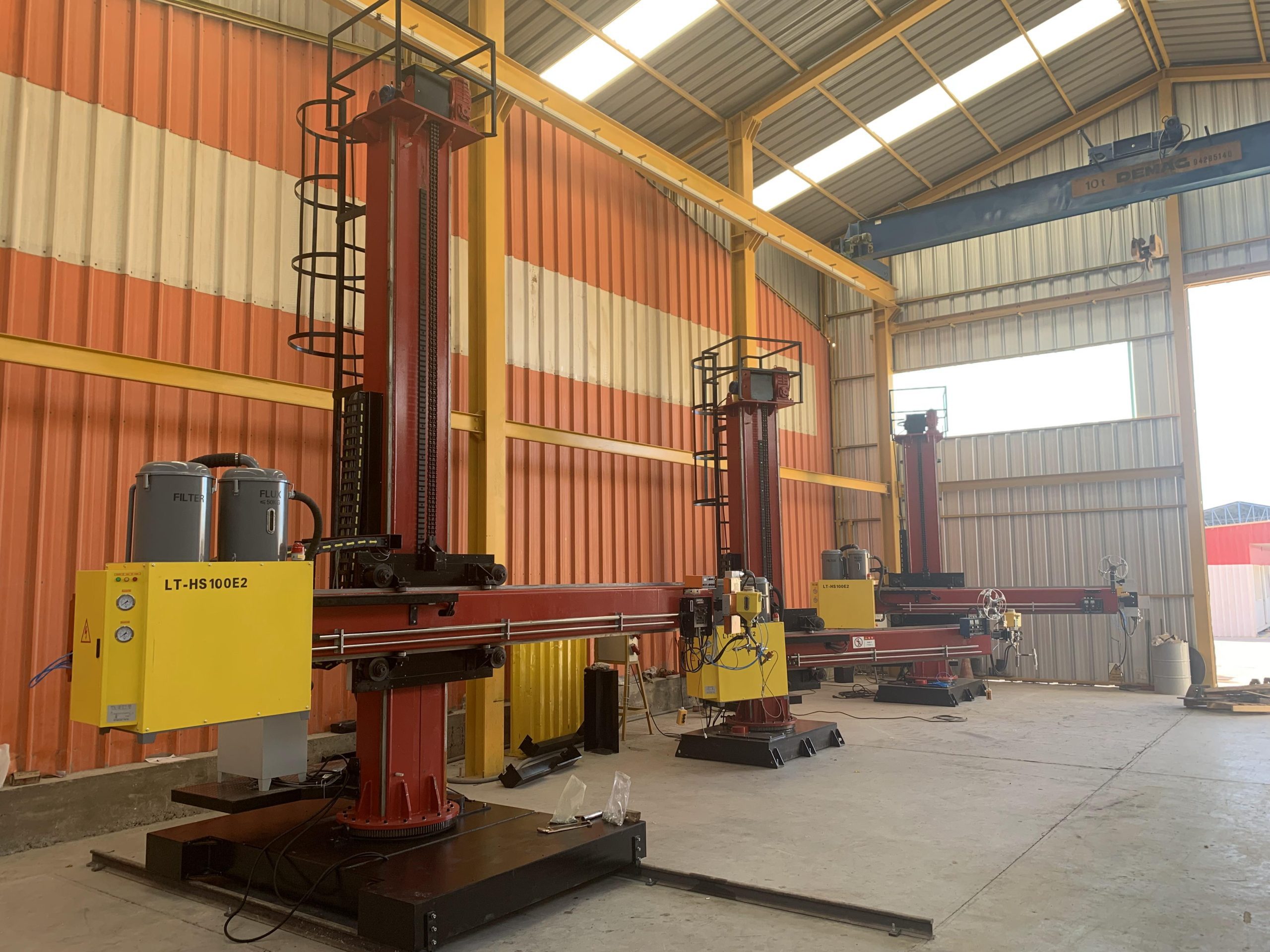
Interface with existing equipment: most modern positioners communicate with manipulators through standard industrial protocols, but matching controller brands and confirming accurate coordinated motion still requires engineering effort. Involving the positioner supplier early in the layout design avoids compatibility surprises later.
If your production line involves integrating the positioner with an existing manipulator or within a tight floor layout, confirm the foundation and control interface requirements before finalizing your BOM—reach out at [email protected].
What Are the Cost and ROI Implications of Each Type?
Price varies, but the real cost difference often hides in installation and long-term maintenance. A basic L-type positioner might start under ten thousand dollars. A heavy-duty 3-axis with hydraulic drives can exceed one hundred thousand.
Head and tail units sit in the middle price range, but their cost per meter of workpiece is often the lowest for long, repetitive production. The automation justification centers on throughput: a positioner that keeps the welder in the flat position and eliminates repositioning can increase arc-on time by thirty to fifty percent, directly boosting daily output.
Maintenance costs differ too. Hydraulic systems on many 3-axis machines need regular fluid changes and seal inspections. Servo-electric drives on modern L-type and head and tail positioners have lower maintenance but higher initial cost.
For shops investing in their first automated cell, I often suggest starting with an L-type positioner and a basic manipulator. This combination delivers the fastest payback and serves as a foundation for future expansion.
How to Make the Right Choice for Your Shop
The right positioner fits your part range, floor space, and budget—not the one with the most axes. After years on shop floors, I group decisions into three scenarios.
If you weld plates, flanges, and vessels under three meters in diameter, an L-type positioner will handle eighty percent of your work with minimal training and upkeep. It is the workhorse of the industry.
For structural fabricators handling long beams, pipes, or wind tower sections, the head and tail is non-negotiable. The support at both ends prevents distortion and lets you weld at high travel speeds with a manipulator.
Reserve 3-axis positioners for complex castings, fittings, and parts where the weld joint orientation changes in multiple planes during a single cycle. The added programming complexity only pays off when the alternative is manual repositioning that slows production to a crawl.
Whenever possible, run a test with your actual workpiece on the proposed positioner before purchasing. Many suppliers, including our team at WUXI ABK, can arrange demonstrations or provide video of similar configurations.
Getting Started with Your Welding Positioner Specification
Selecting the right welding positioner changes weld quality, throughput, and long-term equipment costs. A mistaken choice can lead to months of reconfiguration and lost production. Send your part drawings and production quantity to [email protected], and our engineering team will recommend the positioner type and capacity that matches your shop floor reality. You can also reach us at +86 13616174307.
Common Questions About Welding Positioner Types
Can a head and tail positioner handle short workpieces?
Generally no. The head and tail design requires a minimum workpiece length to span the distance between the two units. For parts under about 800 mm, an L-type or a turntable positioner works better. While some adjustable tailstocks can reduce the gap, the design remains optimized for cylindrical parts with length-to-diameter ratios above 2:1. In practice, if your product mix includes both short and long parts, you may need two different positioner types rather than trying to make one do everything.
What maintenance does a hydraulic 3-axis positioner need?
Hydraulic units need regular checks on fluid cleanliness, hose integrity, and cylinder seals. I recommend a quarterly inspection of the hydraulic power pack and annual replacement of filters and fluid. Ignoring seal wear can lead to drift during welding, compromising joint quality. Servo-electric models largely avoid these issues but need clean, stable power. Preventive maintenance is simpler and cheaper than fixing a cylinder that drifts during a production run.
Can I retrofit an existing positioner with a different chuck or fixture?
Yes, most positioners can accept different chucks if the interface plate dimensions and bolt pattern match. Changing the chuck affects the load moment, so you must verify that the positioner’s overturning capacity still covers the new setup. The manufacturer can usually confirm compatibility. Always request a load-moment recalculation when changing tooling to avoid overloading the drive.
How do I justify the cost of a positioner to management?
Focus on arc-on time improvement. A manual positioning setup often leaves welders waiting for part repositioning. By automating positioning, you can increase arc-on time from 25% to 45% or higher, essentially doubling the output per welder. This productivity gain typically recovers the equipment cost within twelve to eighteen months for single-shift operations. For a shop with three welders, that can mean adding the equivalent of a fourth without hiring.
Can I use one positioner for both pipe and structural steel?
Yes, but fixturing becomes the key. L-type positioners can handle plates and small pipes with the right chuck, but long structural beams require a head and tail. If your product mix includes both, consider an L-type for the majority and evaluate whether outsourcing the longest parts is more economical than buying two separate systems. Share your typical workpiece dimensions and we can confirm the best configuration for your shop.
If you’re interested, check out these related articles:
Shot Blasting Solutions for Steel Structure Surface Treatment
Offshore Wind Tower Fabrication: Key Equipment and Main Challenges
Adjustable Welding Rotator for Different Diameter Vessel Welding
L-Type Welding Positioners: Applications and Load Capacity Guide
Wind Tower Welding Lines: Designing for Peak Production