Electrostatic Welding: Process, Uses and Key Comparisons
Table of Contents
- What Is Electrostatic Welding in Heavy Fabrication?
- Electrostatic Welding vs. Electroslag Welding: The Real Comparison
- How Electroslag and Electrogas Welding Work
- Industrial Applications and Equipment Requirements
- Quality, Standards and Qualification
- Plan Your Heavy-Wall Welding Automation with ABK
- Frequently Asked Questions
- Is electrostatic welding a standard metal fabrication process?
- What is the difference between electrostatic welding and electroslag welding?
- Where are ESW and EGW used?
- Can electrostatic welding be automated?
- What information should I prepare before asking for welding equipment?
- References
Electrostatic welding is not a recognized production metal-joining process in the main industrial welding standards. ISO 4063 classifies arc and resistance welding processes and lists electroslag welding as process 72 and electrogas welding as process 73, but it does not use the term electrostatic welding [2]. AWS A3.0 similarly defines standard welding terms without a separate electrostatic welding process [1]. In heavy fabrication, the phrase is usually a search term or shop-floor shorthand for thick-plate vertical welding.
Outside structural work, electrostatic bonding exists in microelectronics and semiconductor packaging, but it is a different technology with different equipment and acceptance criteria. For procurement, RFQ, and production planning in metal fabrication, the practical question is whether the job needs electroslag welding, electrogas welding, or a conventional mechanized arc process.
What Is Electrostatic Welding in Heavy Fabrication?
For most fabricators, an inquiry about electrostatic welding should be translated into a specific vertical heavy-wall welding requirement. The two standard industrial processes that fit the intended capability are electroslag welding, usually called ESW, and electrogas welding, usually called EGW. Both are mechanized vertical-up processes designed for thick sections where a single pass can replace many manual or semi-automatic arc passes.
This matters because the wrong term can lead to the wrong equipment specification, the wrong welding procedure, and unnecessary qualification cost. Before buying equipment or writing an RFQ, it is useful to compare the actual processes and decide which one supports the joint geometry and production target.
Electrostatic Welding vs. Electroslag Welding: The Real Comparison
Because buyers often compare electrostatic welding with electroslag welding, the useful comparison is ESW versus EGW. ESW uses the resistance of a molten slag bath to melt the joint after arc initiation; the arc can be extinguished once the slag is established [1][2]. EGW remains an arc-based process, using a shielding gas and sometimes flux-cored wire while a mechanized carriage moves upward in a single pass [2].
| Feature | Electroslag Welding | Electrogas Welding |
|---|---|---|
| Heat source | Resistance heating of molten slag | Electric arc maintained during welding |
| Typical position | Vertical or near-vertical | Vertical or near-vertical |
| Shielding | Molten slag pool | Shielding gas, with slag from consumables |
| Common use | Thick structural and heavy process vessels | Storage tank vertical seams and shipbuilding |
| Automation | Mechanized vertical carriage required | Mechanized vertical carriage required |
In both cases, the machine must hold a vertical travel path with copper shoes or similar dams to contain the weld pool. The practical selection often comes down to material thickness, production volume, code requirements, and whether the joint can be positioned vertically.
How Electroslag and Electrogas Welding Work
ESW starts with arc ignition under granular flux. The arc melts flux into a conductive slag pool, and the current then travels through the slag. Resistance heating melts the filler wire and the base-metal edges. Copper shoes contain the weld metal while the carriage moves upward. With EGW, an arc continues to supply heat, and shielding gas plus slag formed by the consumable protect the weld [1][2]. Both processes can deposit the full joint thickness in a single vertical pass, which reduces multi-pass welding time on heavy sections.
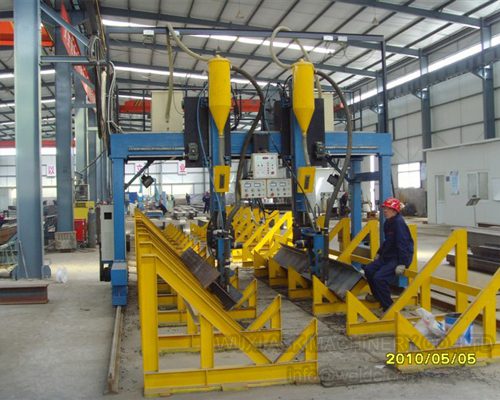
Because the vertical carriage, wire feed system, water cooling, and copper shoe guidance must hold alignment over long seam lengths, equipment selection is more specialized than a standard welding manipulator used for horizontal or circumferential welding. A stable vertical carriage matters for seam tracking and defect control.
Heat input control is also more demanding than in many conventional arc processes. If travel speed, current, or slag depth moves outside the qualified range, defects such as lack of fusion, slag inclusions, or excessive grain growth can occur [4].
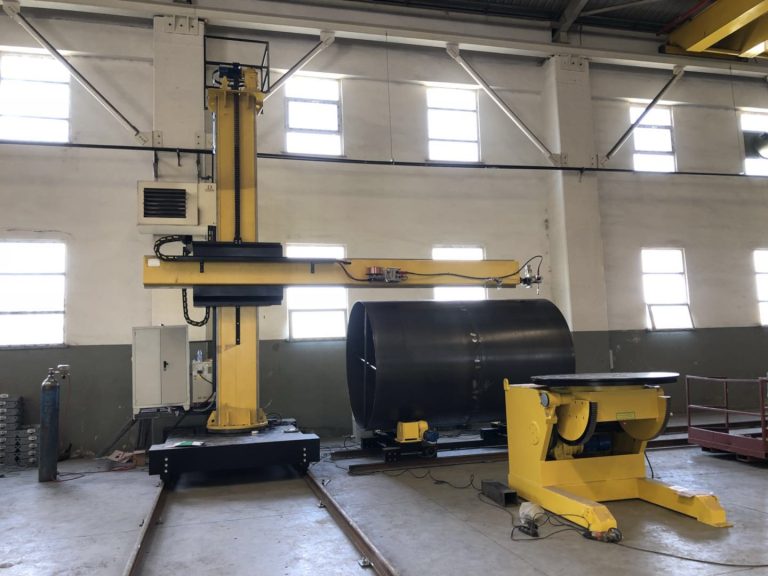
Long vertical seams require a rigid column-and-boom setup or a dedicated vertical carriage rather than a conventional manual station. <Column and Boom Manipulators for Large Vessel Precision Welding> covers reach, rigidity, and longitudinal seam control for vessel work.
Industrial Applications and Equipment Requirements
Electroslag and electrogas welding are used mainly for thick-wall joints in vertical positions. Typical jobs include storage tank shell vertical seams, pressure-vessel longitudinal welds where the shell can be oriented for vertical welding, blast furnace and heavy process-vessel shells, and certain heavy structural box sections. The applications are often driven by weld metal volume: when a joint would require many arc passes, a single vertical automated pass can improve throughput.
Storage tank projects usually combine vertical seam welding with tank welding equipment for shell rotation, fit-up, and circumferential welding.

Fit-up quality has an outsized effect. Joint gap, alignment, and copper shoe placement need to be controlled before welding starts. A practical planning sequence is to confirm the vertical position, select the carriage and control type, then qualify the procedure before production.
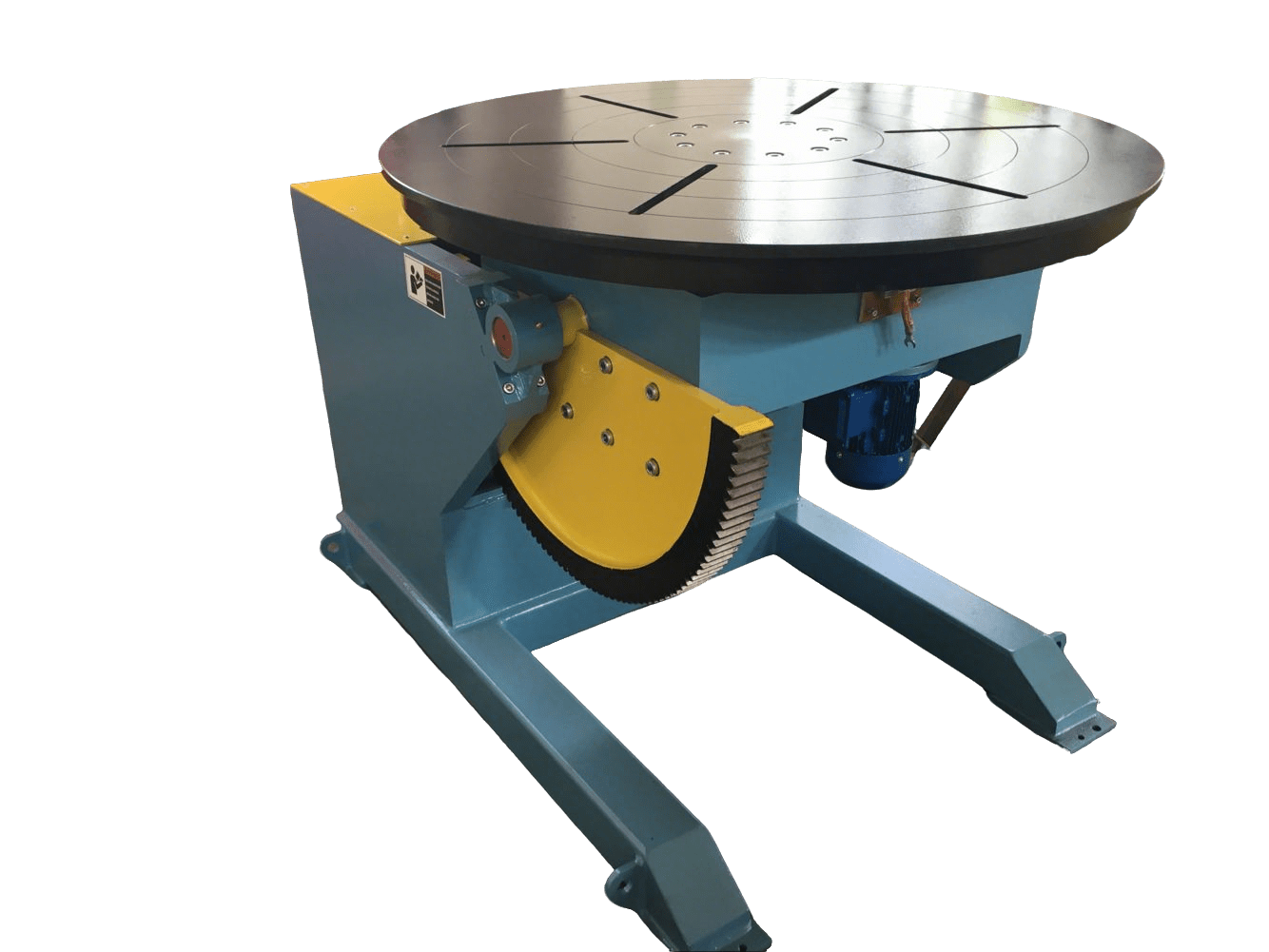
Once the process is selected, pressure-vessel work still depends on positioner compatibility, load capacity, and joint access. <Welding Positioner Selection for Pressure Vessels: Key Best Practices> covers what to check before equipment purchase.
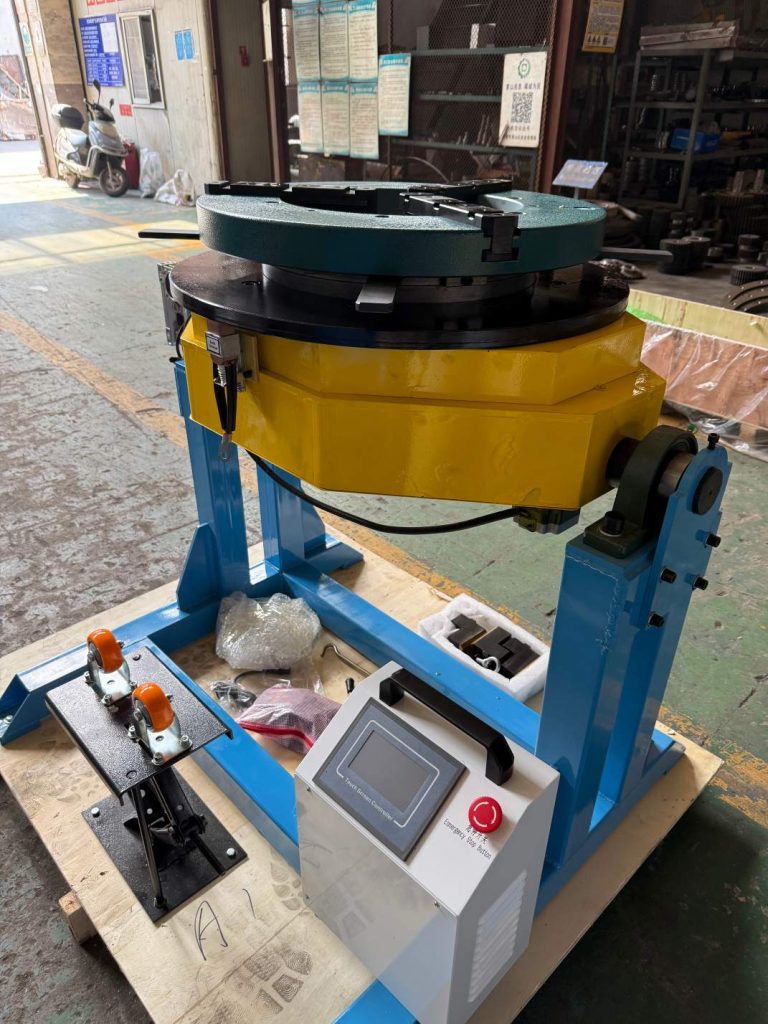
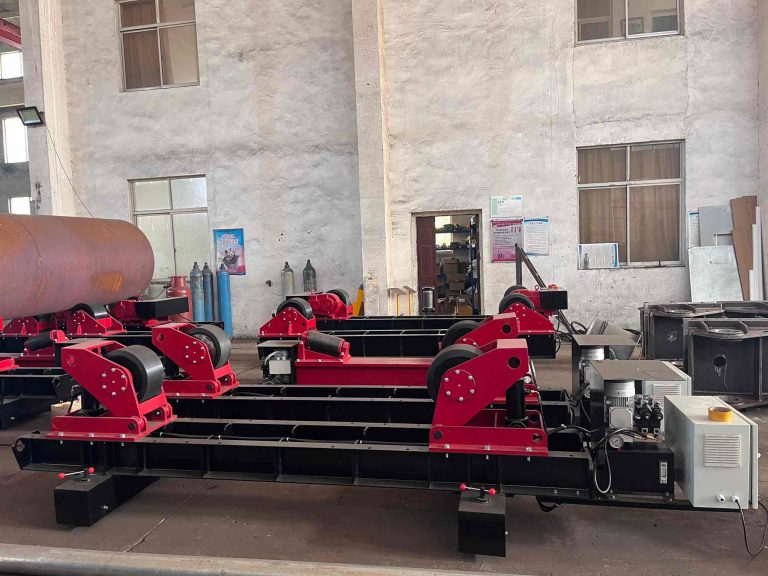
For example, a fabricator planning long shell seams should specify carriage travel length, cooling-water availability, and the operator interface before ordering. For cylindrical work, a welding positioner or welding rotator may handle horizontal and circumferential seams while the vertical process is used only for the upward joints.
Need to match vertical welding equipment to your seam length, plate thickness, and production target? Contact [email protected] or call +86 13616174307. In your first message, include material grade, thickness, seam length, and whether the joint will be welded in the shop or in the field.
Quality, Standards and Qualification
Because ESW and EGW can generate high heat input and slower cooling rates, procedure qualification and post-weld heat treatment must follow the applicable code. For pressure-retaining equipment, ASME BPVC Section IX governs welding procedure and performance qualification [3]. The selected process must be identified in the procedure qualification record using the correct process designation, not the colloquial term.
Before production, teams should verify base-metal specification, filler metal compatibility, joint preparation, travel speed limits, and required PWHT. Inspection often includes ultrasonic testing or radiographic testing depending on the joint configuration and code. The key point is that qualification proves the selected vertical process, whether ESW or EGW, not a generic electrostatic welding method.
Automation decisions for heavy-wall welding should be justified with a clear payback path. <Evaluate ROI of Welding Automation Business Investment> covers cost categories, utilization assumptions, and the CFO conversation.
Plan Your Heavy-Wall Welding Automation with ABK
WUXI ABK MACHINERY CO., LTD supports fabricators with welding manipulators, positioners, rotators, tank welding equipment, and custom automation for heavy plate and vessel production. Our engineering team works from joint details, workpiece data, and production targets to configure a system rather than force a standard package into the job.
Send your project data to [email protected] or call +86 13616174307. Include plate or shell thickness, material grade, vertical seam length, number of workpieces per shift, and any code requirements. A clear inquiry list shortens the proposal loop and leads to an accurate equipment and automation recommendation.
Frequently Asked Questions
Is electrostatic welding a standard metal fabrication process?
No. Main welding standards such as ISO 4063 and AWS A3.0 do not list electrostatic welding as a production metal welding process [1][2]. In practice, the requirement usually maps to electroslag or electrogas welding.
What is the difference between electrostatic welding and electroslag welding?
Electroslag welding uses resistance heating from a molten slag pool after arc initiation, with a vertical mechanized carriage and water-cooled copper shoes [1][2]. The term electrostatic welding is not defined as the same metal process. If an inquiry uses that term, clarify whether the joint requires ESW, EGW, or conventional arc welding.
Where are ESW and EGW used?
Common applications include storage tank vertical shell seams, thick pressure-vessel longitudinal joints, blast furnace and heavy process-vessel shells, and certain heavy structural box sections where the joint can be positioned vertical.
Can electrostatic welding be automated?
The production processes usually meant by the phrase, ESW and EGW, are mechanized rather than manual. The vertical carriage, wire feed, welding parameter control, and seam guidance can be automated and integrated with upstream fit-up and downstream inspection.
What information should I prepare before asking for welding equipment?
Prepare material grade, joint thickness, seam length and position, production volume, site conditions, and the applicable code. That information helps the supplier recommend the correct vertical welding system, manipulator, positioner, or rotator.
References
[1] American Welding Society, AWS A3.0M/A3.0:2020, Standard Welding Terms and Definitions, AWS, Miami, FL, 2020.
[2] International Organization for Standardization, ISO 4063:2023, Welding, brazing, soldering and cutting — Nomenclature of processes and reference numbers, ISO, Geneva, 2023.
[3] American Society of Mechanical Engineers, ASME BPVC Section IX, Qualification Standard for Welding, Brazing, and Fusing Procedures, ASME, New York, NY, 2023.
[4] TWI Ltd, What is Electroslag Welding? — Frequently Asked Questions, TWI Global, accessed 2026.
If you’re interested, check out these related articles:
Automatic Girth Welding Machines: Boost Efficiency for Pipeline Projects
Achieve Production Success With One-Stop Welding Automation
One-Stop Welding Automation: Build a Complete Production Line Setup
Welding Positioner Selection for Pressure Vessels: Key Best Practices