Shot Blasting Solutions for Steel Structure Surface Treatment
Table of Contents
Shot blasting for steel structures is one of those processes where the difference between “good enough” and “done right” shows up years later, usually as coating failure on a bridge deck or premature rust on offshore platform members. The mechanics are straightforward: high-velocity abrasive media strips contaminants and creates a surface profile that coatings can actually grip. What separates reliable preparation from the kind that leads to warranty claims is understanding how media selection, equipment choice, and surface standards interact for your specific steel grade and service environment.
How Shot Blasting Actually Works on Structural Steel
The process accelerates metallic shot or grit toward the steel surface at speeds high enough to remove mill scale, rust, and old coatings in a single pass. What remains is a uniformly roughened surface, the anchor profile, that gives paint something to mechanically lock onto. Without this profile, coatings sit on top of the steel rather than bonding to it.
The impact does more than clean. Each particle strike induces compressive stress in the surface layer, which improves fatigue resistance. For structural members under cyclic loading, this matters. I have seen beams pass fatigue testing after shot blasting that would have failed with the same coating applied over wire-brushed surfaces.
Inconsistent preparation is where most coating failures originate. A surface that looks clean to the eye may still have invisible mill scale or an uneven profile depth. When the coating goes on, adhesion varies across the surface. Six months later, you are chasing delamination spots that started as preparation defects.
Which Machine Type Fits Your Steel Fabrication Setup
Equipment selection comes down to what you are blasting and how much of it. The two main categories, centrifugal wheel machines and air blast systems, solve different problems.
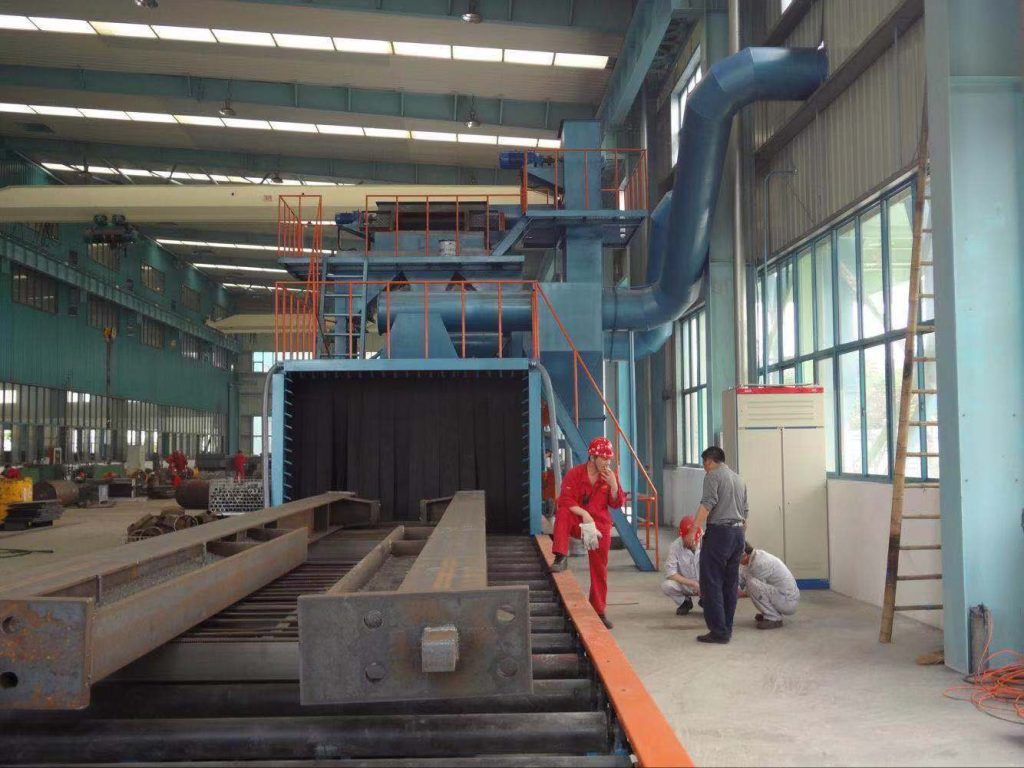
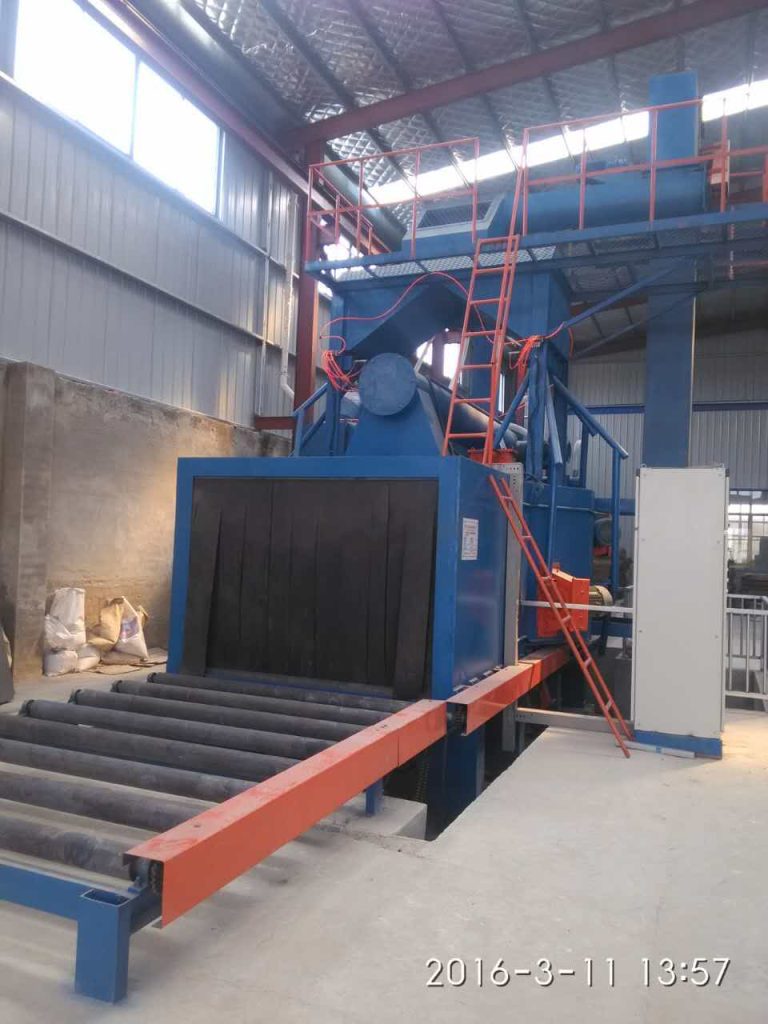
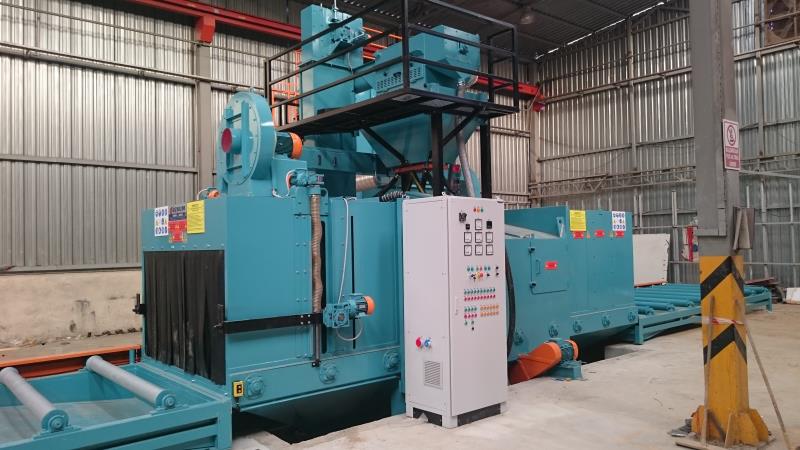
Centrifugal wheel blasters use a spinning wheel to throw abrasive at the workpiece. They process high volumes efficiently: plates, beams, pipes moving through on conveyors. If your shop runs continuous production of standard structural sections, this is the equipment that keeps pace. Energy costs per square meter of treated surface run lower than air systems because you are not paying for compressed air.
Air blast systems propel media with compressed air, giving operators precise control over where the abrasive hits. Complex welded assemblies, repair work on installed structures, or anything with geometry that would shadow parts of the surface from a fixed wheel position, these situations call for air blast. The tradeoff is slower throughput and higher operating cost per unit area.
| Machine Type | Propulsion Method | Best Application | Primary Advantage |
|---|---|---|---|
| Wheel Blast Machine | Centrifugal Wheel | Plates, beams, pipes, production lines | High throughput, lower energy cost |
| Air Blast Cabinet | Compressed Air | Smaller parts, batch work, delicate items | Contained environment, precise control |
| Air Blast Room | Compressed Air | Large assemblies, manual operation | Handles complex geometry, operator access |
WUXI ABK builds wheel blast and air blast equipment sized for structural steel fabrication. The machines are designed for the throughput and durability that production environments demand.
What Proper Surface Preparation Actually Delivers
The immediate payoff is coating adhesion that holds. Mill scale looks stable but it is not bonded to the base steel. Paint applied over mill scale eventually lifts when the scale separates. Shot blasting removes the scale and creates a profile, typically 40 to 100 microns deep depending on specification, that the coating fills and grips.
One project stands out. A fabricator was losing money on rework because coatings on marine-grade beams kept delaminating during shipping. The surface looked prepared, but profile measurements showed inconsistent depth, some areas barely reaching 25 microns. We specified steel grit at a controlled operating mix and ran the beams through a continuous pass-through system calibrated for SA 2.5. Accelerated weathering tests on the reworked beams showed coating adhesion lasting more than 50% longer than the original preparation method. The fabricator stopped eating warranty claims.
Corrosion protection follows from adhesion. A coating that stays bonded acts as a continuous barrier. A coating with micro-delaminations lets moisture and chlorides reach the steel. For structures in aggressive environments, the difference between a 15-year and a 30-year service life often traces back to how the surface was prepared before the first coat went on.
Matching Abrasive Media to Your Surface Specification
Media selection is not arbitrary. The shape, hardness, and size of the abrasive determine the profile it creates and how aggressively it removes material.
Steel grit particles are angular. They cut into the surface and leave a sharp, jagged profile. This is what you want when the coating specification calls for maximum mechanical adhesion, typically for epoxy or polyurethane systems going into corrosive service. Steel shot is spherical. It peens the surface, leaving a smoother profile with rounded valleys. Shot works for cleaning and descaling where a gentler finish is acceptable or where the peening effect itself is the goal.
Cut wire falls between the two. It starts cylindrical and breaks down into angular fragments during use. It is aggressive and durable, often chosen for heavy rust removal or when the operating mix needs to maintain consistent cutting action over long runs. Glass beads are for situations where you need to clean without significant material removal or profile creation, typically finishing work rather than coating preparation.
| Abrasive Media | Particle Shape | Profile Character | Aggressiveness | Typical Application |
|---|---|---|---|---|
| Steel Shot | Spherical | Peened, smooth | Medium | Cleaning, descaling, peening |
| Steel Grit | Angular | Rough, angular | High | Coating preparation, heavy rust |
| Cut Wire | Cylindrical | Angular, uniform | High | Heavy-duty cleaning, fatigue resistance |
| Glass Beads | Spherical | Smooth, matte | Low | Delicate cleaning, aesthetic finishes |
If you are specifying equipment for a new line or troubleshooting adhesion problems on an existing one, WUXI ABK’s technical team can help match media type and operating parameters to your surface standard and steel grade.
Keeping Equipment Running and Operators Safe
Shot blasting machines are not maintenance-free. Blast wheels wear. Liners erode. Seals degrade. The question is whether you catch these issues during scheduled inspections or discover them when the machine stops mid-shift.
Wear parts have predictable lifespans based on operating hours and media type. Steel grit wears components faster than steel shot. Harder abrasives accelerate wear on everything they contact. Following the manufacturer’s inspection intervals and replacement schedules prevents the kind of unplanned downtime that disrupts production schedules and delivery commitments.
Dust collection is not optional. The process generates fine particulate that is both a health hazard and an explosion risk in sufficient concentration. Filters need regular inspection and replacement. Ductwork needs periodic cleaning. Compliance with local air quality regulations requires documentation that the system is maintained and operating within design parameters.
Operator safety starts with training. The hazards are real: high-velocity abrasive, confined spaces in blast rooms, noise levels that cause hearing damage without protection. PPE requirements exist because the injuries they prevent are serious. WUXI ABK designs equipment with maintenance access and safety interlocks that support safe operation, but the equipment only protects operators who follow the procedures.
Frequently Asked Questions
How often should shot blasting machine parts be replaced?
Replacement intervals depend on operating hours, media type, and the specific component. Blast wheels on high-volume lines running steel grit may need replacement every few hundred hours. Liners last longer but still wear. The practical answer is to inspect at the intervals your manufacturer specifies and replace based on measured wear, not calendar time. Waiting until something fails costs more in downtime than scheduled replacement costs in parts.
Can shot blasting remove all types of contaminants from steel?
It handles rust, mill scale, weld spatter, and most old coatings effectively. What it does not remove well is oil, grease, or chemical contamination. These need solvent cleaning or alkaline wash before blasting. If you blast over oil, you just drive the contamination into the profile where it will cause adhesion failure later.
What are the environmental considerations for operating a shot blasting machine?
Modern equipment includes abrasive recovery systems that recirculate media and dust collection that captures fine particulate. Spent media and collected dust require disposal according to local regulations, which vary by jurisdiction. The environmental footprint is manageable with proper equipment and procedures, but it requires attention to filter maintenance, waste handling, and documentation. If your project involves coatings that contain lead or other hazardous materials, the waste stream from removing them has additional handling requirements.
For fabricators dealing with coating adhesion problems or planning surface preparation capacity for structural steel projects, WUXI ABK provides shot blasting equipment and technical support matched to production requirements. Contact [email protected] or call +86 13616174307 to discuss your specific application.
If you’re interested, check out these related articles:
Welding Rotator vs Manual Pipe Welding: Productivity & Cost Efficiency