Bevel End Welding: Basics, Benefits & Applications
Table of Contents
- What Is a Bevel End?
- Common Bevel End Types and Geometry
- Benefits of Proper Bevel End Preparation
- Industrial Applications of Bevel Ends
- Bevel End Preparation Methods
- Common Bevel End Defects and How to Avoid Them
- Get Engineering Support for Bevel End Welding
- FAQ: Bevel End Welding
- What is the difference between a bevel end and a plain end?
- What bevel angle is most common for pipe welding?
- Does a bevel end always require a root face?
- How is bevel end quality checked before welding?
- Can bevel ends be produced by plasma or flame cutting?
- References
Bevel end preparation is the controlled removal of material at the edge of a pipe, tube, or plate to create an angled joint for welding. The bevel gives the welding arc access to the root of the joint and helps produce a full-penetration, code-compliant weld. In heavy fabrication, bevel ends appear in pipeline girth welds, pressure vessel shells, boiler tube connections, and structural members. ASME B16.25 defines standard buttwelding end geometry for pipe connections [1].
What Is a Bevel End?
A bevel end is not the weld itself; it is the preparation that creates a deliberate groove between two workpieces. AWS A3.0M/A3.0 describes a bevel as an angular edge preparation [2]. ISO 9692-1 provides common groove preparations for arc welding and related processes [3]. The bevel angle, root face, and root opening together control heat input, deposition volume, and joint access. Without a bevel, thicker sections are more likely to suffer lack of fusion and are harder to inspect.
Common Bevel End Types and Geometry
Most industrial bevel ends fall into a small number of standardized groove shapes. V-bevels are the most widely used for pipe and plate. Single V-groove bevels typically use a 30° to 37.5° bevel angle and a controlled root face, with exact values depending on thickness and welding standard [1][3]. J-bevel and U-bevel ends use a curved edge preparation that reduces weld metal volume compared with a V-bevel, which matters on thick-wall pressure vessel and boiler components [3]. Compound bevels combine angles or straight and curved sections for heavy-wall or transition joints.
Benefits of Proper Bevel End Preparation
Correct bevel end geometry delivers more than a clean edge. Full joint penetration becomes achievable without excessive heat input. A consistent bevel angle and root face help keep the root pass stable and reduce cut-out and repair work. Lower weld metal volume, especially with J or U preparations, reduces filler material consumption and heat-affected zone size. Dimensional control from beveling also improves fit-up repeatability when pipes or vessels are rotated on welding positioners.
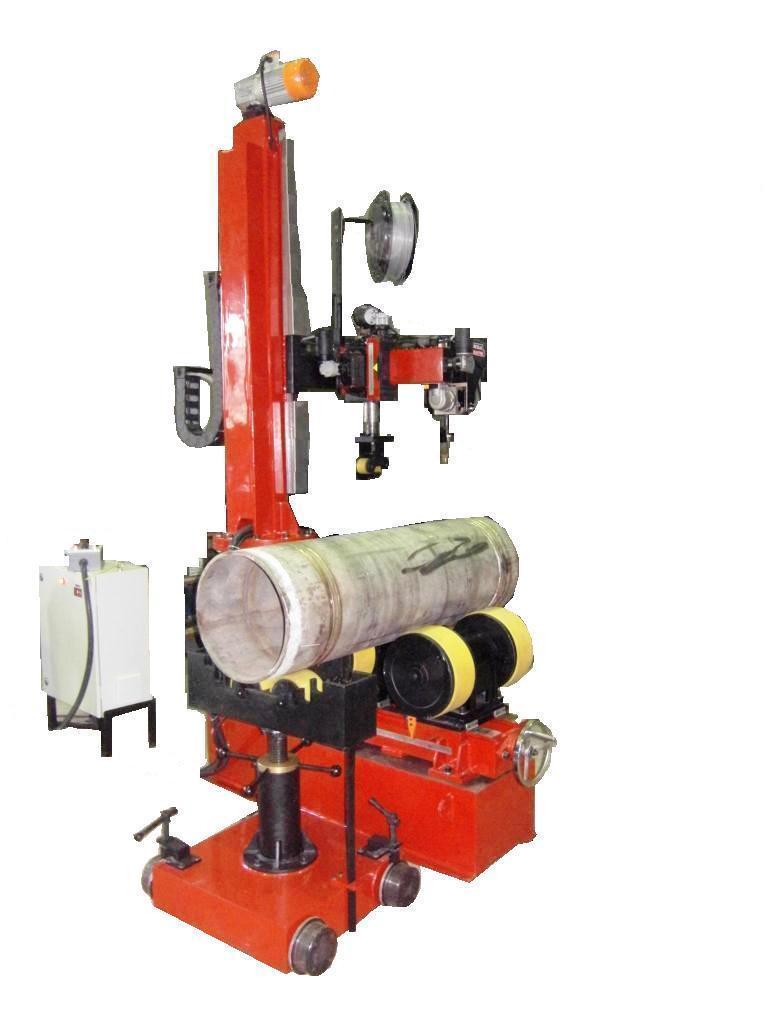
However, benefits only hold when preparation is consistent. A bevel that varies around the circumference changes root opening and can produce uneven root pass quality. That is why production shops often pair bevel machining with fit-up rotators and positioners that stabilize alignment before welding.
Selecting the right bevel preparation is only one part of the welding cell. If your team is planning pipe or vessel welding with beveled ends, discussing positioning and fit-up early prevents rework. Contact an application engineer at [email protected] or +86 13616174307 with your pipe diameter, wall thickness, and bevel details to get a practical equipment recommendation.
Industrial Applications of Bevel Ends
Bevel ends are standard in every weld-heavy industry. Pipeline and process piping built to ASME B31.3 commonly require full-penetration groove welds at butt joints, making bevel end preparation a baseline requirement [4]. Pressure vessels, storage tanks, boiler headers, and wind tower sections all use beveled edges for longitudinal and girth seams. In structural fabrication, beveled edges support complete joint penetration where members carry high cyclic or seismic loads.
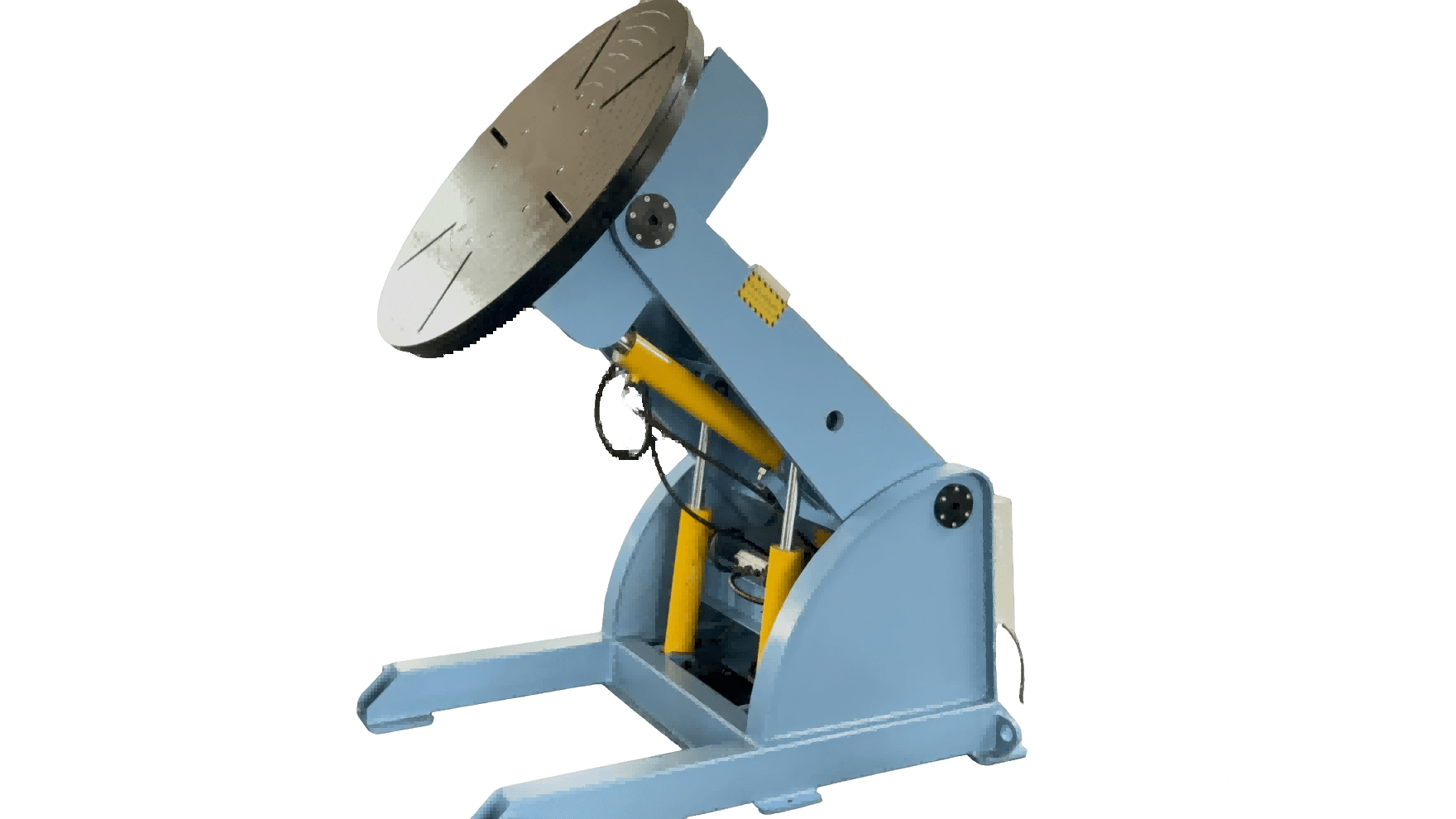
Pressure vessel joints often combine bevel ends with heavy shell sections that must be positioned accurately for root pass and fill passes. <Welding Positioner Selection for Pressure Vessels: Key Best Practices> covers capacity, tilt, and configuration choices for vessel welding.
Bevel End Preparation Methods
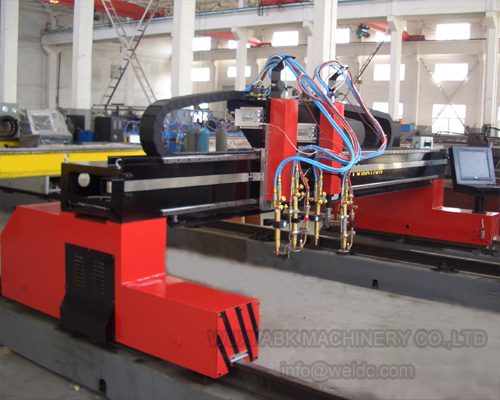
Bevel ends are produced by machining, grinding, flame cutting, plasma cutting, or CNC cutting, depending on thickness, material, and edge quality requirements. Machined bevels offer the tightest tolerance control and are preferred for high-alloy and pressure part work. Thermal cutting is faster for large plate but requires a subsequent cleaning or light grinding step to remove oxide and hard edges. CNC cutting systems can generate repeatable bevel angles on plate components, reducing manual grinding and improving downstream fit-up.

Thermal beveling on heavy plate must balance speed with edge quality and dimensional repeatability. <CNC Flame Cutting: Precision Cutting for Heavy Plate Fabrication> covers precision cutting for plate parts that feed directly into welding and fit-up.
Common Bevel End Defects and How to Avoid Them
Poor bevel end preparation shows up quickly in weld quality. Uneven root face, incorrect bevel angle, excessive root opening, surface oxidation, and out-of-round pipe ends are common issues. ISO 5817 defines quality levels for fusion-welded joints in steel, including acceptable imperfection limits for incomplete penetration and root concavity [5]. Maintaining consistent preparation, measuring root face and angle before fit-up, and using rotation equipment to keep the joint accessible during welding all reduce defect risk.
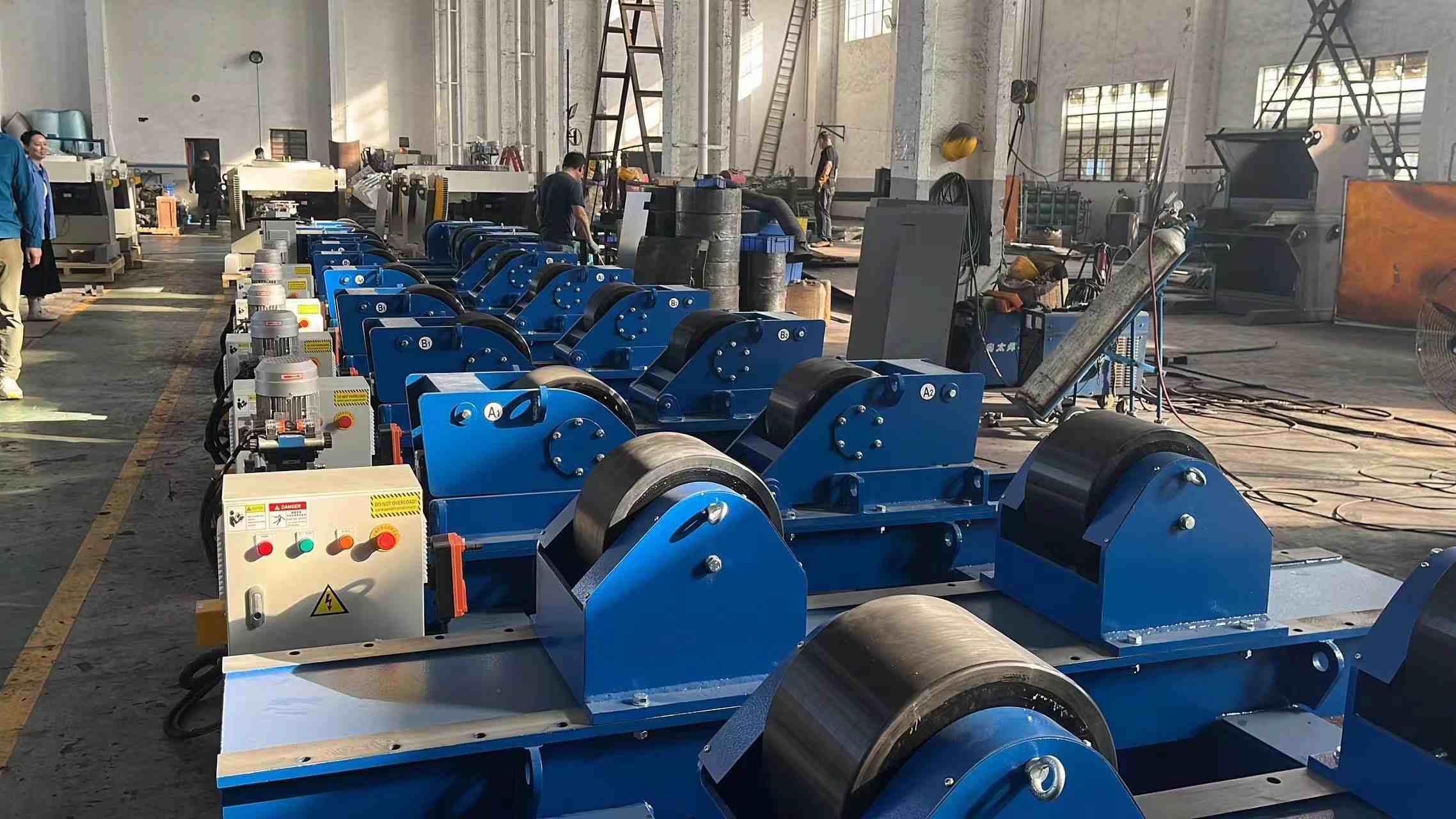
Vessel alignment after bevel preparation is a major source of rework when shells are not stabilized before tacking. <Fit-Up Rotator for Accurate Vessel Alignment & Stable Welding> covers fit-up rotators that hold cylindrical sections during tacking and root pass welding.
Get Engineering Support for Bevel End Welding
At WUXI ABK MACHINERY CO., LTD, we support industrial fabricators with welding positioners, rotators, fit-up equipment, and CNC cutting systems that keep bevel end joints aligned and accessible. Contact [email protected] or +86 13616174307 with your pipe diameter, wall thickness, material, and bevel geometry. Our engineering team will recommend equipment for repeatable fit-up and full-penetration welding.
FAQ: Bevel End Welding
What is the difference between a bevel end and a plain end?
A plain end is cut square and has no angular preparation; a bevel end is machined, ground, or thermally cut to an angle for full-penetration welding.
What bevel angle is most common for pipe welding?
Single V-groove pipe bevels often use 30° to 37.5°, with exact geometry governed by standards such as ASME B16.25 and ISO 9692-1. Always verify against the governing specification.
Does a bevel end always require a root face?
Not always. Thin-wall pipe may use a feather edge without a root face, while thicker sections use a controlled root face to prevent burn-through and support the root pass.
How is bevel end quality checked before welding?
Check bevel angle, root face dimension, root opening, surface condition, and roundness with weld gauges or templates. Production shops may also use fit-up rotators to verify alignment before tacking.
Can bevel ends be produced by plasma or flame cutting?
Yes. Thermal cutting is common for heavy plate, but machined or ground finishing may still be needed to meet edge tolerance and cleanliness.
References
[1] ASME B16.25, Buttwelding Ends, The American Society of Mechanical Engineers.
[2] AWS A3.0M/A3.0:2020, Standard Welding Terms and Definitions, American Welding Society.
[3] ISO 9692-1:2013, Welding and allied processes — Recommendations for joint preparation — Part 1: Manual metal arc welding, gas-shielded metal arc welding, gas welding, TIG welding and beam welding of steels, International Organization for Standardization.
[4] ASME B31.3-2020, Process Piping, The American Society of Mechanical Engineers.
[5] ISO 5817:2014, Welding — Fusion-welded joints in steel, nickel, titanium and their alloys (beam welding excluded) — Quality levels for imperfections, International Organization for Standardization.
If you’re interested, check out these related articles:
Welding Positioner Selection for Pressure Vessels: Key Best Practices
Fit-Up Rotator for Accurate Vessel Alignment & Stable Welding
Tube to Tube Automatic Welding for Boiler Header Joints
Pipe Welding Rotator vs Manual Welding | Productivity and Cost Comparison