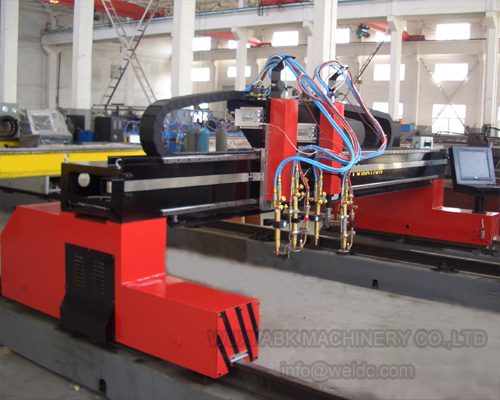
ESW Welding Explained: Uses, Types, and Practical Tips
Table of Contents
- What Is Electroslag Welding?
- How the ESW Process Works
- ESW Types and Process Variations
- Main Uses in Heavy Fabrication
- Advantages and Tradeoffs
- Practical ESW Welding Tips
- Work With ABK on ESW-Related Welding Automation
- FAQ
- Is ESW the same as electrogas welding?
- What thickness is ESW best suited for?
- What materials can be electroslag welded?
- What are the main inspection concerns after ESW?
- Does ESW require special operator training?
- References
ESW welding, or electroslag welding, is a high-deposition process developed for thick vertical joints. Instead of relying on an open arc, it uses a pool of molten, electrically conductive slag to melt filler wire and base metal. That lets a heavy joint be filled in one continuous pass or a small number of passes rather than dozens of conventional passes. ESW is therefore most useful for pressure vessels, storage tanks, heavy machine frames, and structural steel where vertical seams control the schedule. The process is not a universal replacement for arc welding. It has a narrow sweet spot, but within that sweet spot it can cut weld time and reduce some of the heat cycles and interpass work associated with heavy multi-pass welding.
What Is Electroslag Welding?
Electroslag welding is a process that joins metal using a molten slag bath instead of relying on an open arc after startup. In the American Welding Society classification, ESW is grouped with processes in which the molten slag carries the welding current and melts the filler metal and the joint faces while the slag shields the weld pool [1]. The workpieces are set vertically, usually with a square butt joint and a controlled root gap. Water-cooled copper shoes form the front and back of the weld cavity, contain the slag and metal, and move upward as the weld progresses.
The weld starts with an arc, then transitions to the slag bath as soon as enough molten slag has been formed. During steady operation, there is no visible arc. The operator monitors slag depth, voltage, wire feed, and shoe travel instead. That difference is important because ESW is often confused with electrogas welding. Electrogas welding also runs vertically and uses copper shoes, but it maintains an arc under gas shielding rather than running on a molten slag bath.
How the ESW Process Works
The process starts with starting tabs or a run-on block at the bottom of the joint. The wire feeds into the gap from above, current flows through the slag, and resistance heating melts the filler wire and the parent plate edges. The molten metal collects below the slag and solidifies behind the rising copper shoes. Because the weld progresses upward in one pass or only a few passes, the equipment must hold the joint opening consistent for the full seam height.
The high deposition rate comes from the large volume of slag and the continuous wire feed. It is not achieved by forcing a very fast travel speed, but by feeding enough filler to fill a thick joint in a controlled vertical progression. A key control point is the depth of the slag layer. Too little slag can cause arc break-through, while too much can produce an unstable pool or leave slag trapped in the weld. Operators also verify that both copper shoes stay aligned with the joint and that cooling water keeps the shoes from overheating.
ESW Types and Process Variations
ESW variants are not completely separate processes. They are equipment and setup choices that change how the electrode is fed, how the slag is confined, or how much weld metal is deposited. The following table summarizes the common forms.
| Variant | How it works | Typical use | Main limitation |
|---|---|---|---|
| Conventional wire-fed ESW | A wire electrode feeds into a molten slag bath between traveling copper shoes | Straight vertical seams in thick steel plate | Best suited to regular joint profiles and stable vertical travel |
| Consumable-guide ESW | A guide tube carries current and melts into the weld as the joint fills | Very thick or variable-section vertical joints | Guide handling and fit-up require more attention |
| Multi-wire ESW | Two or more wires feed into one slag bath to increase deposition | Long heavy seams with high fill volume | Higher equipment complexity and setup time |
| Narrow-groove ESW | A reduced joint opening and special shoe arrangement limit the amount of weld metal | Heavy wall joints where heat input or material volume matters | Requires precise preparation and monitoring |
Conventional wire-fed ESW remains the baseline for straight vertical seams. Consumable-guide ESW is useful for very thick sections because part of the guide melts into the joint, which reduces the demand for a copper shoe to travel the entire height. Multi-wire systems increase output for long production runs. Narrow-groove ESW can lower weld metal consumption and total heat input, but the fit-up window is tighter.
Main Uses in Heavy Fabrication
ESW is most common where vertical seams dominate and the plate is too heavy for efficient manual or semi-automatic multi-pass welding. Typical applications include pressure vessel shell seams, storage tank shell welds, heavy machine frames, press bases, bridge splice plates, and thick-wall structural columns.
The process is not the same as submerged arc welding, which uses a granular flux and a continuous arc under a flux blanket. Some shops operate both systems. ESW may handle certain vertical shop seams, while submerged arc welding handles rotating girth welds or flat-position joints with a different procedure.
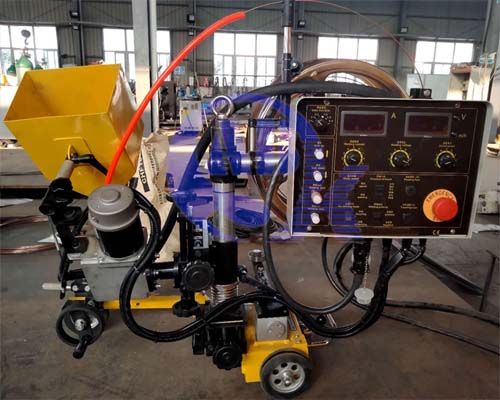
For tank construction, ESW can be one station among several. Positioning and seam access still determine whether the total welding line meets the required output. In the same shop, automatic girth welding equipment may handle rotating shell seams that ESW cannot.
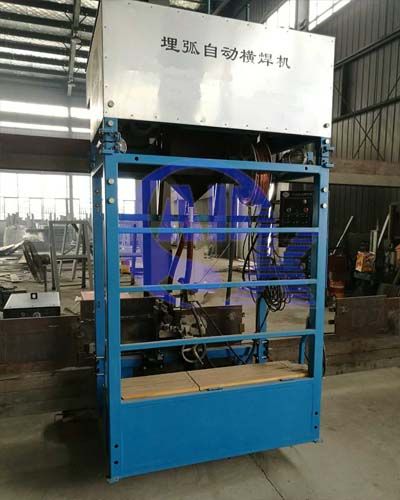
Electroslag welding works well on vertical tank seams, but surrounding positioning still determines total productivity. <Welding Manipulators for Storage Tanks: Girth and Seam Automation> covers how coordinated manipulators automate girth and seam welding in tank fabrication.
Advantages and Tradeoffs
The main advantage of ESW is high deposition on thick vertical joints. A seam that would require many conventional passes can often be completed in one pass or a small number of passes, which reduces interpass cleaning, repeated setup, and some labor time. The slag bath also provides shielding without a separate gas nozzle, and the process can be easier to monitor once it has reached steady operation.
The tradeoffs are equally specific. ESW works vertically, so it does not replace flat or horizontal processes. High heat input can produce a coarse grain structure, and not every design code accepts ESW for dynamically loaded or fracture-critical components without specific qualification. The copper shoes, starting tabs, and run-off blocks add setup work. Materials that are sensitive to slow cooling or high heat input, including some stainless and high-alloy grades, are generally not the first choice for ESW unless the procedure has been evaluated carefully.
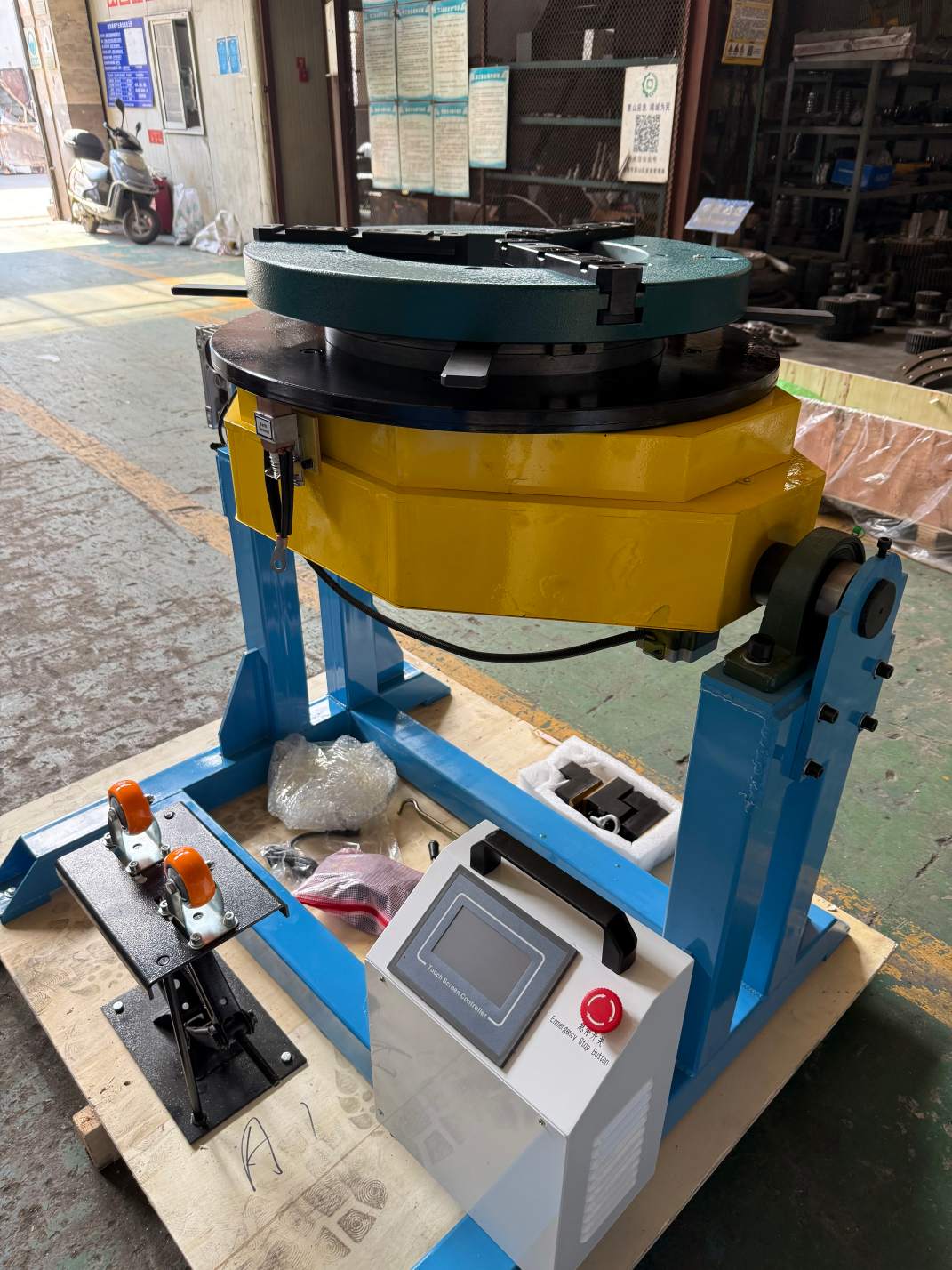
For pressure vessel work, ESW must fit into the broader sequence of fit-up, positioning, and inspection. Selecting the right positioner is part of that planning.
ESW is only one part of a pressure vessel weld line. <Welding Positioner Selection for Pressure Vessels: Key Best Practices> covers how to match positioning equipment to vessel geometry and code requirements.
Practical ESW Welding Tips
- Qualify the procedure on the actual material and thickness. ESW is not a simple travel-speed change. The procedure should address fit-up, wire feed, voltage, slag depth, shoe design, and any required post-weld inspection.
- Control joint fit-up and root opening. A changing gap or misaligned edges can produce lack of fusion, slag entrapment, or an unstable slag bath. Use strong tack welds, alignment fixtures, or jigs to hold the joint position for the full seam height.
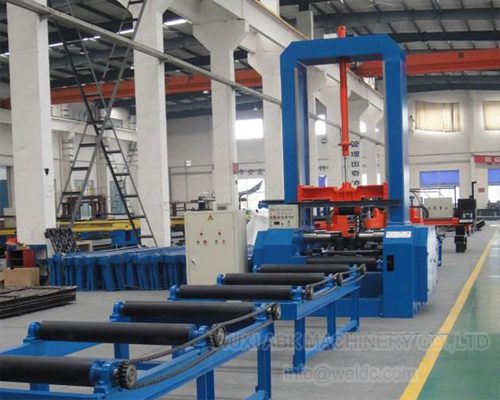
- Use proper start and run-off tabs. Starting tabs let the process stabilize before it reaches the production joint. Run-off tabs carry the finish beyond the joint so the final weld metal remains sound.
- Monitor slag depth and current path. The operator should watch slag depth, voltage, and wire feed together. If the slag depth changes, the resistance heating changes, and the weld shape can change with it.
- Maintain the copper shoes and cooling water. Check shoe contact, alignment, cleanliness, and water flow before and during welding. Overheated or dirty shoes can allow slag leaks and cause surface defects.
- Plan for heat input and inspection. After welding, ultrasonic testing is often used to check for internal discontinuities. Verify the governing code requirements before production and do not assume that a successful ESW run eliminates all qualification or inspection obligations.
- Train operators on ESW-specific behavior. A skilled arc welder still needs training to read a slag bath, respond to shoe movement, and recognize instability early. Procedure qualification should include operator demonstration on a representative joint.
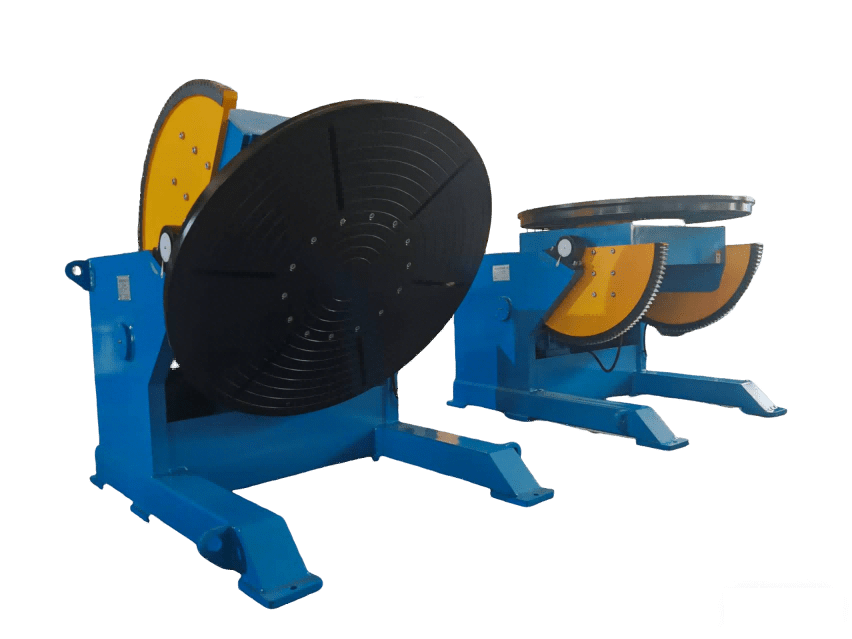
The welding station also needs to work with the surrounding production line. If the seam is complete but the next station is waiting, the ESW deposition advantage does not show up in the final delivery schedule.
ESW productivity depends on how the whole workstation is planned, not just the welding head. <One-Stop Welding Automation: Build a Complete Production Line Setup> covers how to coordinate welding, positioning, and handling equipment as one production line.
Work With ABK on ESW-Related Welding Automation
When your project involves thick vertical seams, pressure vessels, storage tanks, or heavy structural fabrications, send us the joint thickness, material grade, seam length, and required production rate. We can help you evaluate whether ESW, electrogas, or another process fits and which positioning, manipulation, or automation equipment should support it. Contact Jan at [email protected] or +86 13616174307.
FAQ
Is ESW the same as electrogas welding?
No. Both processes run vertically and use water-cooled shoes, but ESW operates on a molten slag bath after startup, while electrogas welding maintains an arc under gas shielding. The difference affects heat input, filler selection, code qualification, and the skills required to monitor the weld.
What thickness is ESW best suited for?
ESW is practical for thick plate where conventional multipass welding would require many passes. The upper thickness depends on the equipment and the chosen variant. Consumable-guide ESW is often used on very heavy sections. ESW is not a suitable choice for thin sheet or small-diameter thin-wall tube.
What materials can be electroslag welded?
ESW is most commonly applied to carbon steel and low-alloy structural steel. It is less common for stainless steel and high-alloy materials because high heat input and slow cooling can reduce toughness or corrosion performance. Material selection should be confirmed through procedure qualification and the governing fabrication code.
What are the main inspection concerns after ESW?
The main concerns are internal discontinuities, slag entrapment, lack of fusion, and the coarse grain structure that can result from high heat input. Ultrasonic testing is commonly used for internal soundness. Visual inspection checks shoe marks, surface geometry, and the run-off tab area.
Does ESW require special operator training?
Yes. The operator is not watching a conventional arc. Slag depth, voltage, wire feed, shoe travel, and cooling water all interact. A welder with strong arc experience still needs ESW-specific training and supervised procedure qualification before production.
References
[1] American Welding Society, “Standard Welding Terms and Definitions,” AWS A3.0M/A3.0:2020, 2020.
If you’re interested, check out these related articles:
Automatic Girth Welding Machines: Boost Efficiency for Pipeline Projects
Fixed vs Adjustable Welding Positioners: How to Choose the Right Tool