Good Welding Position Improves Weld Quality and Speed
Table of Contents
- What Does a Good Welding Position Actually Mean?
- How Does Welding Position Affect Weld Quality and Defect Rates?
- Why Does Manual Positioning Fail on Large and Heavy Workpieces?
- How Do Welding Positioners Hold the Right Position?
- Welding turntables for small cylindrical parts
- Pipe and vessel rotators for long workpieces
- Head and tail positioners for heavy fabrications
- Ready to Lock the Right Welding Position for Your Shop?
- What Should Buyers Ask About Welding Position Equipment?
- Does a good welding position matter more for manual welding or automated welding?
- Can a welding positioner fix poor joint preparation?
- What is the difference between a flat position and a fixed positioner?
- How do I know which positioner capacity fits our workpieces?
Finding a good welding position is not an ergonomic preference. It determines whether the arc stays where the joint needs it, how much spatter and undercut the operator accepts, and how long a production run can continue before fatigue or rework erodes output. Welders who fight gravity and part access produce inconsistent welds on the same drawing, same machine, same procedure. In automated and heavy fabrication, the right welding position is often achieved with a positioner or rotator rather than an operator’s body. This article breaks down what good positioning means, how it affects weld quality, and which equipment choices hold the position repeatably.
What Does a Good Welding Position Actually Mean?
A good welding position does not mean the most comfortable stance for the welder alone. It means the joint is oriented so gravity works with the weld pool, the torch has full access, and the same sequence can be repeated part after part. In flat and horizontal passes, the pool stays where deposition happens; in vertical and overhead passes, the welder must control freeze speed and metal transfer much more tightly. For heavy parts, an operator may be able to reach the joint but cannot hold a stable torch angle for a long continuous weld. That is the point where a better body position is not enough. The workpiece itself has to move.
How Does Welding Position Affect Weld Quality and Defect Rates?
Welding position changes heat input, bead shape, penetration, spatter, and the likelihood of slag trapping. A joint welded flat runs hotter and deposits more metal per pass than the same joint welded overhead. When the position is wrong, the welder compensates with slower travel, wider weave, or higher amperage, which can create undercut, overlap, or lack of fusion.
| Position | Main Defect Risk | Practical Equipment Response |
| 1G or 1F flat | Slag trapping on deep roots | Use downhand travel and keep the part flat |
| 2F or 2G horizontal | Undercut and overlap | Keep a short arc and hold the part at the correct height |
| 3G vertical | Undercut and lack of fusion on uphill passes | Limit weave width or rotate the part flat |
| 4G overhead | Spatter, low deposition, operator fatigue | Reposition the part to flat or horizontal |
| 5G or 6G fixed pipe | Uneven root and changing travel angle | Use a pipe rotator or welding positioner |
In practice, most defects I have reviewed in heavy fabrication trace back to the joint being in the wrong orientation for too much of the pass. A root pass started flat can turn into a near vertical pass as the operator works around a large vessel. Welding position is not static on curved parts, and treating it as a fixed setting is how repeatable defects enter the process.
Why Does Manual Positioning Fail on Large and Heavy Workpieces?
Manual positioning fails when the part is too large to rotate by hand, too heavy to flip safely, or too long for one person to see the whole joint. A welder working around a floor mounted vessel must change stance, torch angle, and travel direction several times on a single seam. Each change is a chance for the arc length to shift. I have watched a 3 m diameter shell welded on floor stands. The welder spent more time repositioning than welding, and the vertical sections showed undercut because the torch angle changed as he walked around the part. Cranes can turn a large component, but they do not give the controlled surface speed that a continuous weld needs.
If your program involves large cylinders, thick plate, or multi pass joints, it is worth confirming load capacity and speed range before you lock the equipment list. Send your workpiece diameter, weight, and worst case joint position to [email protected] and we will check the positioner or rotator configuration against the pass you need to control.
How Do Welding Positioners Hold the Right Position?
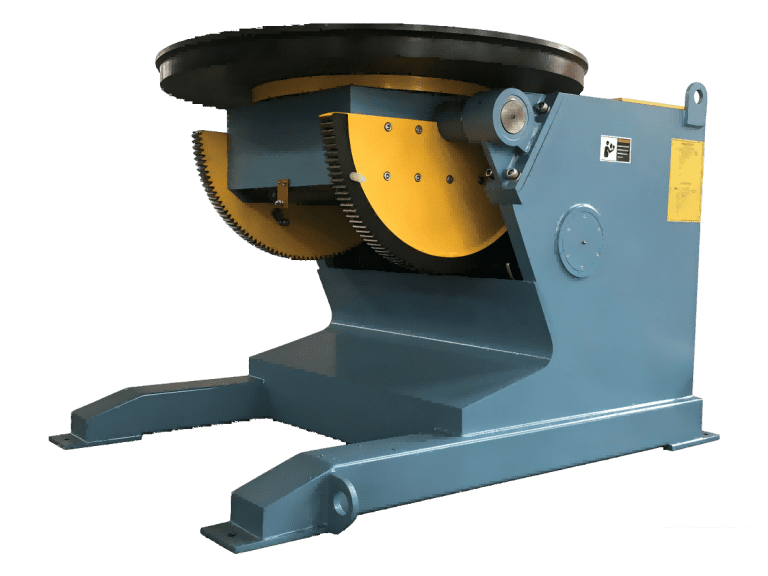
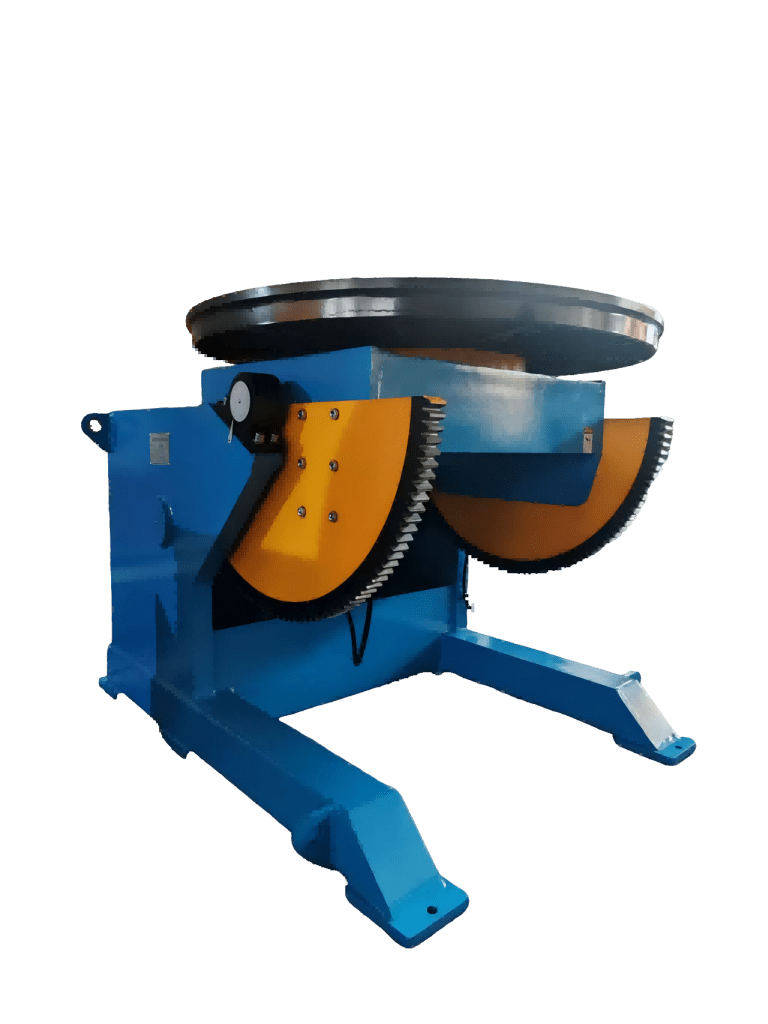
A positioner replaces the operator’s fight with gravity. The machine rotates or tilts the part so the seam arrives at the torch in the position that produces the best bead, usually flat or slightly horizontal. That is not the same as simply making the part easier to reach. The target is repeatable weld geometry.
Welding turntables for small cylindrical parts
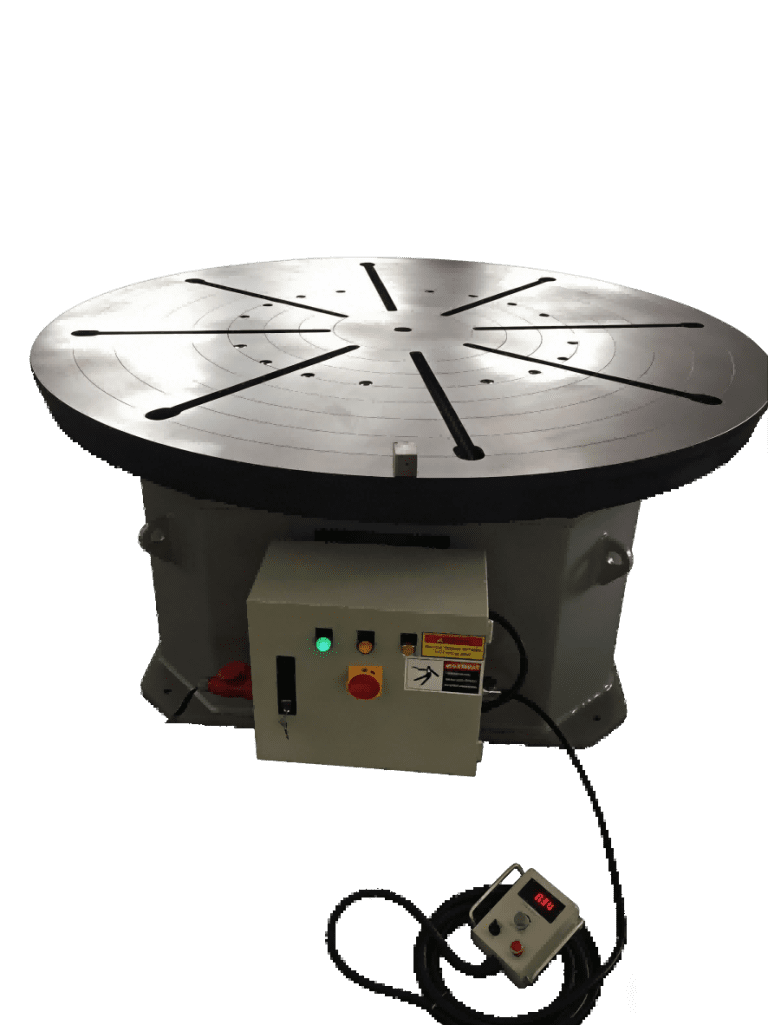
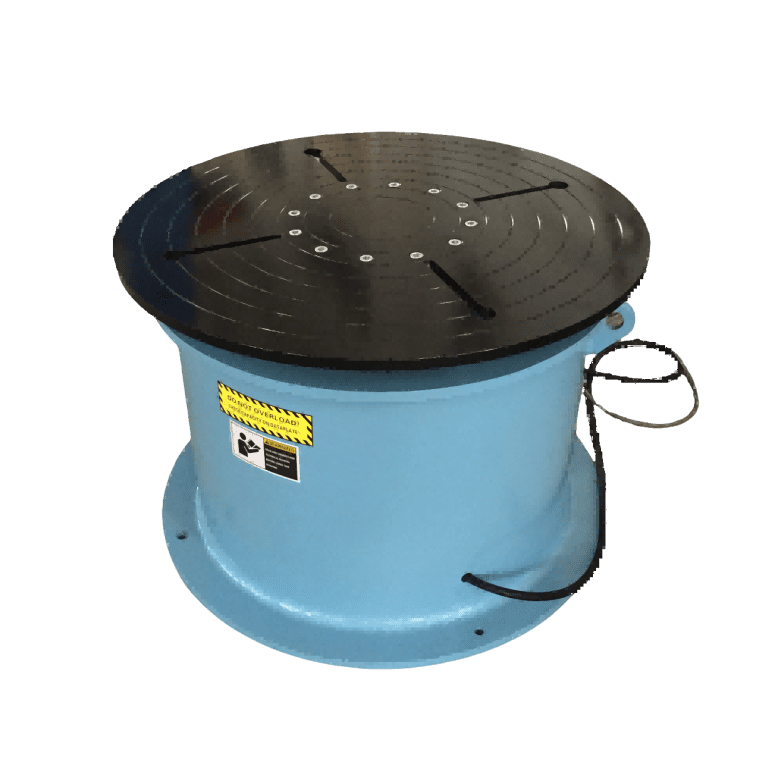
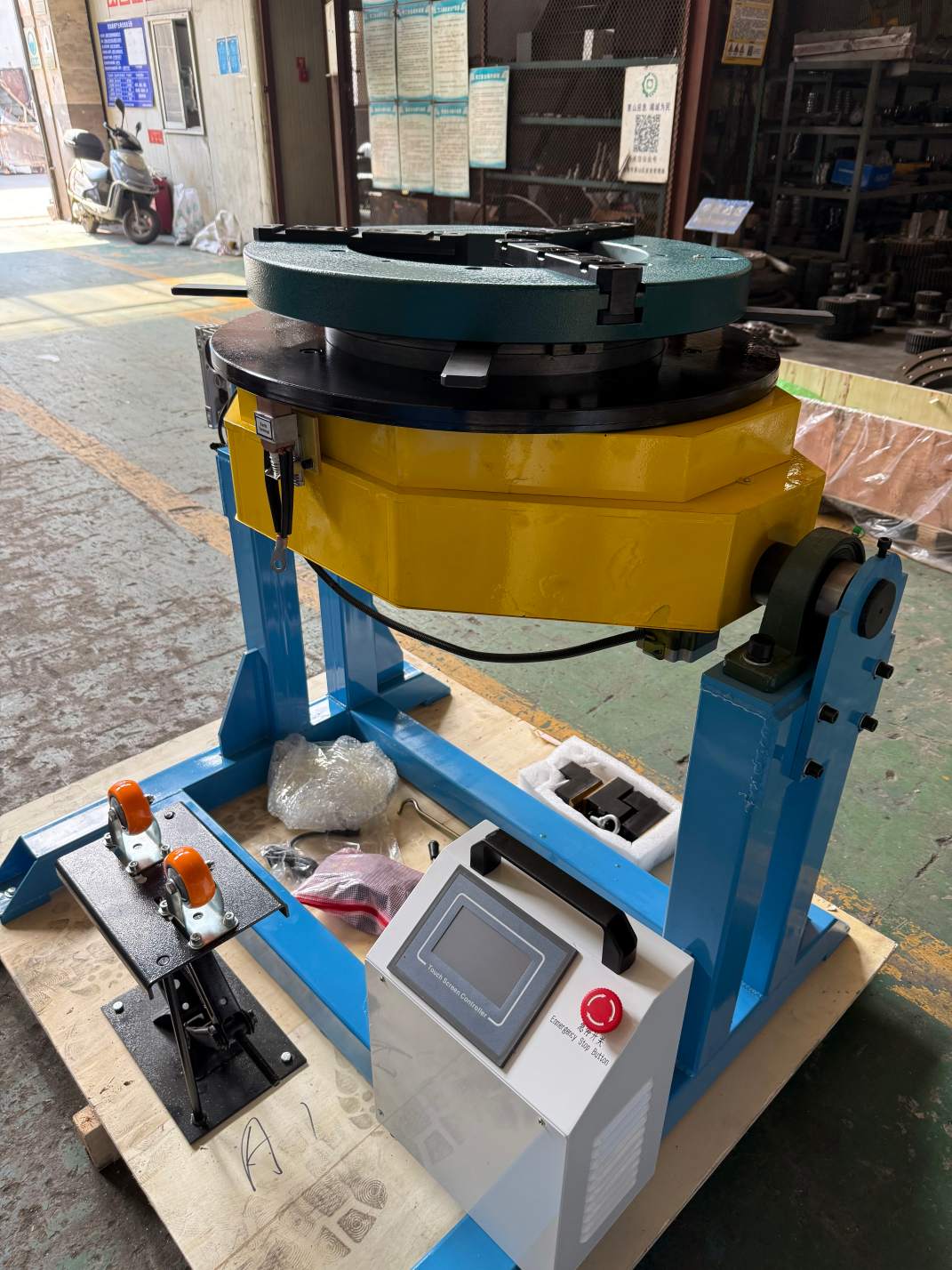
Welding turntables suit flanges, hubs, and smaller housings. The table keeps the part rotating at a set speed while the torch stays fixed. This puts every degree of the circular weld in the same orientation, which removes the stop and start pattern common in manual circular welds.
Pipe and vessel rotators for long workpieces
Conventional and adjustable welding rotators hold pipes, rolls, and tank sections. They rotate the cylinder under a fixed torch, and the operator sets surface speed to match deposition rate. On a vessel girth seam, that means the weld is performed in the same relative position even though the part weighs several tons. For pressure vessel work, welding positioner selection for pressure vessels matters because joint orientation affects root pass consistency.
Head and tail positioners for heavy fabrications
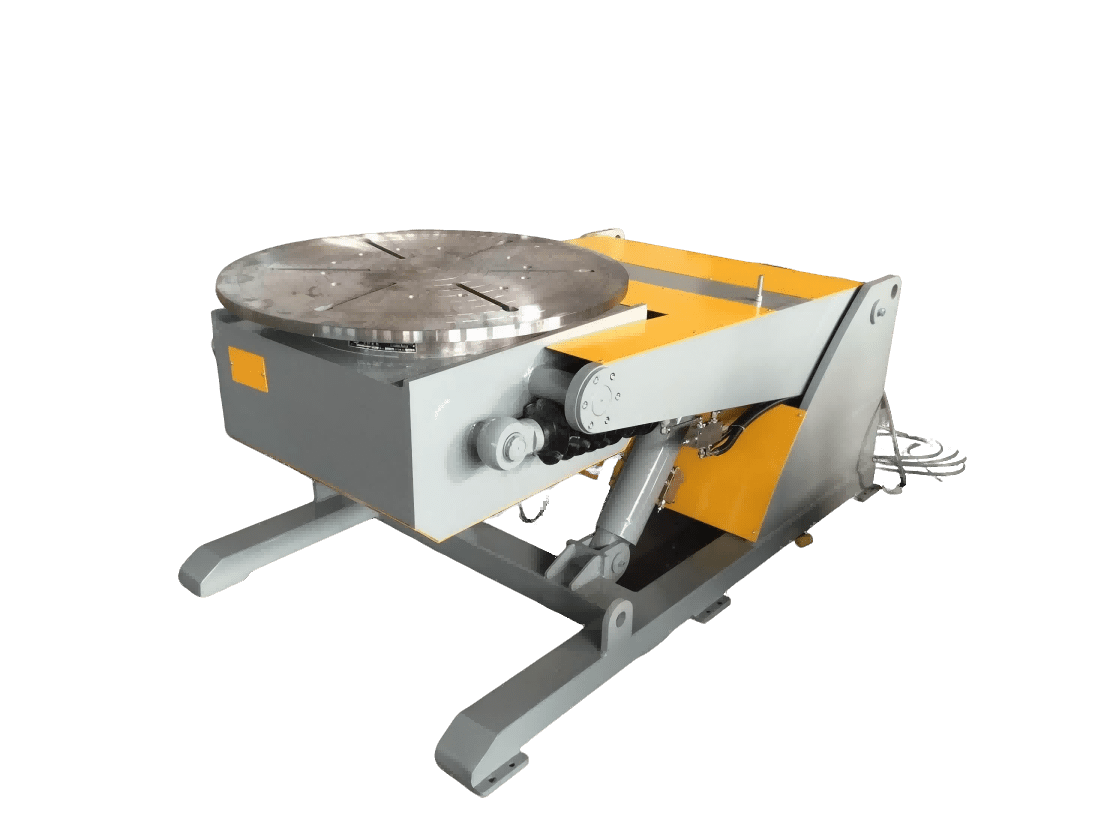
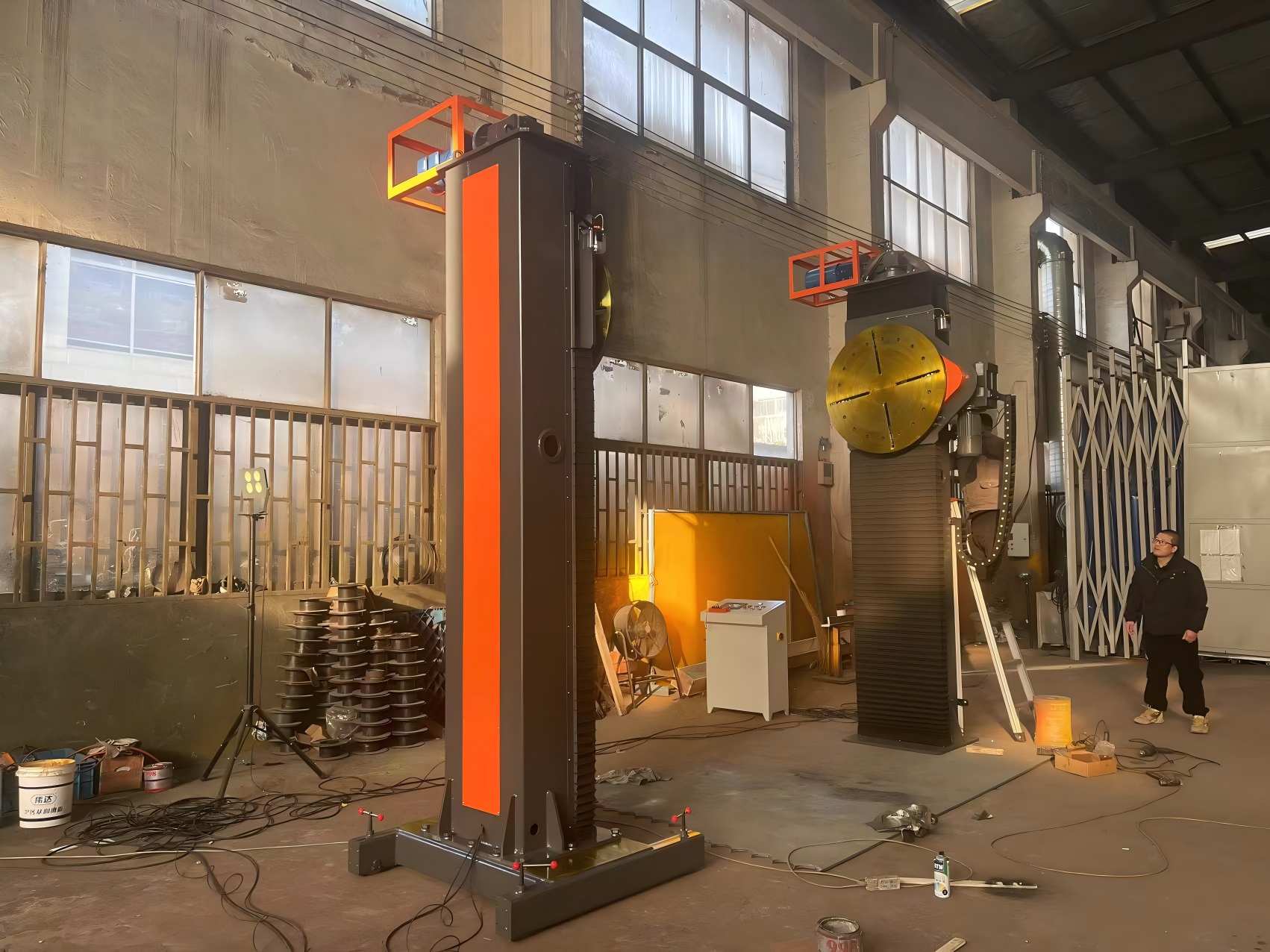
For long or unbalanced weldments, head and tail positioners grip both ends and tilt the assembly into flat position. This matters on structural beams, rollers, and shaft type parts where the center of gravity changes as components are added. Buyers comparing configurations may also want to review fixed vs adjustable welding positioners before they specify a cell.
Ready to Lock the Right Welding Position for Your Shop?
The difference between a good welding position and a missed one shows up in rework hours, arc time, and how often a welder has to stop and fight the part. If you are quoting pipe, vessel, structural, or heavy plate work, send your workpiece diameter, weight, length, and the joint positions you need to weld before the weld cell is installed. Send the details to [email protected] or call +86 13616174307. We will confirm which welding positioner, rotator, or head and tail setup holds your seam in the right position before the weld starts.
What Should Buyers Ask About Welding Position Equipment?
Does a good welding position matter more for manual welding or automated welding?
It matters for both, but the failure mode changes. In manual welding, a poor position shows up as operator fatigue, inconsistent travel speed, and higher defect rates late in the shift. In automated welding, the part position is programmed into the cycle, so the risk shifts to setup: if the part is not clamped square or the positioner does not repeat, the torch follows the wrong path. A good position is the common requirement. Manual welders need it to stay consistent; automated systems need it to make the repeatability worth the investment.
Can a welding positioner fix poor joint preparation?
No, a positioner cannot fix poor joint preparation. Many buyers assume rotation or tilting will compensate for uneven root gaps, heavy mill scale, or bad bevel angles. The positioner changes the orientation of the part, not the condition of the joint. What it can do is expose the joint more consistently so the welder sees the problem earlier and the repair is made before the part is welded into place. For critical work, joint fit up and bevel accuracy still need to be controlled before the part reaches the positioner.
What is the difference between a flat position and a fixed positioner?
It depends on whether the joint stays in one orientation. A flat position means the weld pool sits level for that pass. A fixed positioner can hold a part in flat position for a specific seam, but it may not be enough for a cylindrical part whose joint travels around the circumference. For circular welds, a rotating positioner keeps the seam in the same relative flat or horizontal position continuously. For a single straight seam on a plate, a fixed table may be all that is required.
How do I know which positioner capacity fits our workpieces?
In projects I have worked on, buyers who specify only part weight often miss the effect of center of gravity. A 2 ton part with the center of gravity 400 mm off the table center creates a tilting moment far greater than the weight alone suggests. I ask for three points before recommending a unit: maximum part diameter or length, weight, and the distance from the table face to the center of mass. If the part is long, head and tail tooling may be required. Share your joint configuration with [email protected] and we will confirm the right positioner or rotator setup.
If you’re interested, check out these related articles:
Automatic Girth Welding Machines: Boost Efficiency for Pipeline Projects
Fixed vs Adjustable Welding Positioners: How to Choose the Right Tool
Heavy-Duty Welding Rotators with 200 Ton Load Capacity
Evaluate ROI of Welding Automation Business Investment
One-Stop Welding Automation: Build a Complete Production Line Setup