Welding Standards: Codes and Compliance for Buyers
Table of Contents
- What Do Welding Standards Actually Cover?
- Which Welding Codes Matter for Industrial Equipment?
- How Do You Turn a Welding Standard into Equipment Specifications?
- How Do You Verify Welding Standard Claims Before You Buy?
- What Questions Do Buyers Ask About Welding Standards?
- Is CE marking the same as a welding qualification?
- Do I need a new procedure qualification if I change welding positioners?
- What documents show a machine is suitable for a code driven job?
- Which welding standards should a metal fabrication shop prioritize first?
A welded product is only as reliable as the procedure behind it. Welding standards turn an approved procedure into a repeatable engineering requirement, covering base material, filler metal, joint design, position, heat input, inspection and documentation. After twelve years of specifying welding automation equipment, I have seen too many procurement teams treat these standards as paperwork rather than a design boundary. That gap is where noncompliance starts: the weld may pass a sample while production equipment drifts outside the qualified range. The useful approach is to read welding standards as machine specifications you can verify before buying, not as a generic promise that everything is welded correctly.
What Do Welding Standards Actually Cover?
A welding standard is not a single hidden rule. It is a boundary layer of requirements around the weld joint, and it usually sets three things at once: acceptance limits for defects, the range of variables that can change without requalification, and the records the fabricator must keep. On our projects, the most frequent confusion is treating a machine setting as a preference. A code may treat heat input, wire feed speed and travel speed as essential variables, which means an unrecorded change can invalidate the procedure even if the welded result looks acceptable.
| Standard or code | Typical scope | Primary equipment impact |
|---|---|---|
| AWS D1.1 | Structural steel welding | Procedure qualification, weld acceptance criteria |
| ASME Section IX | Pressure vessels and boilers | Welder qualification, essential variable control |
| ISO 15614 | Welding procedure qualification for metals | Welding procedure specification limits |
| EN 1090 | Structural steel and aluminum execution | CE marking, execution class traceability |
| ISO 3834 | Quality requirements for fusion welding | Documentation, process control, inspection |
CE marking on a machine is a different layer. It confirms the equipment meets European safety and electrical requirements, not that a specific weld procedure remains qualified. That distinction matters most when a buyer orders general purpose equipment for a code driven project.
Which Welding Codes Matter for Industrial Equipment?
For pipeline, pressure vessel and structural work, the governing code usually comes from the customer’s contract or from the local regulatory body, not from the equipment catalog. A buyer ordering a welding manipulator for tank fabrication may need ASME Section IX documentation for procedure records. A buyer producing structural steel for Europe may need EN 1090 execution class traceability. A buyer making general industrial frames may only need an internal quality procedure. The machine itself does not hold the qualification; the combination of power source, positioner, fixture and documented parameters does. For example, if you buy a welding manipulator with accurate travel repeatability but pair it with an unstable wire feeder, the qualified procedure cannot be maintained.
If your order involves a code you have not qualified before, it is worth confirming the equipment documentation trail before you finalize the bill of materials. A note to [email protected] with the code clause and workpiece range will usually expose gaps early.
How Do You Turn a Welding Standard into Equipment Specifications?
Most standards define what the finished joint must withstand, not which machine to buy. That means the buyer has to translate code requirements into measurable equipment behavior. For a circumferential seam welded to a qualified procedure, the rotator must hold the required surface speed within the range the WPS allows, without drift under load. A positioner intended for multi-pass welding must repeat tilt and rotation angle accurately because the procedure assumes a fixed welding position.
As an engineer, I start with three documents: the WPS, the essential variable list, and the inspection hold points. Then I map each requirement to a machine parameter. If the WPS limits heat input, travel speed accuracy becomes a compliance parameter, not a convenience feature.
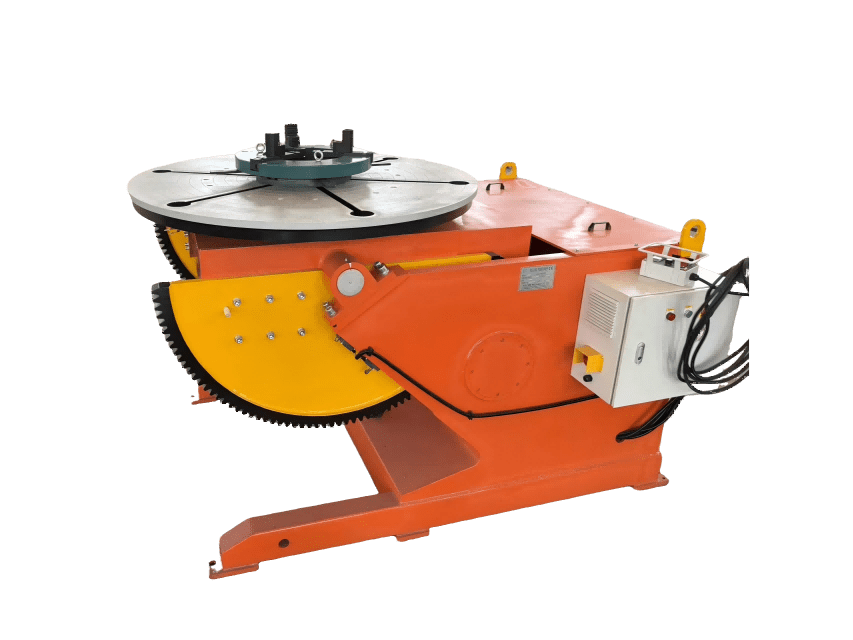
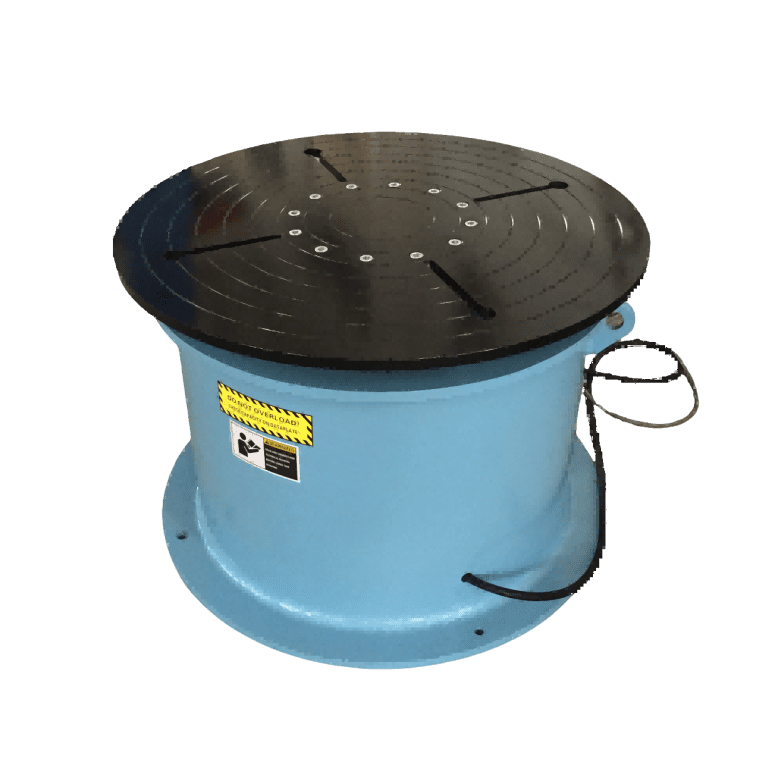
For pipe and vessel work, a welding rotator with adjustable rollers lets a shop align the workpiece centerline before rotation, which reduces speed variation. For large flanges and odd shapes, a welding positioner with tilt and rotation accuracy matters more than its maximum load rating alone.
How Do You Verify Welding Standard Claims Before You Buy?
Catalog language is not enough. Before you commit, request the documentation trail that connects the machine to the standard you will claim. A credible supplier should be able to show inverter specifications, motor datasheets, safety certifications and nameplate details. If you plan to use the equipment in a qualified procedure, ask how the control system records and exports welding parameters. I have seen shops accept a machine on price and later discover they could not document heat input, which made their certified procedure worthless in an audit.
Too many buyers order general purpose welding equipment and assume it will cover a code driven project, then discover the documentation cannot support qualification. Before finalizing your order, send the governing standard and your workpiece range to the manufacturer. Wuxi ABOKE Machinery’s engineering team can check the equipment configuration against your code requirement and tell you which parameters are covered and which need customization. Write to [email protected] or call +86 13616174307 with your required code clause and part dimensions, and we will confirm the standard configuration or propose a specific alternative.
What Questions Do Buyers Ask About Welding Standards?
Is CE marking the same as a welding qualification?
No. CE marking on welding equipment confirms compliance with European safety and electromagnetic requirements, not weld procedure qualification. A CE marked machine can be sold in Europe and still require a separate welding procedure specification, welder qualification and inspection records for structural or pressure work. The confusion usually appears when a buyer sees CE on a positioner or manipulator and assumes the finished weld will automatically satisfy EN 1090 or ASME requirements. Those are separate evidence chains. Always ask which standard the documentation actually proves, then check whether that standard appears in your contract or local regulation.
Do I need a new procedure qualification if I change welding positioners?
It depends on whether the governing standard classifies position as an essential variable. In many codes, changing a joint position from flat to vertical or overhead will require requalification because heat input and deposition behavior change. Changing from one model of positioner to another may not trigger a new qualification if the new equipment holds the same position range, speed accuracy and workpiece alignment. The safest step is to compare the original WPS essential variable list against the new equipment’s documented speed and tilt accuracy before ordering. If the positioner cannot repeat the angle or speed stated in the WPS, treat the change as requiring requalification.
What documents show a machine is suitable for a code driven job?
In the projects I have handled, the shortest path is not a general brochure but a documentation pack that includes motor and inverter datasheets, speed control accuracy, safety certification, and the nameplate showing rated load and duty cycle. I also check whether the control system can record parameters such as voltage, current, travel speed and heat input over the full weld cycle. If your inspection plan requires traceability, the data export format matters as much as the machine rating. Ask the supplier to name the specific parameter the control system records, then compare that against the WPS values your procedure requires.
Which welding standards should a metal fabrication shop prioritize first?
The answer changes once you separate production welding from structural or pressure work. A shop welding general industrial frames may start with ISO 3834 to organize quality records and process control. A shop producing steel structures for the European market should prioritize EN 1090 and CE marking traceability. A shop supplying pressure vessels should focus on ASME Section IX and local code requirements before any equipment purchase. If your shop mixes these jobs, prioritize the strictest code you quote most often. Send your current workpiece mix and relevant code clauses to [email protected], and we can confirm what documentation your equipment package will include.
If you’re interested, check out these related articles:
Pipe Welding Rotator vs Manual Welding | Productivity and Cost Comparison
L-Type Welding Positioners: Applications and Load Capacity Guide