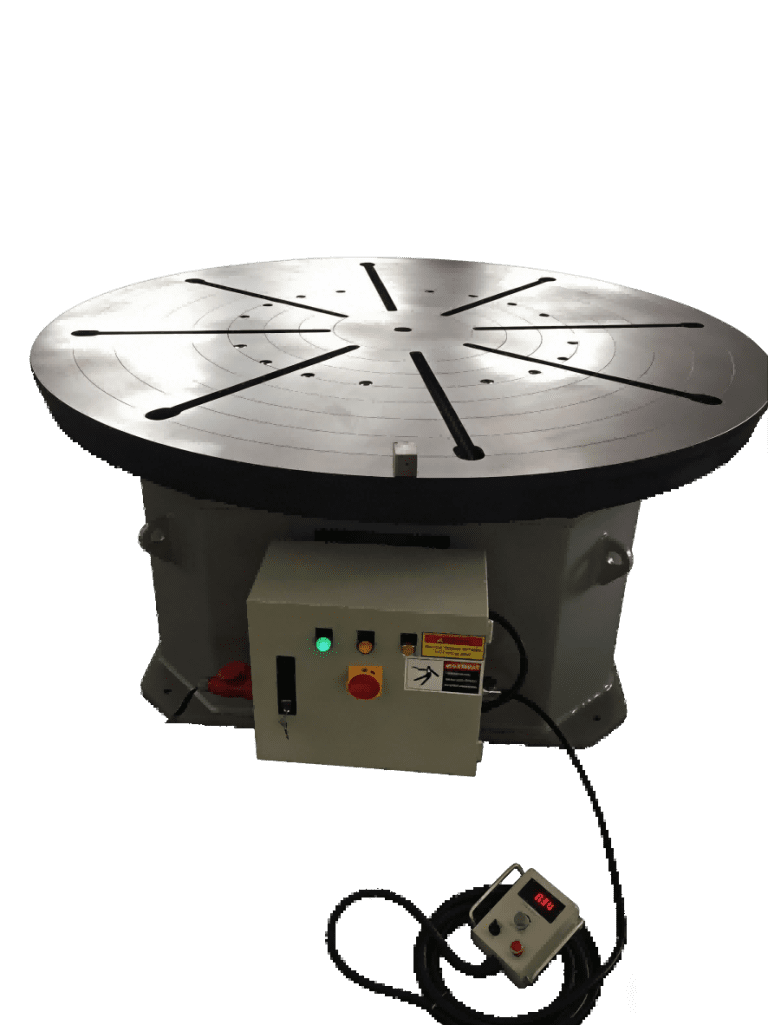
Weld Types and Positions Every Fabricator Must Understand
Table of Contents
- The Weld Types That Cover Most Fabrication Work
- What are the five basic joint types?
- Which is stronger, a groove weld or a fillet weld?
- Welding Positions from Flat to Overhead and What Changes
- What do 1G, 2G, 5G, and 6G actually mean?
- How Position Affects Weld Parameters and Defect Risk
- Weld Types and Positions in Structural and Pipe Work
- Choosing Equipment That Holds the Right Position
- Common Questions About Weld Types and Positions
- Which weld type should I use for a T-joint?
- Is a 6G pass valid for every other position?
- Can a positioner turn an overhead weld into a flat weld?
- What is the hardest welding position to qualify on?
Weld types and positions drive more fabrication outcomes than any single machine setting. The joint type controls how load passes through the finished part, and the welding position controls how gravity, shielding gas coverage, and operator access shape each pass. In over twelve years of welding automation work, I have seen defects cluster in overhead and vertical work not because welders lacked skill, but because the workpiece stayed in a poor position when simple repositioning equipment would have moved it into the flat or horizontal range. Selecting the right weld type and moving the part into the right position produce more quality gains than any parameter sheet.
The Weld Types That Cover Most Fabrication Work
Weld type describes the cross-sectional shape of deposited metal, and the two families that cover most fabrication work are groove welds and fillet welds. A groove weld fills a prepared opening between members, usually with full or partial joint penetration. A fillet weld joins two surfaces that meet roughly at right angles and forms a triangular cross-section in the corner. Both families appear across five joint configurations, and the joint configuration, not the weld process, decides which family applies.
What are the five basic joint types?
Butt, corner, T, lap, and edge joints cover most work. A butt joint lines up two edges in the same plane and calls for a groove weld when thickness demands penetration. A corner joint brings two edges together at an angle and can use either a groove or a fillet depending on load. A T-joint places one member against the face of another and normally takes a fillet weld on one or both sides. A lap joint overlaps two members and uses fillet welds in shear. An edge joint welds the edges of parallel or near-parallel members and appears mostly in thin sheet work.
Which is stronger, a groove weld or a fillet weld?
A full penetration groove weld is normally stronger for the same materials because load passes directly through the full joint thickness. A fillet weld carries load across its throat, and its capacity depends on throat dimension, not just leg size. That does not make fillet welds weak. In many structural connections, a correctly sized double fillet weld is the practical choice because it avoids the cost of edge preparation while meeting the design load. The decision belongs in the drawing load calculation, not in the welder’s preference.
| Joint Type | Typical Weld Type | Load Path | Common Application |
|---|---|---|---|
| Butt | Groove | Direct, through thickness | Pressure vessels, pipe |
| Corner | Groove or fillet | Edge to surface | Box sections, frames |
| T-joint | Fillet | Shear across throat | Stiffeners, brackets |
| Lap | Fillet | Shear across throat | Sheet assembly, covers |
| Edge | Groove or slot | Edge to edge | Thin sheet seams |
Fillet sizing follows the minimum leg requirement on the drawing, and undersized legs are one of the most common inspection findings. I have seen parts rejected at final inspection because the welder matched the drawing only at the start of the weld and let the leg taper near the end. The fix was not better skill training alone; it was a fixture that held the joint in a stable flat position so the operator could keep torch angle through the full length.
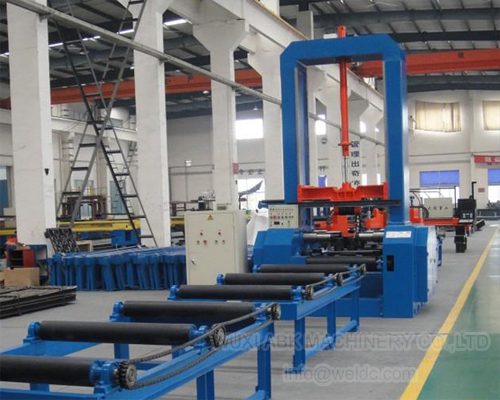
Welding Positions from Flat to Overhead and What Changes
Welding positions are coded by the angle between the weld axis, the joint, and gravity. The number letter system used in ASME and AWS work assigns 1 to flat, 2 to horizontal, 3 to vertical, and 4 to overhead. The letter F marks a fillet weld, and G marks a groove weld. So 1F is a flat fillet, and 3G is a vertical groove weld. The numbers tell operators and inspectors more than the direction of travel: they set the difficulty of pool control.
What do 1G, 2G, 5G, and 6G actually mean?
1G and 1F keep the weld on a flat surface with gravity holding the molten pool in the joint. 2G runs a groove weld on a vertical plate while welding horizontally, which pulls the pool toward the lower side. 5G applies to pipe fixed in a horizontal position, so the weld passes through flat, vertical, and overhead as the operator works around the circumference. 6G fixes pipe at a 45 degree incline, which combines every position in one test and is the most demanding pipe qualification.
| Position Code | Joint Orientation | Typical Work | Main Control Issue |
|---|---|---|---|
| 1G / 1F | Flat, beneath | Plate, rotated pipe | Heat input |
| 2G / 2F | Horizontal | Vertical seams | Pool sag |
| 3G / 3F | Vertical up or down | Vertical plate | Gravity pull |
| 4G / 4F | Overhead | Overhead joints | Droplet fallback |
| 5G / 6G | Pipe fixed, variable | Fixed pipe | Position shifting |
The position changes what the welder can control. Flat work tolerates higher deposition rates because gravity keeps the pool in place. Overhead work requires less molten metal per pass, tighter arc length, and a lower voltage range. These are not style choices; they are the mechanics of holding liquid metal against gravity.
How Position Affects Weld Parameters and Defect Risk
Position changes three process variables at once: heat input, travel speed, and shielding gas coverage. In the flat position, higher current and faster travel produce a clean, wide bead. In vertical up, too much current widens the pool until it sags over the previously fused toe. In overhead work, voltage set too high lengthens the arc and produces spatter, while voltage set too low raises the risk of a short arc and lack of fusion.
The failure mechanism is easiest to see in vertical up work. The operator wants to fill the joint in fewer passes, raises amperage, and the pool grows beyond what surface tension can hold. The bead sags, the arc briefly loses the root, and the result is a convex profile with lack of fusion buried under the cap. I have seen a pipe seam repaired three times before the weld procedure was corrected to a lower heat input with a narrower weave. The defect was not visible from the surface; ultrasonic testing found it after the first pass. The correction changed the parameter sheet and the procedure qualification record, not just the operator.
If your loading includes pipe or vessel circumferential seams, confirm the workpiece diameter, weight, and required speed range before finalizing your equipment list. Send those three numbers to [email protected] and we can confirm which rotator configuration holds the seam in the flat position at the required welding travel speed.
Vertical down is a separate case. It is faster and used for thin material with process types built for it, but its penetration is shallower, and it is not a direct substitute for vertical up on structural or pressure work without procedure support. Each position has to be qualified through the applicable welding procedure specification before production, and the position stated on that document is the only position the welder may use.
Weld Types and Positions in Structural and Pipe Work
Structural shops often qualify procedures only in flat and horizontal because most shop joints can be positioned. Field work changes that: a beam splice in the air, a column to base plate connection, or a pipe tie-in cannot always be rotated, so all position qualification becomes necessary. AWS D1.1 distinguishes prequalified procedures from those requiring qualification testing, and a change in position class is a change that voids the prequalified status.
Pipe work shows the position problem most clearly. A shop rolling a small diameter pipe can keep the weld in the flat position, which permits higher deposition and a more uniform bead. A fixed pipe in the field runs 5G or 6G and forces the welder to manage four different pool orientations in one pass. The difference is hours of arc time and a measurable repair rate.
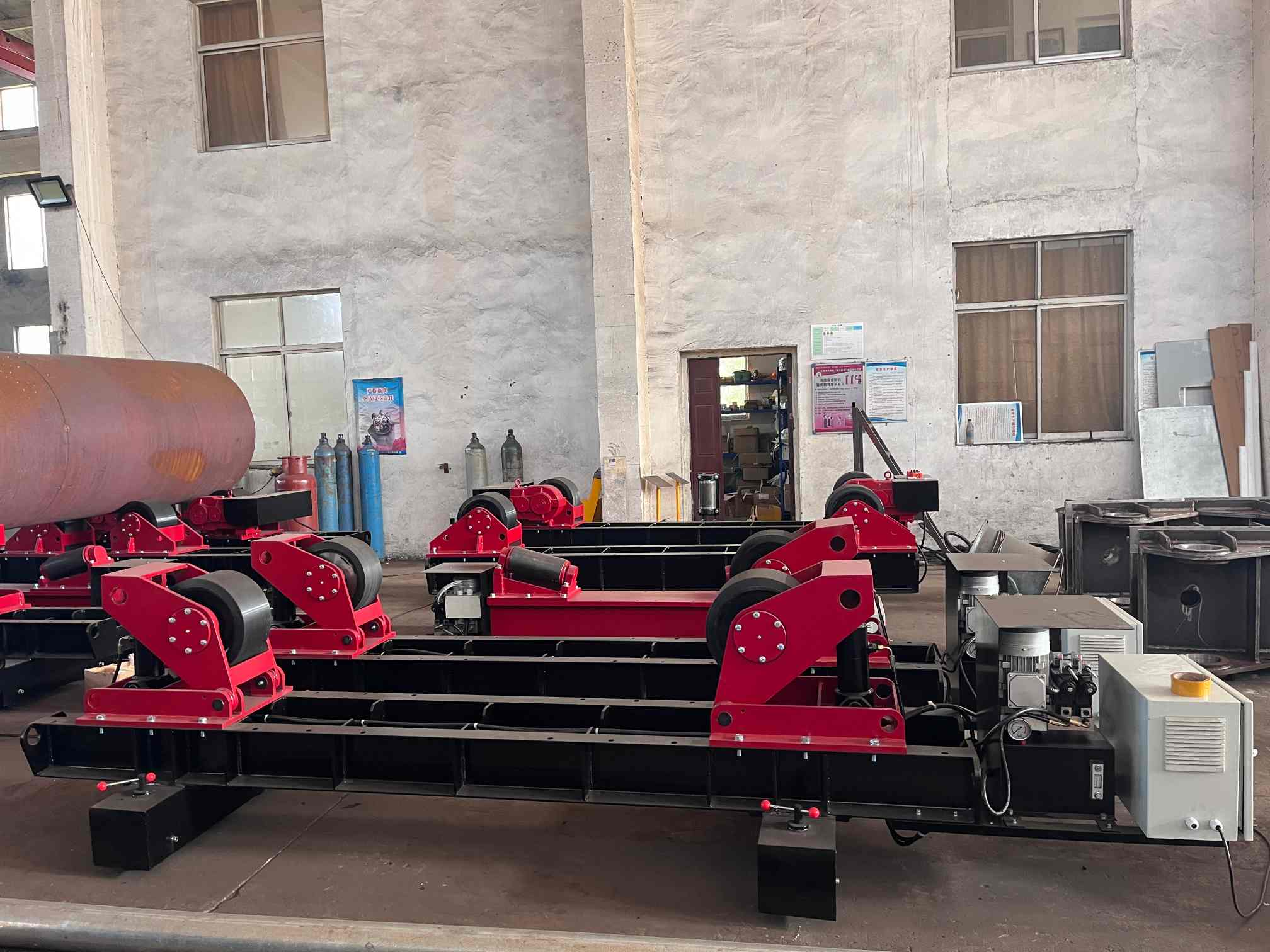
At Wuxi ABOKE Machinery, we treat the position as a production variable, not a fixed condition. Before assigning a process, we ask whether the part can be rolled, clamped at an angle, or held in a head and tail frame so the weld stays in the flat or horizontal band. The same torch, power source, and filler deliver far better results once the part is moved into a familiar position.
Choosing Equipment That Holds the Right Position
The consistent problem I see is not the weld process. It is workpieces that stay in whatever orientation the crane left them in. Manual position changes between passes consume time, require re-tacking, and add variation. When a shop moves to a positioner or rotator, pass quality stabilizes because torch angle, travel speed, and pool control no longer fight gravity.
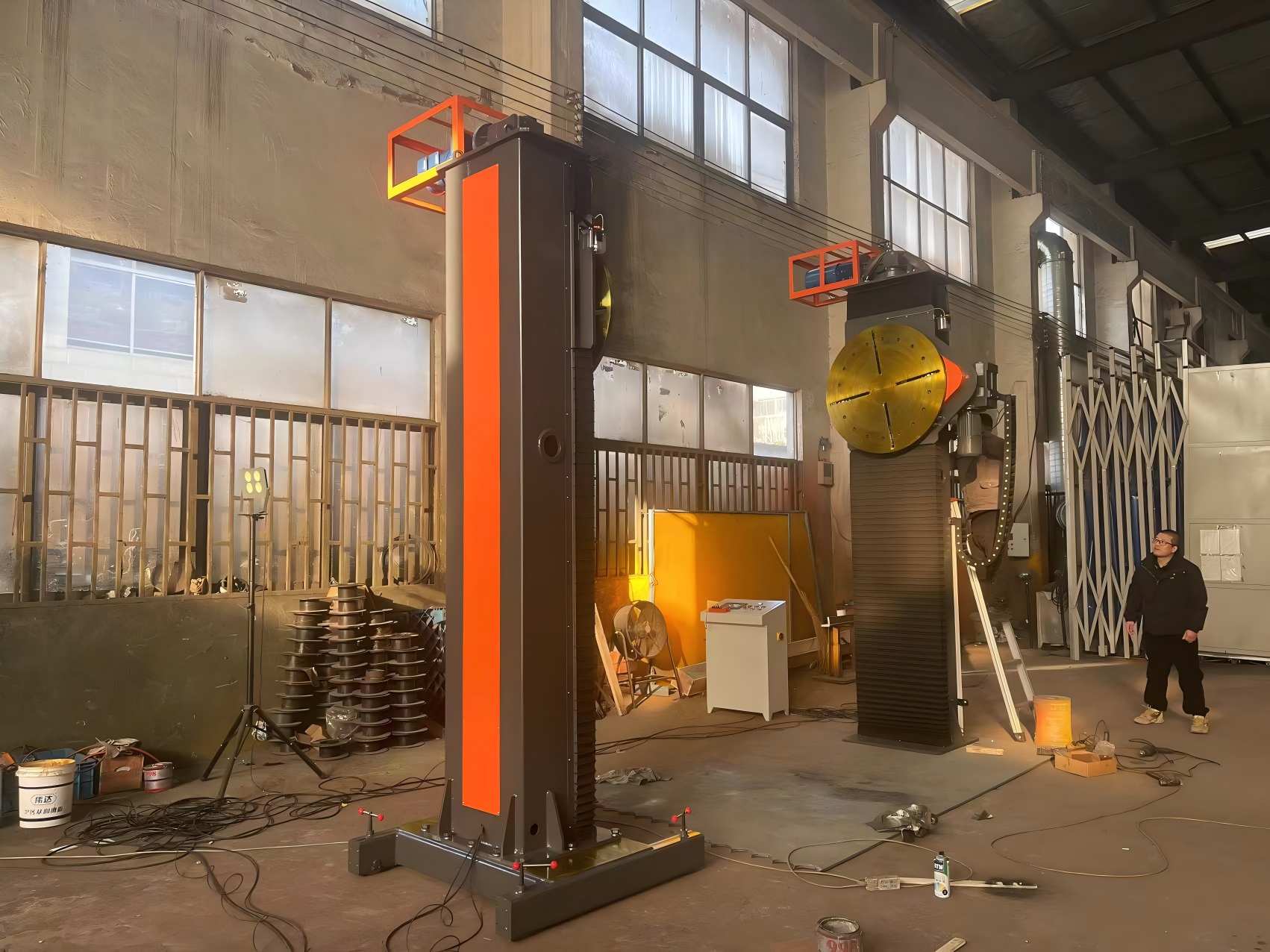
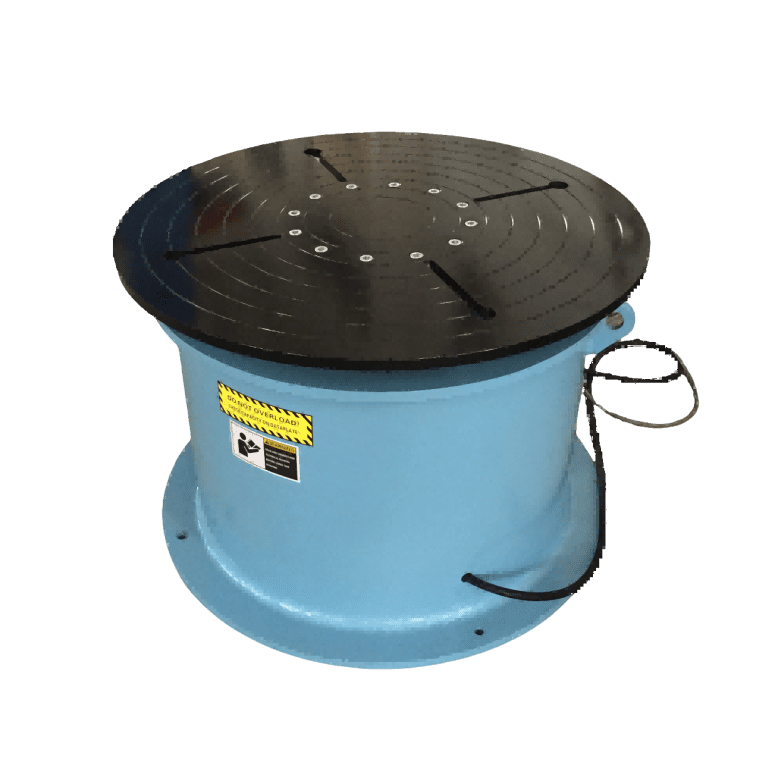
The decision point comes down to part geometry and weight. Cylindrical work suits a welding rotator or turning roll set that keeps the seam rotating under a stationary head. Plate and frame work suits a positioner that tilts and rotates the fixture into the flat or horizontal band. A head and tail positioner handles long parts such as shafts and booms. For tilt positioners, the deciding number is not weight alone but the center of gravity offset: a load that is balanced at rest can overturn the table when rotation shifts it.
Send your workpiece drawings, maximum weight, and the positions you currently weld by hand to [email protected] or call +86 13616174307. Include the part diameter range if the work is cylindrical. We confirm which rotator or positioner keeps your primary seams in the flat or horizontal position before you commit to a purchase order.
Common Questions About Weld Types and Positions
Which weld type should I use for a T-joint?
For most T-joints in structural work, a fillet weld on both sides is the standard choice because it delivers sufficient shear capacity without the edge preparation a full penetration groove demands. When the joint has to develop the full strength of the plate or faces fatigue loading, a groove weld with backing or back gouging may be required. The drawing load calculation and the governing code set that requirement, and the weld symbol on the print tells the welder which of the two families to deposit.
Is a 6G pass valid for every other position?
Not automatically. A 6G pipe test does cover open air positions across the circumference, but qualification ranges depend on the diameter, wall thickness, and the specific code rules. A small diameter 6G coupon does not automatically qualify large diameter structural plate work in all positions. Check the qualification range tables in the referenced code before assuming the wider coverage. The same logic applies to 5G; rotation direction and position limits come from the code table, not from the test label alone.
Can a positioner turn an overhead weld into a flat weld?
It depends on the part geometry and the access around the joint. Cylindrical parts generally can be rotated so the seam sits flat, which is why rotators are standard for tank and vessel work. A large asymmetric frame may have some seams that simply cannot be reached in a flat orientation, and those remain overhead or vertical. Check whether the part can be safely held, rotated, and accessed at every seam without exceeding the positioner’s load rating.
What is the hardest welding position to qualify on?
In the tests I have watched and assessed, 6G produces the highest initial failure rate because the operator must hold arc length, travel speed, and bead profile while moving continuously through flat, vertical, overhead, and back again. The failures are rarely a person holding the torch wrong; they are a person running out of adjustment range as gravity changes direction. This is also why shops that can rotate work out of 6G do so. If your next project contains fixed pipe or hard to reach seams, share the drawings and the position list with [email protected] and we will confirm which positioning configuration fits before you build the procedure.
If you’re interested, check out these related articles:
Industrial Welding Rotator Types & Structural Designs
Welding Equipment Factory Audits: Secure Quality Before Purchase