Sourcing Welding Automation Gear from China: Key Checks for Buyers
Table of Contents
- Why Procurement Teams Look to China for Welding Automation
- What Separates Qualified Suppliers from Catalog Resellers
- Factory Verification: What to Inspect and Why It Matters
- Specification Alignment: Preventing Costly Misunderstandings
- Payment Terms and Contract Protections
- Logistics and Import Considerations
- After-Sales Support Realities
- Evaluating Supplier Communication Quality
- When Chinese Sourcing Makes Sense—and When It Does Not
- Moving Forward with Supplier Evaluation
- Common Questions About Sourcing Welding Equipment from China
- How long does delivery typically take from order to arrival?
- What quality certifications should I require from Chinese welding equipment suppliers?
- Can Chinese manufacturers customize equipment for non-standard applications?
- What happens if equipment arrives damaged or fails to meet specifications?
- Should I visit the factory in person or rely on third-party inspection?
When your fabrication shop needs welding rotators, positioners, or manipulators, Chinese manufacturers offer compelling price points—often 30% to 50% below European or North American equivalents. But the real cost of welding automation equipment extends far beyond the invoice. I have supported procurement teams across four continents evaluating Chinese welding equipment suppliers, and the pattern is consistent: buyers who verify capabilities before ordering receive equipment that performs; those who skip verification spend months troubleshooting problems that should never have left the factory.
Why Procurement Teams Look to China for Welding Automation
The concentration of welding equipment manufacturing in China’s Jiangsu and Shandong provinces creates genuine advantages for international buyers. Established manufacturers in these regions maintain vertically integrated operations—machining, fabrication, assembly, and testing under one roof—which shortens lead times and reduces coordination failures.
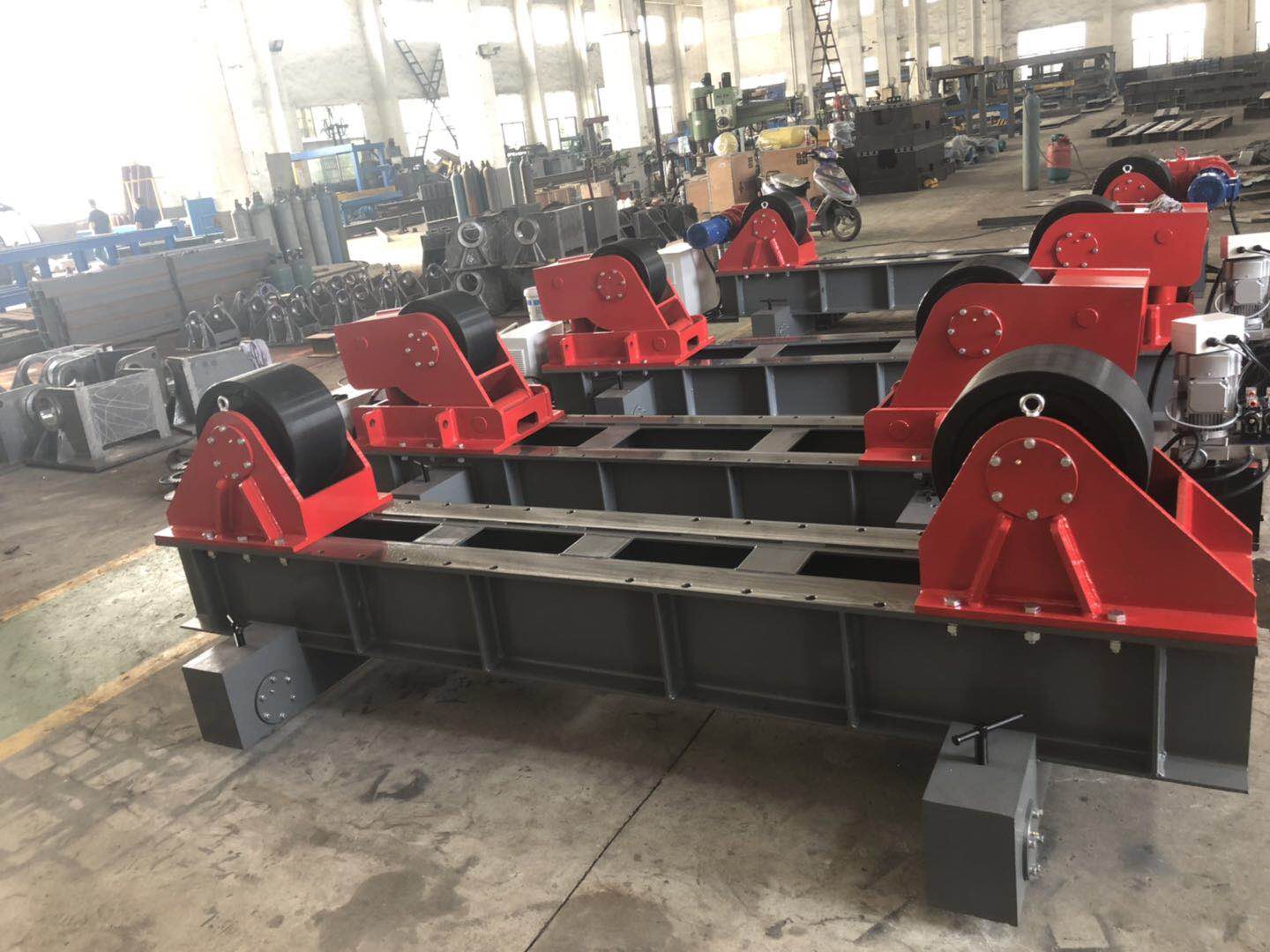
Price remains the primary driver. A 100-ton conventional welding rotator from a qualified Chinese supplier typically costs $18,000 to $28,000 FOB, compared to $45,000 to $65,000 for comparable European units. For a pressure vessel shop equipping a new bay with rotators, positioners, and a column-and-boom manipulator, the savings can exceed $150,000—enough to fund an additional production cell.
But price advantages evaporate when equipment arrives with undersized bearings, inconsistent speed control, or electrical systems that fail local code inspection. The suppliers who deliver reliable equipment and the suppliers who deliver problems often look identical on paper. The difference shows up in verification.
What Separates Qualified Suppliers from Catalog Resellers
The Chinese welding equipment market includes three distinct supplier types, and confusing them creates most procurement failures:
| Supplier Type | Characteristics | Risk Profile |
|---|---|---|
| Integrated manufacturers | Own machining, fabrication, and assembly; maintain engineering staff; produce standard and custom equipment | Lower risk when verified; capable of modifications and technical support |
| Assembly-focused operations | Purchase components from multiple vendors; assemble to order; limited engineering capability | Medium risk; quality depends entirely on component sourcing discipline |
| Trading companies | No manufacturing; source from multiple factories per order; primary value is price negotiation | Higher risk; no accountability for production quality or consistency |
Trading companies serve a legitimate function for commodity products, but welding automation equipment requires engineering judgment during production. When a fit-up rotator needs a non-standard wheel configuration for your vessel diameter range, an integrated manufacturer adjusts the design and machines the components. A trading company forwards your request to whichever factory offered the lowest quote that week.
I have seen procurement teams select suppliers based on website presentation and quoted price, only to discover during factory inspection that the “manufacturer” operates from a 200-square-meter warehouse with no production equipment. The lesson is straightforward: verify manufacturing capability before issuing a purchase order.
Factory Verification: What to Inspect and Why It Matters
Factory inspection is not a formality—it is the single most effective risk reduction step in Chinese equipment procurement. A proper inspection reveals whether the supplier can actually build what they quoted.
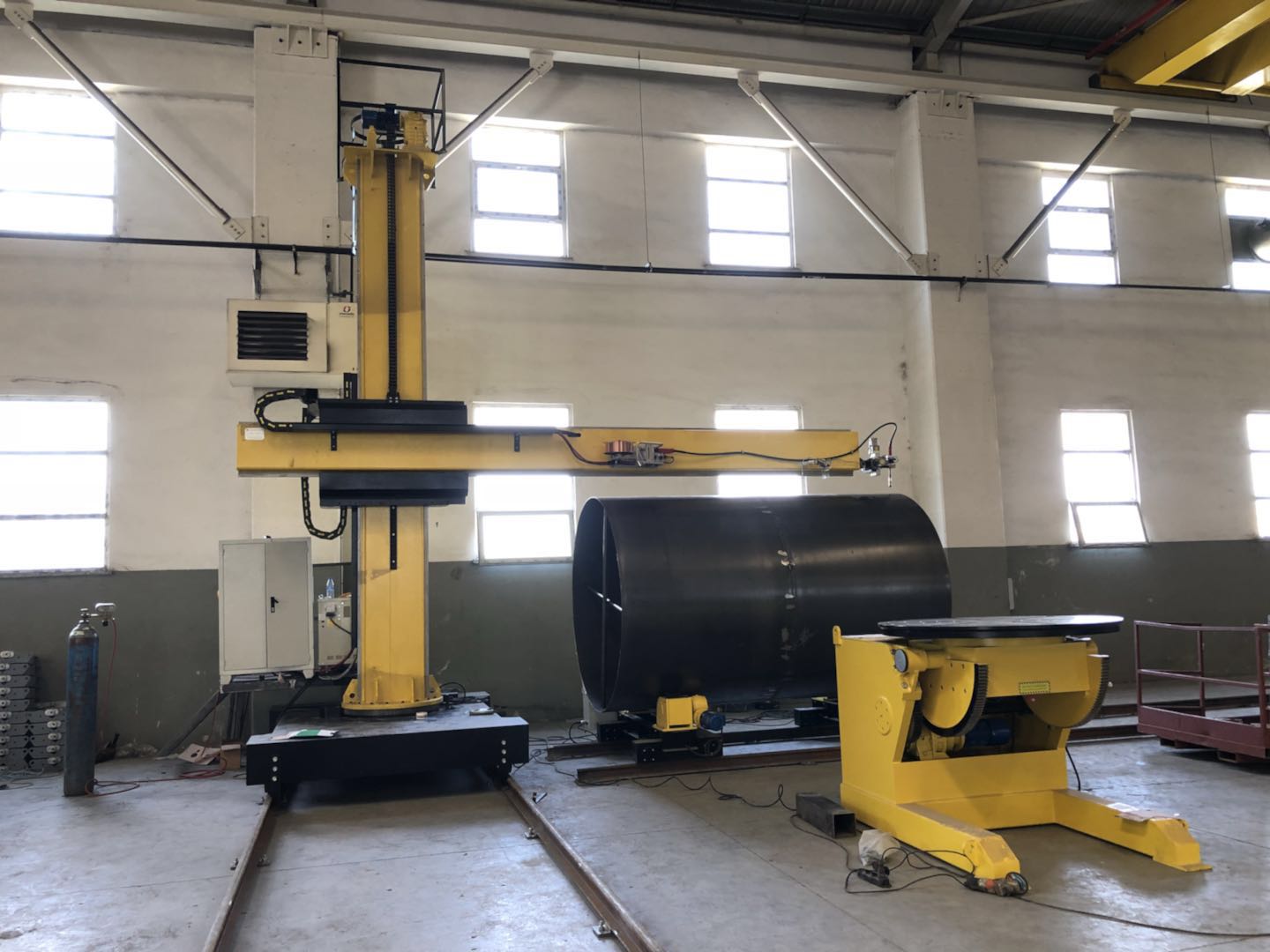
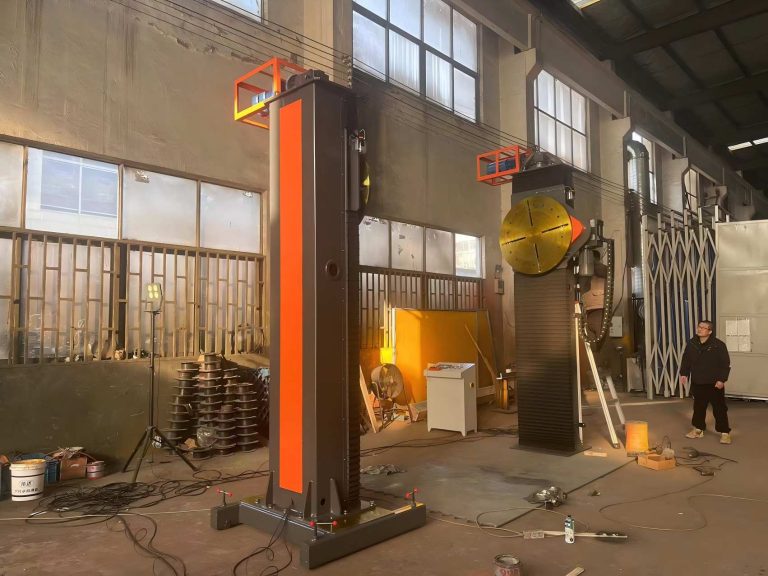
Machining capability assessment. Welding rotators and positioners depend on precision-machined components: bearing housings, shaft assemblies, gear interfaces. Examine the machine shop. Are CNC lathes and milling centers present and operational? Check recent work pieces for dimensional consistency. A supplier machining bearing housings on manual equipment will struggle to hold the tolerances that determine rotator concentricity.
Assembly area organization. The assembly floor reveals production discipline. Components should be staged systematically, not scattered. Wiring harnesses should be bundled and labeled. Hydraulic lines should be routed cleanly with proper fittings. Disorganized assembly areas produce disorganized equipment.
Testing documentation. Request test records for recent shipments to other international customers. Qualified manufacturers maintain load test data, runout measurements, and speed calibration records. If the supplier cannot produce documentation for equipment shipped six months ago, they will not produce it for yours.
Component sourcing verification. Ask to see the actual motors, reducers, and bearings that will go into your equipment—not catalog pages, but physical inventory. Confirm brand names match quotation specifications. Substitution of lower-grade components is common when buyers do not verify.
For buyers who cannot travel, third-party inspection services provide an alternative. Specify inspection scope carefully: a general factory audit differs from a technical capability assessment. The inspector should understand welding equipment well enough to evaluate machining quality and assembly practices, not just count employees and photograph the building.
Specification Alignment: Preventing Costly Misunderstandings
Specification misalignment causes more post-delivery problems than component quality. Chinese manufacturers interpret requirements literally—if your specification omits a detail, the supplier will make their own decision, and it may not match your expectation.
Load capacity definitions. When you specify a 50-ton welding rotator, clarify whether that capacity applies at the wheel contact point or as distributed vessel weight. A rotator rated for 50 tons with wheels at 3-meter spacing performs differently than one rated for the same load at 2-meter spacing. Specify vessel diameter range, wall thickness range, and maximum weight simultaneously.
Speed control requirements. “Variable speed” means different things to different suppliers. Specify the actual rotation speed range you need (typically 100 to 1,500 mm/min peripheral speed for submerged arc welding), the control method (potentiometer, PLC, pendant), and the speed stability tolerance. If your welding procedure requires ±5% speed consistency, state it explicitly.
Electrical system compliance. Chinese domestic equipment uses 380V/50Hz three-phase power. If your facility operates on 480V/60Hz, the supplier must wind motors accordingly and select compatible VFDs. Specify your voltage, frequency, and any local electrical code requirements (CSA, UL, CE) in the initial inquiry. Retrofitting non-compliant equipment after delivery costs more than specifying correctly upfront.
Interface requirements. If the rotator or positioner must integrate with existing welding systems, define the interface completely. What signals does your welding power source need? What communication protocol does your PLC use? A manipulator that cannot handshake with your Lincoln or Fronius system is a manipulator that requires manual intervention at every weld start.
Payment Terms and Contract Protections
Standard Chinese export payment terms—30% deposit, 70% before shipment—leave buyers with limited leverage if problems emerge during production. Negotiating protective terms requires understanding what suppliers will accept.
Milestone payments. For orders exceeding $50,000, request milestone-based payment: 30% at order, 30% after successful factory acceptance test, 40% after delivery and commissioning. Established manufacturers accept this structure for qualified buyers because it demonstrates serious intent.
Factory acceptance testing. Define FAT requirements in the contract. Specify load test duration, measurements to be recorded, and pass/fail criteria. Attend the FAT personally or send a representative. Equipment that passes a witnessed FAT rarely fails in the field; equipment shipped without testing frequently does.
Warranty terms. Standard warranty periods from Chinese manufacturers range from 12 to 18 months. More important than duration is warranty scope: does it cover parts only, or parts and labor? Does it include shipping costs for replacement components? Who provides field service if a motor fails—the manufacturer, a local distributor, or your own maintenance team with phone support?
Documentation deliverables. Specify required documentation in the contract: operation manuals in your language, electrical schematics, hydraulic diagrams, spare parts lists with part numbers, and recommended maintenance schedules. Documentation that arrives in Chinese only is documentation you cannot use.
Logistics and Import Considerations
Welding automation equipment ships as heavy, oversized cargo requiring specialized handling. Logistics failures—damage during transit, customs delays, incorrect import classification—add costs and delays that erode the price advantage of Chinese sourcing.
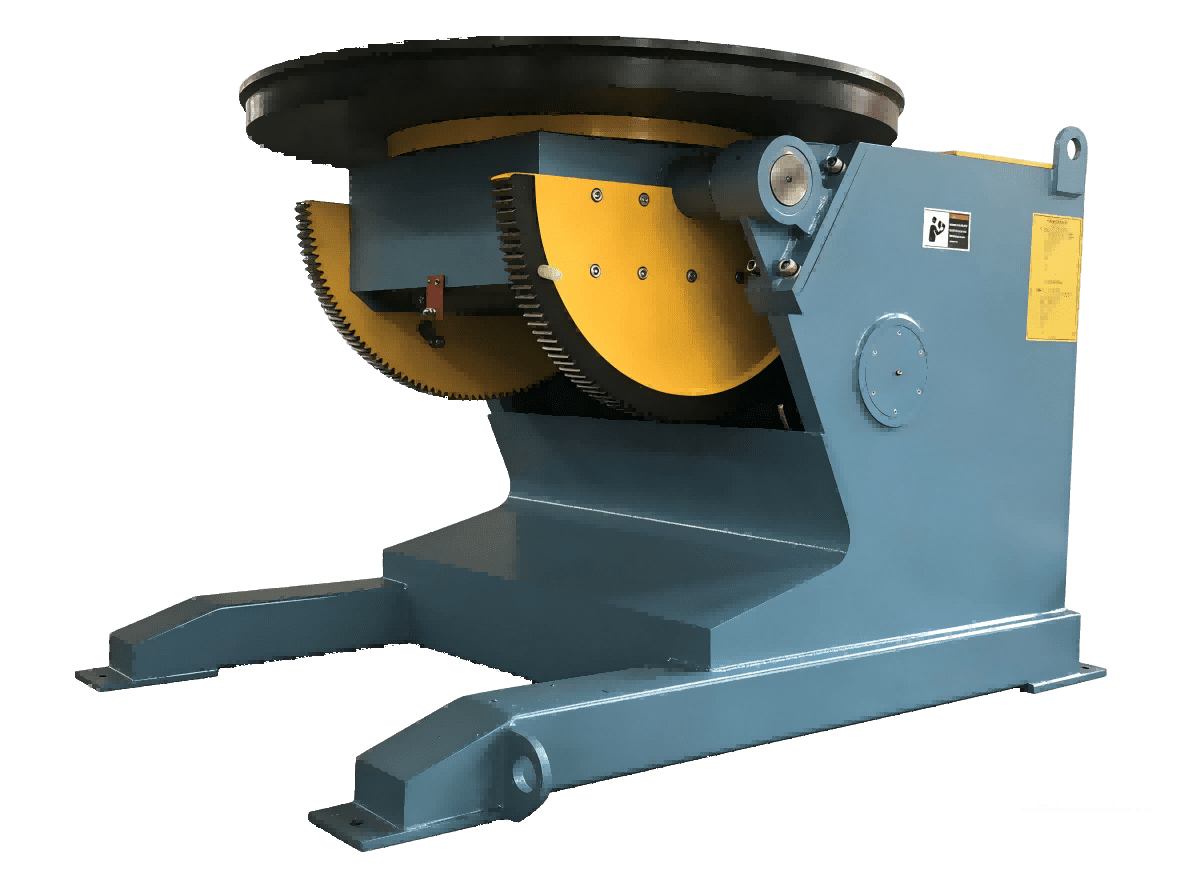
Packaging standards. Specify export packaging suitable for ocean freight: steel-reinforced wooden crates, vapor barrier protection, secure internal bracing. Inspect packaging during FAT. Equipment secured with minimal blocking inside a thin plywood crate will shift during transit.
Shipping mode selection. Full container load (FCL) shipments provide better protection than less-than-container-load (LCL) consolidation. A 20-foot container accommodates most welding positioners and rotator sets; larger manipulators may require flat rack containers or break-bulk shipping. Factor shipping mode into total landed cost calculations.
Import classification. Welding rotators and positioners typically classify under HS code 8468 (welding equipment) or 8428 (lifting and handling machinery), depending on specific function. Incorrect classification triggers customs delays and potential duty reassessment. Confirm HS codes with your customs broker before shipment.
Installation planning. Chinese suppliers rarely provide on-site installation in export markets. Plan for installation by your own millwrights or a local rigging contractor. Request detailed installation drawings and foundation requirements with sufficient lead time to prepare your facility.
After-Sales Support Realities
After-sales support from Chinese manufacturers operates differently than domestic supplier relationships. Setting realistic expectations prevents frustration.
Remote technical support. Most established manufacturers provide responsive support via email and video call for troubleshooting and adjustment guidance. Time zone differences (12 to 15 hours from North America) mean queries sent in the morning receive responses by evening. This model works adequately for operational questions and minor issues.
Spare parts supply. Maintain critical spare parts inventory from initial delivery. Request a recommended spare parts list with the quotation and order spares with the equipment. Shipping replacement parts from China takes 4 to 6 weeks by sea or 7 to 10 days by air—either timeline means extended downtime if you lack local inventory.
Field service limitations. On-site service visits from Chinese manufacturers are possible but expensive and slow to arrange. For equipment requiring commissioning support, negotiate commissioning service as part of the original contract, with technician travel costs and daily rates specified. Do not assume field service will be available on short notice after delivery.
Local service alternatives. Identify local industrial service providers who can support the equipment before purchase. A welding rotator uses standard components—motors, reducers, bearings—that any competent industrial mechanic can service with proper documentation. The documentation requirement returns: without schematics and parts lists, even simple repairs become difficult.
Evaluating Supplier Communication Quality
Communication quality during the quotation process predicts communication quality during production and after-sales support. Suppliers who respond slowly, vaguely, or defensively to pre-order questions will respond the same way to post-order problems.
Technical question responsiveness. Ask specific technical questions during evaluation: What bearing brand and series do you use in this rotator model? What is the gear ratio in the drive system? How is speed feedback measured? Qualified manufacturers answer technical questions directly. Suppliers who deflect or provide generic responses lack engineering depth.
Reference customer availability. Request references from customers in your region or industry. Established exporters have references they can share; suppliers without export track records cannot. Contact references and ask specific questions: Did equipment arrive as specified? How responsive was the supplier to problems? Would you order again?
Documentation samples. Request sample documentation—a page from an operation manual, an electrical schematic excerpt—before ordering. The quality of sample documentation indicates the quality of documentation you will receive.
When Chinese Sourcing Makes Sense—and When It Does Not
Chinese welding automation equipment delivers value for buyers who invest in verification, specification, and supplier qualification. The economics work best for:
- Standard equipment configurations where specifications are well-defined
- Buyers with technical staff capable of evaluating equipment and managing installation
- Orders large enough to justify factory inspection and FAT attendance
- Applications where 4 to 6 week spare parts lead times are acceptable
Chinese sourcing carries higher risk for:
- Highly customized equipment requiring iterative engineering collaboration
- Buyers without technical resources to verify specifications and inspect equipment
- Critical applications where any downtime creates severe consequences
- Situations requiring rapid field service response
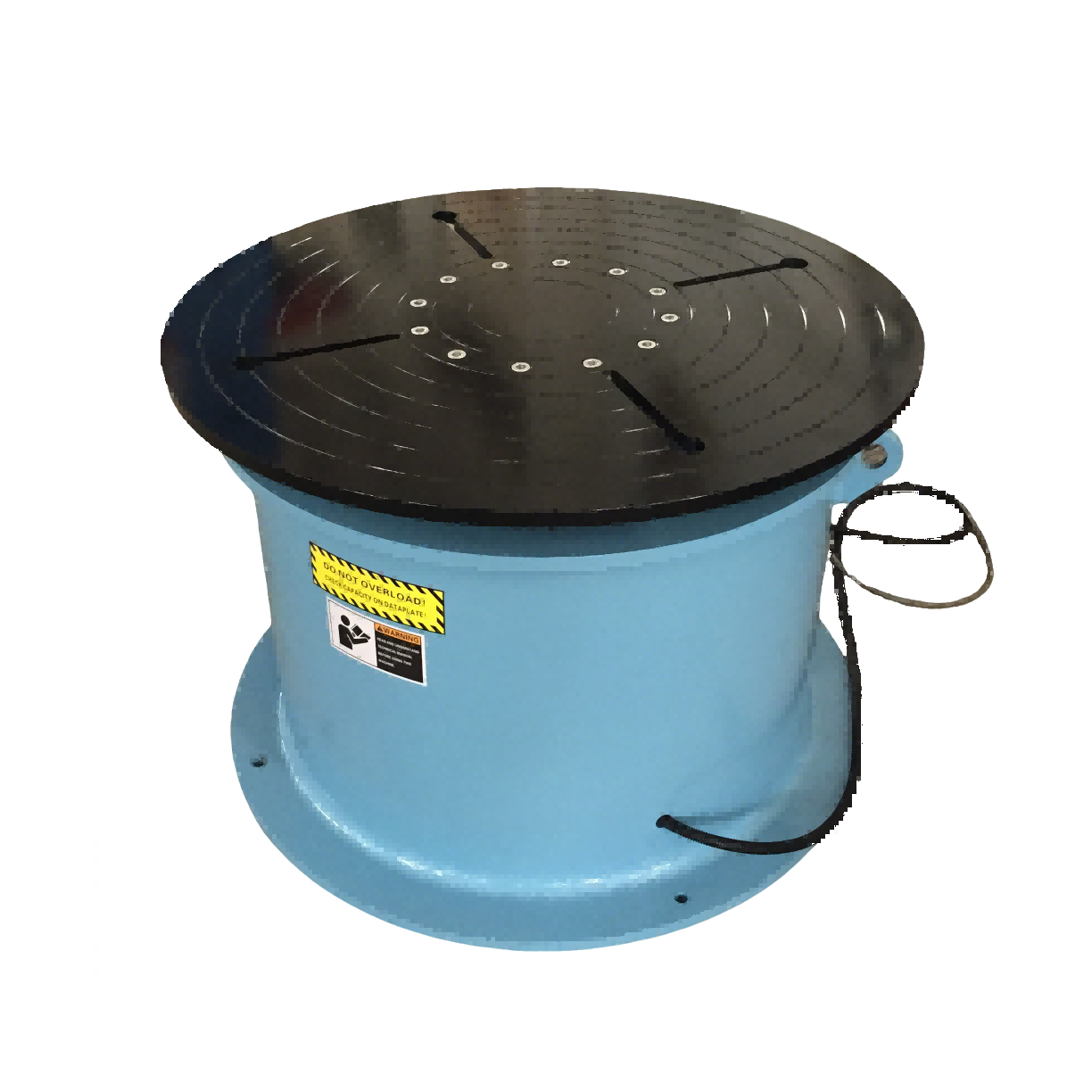
The decision is not binary. Many fabrication shops source standard rotators and positioners from China while purchasing complex manipulator systems from domestic suppliers. The key is matching supplier capability to application requirements.
Moving Forward with Supplier Evaluation
If your operation is evaluating Chinese suppliers for welding rotators, positioners, or manipulators, the path forward involves verification at each stage. Define your specifications completely before requesting quotations. Evaluate supplier responses for technical depth, not just price. Verify manufacturing capability through factory inspection or qualified third-party assessment. Negotiate contract terms that protect your interests through milestone payments and witnessed testing.
The price advantage of Chinese welding automation equipment is real, but capturing that advantage requires procurement discipline. Buyers who verify receive equipment that performs. Buyers who assume receive equipment that disappoints.
If your team is planning a welding automation equipment purchase and wants to discuss specific requirements—load capacities, speed ranges, integration needs, or compliance requirements—share your specifications with our engineering team at [email protected] or call +86 13616174307. We can review your application and confirm what configuration delivers the performance you need.
Common Questions About Sourcing Welding Equipment from China
How long does delivery typically take from order to arrival?
Production lead time for standard welding rotators and positioners runs 30 to 45 days from deposit receipt. Custom configurations or large manipulator systems extend to 60 to 90 days depending on complexity. Ocean freight from Shanghai or Ningbo to North American west coast ports adds 18 to 25 days; east coast delivery via Panama Canal adds another 10 to 14 days. Total timeline from order to delivery typically falls between 60 and 120 days. If your project timeline is tight, confirm production scheduling and shipping routing before committing to avoid delays that cascade into installation schedules.
What quality certifications should I require from Chinese welding equipment suppliers?
ISO 9001 certification demonstrates basic quality management system implementation—necessary but not sufficient. CE marking indicates compliance with European safety directives and reflects more rigorous design documentation. For electrical components, look for motors and drives from recognized brands (SEW, Nord, Siemens, ABB) rather than unbranded alternatives. Request material certificates for structural steel and test reports for critical components. The certifications that matter most are the ones you can verify: ask for certificate copies and confirm validity with issuing bodies when the order value justifies the effort.
Can Chinese manufacturers customize equipment for non-standard applications?
Integrated manufacturers with in-house engineering routinely modify standard designs for specific applications—non-standard wheel configurations, extended travel ranges, special mounting arrangements, integration with existing systems. The key is providing complete specifications upfront: vessel dimensions, weight ranges, rotation speed requirements, interface signals, and installation constraints. Customization adds 20% to 40% to base equipment cost and extends lead time by 2 to 4 weeks. For complex customization involving structural redesign or novel functionality, evaluate whether the manufacturer has completed similar projects previously—request documentation of comparable custom work before committing.
What happens if equipment arrives damaged or fails to meet specifications?
Contract terms determine your recourse. With proper documentation—photographs of packaging condition at delivery, inspection reports noting deficiencies, comparison of actual versus specified performance—qualified manufacturers will remedy legitimate problems through replacement parts, repair support, or partial refunds. The critical protection is inspection before final payment release: equipment inspected and accepted at the factory rarely presents surprises at delivery. For specification disputes, clear contract language defining acceptance criteria prevents disagreements about what was promised versus delivered. If you identify a potential specification gap during evaluation, clarify it in writing before ordering rather than assuming favorable interpretation.
Should I visit the factory in person or rely on third-party inspection?
Personal factory visits provide insights that third-party inspections cannot replicate—you observe how staff respond to questions, how production areas are maintained when not staged for inspection, and how engineering discussions proceed. For orders exceeding $100,000 or equipment critical to your operation, the travel investment typically pays for itself in risk reduction. For smaller orders or repeat purchases from established suppliers, qualified third-party inspection provides adequate verification at lower cost. The worst option is no verification at all: suppliers who resist any form of inspection—whether personal visit or third party—are signaling something about their operation that you should heed. Share your equipment requirements and we can discuss what verification approach fits your situation—reach out at [email protected].
If you’re interested, check out these related articles:
Fit-Up Rotator for Accurate Vessel Alignment & Stable Welding
Fixed vs Adjustable Welding Positioners: How to Choose the Right Tool
Adjustable Welding Rotator for Different Diameter Vessel Welding
Custom Welding Automation Solutions for Industrial Manufacturing