Rotary Positioner Table Uses, Types & Selection Tips for Welding
Table of Contents
- What Is a Rotary Positioner Table
- Load Capacity, Table Diameter, and Speed Range
- Types of Rotary Positioner Tables
- Fixed Height Tables
- Adjustable Height and Tilt-Rotate Tables
- Table with Integrated Chuck
- How to Choose the Right Rotary Positioner Table
- Define the Workpiece and Welding Process First
- Check the Drive System and Backlash
- Consider Integration and Controls
- Integrating Rotary Positioner Tables into Welding Automation
- Pairing with a Robotic Welding Cell
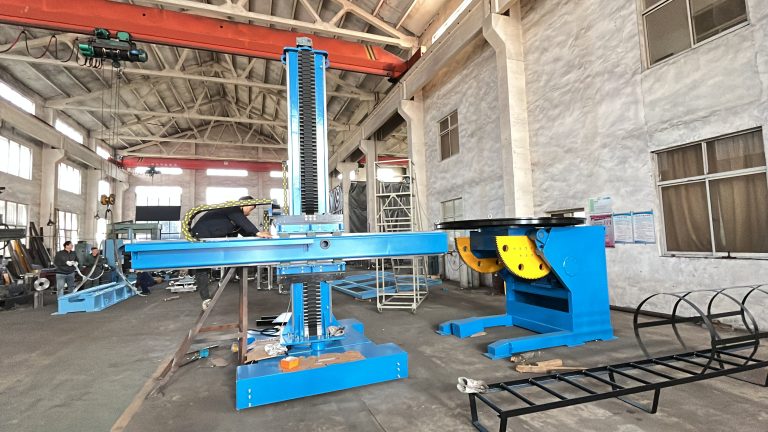
- Combining with a Column and Boom Manipulator
- Welding Turntable Applications for Circular Parts
- Maintenance and Operation Tips for Long-Term Reliability
- Daily and Weekly Checks
- Protecting the Drive System
- Preventative Maintenance Schedule
- Common Questions About Rotary Positioner Tables
- What is the difference between a rotary positioner table and a welding turntable?
- Can a rotary positioner table be used for TIG welding?
- How do I calculate the load rating when the workpiece is off-center?
- What safety features should I look for?
- Is it possible to integrate an older rotary table into a modern robot cell?
Positioning a workpiece for consistent, repeatable welding without operator fatigue is a challenge that almost every fabrication shop eventually faces. A rotary positioner table solves this by providing motorized rotation, allowing the welder to maintain a steady arc while the part moves into the optimum position. This not only improves weld bead appearance and penetration but also directly reduces cycle time and rework. In my years of supporting workshops from small job shops to full production lines, I have seen a properly sized table cut manual handling time by more than half on circular seams. The key is matching the table’s type and specifications to the actual workpiece weight, geometry, and welding process — not just picking the heaviest model available.
What Is a Rotary Positioner Table
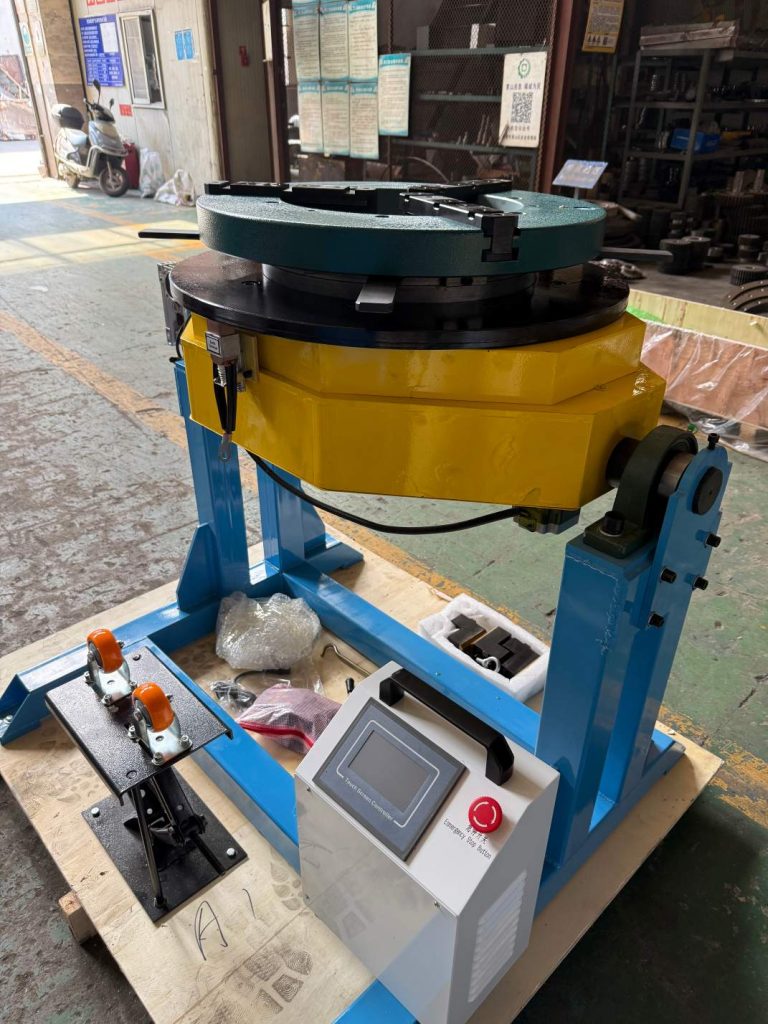
A rotary positioner table is an electromechanical welding positioning device that rotates a workpiece around a single vertical or horizontal axis at a controlled speed. Unlike a simple turntable, an industrial-grade table is designed to handle eccentric loads, provide arc-safe grounding, and maintain stable rotation even when supporting heavy or unbalanced fabrications.
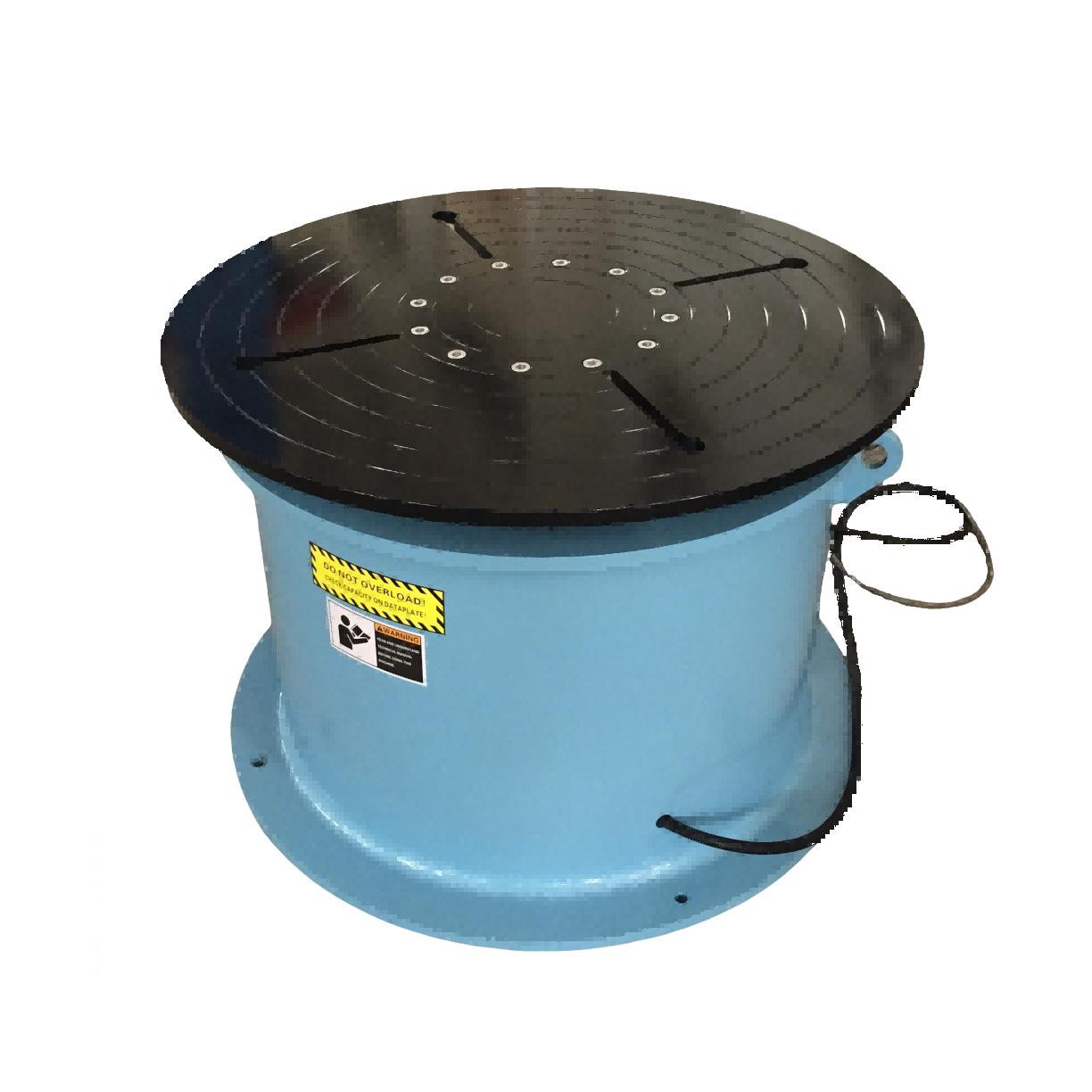
The basic assembly consists of a flat worktable mounted on a gear-driven spindle, an AC or servo motor with a variable frequency drive, and a rigid base frame. The table surface typically includes T-slots or threaded holes for clamping fixtures, jigs, or a welding chuck directly. Operators can adjust rotation speed via a foot pedal or pendant control, keeping both hands free for the torch.
What distinguishes a true positioner table from a lazy susan is its ability to resist welding current passing through bearings. Proper grounding design — usually a dedicated copper brush or slip-ring assembly — prevents arcing damage and extends bearing life. This is a specification I always check when evaluating a table for high-amperage submerged arc welding because a poorly grounded table will fail within weeks of commissioning.
Load Capacity, Table Diameter, and Speed Range
Three specifications define a table’s core capability. The first is maximum load capacity, which must account for both the static weight of the workpiece and any off-center moment. If the center of gravity is 150 mm from the axis, the effective load on the table’s drive can be two to three times higher than the part weight alone. Always request the load-moment curve from the manufacturer when reviewing capacity ratings.
Table diameter determines the maximum workpiece footprint. For circular flanges or small pipe sections, a 400 mm to 600 mm table is usually sufficient. Larger vessel heads or structural weldments often require a 1,000 mm or wider table, sometimes combined with an extended work envelope.
Speed range is tied to the welding process. Tungsten inert gas (TIG) welding may require rotation as slow as 0.1 rpm for precise torch manipulation, while gas metal arc welding (GMAW) on thick sections can operate at 2–5 rpm. A table with a 0.1–6 rpm variable speed range covers most manual and mechanized welding applications.
Types of Rotary Positioner Tables
Rotary positioner tables come in several distinct configurations, each suited to different workpiece geometries and production requirements. Understanding the mechanical differences helps avoid the common mistake of buying a table that cannot tilt when the job demands it.
Fixed Height Tables
A fixed height rotary table provides a flat, horizontal work surface mounted at a set elevation, typically 700–900 mm from the floor. These tables are ideal for smaller, stable parts that do not require reorientation during welding — for example, circular flanges, bearing housings, or end caps. Because they lack a tilting mechanism, fixed height tables are mechanically simple, offer high rigidity, and carry a lower upfront cost. However, they force the welder to adapt body position to the workpiece, which can become an ergonomic problem on long production runs. I generally recommend them for batch welding of parts under 100 kg where the weld joint remains accessible from a single overhead or horizontal torch angle.
Adjustable Height and Tilt-Rotate Tables
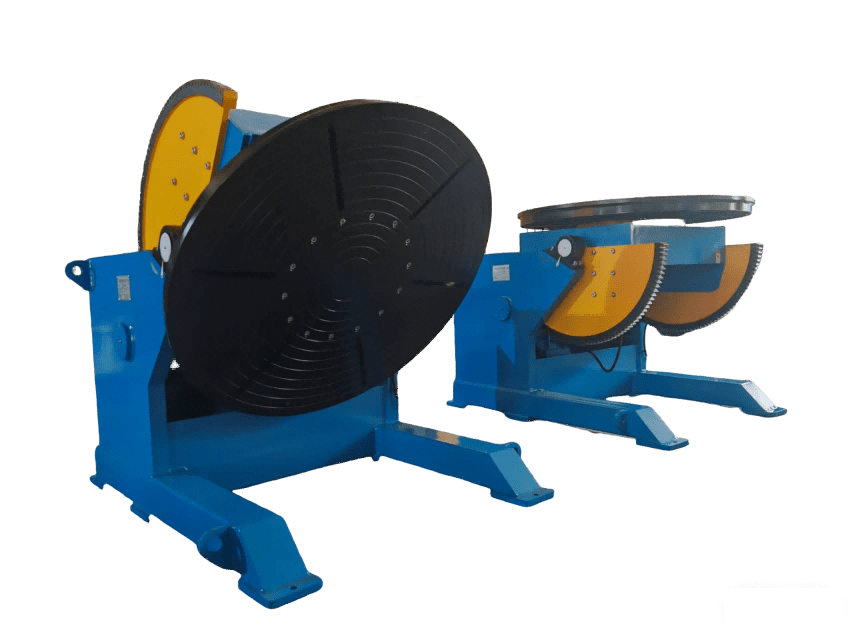
Tables with powered height adjustment and tilt capability solve the problem of welding multi-face assemblies in a single setup. The tabletop can be inclined from horizontal through any angle up to a full 90-degree vertical position, bringing previously hard-to-reach seams into the flat position. This is particularly useful for weldments like machine bases, brackets, and fabricated boxes where joints exist on multiple planes.
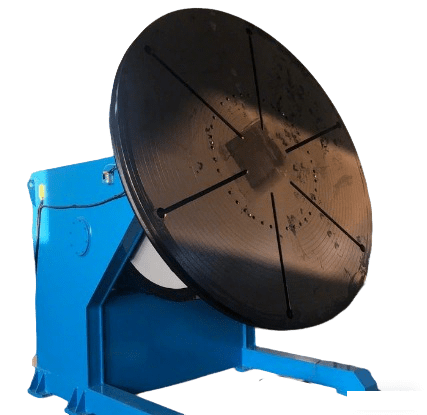
In workshops where floor space is tight, a tilt-rotate table often eliminates the need for an overhead crane to flip a part. The operator can weld the bottom side, then tilt the table to access the sidewall, all without re-rigging. For heavy fabrications, hydraulic tilt mechanisms provide smoother motion and better holding torque than electromechanical jacks. Our team frequently specifies hydraulic tilt tables for customers working with excavator arms and heavy machinery frames because the combination of high load capacity and tilt stability reduces rigging time.
Table with Integrated Chuck
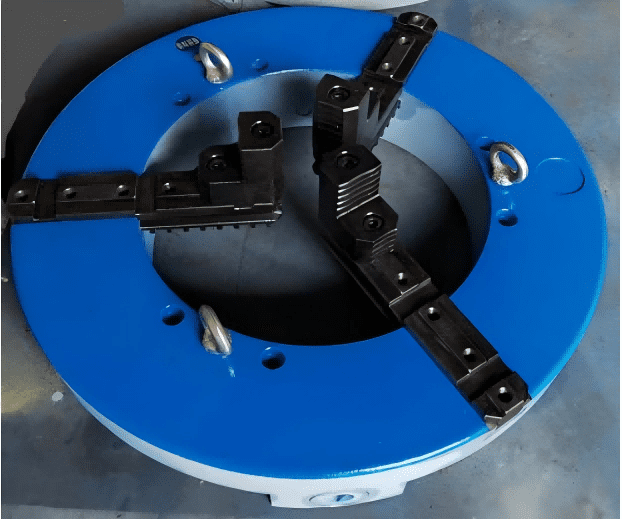
For pipe, shaft, and cylindrical workpieces, a rotary table fitted with a self-centering three-jaw or four-jaw chuck offers a major productivity gain. The chuck grips the part directly on the table surface, providing positive drive without the need for separate fixturing. This configuration is common in pipe welding cells where operators weld circumferential joints on flanges, fittings, and branch connections.
A key specification here is chuck through-hole diameter, which dictates the largest diameter pipe or bar that can pass through the table. If through-feeding is required — for feeding long pipes into the welding station — a hollow spindle table is necessary. For shorter parts, a non-through-hole table with a large chuck will suffice. In either case, the chuck must be properly insulated from the welding current path to prevent jaw bearing damage over time.
How to Choose the Right Rotary Positioner Table
My experience has shown that most selection mistakes trace back to two things: underestimating the off-center weight of the workpiece and ignoring the speed stability needed for the welding process. Answering a few questions upfront will filter out unsuitable models quickly.
Define the Workpiece and Welding Process First
Start with the maximum workpiece weight, and then calculate the eccentric moment. As a rule of thumb, if the distance from the table center to the workpiece center of gravity exceeds one-third of the table radius, the effective load rating should be derated. Many manufacturers provide a moment capacity chart. Always ask for one. Next, look at the welding process: GMAW, shielded metal arc welding (SMAW), or TIG welding each have different heat input and travel speed characteristics, and the table’s speed range must match.
Check the Drive System and Backlash
Gear backlash directly affects rotational accuracy, which in turn affects weld bead consistency on automated setups. For manual welding, some backlash is tolerable. But for mechanized or robotic welding, a table with a precision worm gear set or zero-backlash harmonic drive is worth the investment. I have seen shops try to adapt a general-purpose turntable for automated GMAW only to find that gear slop caused periodic speed oscillation, producing an uneven bead. The extra cost of a well-machined gear set pays for itself in reduced rework.
Consider Integration and Controls
If the table will eventually be part of a larger automated cell with a robotic arm or column and boom manipulator, select a model with an interface that supports external start/stop signals and speed command input. Look for Modbus RTU, Profinet, or at minimum a dry contact closure for starting rotation. This future-proofs the investment. Even if you are starting with manual welding, having an interface-ready table avoids the cost of retrofitting later.
Picking the right table also triggers a procurement decision about the supplier’s engineering support. For complex workpieces, a standard catalog table may not fit without modifications — extended tabletop, custom T-slot pattern, or a taller column height. Working with a manufacturer that offers design customization shortens the lead time and ensures the table arrives ready to handle your specific part.
Integrating Rotary Positioner Tables into Welding Automation
While many shops use rotary tables in standalone manual cells, their real leverage appears when integrated into an automated system. The table becomes the motion axis around which a robot or manipulator can access the entire joint.
Pairing with a Robotic Welding Cell
A servo-driven rotary positioner table acts as an external axis for the robot controller. The robot can coordinate its torch path with table rotation, enabling smooth, continuous welds around circular parts without stopping to reposition. This is especially effective for small to medium parts like hydraulic cylinder caps, motor housings, and automotive components. The table’s repeatability must be within ±0.1 mm at the workpiece radius for the robot to maintain consistent wire stickout.
For higher payloads or large diameters, using a headstock-tailstock positioner instead of a table may be more practical. But for parts that can be securely fixtured on a flat table, the rotary design is simpler to maintain and requires less floor space.
Combining with a Column and Boom Manipulator
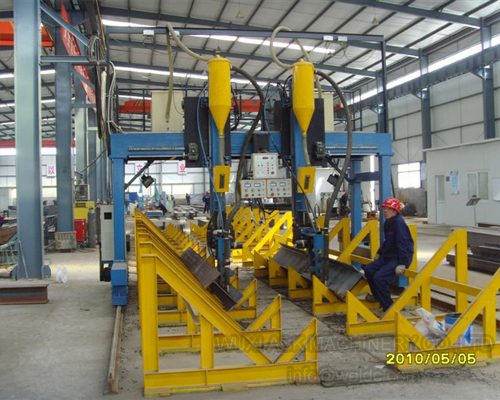
In heavy fabrication — large vessel heads, wind tower sections, pressure vessel components — a rotary positioner table works best when paired with a column and boom manipulator. The table rotates the workpiece while the manipulator positions the submerged arc welding (SAW) or GMAW torch at the correct angle and stickout. The table’s speed stability under high current directly influences penetration consistency. For this kind of setup, I recommend selecting a table with a servo motor and closed-loop control rather than a basic AC drive because small speed variations at high deposition rates can produce underfill or excessive reinforcement.
Welding Turntable Applications for Circular Parts
For lighter, purely circular parts, a dedicated welding turntable can be the most cost-effective solution. These simpler devices lack the tilt functionality and robust gearbox of a full positioner table, but they provide constant-speed rotation for repetitive circumferential seams. When choosing between a turntable and a positioner table, consider whether the part requires reorientation. If it does, the added tilt axis of a positioner table will be necessary.
Maintenance and Operation Tips for Long-Term Reliability
Even a well-built rotary positioner table will underperform if daily checks are overlooked. A few simple practices keep the table accurate and safe over years of production.
Daily and Weekly Checks
Before every shift, verify that the table rotates smoothly through its full speed range without unusual noise. Listen for rhythmic clicking or grinding from the gearbox — a sign of metal contamination in the oil or worn gear teeth. Check the grounding brush or slip ring for oxidation, especially if you have been welding at high amperage. A 15-second visual inspection of the grounding assembly can prevent a bearing replacement that costs weeks of downtime.
Once a week, inspect the T-slot condition on the table surface. Spatter buildup in a slot can prevent a fixture from sitting flat, which introduces angular misalignment. Clean spatter with a chisel or needle descaler, not a grinder, to avoid removing table material.
Protecting the Drive System
The most common failure I see in the field is overloaded gearboxes. Operators sometimes use a rotary table to rotate a part while simultaneously applying a lever to force alignment — a practice that sends shock loads through the gear teeth. If a part does not rotate freely, stop the table and fix the binding issue rather than pushing through it. Overload protection circuits are standard on industrial tables, but they cannot prevent damage from repetitive shock loading.
Preventative Maintenance Schedule
Every 500 operating hours or six months — whichever comes first — drain and refill the gearbox oil. Use the viscosity grade specified in the manual, typically ISO VG 220 or 320 for worm gear reducers. Inspect the motor fan and ventilation grilles for dust accumulation; a dirty motor housing raises internal temperature and shortens winding life. Check all electrical connections for tightness, especially the main power terminals, as vibration from welding operations gradually loosens terminal screws.
Common Questions About Rotary Positioner Tables
What is the difference between a rotary positioner table and a welding turntable?
A rotary positioner table generally refers to a more robust device that may include tilt axes, higher precision gearing, and a welding-rated grounding system. A welding turntable is typically a simpler, single-axis rotating platform meant for lighter, repetitive circular welds. If your workpiece requires reorientation during welding or weighs more than 200 kg, a positioner table is the appropriate choice. For small flanges and consistent horizontal seams, a turntable is usually sufficient.
Can a rotary positioner table be used for TIG welding?
Yes, but the table must provide a stable low-speed range — ideally down to 0.1 rpm or slower. Speed stability is critical for TIG because the weld pool is highly responsive to heat input changes caused by rotation variation. A servo-driven table with speed feedback will maintain a constant angular velocity much better than a standard AC gear motor. Our customers doing pharmaceutical-grade stainless tube welding often specify this.
How do I calculate the load rating when the workpiece is off-center?
Request the manufacturer’s load-moment chart. If that is not available, a safe approximate method is to multiply the workpiece weight (in kg) by the offset distance (in meters) and ensure this product does not exceed the table’s published moment capacity. For example, a 300 kg part with a center of gravity offset of 0.2 meters produces a moment of 60 kg·m. A table with a static load rating of 500 kg but a moment capacity of 50 kg·m would be insufficient.
What safety features should I look for?
At minimum, the table should have an emergency stop button, overload protection, and a mechanical brake that engages when power is removed. If the table includes a hydraulic tilt function, check that the hydraulic circuit has a hose burst valve or pilot-operated check valve to prevent uncontrolled lowering in the event of a line failure. Grounding isolation between the table body and drive electronics is non-negotiable.
Is it possible to integrate an older rotary table into a modern robot cell?
Often yes, if the table’s motor drive accepts an external analog speed command or has a replaceable controller. Many older tables use simple AC motors with contactor-based controls, and a retrofit with a variable frequency drive and an encoder feedback module can turn them into robot-compatible axes. The cost of retrofitting should be compared against a new table designed for automation, but for large tables with a proven structure, a controls upgrade is frequently the more budget-friendly path. If your project involves older equipment, we can review the table’s existing electrical drawings and advise on the feasibility of an upgrade before you commit to a purchase — simply send your equipment details to [email protected] or call +86 13616174307.
If you’re interested, check out these related articles:
Wind Tower Welding Lines: Designing for Peak Production
Boiler Production Lines: Tube to Panel Manufacturing Explained
Automatic Girth Welding Machines: Boost Efficiency for Pipeline Projects