Pressure Vessel Industry Welding: What Buyers Should Verify
Table of Contents
- Pressure Vessel Industry Segments and Equipment Demands
- Welding Standards That Define Pressure Vessel Quality
- Core Pressure Vessel Welding Equipment and Where It Fails
- A Practical Path to Sourcing Pressure Vessel Welding Lines
- Frequently Asked Questions About Pressure Vessel Welding Equipment
- What is the difference between a welding rotator and a welding positioner in vessel fabrication?
- Which welding process is most common for pressure vessel longitudinal and girth seams?
- How much load capacity do we really need?
- What documentation should we request before accepting a pressure vessel welding line?
Pressure vessel industry welding decisions carry more risk than most fabrication equipment choices. A vessel that passes hydrostatic testing in the shop can still fail in service if the longitudinal and girth seams were not positioned and welded with stable, repeatable parameters. I have spent over twelve years working with welding manipulators, rotators, and positioners for vessel fabricators, and the most expensive problems I have seen came from two sources: buying equipment sized for average work, and treating welding positioner selection as an afterthought. Buyers who verify the vessel range first avoid most of those costs.
Pressure Vessel Industry Segments and Equipment Demands
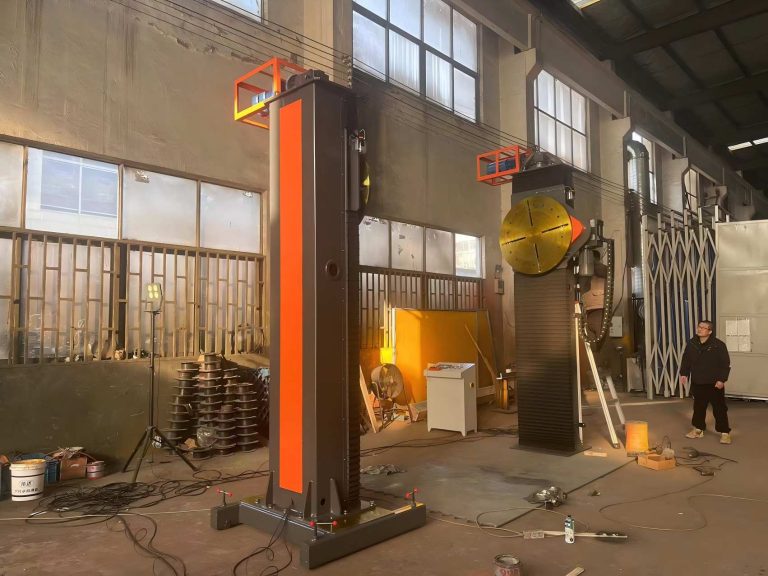
Different segments of the pressure vessel industry do not ask the same questions. A chemical plant building small stainless steel reactors with 2 m diameter shells has little in common with a storage terminal fabricating 40 m long LPG bullets. One shop may need a 5 ton welding positioner; the other may need a self-aligning rotator set rated for 60 tons or more.
Before I recommend equipment, I ask three things: the vessel diameter range, the maximum shell section weight, and the welding process the shop already runs. Those three answers narrow the field faster than any brochure comparison. Carbon steel vessels in the 2 to 4 m diameter range commonly run submerged arc welding for longitudinal and girth seams, so the rotator drives need low-speed stability. Stainless steel and clad vessels often run GMAW or FCAW for root passes and work better on positioners that hold a fixed torch angle.
The segment also changes the tolerance you should accept. Thinner wall vessels distort more easily during rotation. If the rotator rollers have uneven diameters or the bed is not level, a 6 mm shell can show fit-up gaps that were not present on the shop floor. I have seen girth seam fit-up problems traced back to a rotator foundation that shifted by less than 10 mm over two years. That kind of error is avoidable when the buyer asks about frame rigidity and roller alignment before purchase.
Welding Standards That Define Pressure Vessel Quality
ASME Section VIII and EN 13445 do not tell a fabricator which machine to buy, but they set the proof points the equipment must hit. Weld procedure qualifications require consistent travel speed, voltage, and heat input. If a rotator slows under load or a manipulator boom vibrates at the end of travel, the parameters recorded on the WPS may not match what happens on the vessel.
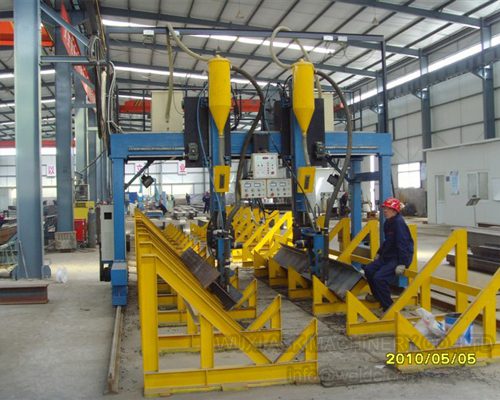
Pressure vessel codes push shops toward more automatic and mechanized welding than ordinary structural work. The reason is straightforward: a manual welder can produce an acceptable test coupon, but repeating that same weld for 20 meters of girth seam without drift is harder. A column and boom manipulator with stable travel speed takes one variable out of the operator’s hands.
European conformity adds another layer. When a vessel is supplied under PED, the fabricator needs documentation that extends back to the equipment used to make the weld. We supply machines with CE and ISO conformity and voltage options aligned to those requirements, and we keep the equipment records buyers need for their own certification files. The welding set is not the vessel certificate, but it can create the conditions that make certification repeatable.
Core Pressure Vessel Welding Equipment and Where It Fails
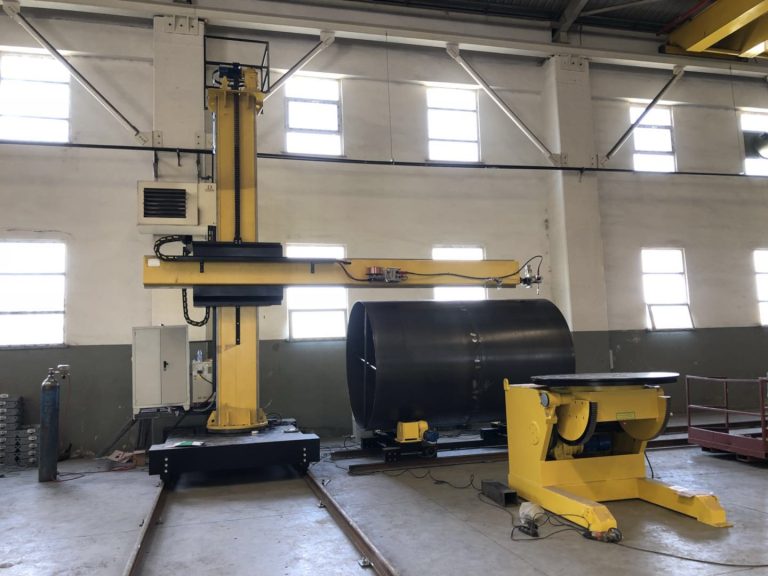
Pressure vessel welding lines usually combine three elements: a rotating device to turn the shell, a manipulator or beam to carry the welding head, and a positioner or fixture for heads, flanges, and nozzles. The table below maps the equipment to its main job.
| Equipment | Main job in vessel work | Common failure point when underspecified |
|---|---|---|
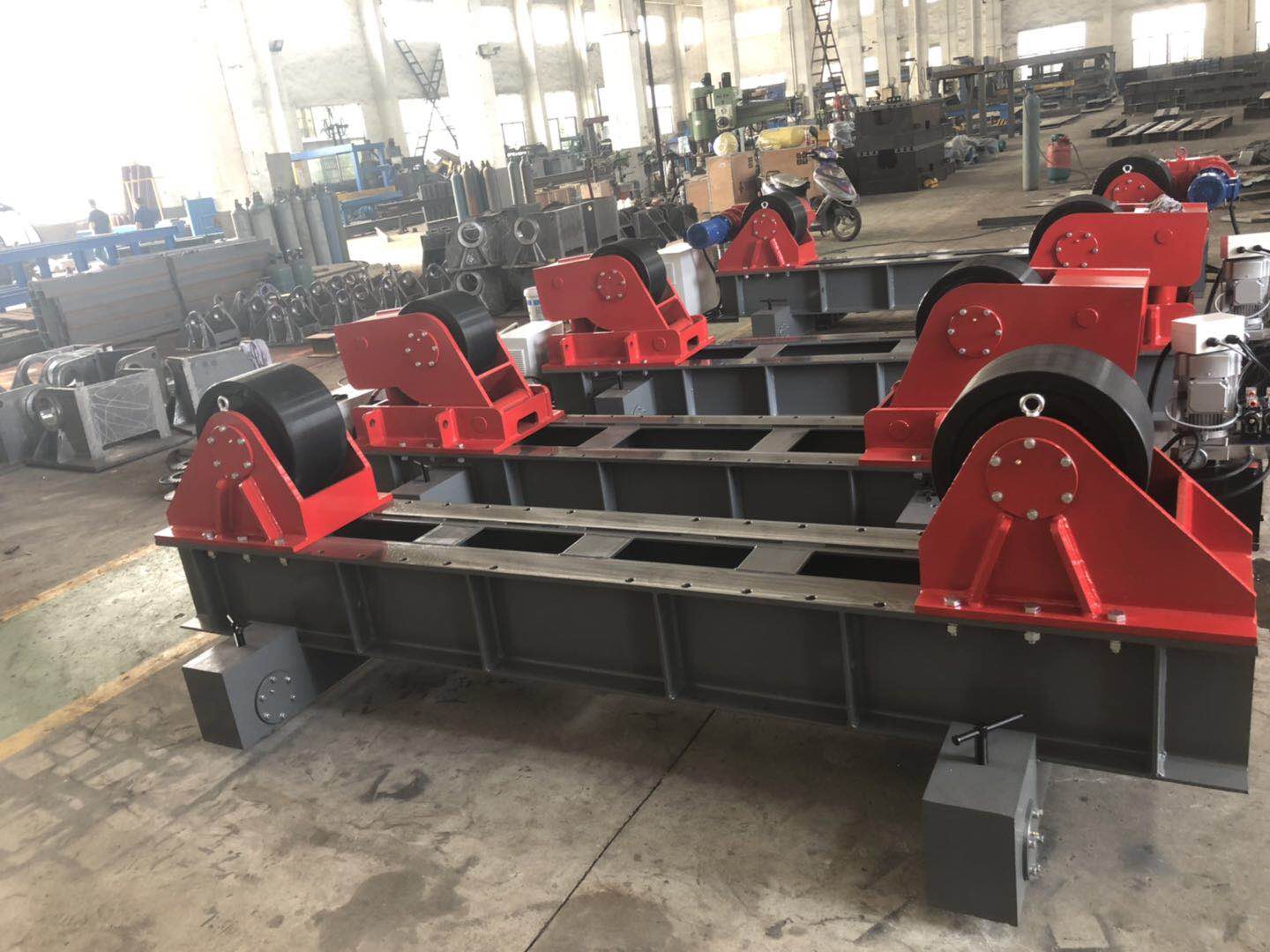
| Conventional welding rotator | Turns cylindrical shells during longitudinal and girth seam welding | Roller slip on heavy painted shells |
| Adjustable welding rotator | Handles mixed diameters on one set | Flexible center distance selection not matched to vessel range |
| Fit-up rotator | Aligns and tacks shell courses before final welding | Insufficient lateral adjustment for course matching |
| Column and boom manipulator | Carries SAW or GMAW torch along long seams | Boom deflection at full extension |
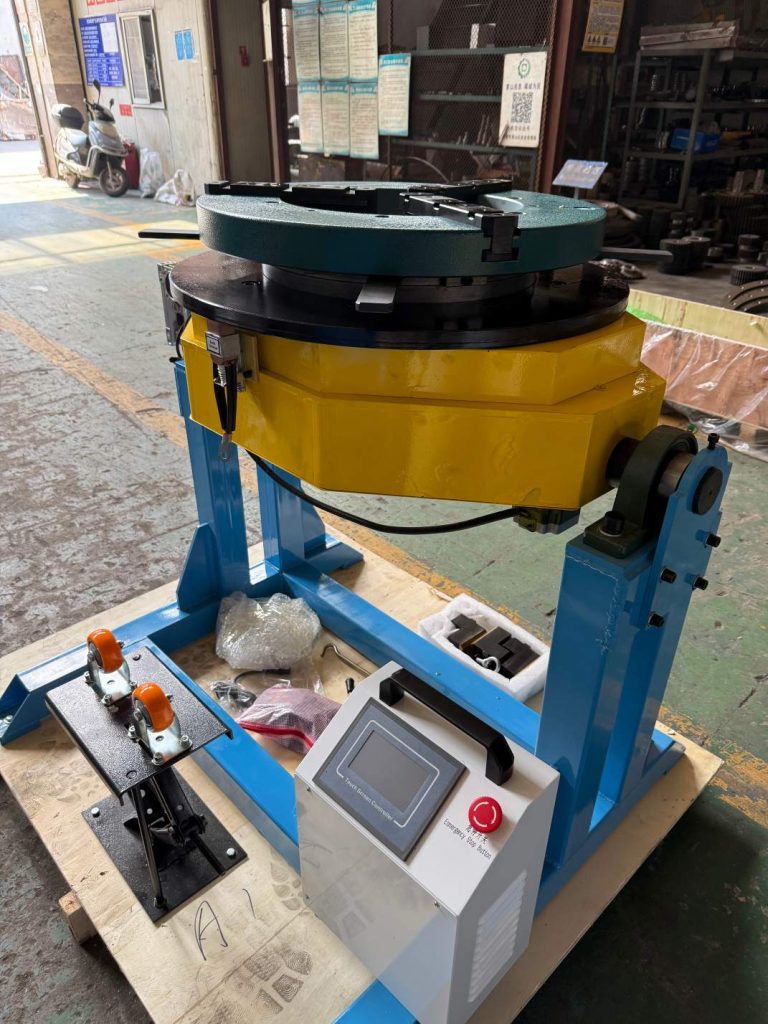
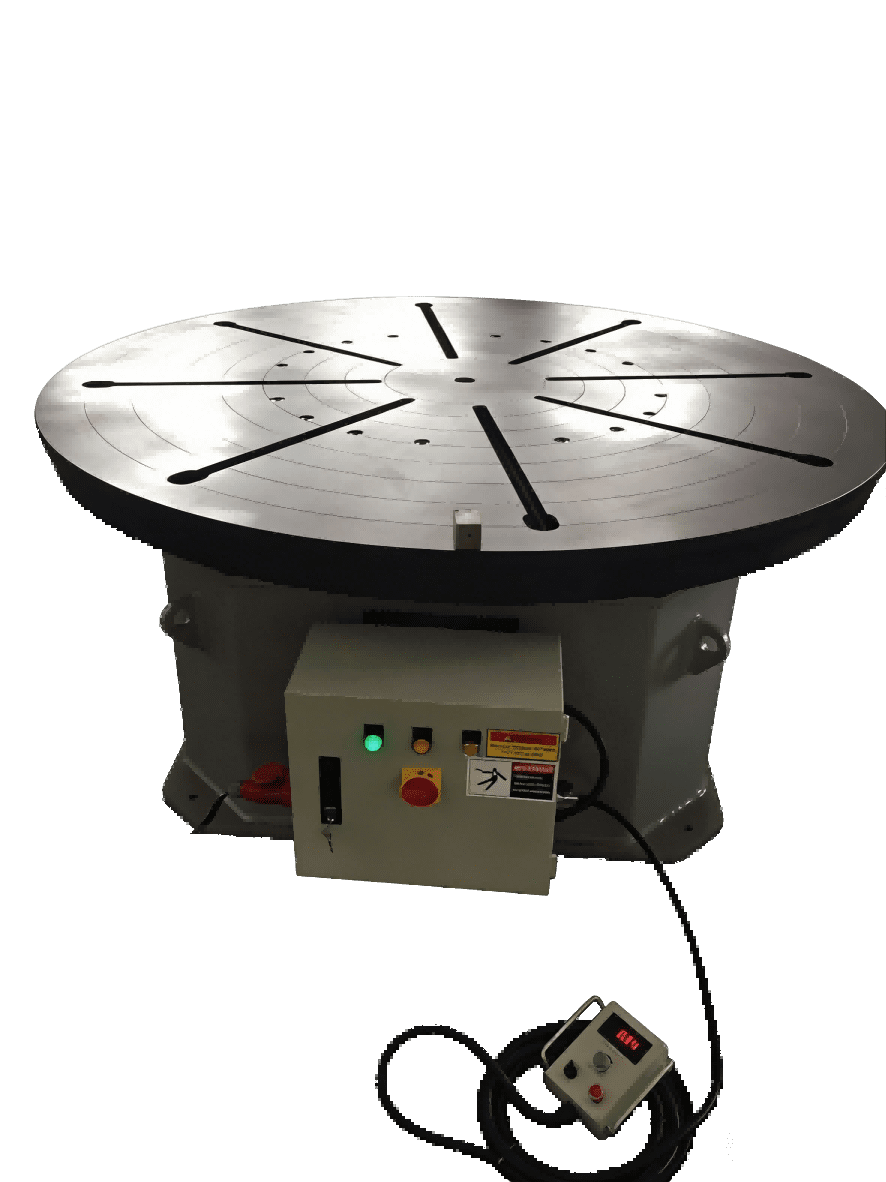
| L-type welding positioner | Rotates heads, flanges, and small components | Off-center load torque underestimated |
| Head and tailstock positioner | Holds long cylindrical sections with end clamping | Tailstock travel not aligned to shell length |
The most common specification mistake is loading. Fabricators look at total vessel weight and ignore center of gravity. A 20 ton vessel with a heavy nozzle pattern at one end can exert a far larger tilting torque on an L-type positioner than its weight suggests. I ask for the off-center distance and the exact orientation of nozzles and internals before confirming a positioner. When we skip that step, the result is usually a torque margin that works on paper and alarms in production.
On mixed product lines, a single capacity rating is not enough. If your shop handles both small drums and long heavy wall columns, send the largest outside diameter, maximum shell length, and the weld process to [email protected]. We will check the rotator capacity and the manipulator reach against the full range before you commit.
A Practical Path to Sourcing Pressure Vessel Welding Lines
Start with the vessel, not the machine. We ask buyers to send a simple set: outside diameter range, maximum course length, wall thickness, material grade, and whether the shop will run SAW, GMAW, or FCAW. A missing wall thickness often leads to wrong rotator motor sizing, because heavy wall vessels need higher torque at low speed.
After the vessel data is set, define how the shop will move work in and out. Cranes, forklifts, and foundation layout decide whether a fixed base manipulator or a traveling manipulator is the better fit. In many pressure vessel shops, the vessel itself moves past the welding station; in others, the manipulator travels to the vessel. Buying the wrong travel configuration creates a material flow problem, not just a welding problem.
Acceptance testing is the next gate. Load testing, runout checks, variable frequency drive behavior, and emergency stop action should be confirmed before shipment. For export orders, voltage, frequency, and documentation matter as much as the steel frame. A machine that cannot run on the site’s generator capacity can sit unused even if the weld parameters look perfect.
Spare parts planning belongs in the order, not after commissioning. Rollers, contactors, control boards, and drive belts wear. A spare parts kit assembled before shipment costs less than waiting for a courier during a vessel contract.
If your pressure vessel program involves mixed diameters, code documentation, or site power limits, do not start with generic capacity tables. Send your vessel diameter range, wall thickness, and monthly output target to [email protected] or call +86 13616174307, and we will map the equipment set to the vessel range you actually fabricate.
Frequently Asked Questions About Pressure Vessel Welding Equipment
What is the difference between a welding rotator and a welding positioner in vessel fabrication?
A rotator turns the cylindrical shell around its own axis so longitudinal and girth seams stay under the welding head. A positioner tilts or rotates the workpiece to bring a weld into the flat or most controlled position. For large vessel courses, rotators carry the shell and a manipulator handles torch travel. For heads, flanges, and nozzle assemblies, a positioner holds the part and moves it through different angles. Buyers sometimes confuse the two because both rotate, but they solve different parts of the same welding problem. The selection question is whether you are rotating a long cylinder or repositioning a component with an off-center shape.
Which welding process is most common for pressure vessel longitudinal and girth seams?
Many buyers assume one process fits all pressure vessel welding. In practice, submerged arc welding is the most common choice for carbon steel long seams and girth seams because it gives high deposition and consistent penetration on long straight or circular joints. GMAW or FCAW often handles root passes, stainless steel, and smaller diameter work where changing wire and shielding gas matters. The vessel code and material grade should guide the process choice more than shop habit. A shop that only runs GMAW may need different manipulator speeds and rotator drive control than a shop set up for SAW.
How much load capacity do we really need?
The answer depends on two figures: maximum vessel weight and center of gravity offset. If the weight is centered and the vessel is nearly symmetrical, a rotator or positioner rated slightly above the gross weight may work. If nozzles, internals, or heavy flanges sit off center, the required capacity rises quickly because torque, not weight alone, controls the drive and tilt mechanism. We ask buyers to send the heaviest off-center condition they expect, not just the maximum vessel weight. That figure prevents a machine from being sized for the average shell and then failing when the difficult head or nozzle assembly goes on the table.
What documentation should we request before accepting a pressure vessel welding line?
Request the factory acceptance test record, load and runout test data, CE or ISO certificates, electrical diagrams, and the operation manual in your working language. The manual should cover startup, fault recovery, and maintenance intervals, not just basic operation. For export buyers, also confirm the voltage, frequency, and spare parts list in the commercial documents. These records matter most when the vessel itself must meet PED or ASME documentation requirements. If your contract requires traceability, share your certification requirements with [email protected] and we will confirm which documentation set matches before shipment.
If you’re interested, check out these related articles:
Industrial Custom Welding Manipulators for Structural Fabrication
Fit-Up Rotator for Accurate Vessel Alignment & Stable Welding
CNC Flame Cutting: Precision Cutting for Heavy Plate Fabrication
Welding Equipment Factory Audits: Secure Quality Before Purchase