Portable Water Jet Cutters: Ideal for On-Site Field Cutting Tasks
Table of Contents
- Why Field Operations Demand Cold-Cutting Capability
- How Portable Water Jet Cutting Systems Work
- Materials and Thickness Capabilities for Field Cutting
- Selecting a Portable Water Jet Cutting Machine for Your Application
- Setting Up and Operating Portable Water Jet Equipment On-Site
- Comparing Portable Water Jet Cutting to Alternative Field Methods
- Maintenance Requirements and Consumable Costs
- Applications Where Portable Water Jet Cutting Excels
- What to Consider Before Investing in Portable Water Jet Capability
- Common Questions About Portable Water Jet Cutting Machines
- What materials can a portable water jet cutting machine cut?
- How thick can portable water jet equipment cut?
- What are the operating costs for portable water jet cutting?
- Can portable water jet cutting be used in explosive atmospheres?
- How does portable water jet cutting compare to plasma cutting for field work?
- Sources and Further Reading
When a pipeline repair crew arrives at a remote oil field site and discovers they need to cut through 150mm stainless steel plate to access damaged infrastructure, transporting the workpiece to a workshop is not an option. The job must happen where the problem exists. Portable water jet cutting machines solve exactly this challenge by bringing cold-cutting precision directly to the field, eliminating heat-affected zones that would compromise material integrity in critical applications. For maintenance teams, demolition contractors, and emergency response operations, these machines represent a fundamental shift from “bring the work to the shop” to “bring the shop to the work.” The technology operates at pressures exceeding 400 MPa, using a focused stream of water mixed with abrasive garnet to slice through virtually any material without thermal distortion, sparks, or hazardous fumes.
Why Field Operations Demand Cold-Cutting Capability
Traditional thermal cutting methods create problems that portable water jet systems eliminate entirely. Plasma and oxy-fuel cutting generate heat-affected zones extending 3–8mm into the base material, altering metallurgical properties and introducing residual stresses. In pressure vessel repair or nuclear decommissioning work, these thermal effects can disqualify the cut edge from meeting code requirements, forcing additional machining or complete part replacement.
The cold-cutting nature of water jet technology means the material temperature at the cut edge rarely exceeds 50°C. I have observed pipeline repair projects where welders could begin fitting new sections within minutes of the cut completion because no cooling period was required. This characteristic becomes critical when working with heat-sensitive materials like titanium alloys, hardened tool steels, or composite laminates that would delaminate under thermal stress.
Spark-free operation opens applications in hazardous environments where thermal cutting is prohibited. Petrochemical facilities, grain storage silos, and ammunition disposal sites all require cutting methods that cannot ignite flammable atmospheres. Water jet cutting satisfies ATEX Zone 1 requirements for explosive atmosphere work, a certification that thermal methods cannot achieve.
The absence of toxic fumes simplifies confined space work significantly. Cutting operations inside tanks, vessels, or ship compartments no longer require extensive ventilation systems or supplied-air respirators for the operator. The cutting stream captures most material particles in the water flow, and the garnet abrasive is an inert mineral that poses no respiratory hazard.
How Portable Water Jet Cutting Systems Work
A portable water jet cutting system consists of three primary subsystems: the high-pressure pump unit, the abrasive delivery system, and the cutting head assembly. Understanding how these components interact explains both the capabilities and the operational requirements of field deployment.
The pump unit generates water pressure between 300 MPa and 600 MPa, depending on the application requirements. Ultra-high-pressure pumps in the 400–600 MPa range achieve faster cutting speeds and cleaner edge quality but require more robust containment and safety measures. Most portable systems operate in the 380–450 MPa range, balancing cutting performance against field serviceability. The pump draws clean water from a supply tank, pressurizes it through intensifier cylinders, and delivers it to the cutting head through specialized high-pressure tubing rated for the operating pressure plus a safety margin.
| Component | Function | Typical Specifications |
|---|---|---|
| Intensifier Pump | Generates ultra-high pressure | 380–600 MPa, 2–8 L/min flow |
| Abrasive Hopper | Stores and meters garnet | 50–200 kg capacity, 0.2–0.8 kg/min feed |
| Cutting Head | Focuses water stream, mixes abrasive | 0.25–0.35mm orifice, mixing tube 0.75–1.2mm |
| Control Unit | Manages pressure, abrasive flow, safety interlocks | PLC-based, remote pendant operation |
The abrasive delivery system meters garnet particles into the cutting stream at the mixing chamber. Garnet mesh sizes between 50 and 120 are standard, with finer mesh producing smoother cut surfaces and coarser mesh increasing cutting speed on thick materials. The feed rate is adjustable based on material thickness and desired edge quality, typically ranging from 0.2 to 0.8 kg per minute.
At the cutting head, the high-pressure water passes through a jewel orifice—usually synthetic sapphire or diamond—creating a coherent stream traveling at approximately 900 meters per second. This stream enters the mixing chamber where it entrains the abrasive particles through a venturi effect. The combined stream exits through a focusing tube that maintains beam coherence over the cutting distance.
Materials and Thickness Capabilities for Field Cutting
The material versatility of water jet cutting is one of its defining advantages for field operations. A single portable system can cut steel, aluminum, copper, titanium, glass, stone, composites, and rubber without changing consumables or adjusting fundamental operating parameters.
For carbon and stainless steel, portable systems typically handle thicknesses up to 150mm, though cutting speed decreases significantly beyond 75mm. A 400 MPa system cutting 25mm mild steel achieves approximately 150–200mm per minute traverse speed with acceptable edge quality. At 100mm thickness, the same system slows to 15–25mm per minute, and the cut surface shows more pronounced striations in the lower portion.
Aluminum cuts approximately 30% faster than steel at equivalent thicknesses due to its lower density and hardness. However, the softer material can exhibit more pronounced taper on thick sections if traverse speed is not properly matched to thickness. Titanium and nickel alloys cut at roughly 60–70% of steel cutting speeds but benefit enormously from the cold-cutting process that preserves their heat-treated properties.
Composite materials present a particular strength for water jet cutting. Carbon fiber reinforced polymers, fiberglass, and Kevlar laminates that would delaminate under thermal cutting or chip under mechanical sawing cut cleanly with water jet. The cutting stream passes through the layered structure without inducing interlaminar stresses, producing edges that require minimal finishing before bonding or mechanical fastening.
Stone, ceramic, and glass materials up to 100mm thickness are within reach of portable systems, making them valuable for architectural restoration, monument repair, and industrial refractory maintenance. The cut edges on these brittle materials show no microcracking that would propagate under service loads.
Selecting a Portable Water Jet Cutting Machine for Your Application
The selection process for a portable water jet system balances cutting capability against mobility, power requirements, and operational environment constraints. Not every field application needs the same level of portability, and matching the system to actual use conditions prevents both capability shortfalls and unnecessary expense.
True portability requires the complete system to be transportable by standard vehicles and deployable by a small crew without crane assistance. Systems in the 15–25 kW pump power range typically meet this criterion, with total weights between 500 and 1,500 kg depending on water tank capacity and frame construction. These units fit in standard cargo vans or pickup trucks and can be wheeled into position on industrial casters.
Higher-power systems in the 30–50 kW range offer faster cutting speeds and thicker material capability but require trailer mounting and three-phase electrical supply. For operations with regular access to heavy equipment and power infrastructure, these semi-portable systems provide workshop-level performance at field locations.
Water supply requirements often determine practical deployment feasibility. A typical portable system consumes 3–6 liters of clean water per minute during cutting. An eight-hour shift requires 1,500–3,000 liters, which must be transported to the site or sourced locally and filtered. Remote locations without water access may need tanker support or recirculation systems that filter and reuse the cutting water.
Power supply options include diesel generator sets for fully independent operation, three-phase grid connection where available, or hydraulic power take-off from support vehicles. Diesel-powered units offer maximum flexibility but add noise, emissions, and fuel logistics to the operation. Grid-connected systems are quieter and cleaner but limit deployment to locations with adequate electrical infrastructure.
If your cutting requirements span multiple material types and thicknesses, it is worth discussing specific application parameters with equipment suppliers to confirm the system configuration matches your most demanding use cases. Reach out to [email protected] with your material specifications and site conditions for a detailed capability assessment.
Setting Up and Operating Portable Water Jet Equipment On-Site
Field deployment of portable water jet cutting equipment follows a systematic sequence that ensures safe operation and optimal cutting performance. The setup process typically requires 30–60 minutes for experienced crews, depending on site conditions and system complexity.
Site preparation begins with identifying a stable, level surface for the pump unit and establishing clear zones around the cutting area. The high-pressure water stream retains significant energy even after passing through the workpiece, requiring a catch tank or sacrificial material beneath the cut path. Portable systems often include folding catch tanks that deploy beneath the cutting head to contain the spent water and abrasive.
Electrical connection or generator positioning comes next, followed by water supply hookup. The water must be filtered to remove particles larger than 50 microns that could damage the pump seals and jewel orifice. Most systems include onboard filtration, but heavily contaminated source water may require pre-treatment.
The cutting head mounts to a track system, articulating arm, or handheld fixture depending on the cut geometry required. Track-mounted systems provide the straightest cuts and most consistent edge quality for linear cuts. Articulating arms allow curved cuts and access to awkward positions. Handheld operation is possible for rough cutting but produces lower edge quality and requires significant operator skill.
Before cutting, operators verify system pressure, abrasive flow, and safety interlock function. A test cut on scrap material confirms proper setup and allows adjustment of traverse speed for the specific material being cut. During operation, the operator monitors pressure gauges, abrasive hopper level, and cut quality, adjusting parameters as needed.
Post-operation procedures include depressurizing the system, flushing the abrasive lines, and cleaning the cutting head components. Proper maintenance after each use extends consumable life and prevents startup problems on subsequent deployments.
Comparing Portable Water Jet Cutting to Alternative Field Methods
Field cutting operations have traditionally relied on oxy-fuel torches, plasma cutters, and mechanical saws. Each method has legitimate applications, but understanding where portable water jet cutting outperforms these alternatives guides appropriate technology selection.
Oxy-fuel cutting remains the lowest-cost option for carbon steel above 6mm thickness, with equipment costs a fraction of water jet systems and consumables readily available worldwide. However, oxy-fuel cannot cut stainless steel, aluminum, or non-ferrous metals without special flux processes. The heat-affected zone extends 5–10mm into the base material, and the cut edge requires grinding before welding to code requirements. For structural steel demolition where edge quality is irrelevant, oxy-fuel remains practical. For any application requiring material property preservation or non-ferrous capability, water jet is superior.
Plasma cutting offers faster speeds than water jet on thin materials up to about 25mm and handles all conductive metals. Modern plasma systems achieve good edge quality on materials under 12mm. Beyond this thickness, plasma cut quality degrades rapidly, and the heat-affected zone becomes significant. Plasma also cannot cut non-conductive materials like composites, stone, or glass. The spark and spatter generation prohibits use in explosive atmospheres.
Mechanical cutting with reciprocating saws, band saws, or abrasive wheels provides precise cuts on accessible edges but cannot match water jet versatility. Saw blades require specific selection for each material type, and blade changes add time to mixed-material jobs. Mechanical methods also struggle with hardened materials and generate significant noise and vibration.
| Method | Material Range | Max Practical Thickness | Heat-Affected Zone | Hazardous Area Use |
|---|---|---|---|---|
| Portable Water Jet | All materials | 150mm steel | None | Yes (ATEX certified) |
| Oxy-Fuel | Carbon steel only | 300mm+ | 5–10mm | No |
| Plasma | Conductive metals | 50mm | 2–5mm | No |
| Mechanical Saw | Most materials | 100mm | None | Limited |
The cost per cut meter for water jet is higher than thermal methods due to abrasive consumption, typically $15–40 per meter depending on material and thickness. This cost premium is justified when material properties must be preserved, when working in hazardous atmospheres, or when the alternative is transporting large workpieces to a workshop for cutting.
Maintenance Requirements and Consumable Costs
Operating cost awareness helps fabricators and contractors budget accurately for portable water jet operations. The primary consumables are garnet abrasive, jewel orifices, mixing tubes, and high-pressure seals.
Garnet consumption runs between 0.3 and 0.6 kg per minute of cutting time, depending on material thickness and desired edge quality. At typical industrial pricing of $0.30–0.50 per kg, abrasive cost alone adds $10–20 per hour of active cutting. Annual consumption for a system running 1,000 cutting hours reaches 20–30 metric tons, representing a significant logistics and storage consideration for remote operations.
The jewel orifice that creates the initial water stream wears gradually and requires replacement every 40–100 hours of cutting time. Sapphire orifices cost $20–50 each and last toward the lower end of this range. Diamond orifices cost $150–300 but achieve 80–100 hours of service life, often making them more economical for high-utilization operations.
Mixing tubes wear faster than orifices because they handle the abrasive-laden stream. Typical service life is 20–60 hours depending on abrasive quality and operating pressure. Replacement cost runs $50–150 per tube. Operators learn to recognize the gradual degradation in cut quality that signals mixing tube wear.

High-pressure seals in the pump intensifier require periodic replacement based on operating hours and water quality. Seal kits cost $200–500 and are typically replaced every 500–1,000 hours. Poor water quality accelerates seal wear dramatically, making filtration maintenance a priority.
Preventive maintenance schedules for portable systems include daily checks of water filtration, abrasive feed function, and high-pressure connections. Weekly maintenance covers lubrication points and electrical connections. Monthly service includes seal inspection and replacement of wear components approaching end of life.
Applications Where Portable Water Jet Cutting Excels
Certain field applications showcase the unique advantages of portable water jet cutting so clearly that no alternative method competes effectively. Recognizing these applications helps justify the investment and identify opportunities where the technology delivers maximum value.
Nuclear decommissioning and radioactive waste processing require cold cutting to prevent aerosolizing contaminated material. Thermal cutting methods would vaporize radioactive particles and spread contamination through the facility. Water jet cutting captures contaminated particles in the water stream, which is then filtered and processed as liquid waste. The technique has become standard practice for cutting reactor components, contaminated piping, and waste containers in nuclear facilities worldwide.
Underwater cutting for offshore platform decommissioning, ship hull repair, and subsea pipeline maintenance leverages water jet’s inherent compatibility with wet environments. The cutting stream functions identically whether the cutting head is in air or submerged. Specialized underwater cutting heads with diver-operated controls enable precise cuts at depths where thermal methods would be impractical or impossible.
Explosive ordnance disposal uses water jet cutting to access and neutralize munitions without risk of detonation. The cold, spark-free cutting process can open bomb casings, cut through explosive charges, and separate warhead components safely. Military and civilian bomb disposal units increasingly rely on portable water jet systems for this critical application.
Aerospace composite repair in the field allows damaged aircraft structures to be cut and prepared for patching without returning to maintenance facilities. The clean cuts through carbon fiber and honeycomb structures preserve surrounding material integrity and provide proper bonding surfaces for repair patches.
Pipeline maintenance and modification in operating facilities benefits from the spark-free, fume-free cutting that allows work to proceed without extensive shutdowns and purging. Tie-in cuts for new branches, removal of damaged sections, and access cuts for internal inspection can often proceed with the pipeline depressurized but not fully evacuated.
What to Consider Before Investing in Portable Water Jet Capability
The decision to acquire portable water jet cutting capability involves evaluating both the technical fit and the business case. Not every organization with occasional field cutting needs justifies owning this equipment, while others find it transforms their service offerings and competitive position.
Utilization rate drives the ownership economics. A portable water jet system with acquisition cost of $80,000–150,000 and annual operating costs of $20,000–40,000 needs sufficient cutting volume to amortize these expenses. Organizations cutting 500 or more hours annually typically find ownership economical compared to rental or subcontracting. Below this threshold, rental arrangements or subcontracting to specialized cutting service providers may be more cost-effective.
Operator training requirements include both safety certification and practical skill development. Most manufacturers provide 3–5 day training programs covering system operation, maintenance, and troubleshooting. Developing proficient operators who can optimize cutting parameters for various materials and thicknesses takes additional months of supervised practice. Organizations should budget for this learning curve when planning initial deployments.
Logistics capability determines whether portable water jet cutting is practical for a given organization’s operations. The equipment, water supply, abrasive inventory, and support materials require transportation to each job site. Organizations with established field service logistics adapt more easily than those building this capability from scratch.
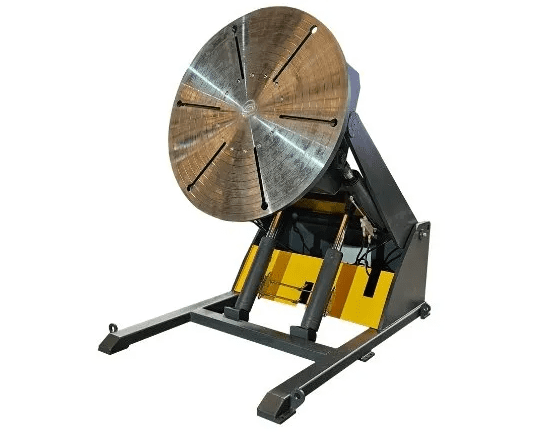
For fabricators considering how portable water jet cutting fits alongside their existing welding positioner and welding rotator equipment, the cold-cutting capability can streamline preparation of parts that will be welded in automated fixtures. Cut edges require no grinding or thermal stress relief before fit-up, reducing total cycle time from raw material to finished weldment.
Common Questions About Portable Water Jet Cutting Machines
What materials can a portable water jet cutting machine cut?
Portable water jet systems cut virtually any material including carbon steel, stainless steel, aluminum, titanium, copper alloys, hardened tool steel, glass, stone, ceramic, composites, rubber, and plastics. The cold-cutting process preserves material properties regardless of heat sensitivity. Material hardness does not limit capability—the abrasive stream cuts hardened steel as readily as mild steel, just at reduced speed. The only materials that present challenges are tempered glass, which shatters from internal stress release, and certain foamed materials where the water penetrates the cell structure. If your application involves unusual materials, confirming cut quality on test samples before production work is straightforward.
How thick can portable water jet equipment cut?
Most portable systems handle steel up to 150mm thickness, though practical cutting speed decreases significantly beyond 75mm. At 25mm thickness, expect traverse speeds of 150–200mm per minute with good edge quality. At 100mm, speeds drop to 15–25mm per minute with more pronounced striations on the cut face. Aluminum cuts faster than steel at equivalent thicknesses, while titanium and nickel alloys cut slower. For applications requiring cuts beyond 150mm, stationary workshop systems with higher pump power are more appropriate. Share your thickness requirements and we can confirm whether portable equipment meets your needs or if alternative approaches would serve better.
What are the operating costs for portable water jet cutting?
Operating costs include abrasive consumption ($10–20 per cutting hour), consumable wear parts (orifices, mixing tubes, seals adding $5–15 per hour averaged over their service life), water supply, and power. Total direct operating cost typically runs $25–50 per cutting hour depending on utilization and maintenance practices. This excludes labor, equipment depreciation, and transportation. The cost per cut meter varies with material thickness—thin materials cut quickly with low cost per meter, while thick materials accumulate more abrasive and consumable wear per meter of cut length.
Can portable water jet cutting be used in explosive atmospheres?
Yes, water jet cutting is inherently spark-free and can be certified for ATEX Zone 1 explosive atmosphere work. The cutting process generates no ignition sources—no sparks, no hot surfaces, no electrical arcs at the cutting point. This makes portable water jet the preferred method for cutting in petrochemical facilities, grain handling operations, ammunition disposal, and other environments where flammable or explosive atmospheres may be present. Proper system configuration and operating procedures must be followed to maintain the intrinsic safety of the process.
How does portable water jet cutting compare to plasma cutting for field work?
Plasma cutting is faster and less expensive for thin conductive metals up to about 25mm thickness. Beyond this range, water jet offers better edge quality, no heat-affected zone, and the ability to cut non-conductive materials that plasma cannot touch. Plasma cannot be used in explosive atmospheres due to spark and arc generation. For mixed-material jobs involving both metals and composites, water jet handles everything with one setup while plasma would require alternative methods for non-metallic components. The choice depends on your specific material mix, thickness range, and operating environment requirements. Contact us at [email protected] or +86 13616174307 to discuss which technology fits your field cutting applications.
Sources and Further Reading
Flow International — Waterjet Technology Fundamentals, 2024
OMAX Corporation — Waterjet Cutting Basics and Applications Guide, 2024
WaterJet Technology Association — Industry Standards and Best Practices, 2023
If you’re interested, check out these related articles:
CNC Flame Cutting: Precision Cutting for Heavy Plate Fabrication
Automatic Girth Welding Machines: Boost Efficiency for Pipeline Projects
Storage Tank Fabrication: Core Equipment and Manufacturing Process
Pipe Welding Rotator vs Manual Welding | Productivity and Cost Comparison
CNC Water Jet Cutting: Precision, No Heat, Any Material