Storage Tank Fabrication: Key Equipment and Standard Manufacturing Procedures
Table of Contents
- How the Storage Tank Fabrication Process Actually Works
- What Equipment Does a Storage Tank Fabrication Line Actually Need?
- Where Automated Welding Makes the Biggest Difference in Tank Production
- Which Quality Standards Apply to Storage Tank Construction?
- How Long Does It Take to Fabricate a Large Industrial Storage Tank?
- Discuss Your Fabrication Needs
- Frequently Asked Questions
Producing industrial storage tanks demands a precise and systematic approach, integrating specialized machinery and skilled execution. Effective storage tank fabrication ensures these critical structures meet stringent safety and performance standards for diverse applications, from petrochemicals to water treatment. Understanding the complete production workflow and the equipment involved is fundamental for any successful project. This deep dive explores the core processes and technologies that define modern tank manufacturing.
How the Storage Tank Fabrication Process Actually Works
The fabrication of storage tanks is a complex sequence of operations, beginning with meticulous design and material selection. We start by analyzing project specifications, including tank type (API 650, pressure vessels, cryogenic tanks), capacity, and the specific material required, such as carbon steel or various grades of stainless steel. This initial phase dictates the entire fabrication line workflow, from plate preparation to final assembly.
The process typically involves several key stages. Raw steel plates undergo precise cutting and shaping first. These prepared plates are then rolled into cylindrical or conical sections, forming the tank shell. The tank bottom and roof components are fabricated concurrently. These individual sections are assembled and welded (often on-site for larger tanks) to create the complete structure. Each step requires specialized equipment and trained personnel to maintain dimensional accuracy and weld quality. Project planning is paramount here, coordinating material flow, equipment availability, and skilled labor to ensure efficiency and adherence to schedules. This structured methodology is what distinguishes reliable industrial tank production.
What Equipment Does a Storage Tank Fabrication Line Actually Need?
Modern fabrication lines rely on a suite of advanced machines to handle various stages of tank production. These machines are designed to process heavy steel plates, perform intricate cuts, and execute high-quality welds.
For efficient and high-quality storage tank fabrication, several pieces of equipment are indispensable:
| Equipment Type | Primary Function | Key Benefit |
|---|---|---|
| CNC Cutting Machines | Precise cutting of steel plates | High accuracy, minimal material waste |
| Plate Rolling Machines | Forming cylindrical tank shells | Uniform curvature, reduced deformation |
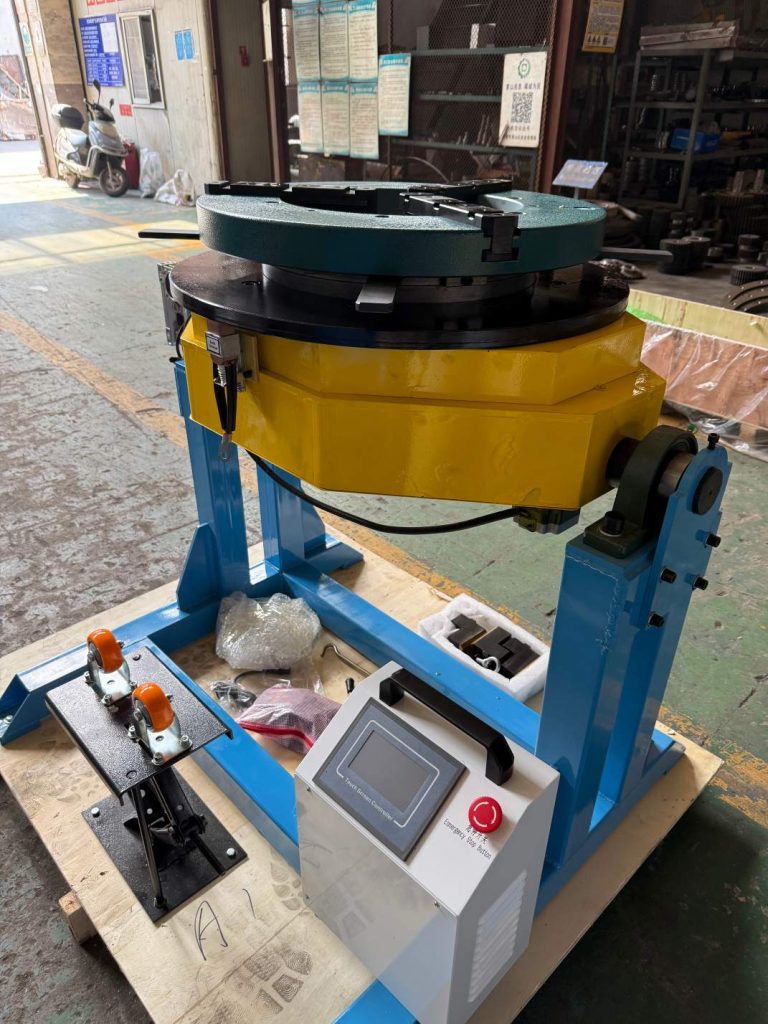
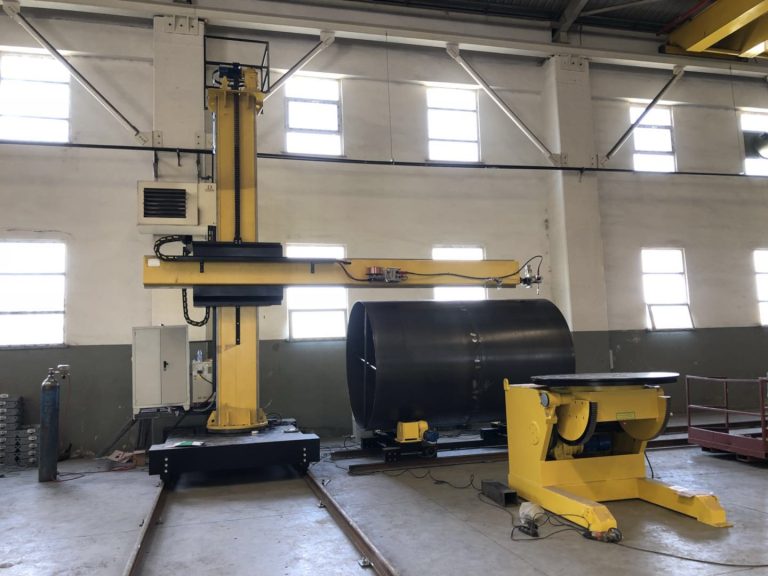
| Welding Manipulators | Positioning welding torches | Consistent weld quality, operator safety |
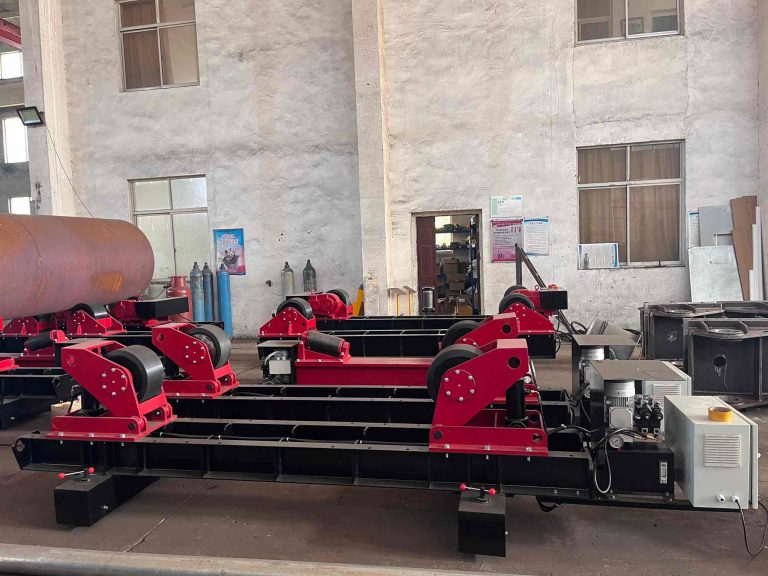
| Turning Rolls | Rotating cylindrical sections | Facilitates circumferential welding |
| Fit-up Equipment | Aligning tank components | Accurate assembly, reduced rework |
| Grinding Machines | Surface preparation and finishing | Smooth welds, improved aesthetics |
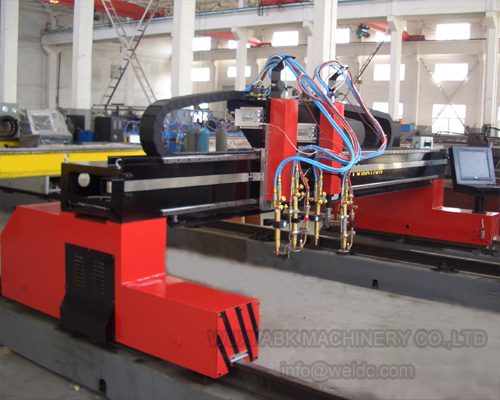
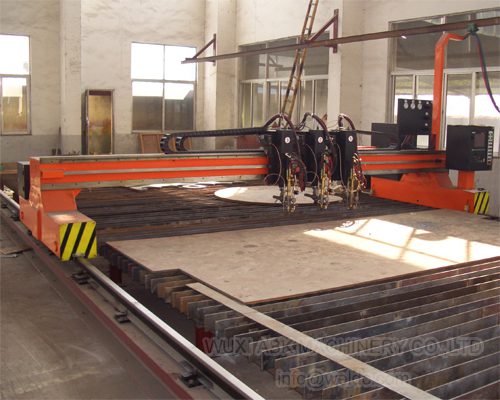
CNC cutting machines (plasma or laser cutters) ensure plates are cut to exact dimensions, minimizing waste and preparation time. Plate rolling machines then form these flat plates into the required curvature for tank shells. Welding equipment, including submerged arc welding (SAW) systems and gas metal arc welding (GMAW) setups, performs the critical task of joining components.
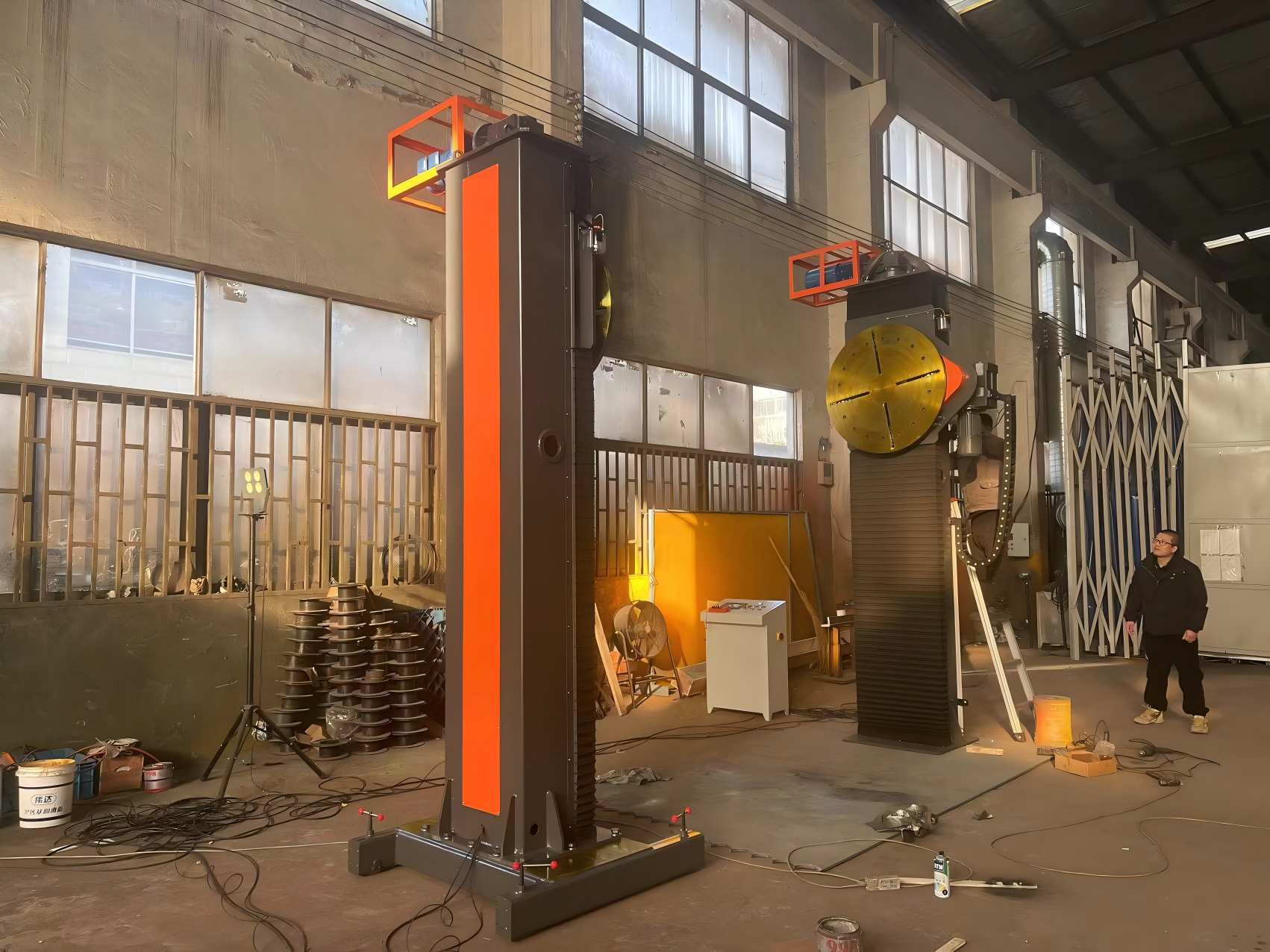
For large tanks, welding manipulators and turning rolls are indispensable. Welding manipulators hold the welding torch in a precise position, while turning rolls rotate the tank sections, allowing for continuous, high-quality circumferential welds. Fit-up equipment aids in accurately aligning tank components before welding, which is critical for structural integrity. Grinding machines handle weld preparation, root cleaning, and finishing, ensuring smooth surfaces and proper weld profiles.
Where Automated Welding Makes the Biggest Difference in Tank Production
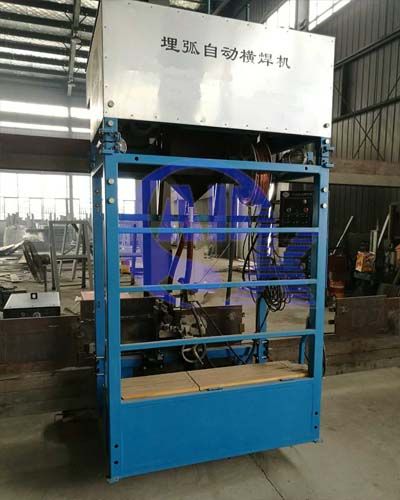
In storage tank production, specialized welding processes are selected based on material type, thickness, and joint configuration. Submerged arc welding (SAW) is frequently used for long, straight seams on tank shells and bottom plates due to its high deposition rate and deep penetration, producing robust welds with excellent mechanical properties. For nozzle fabrication and smaller components, gas metal arc welding (GMAW) or flux-cored arc welding (FCAW) offer versatility and good control.
Automation plays a significant role in optimizing these processes. Automated girth welding machines can weld the circumferential seams of tank shells much faster and more consistently than manual methods. I recall a specific project where we implemented an automatic girth welding machine for a series of large crude oil storage tanks. This machine, paired with precise turning rolls, allowed us to achieve a 25% increase in welding speed and a 15% reduction in post-weld distortion compared to semi-automatic methods. This directly contributed to shortening the shell assembly phase and improving overall project delivery. Robotic welding systems are also increasingly employed for repetitive tasks, ensuring uniform weld quality and reducing operator fatigue. These advancements improve efficiency and enhance the safety of the fabrication environment.
Which Quality Standards Apply to Storage Tank Construction?
Quality assurance begins long before fabrication, with the careful selection and testing of materials. Material selection must match the intended service environment, considering factors like corrosion resistance and temperature extremes. Once fabrication starts, every stage is subject to rigorous inspection.
The construction of storage tanks is governed by several international standards, most notably API 650 for welded tanks for oil storage and API 620 for large, low-pressure storage tanks. Other relevant standards include ASME Boiler and Pressure Vessel Code for pressure vessels, and various ISO/CE certifications for equipment and processes. These standards dictate material specifications, design parameters, welding procedures, and inspection criteria.
Non-destructive testing (NDT) methods are critical for verifying weld integrity. This includes visual inspection, magnetic particle testing (MPT), liquid penetrant testing (LPT), ultrasonic testing (UT), and radiographic testing (RT). Hydrostatic testing, where the completed tank is filled with water, confirms leak-tightness and structural soundness under pressure. Surface treatment (blasting and coating) is also carefully inspected to ensure proper adhesion and corrosion protection. Our commitment to these protocols ensures that every tank we produce meets or exceeds the required safety standards and operational expectations.
How Long Does It Take to Fabricate a Large Industrial Storage Tank?
The fabrication time for a large industrial storage tank varies significantly based on its size, complexity, material, and the level of automation employed. A typical large tank can take anywhere from a few weeks to several months. Factors like site preparation, weather conditions for on-site assembly, and the availability of specialized equipment and skilled labor all influence the lead time.
Streamlining the fabrication line workflow involves careful scheduling, material handling, and resource allocation. Implementing lean manufacturing principles helps identify and eliminate waste, improving cost efficiency. Optimizing the layout of the fabrication shop reduces unnecessary movement of materials and components.
Project management for tank farms (which often involve multiple tanks) requires even more intricate coordination. This includes managing procurement, logistics, construction sequencing, and ensuring all safety standards are met throughout the project lifecycle. Regular progress monitoring and proactive problem-solving keep projects on track and within budget. If your project involves multiple tanks or complex site logistics, it is worth discussing lead time assumptions and equipment availability before finalizing the schedule.
Discuss Your Fabrication Needs
Inconsistent quality and inefficient production do not have to slow your storage tank fabrication projects. WUXI ABK MACHINERY CO., LTD helps fabrication managers and project engineers achieve superior weld quality and optimized workflows through our reliable, ISO/CE certified welding and CNC cutting machines. To discuss specific requirements, contact us at [email protected] or +86 13616174307.
Frequently Asked Questions
What are the primary safety considerations in storage tank fabrication?
Safety standards encompass proper material handling, welding fume extraction, and adherence to lockout/tagout procedures. Implementing robust safety protocols and training minimizes risks on the fabrication line. Personal protective equipment (PPE) use, fire prevention measures, and emergency response plans are also critical elements for a secure working environment.
How do environmental regulations impact storage tank manufacturing?
Environmental regulations influence material selection, waste disposal, and emissions control during the tank manufacturing process. Compliance requires careful planning and often involves specialized surface treatment and painting booths to mitigate ecological impact. Responsible management of hazardous materials and wastewater treatment are key considerations for sustainable production.
Can existing fabrication lines be upgraded for greater automation?
Many existing fabrication lines can integrate automation solutions, such as robotic welding or automated material handling systems. This upgrade can significantly enhance efficiency and precision, improving overall industrial tank production. Assessing current bottlenecks and identifying areas for repetitive tasks are the first steps toward successful automation integration.
What are the common challenges in fabricating large-scale storage tanks?
Fabricating large-scale storage tanks often presents challenges related to logistics, site assembly, and maintaining structural integrity across vast dimensions. Effective project planning and specialized equipment are critical for overcoming these hurdles. Managing material flow, coordinating heavy lifting, and ensuring precise alignment of massive components demand considerable expertise. For specific guidance on your project’s requirements, reach out to our team at [email protected].
If you’re interested, you may want to read the following articles:
Welding Rotator vs Manual Pipe Welding: Productivity & Cost Efficiency