
Metal Welding Machines: How to Choose the Right One
Table of Contents
- Which Welding Process Should Your Metal Welding Machine Use?
- What Inputs Determine the Right Metal Welding Machine Specification?
- Why Material and Thickness Come First
- How Duty Cycle and Arc Hours Shape the Machine
- Why Edge Preparation and Fit-Up Accuracy Matter
- How Do Positioners, Rotators, and Manipulators Change the Selection?
- How Do You Evaluate a Metal Welding Machine Supplier Before Ordering?
- How Do You Confirm the Specification Before You Commit?
- What Questions Do Buyers Ask About Metal Welding Machines?
- How do I choose between a multiprocess machine and separate machines?
- Is a higher amperage machine always a safer choice?
- What causes porosity in machine welding, and how can I avoid it?
- What should I ask before ordering a machine from an overseas supplier?
Shops buy metal welding machines on the basis of price or brand more often than they should. The result is a machine that either sits below its duty cycle while production waits, or gets pushed past its design limits until weld quality falls. In this article I explain how to match welding equipment to material, thickness, joint access, deposition rate, and production volume. I also show where positioners, rotators, and manipulators change the calculation. The path below is the same one I use when specifying equipment for fabrication workshops, and it starts with process selection rather than a model number.
Which Welding Process Should Your Metal Welding Machine Use?
The welding process determines the power source, wire or electrode feed, shielding gas, and operator skill level you will live with every shift. I start here because many shops select the machine first and then adapt the process, which forces compromises later.
The main processes I consider are GMAW (gas metal arc welding), FCAW (flux cored arc welding), GTAW (gas tungsten arc welding), SMAW (shielded metal arc welding), and SAW (submerged arc welding).
| Process | Best fit | Typical production situation | Main limitation |
|---|---|---|---|
| GMAW (MIG) | Carbon steel, stainless steel, and aluminum up to moderate thickness | High volume fabrication, sheet metal work, general job shops | Outdoor use becomes difficult without proper shielding |
| FCAW | Carbon steel and heavy sections | Structural work, field repair, out of position welds at higher deposition | More smoke and slag handling |
| GTAW (TIG) | Stainless steel, aluminum, thin wall, and high purity joints | Sanitary pipe, aerospace, tooling, and root passes | Slow travel speed and high operator skill |
| SMAW (Stick) | Carbon steel, cast iron, and heavy wall | Field service, maintenance, and pipeline tie-ins | Lower deposition and frequent electrode changes |
| SAW | Carbon steel and stainless steel plate or pipe | Tank girth seams, wind tower longitudinal seams, and pressure vessels | Limited to flat or horizontal positions with flux handling |
For most general fabrication shops, GMAW or FCAW carry the load. TIG enters when weld cosmetics and low spatter matter more than speed. SAW is the default when you need repeatable, high deposition long seams on thick plate, and that is where a manipulator or rotator pairing makes the investment worthwhile.
What Inputs Determine the Right Metal Welding Machine Specification?
Before a quotation, I ask for five inputs: base metal and grade, thickness range, joint type and position, monthly output or arc hours, and the available power supply. Each one changes the machine configuration more than the catalog price does.
Why Material and Thickness Come First
Carbon steel forgives many process choices. Aluminum and stainless steel do not. Aluminum needs higher heat input and careful heat control. Stainless steel is prone to distortion and carbide precipitation when heat lingers too long. Thickness defines whether you need a single pass or multipass procedure, and that decision drives power source capacity. A machine rated for 300 A may weld 10 mm carbon steel easily but fall short on a single pass 20 mm aluminum joint.
How Duty Cycle and Arc Hours Shape the Machine
Duty cycle is measured at a given amperage. A 300 A machine at 60 percent duty cycle can run six minutes out of ten at 300 A. If your production plan expects eight hours of arc time per shift at high current, you need a heavier machine, not a lighter one that spends half the shift cooling.
Why Edge Preparation and Fit-Up Accuracy Matter
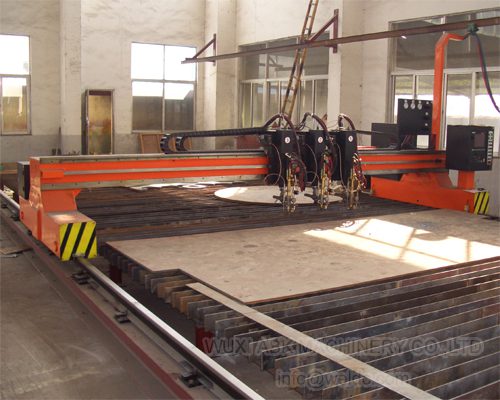
Cutting conditions feed directly into weld quality. Uneven bevel faces from poor edge prep force welders to compensate with arc manipulation, and that slows deposition. When a shop uses CNC plasma cutting before fit-up, root gap consistency improves and the welding machine spends more time joining metal than fighting a poor seam.
How Do Positioners, Rotators, and Manipulators Change the Selection?
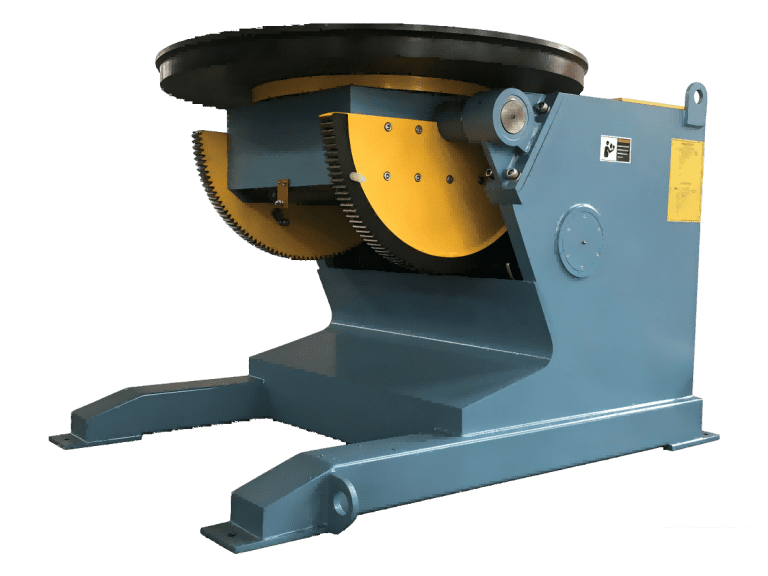
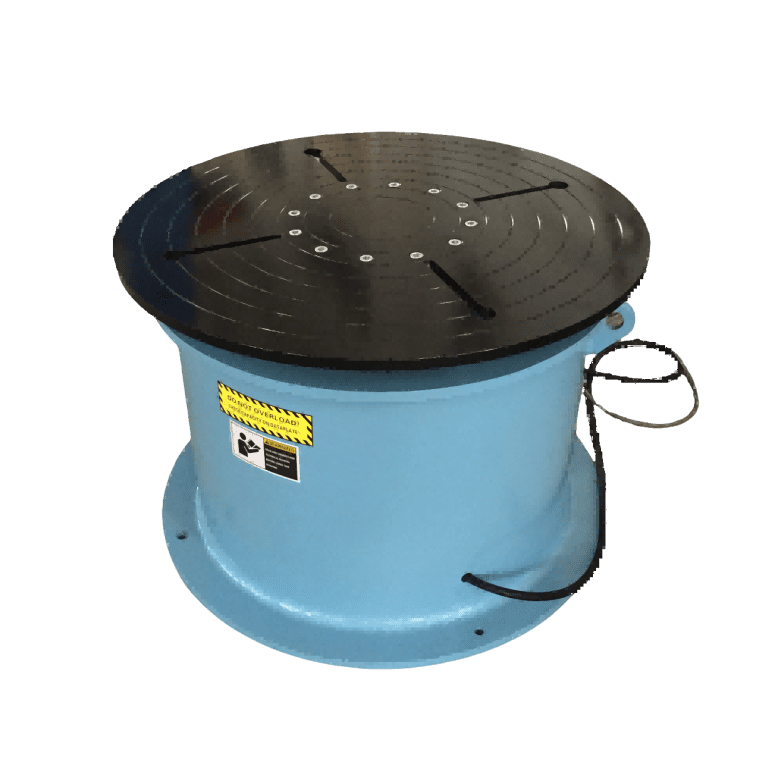
Once part geometry moves beyond a flat bench, the workholding equipment affects weld quality as much as the power source. A pipe joint is not difficult because the weld procedure is complex. It is difficult because the welder must constantly reposition the weld puddle in a stable orientation. Positioners and rotators solve this by keeping the joint in flat or horizontal position while the torch stays fixed.
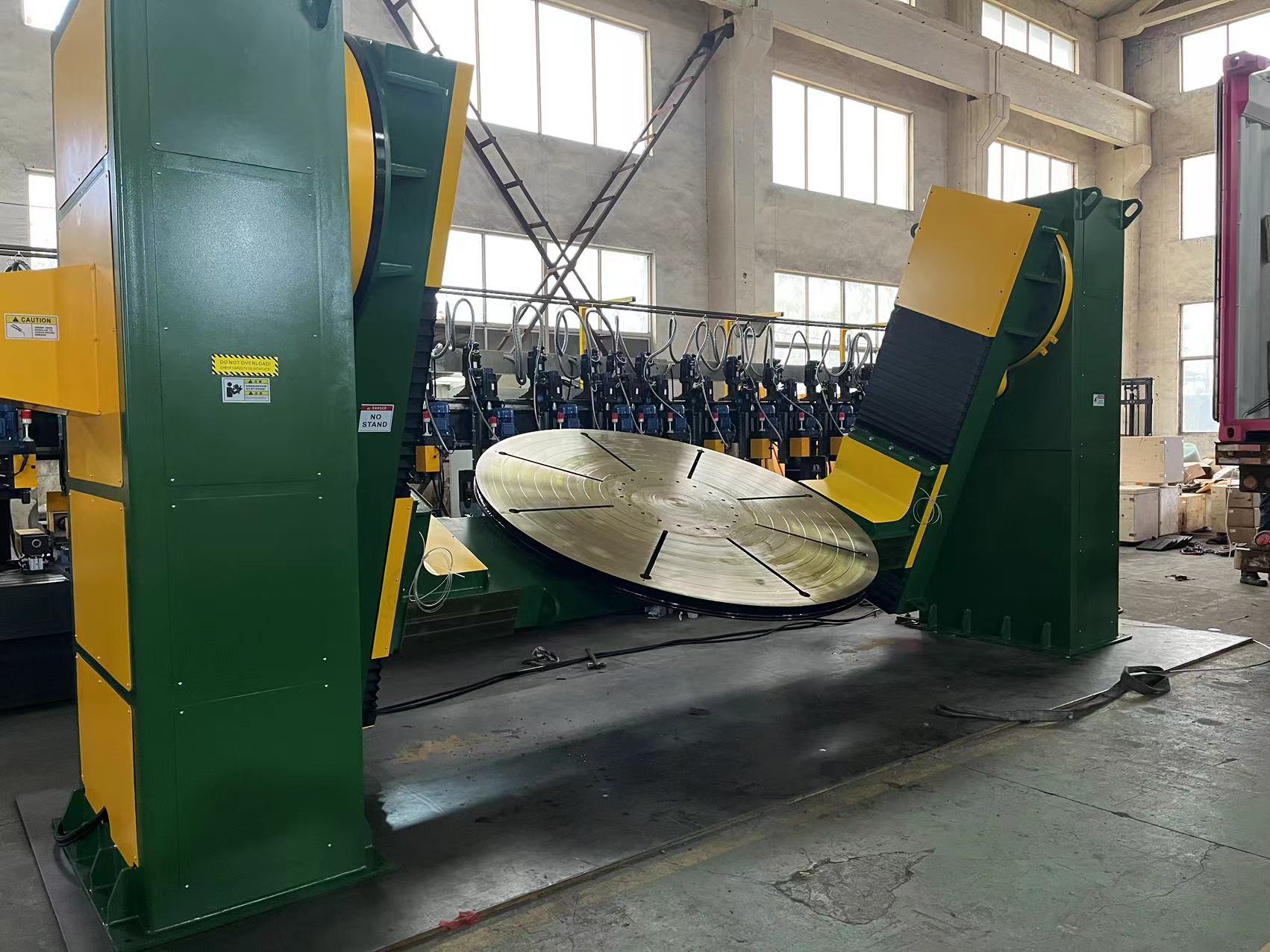
For cylindrical shells, a conventional welding rotator turns the workpiece under a stationary or mechanized torch. In heavy plate workshops I have seen undersized rotators slip under painted shells, and the arc wanders at the joint, producing an uneven weld toe that requires grinding. A head and tail positioner handles longer, heavier parts such as shafts, pipe spools, and pressure vessel sections. A manipulator carries the welding head over long seams so the operator controls the arc without climbing or repositioning.
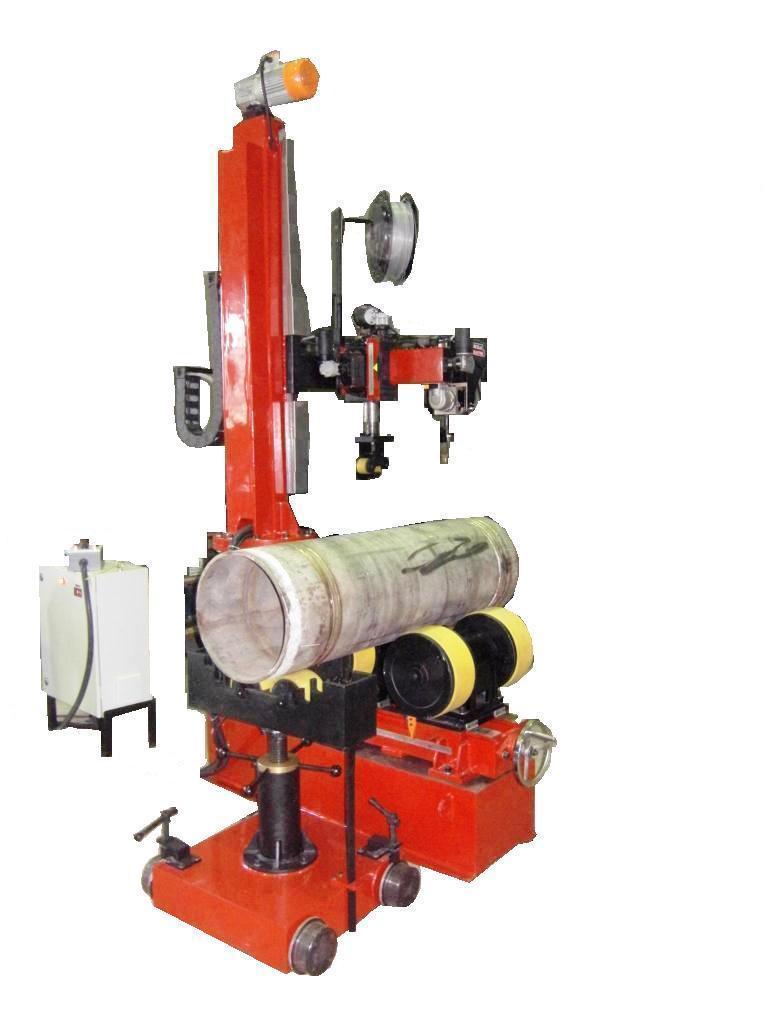
The selection point is not whether automation is useful. It is which axis of motion removes the largest share of manual repositioning time. If your workpiece diameter is below 200 mm on some jobs and above 1,500 mm on others, confirm the rotator center distance adjustment range before you quote a standard model. Send your workpiece diameter range, shell weight, and required rotation speed to [email protected].
How Do You Evaluate a Metal Welding Machine Supplier Before Ordering?
A catalog alone will not tell you whether the frame can hold repeated thermal cycles or whether the control cabinet matches your local voltage. I look at four things: whether the supplier can explain the welding process, whether they ask about your workpiece before quoting, whether test reports and drawings are available, and whether spare parts remain available later.
Wuxi ABOKE Machinery has produced welding and CNC cutting equipment since 1999 under ISO and CE certification. The factory turns out around 1,000 welding equipment sets and 200 cutting machines each year, with clients in more than 40 countries. That scale matters only if the engineering team can explain how a machine will behave on your specific weld joint.
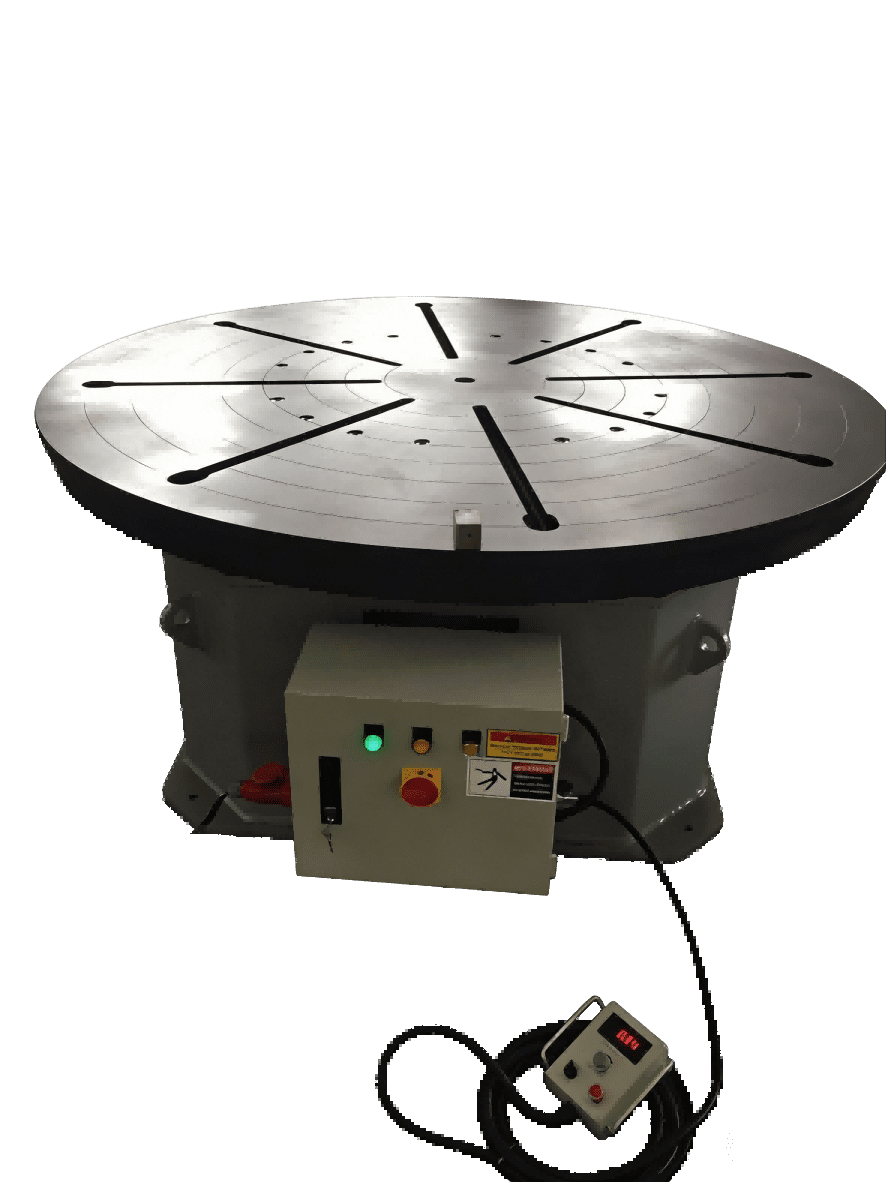
I have walked through enough supplier shops to know that the most useful audit is not the one with the best presentation. It is the one where the engineer can show you the gearbox, explain the bearing arrangement, and tell you at what load the frame deflection matters. Ask for factory inspection before shipment, and request photos of the actual machine frame and nameplate, not a catalog image.
How Do You Confirm the Specification Before You Commit?
The riskiest moment in buying metal welding machines is the gap between a catalog spec and your actual production condition. If you have not confirmed the metal grade, thickness range, joint access, and duty cycle against the machine design, you are guessing with capital equipment.
Send your material, thickness range, and monthly output to [email protected]. You can also call +86 13616174307. A technical review will confirm which standard machine from our welding manipulator, rotator, positioner, or CNC cutting range fits, and whether any customization is required before the quotation is fixed.
What Questions Do Buyers Ask About Metal Welding Machines?
How do I choose between a multiprocess machine and separate machines?
Start with the production plan, not the brochure. A multiprocess machine saves floor space and capital for a small shop with intermittent work. A high mix shop running long production batches usually gets better results from dedicated machines, because each process set stays stable and the duty cycle can be matched to the actual arc time. If you switch processes several times a day, the changeover time and the potential for incorrect settings eat into the savings.
Is a higher amperage machine always a safer choice?
It depends on the work. For thick steel and aluminum sections, extra amperage leaves headroom for higher deposition and avoids running the machine at its limit. For thin sheet and occasional repair work, an oversized machine costs more, weighs more, and can be harder to fine tune at low current. The better question is whether the amperage matches your duty cycle at the thickness you actually weld, not the maximum you could imagine welding.
What causes porosity in machine welding, and how can I avoid it?
Many operators blame the machine first, but most porosity starts with gas coverage, base metal contamination, or wire feed problems. Moisture, mill scale, oil, and drafts displace shielding gas before the arc stabilizes. On GMAW and FCAW, check flow rate, nozzle condition, and wire condition before changing parameters. On TIG, check gas lines and tungsten condition. If porosity appears at the same location repeatedly, look at fit-up gaps and joint contamination rather than the power source.
What should I ask before ordering a machine from an overseas supplier?
In equipment projects I review, the most useful questions are about documentation, voltage, spares, and installation service, not just lead time. Ask for the test report at the specified load, the control voltage options for your site, the spare parts list for the first two years, and the commissioning procedure. Also ask for photos of the actual machine frame and nameplate before shipment. Clear answers to these points reduce the chance that the machine arrives and cannot be connected to your power supply or does not match your workpiece. If your order involves a nonstandard voltage or a remote site, send those details to [email protected] before you finalize the contract.
If you’re interested, check out these related articles:
H-Beam Assembly: Automated Web and Flange Fit-Up Precision
Adjustable Welding Rotator for Different Diameter Vessel Welding
Fixed vs Adjustable Welding Positioners: How to Choose the Right Tool