H-Beam Assembly: Automated Web and Flange Fit-Up Precision
Table of Contents
- Why Manual H-Beam Assembly Creates Production Bottlenecks
- How Automated H-Beam Assembly Machines Streamline Fit-Up
- What Production Gains to Expect from H-Beam Assembly Automation
- How Alignment and Clamping Systems Deliver Repeatable Precision
- Evaluating ROI When Investing in H-Beam Assembly Equipment
- Frequently Asked Questions
Fabricating H-beams for structural steel projects demands precision, efficiency, and consistent quality. Manual H-beam assembly, particularly the web and flange fit-up, often introduces bottlenecks and inconsistencies that impact overall production. Automating this critical stage with specialized machinery directly addresses these challenges, ensuring superior alignment and preparing components for high-quality welding. This approach significantly enhances productivity and reduces operational costs in structural steel manufacturing.
Why Manual H-Beam Assembly Creates Production Bottlenecks
Manual H-beam fabrication presents several significant obstacles for modern production lines. Relying on manual processes for web and flange fit-up is inherently slow and labor-intensive. Workers must meticulously position heavy steel plates, often leading to prolonged production cycles and increased labor costs.
Achieving consistent dimensional accuracy across multiple H-beams becomes difficult when operators handle each assembly individually. Human error can result in misalignments, leading to poor weld quality, increased material waste, and costly rework. These inconsistencies directly affect project timelines and overall profitability for steel structure fabrication. The cumulative effect of small positioning errors compounds across a production run, making quality control increasingly difficult to maintain.
How Automated H-Beam Assembly Machines Streamline Fit-Up
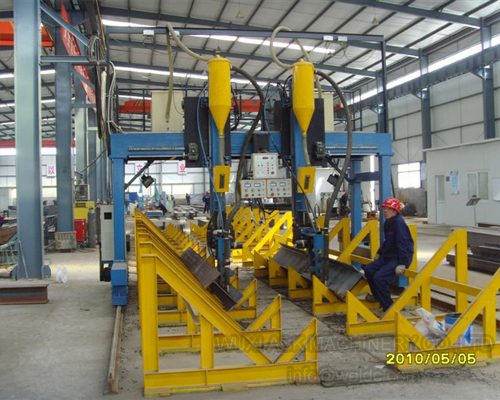
Automated H-beam assembly machines integrate advanced mechanical, electrical, and control systems to precisely align and fit web and flange components. These systems streamline the entire fabrication process through a coordinated sequence of operations.
The machine first accurately positions the web plate between the two flange plates using servo-driven positioning systems. Adjustable clamping mechanisms then secure these components, ensuring a tight and uniform fit regardless of plate thickness variations within the specified range. Digital control systems monitor and adjust parameters such as web height and flange width, guaranteeing precision fit-up before any welding begins.
This automated approach, common in modern H-beam production lines, significantly enhances productivity and prepares the components for subsequent gantry welding machine operations. The transition from manual positioning to machine-controlled alignment eliminates the variability that undermines weld quality in high-volume production.
What Production Gains to Expect from H-Beam Assembly Automation
Automating H-beam web and flange fit-up delivers substantial improvements in production speed, consistency, and overall operational cost-effectiveness. The transition from manual to automated processes profoundly impacts fabrication efficiency across multiple dimensions.
Automated systems operate continuously with minimal human intervention, dramatically increasing the speed at which H-beams are prepared for welding. This higher throughput means more finished products in less time, directly boosting production capacity without proportional increases in floor space or staffing.
Precise fit-up is a prerequisite for high-quality welding. Automated machines ensure that gaps are consistent and alignment is exact, minimizing defects and improving the structural integrity of the welded H-beam. I recall a project where a client was fabricating large H-beams for a new industrial complex. Their manual fit-up process for 15-meter beams resulted in a 15% rework rate due to misalignment. After implementing our automated assembly solution, their rework dropped to under 2%, significantly reducing material waste and accelerating project completion by three weeks.
By automating repetitive and physically demanding tasks, companies can reallocate skilled personnel to more complex operations. This reduces the reliance on extensive manual labor, leading to lower operational costs over time while improving workplace safety.
| Feature | Manual H-Beam Assembly | Automated H-Beam Assembly |
|---|---|---|
| Fit-Up Speed | Slow, labor-intensive | Rapid, consistent |
| Precision | Varies, prone to error | High, repeatable |
| Labor Cost | High, skilled labor needed | Reduced, less specialized |
| Rework Rate | Significant | Minimal |
| Throughput | Limited | High |
How Alignment and Clamping Systems Deliver Repeatable Precision
The integration of advanced alignment systems, robust clamping mechanisms, and sophisticated welding technologies ensures H-beam assembly machines deliver exceptional dimensional accuracy and structural integrity.
Modern machines use laser guidance or vision systems for precise web-flange alignment, ensuring components are perfectly positioned before clamping engages. These measurement systems detect deviations in real time and compensate automatically, maintaining tolerances that manual methods cannot consistently achieve.
Powerful hydraulic or pneumatic clamping mechanisms hold the web and flanges firmly in place, preventing movement during tack welding. This stability is vital for maintaining the specified flange width adjustment and web height adjustment throughout the assembly cycle. The clamping force is calibrated to secure the plates without inducing distortion, a balance that requires careful engineering of the pressure distribution.
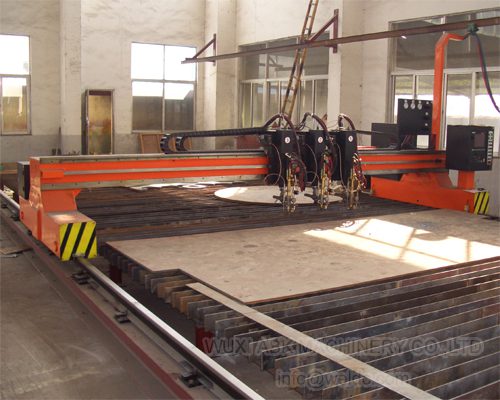
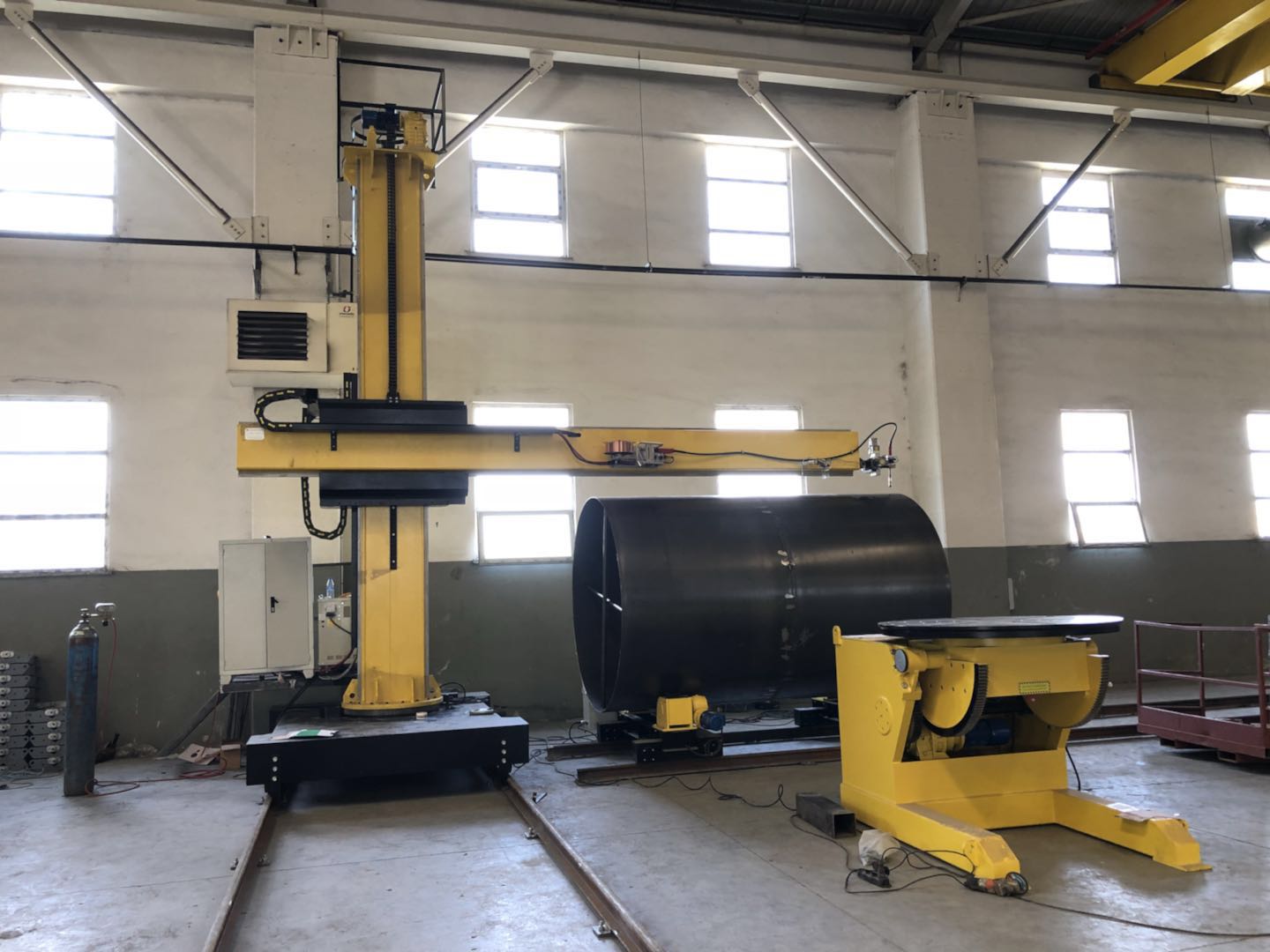
Automated welding technology, often involving robotic welding applications or gantry welding machines, then performs the initial tack welds, securing the fit-up with consistent quality. This precise control over every step establishes a foundation for superior structural steel beams that meet specification requirements without post-weld correction.
Evaluating ROI When Investing in H-Beam Assembly Equipment
Investing in an H-beam assembly machine represents a strategic decision that offers substantial long-term returns through increased capacity, reduced operational expenses, and a stronger competitive position.
The initial capital outlay for automated welding equipment is offset by the significant savings in labor, material waste, and rework. This leads to a favorable return on investment over the machine’s lifespan, typically measured in years rather than decades for high-utilization facilities. The benefits extend beyond immediate cost savings to include enhanced reputation for quality and faster project delivery, both of which influence contract competitiveness.
When selecting an H-beam assembly machine, consider the range of H-beam sizes it can handle, its level of automation, and the quality of its control systems. Evaluate the manufacturer’s reputation for reliability and after-sales support. Future scalability and integration with existing H-beam production line equipment are also important considerations that affect total cost of ownership.
To maximize the longevity and performance of your H-beam assembly machine, adhere to a strict preventive maintenance schedule. This includes regular cleaning, lubrication of moving parts, and calibration of sensors and alignment systems. Our team at WUXI ABK provides comprehensive maintenance guidelines to ensure optimal operation and extend the service life of your equipment.
Frequently Asked Questions
What factors should be considered when selecting an H-beam assembly machine?
The primary factors are the dimensional range of H-beams you need to produce, the throughput requirements of your production schedule, and the integration requirements with your existing welding and material handling equipment. Control system sophistication matters because it determines how much operator intervention is required and how consistently the machine maintains tolerances across production runs. Manufacturer support infrastructure, including spare parts availability and technical service response time, directly affects your uptime. If your production mix is likely to change, verify that the machine can accommodate future size ranges without major retrofitting.
How does an H-beam assembly machine improve welding quality?
The machine improves welding quality by eliminating the fit-up variability that causes weld defects. When web-to-flange gaps are inconsistent, welders must compensate with technique adjustments that introduce their own variability. Automated fit-up holds gaps within tight tolerances, allowing welding parameters to remain constant. The clamping system also prevents movement during tack welding, which eliminates the root-gap shifts that cause incomplete fusion. The result is a more predictable weld profile with fewer defects requiring repair.
What maintenance does an H-beam assembly machine require?
Routine maintenance includes daily cleaning of positioning surfaces and sensors, weekly lubrication of linear guides and clamping mechanisms, and monthly calibration checks on alignment systems. Hydraulic systems require fluid level monitoring and filter replacement on a schedule determined by operating hours. The control system should receive periodic software updates from the manufacturer. Most facilities find that dedicating a technician to scheduled maintenance prevents the unplanned downtime that disrupts production schedules. If you are evaluating maintenance requirements for your specific production environment, contact us at [email protected] to discuss a maintenance plan tailored to your operating conditions.
If you’re interested, check out these related articles:
Welding Rotator vs Manual Pipe Welding: Productivity & Cost Efficiency