Wind Tower Shell Roller Bed Layout and Safety Planning
Table of Contents
- Plan Roller Bed Layout Around Shell Material Flow
- Calculate Load Distribution and Foundation Requirements
- Integrate Roller Beds with Welding and Crane Operations
- Implement Safety Measures to Prevent Shell Handling Hazards
- Establish Preventive Maintenance to Keep Roller Beds Safe Long-Term
- Common Questions on Roller Bed Layout and Shell Handling
- How do we determine the right number of roller beds per shell section?
- Is steel the only reliable wheel material for heavy shells?
- Do roller beds need to be bolted to the floor?
- How do we align roller beds for longitudinal seam welding?
- How often should roller bed safety systems be tested?
Planning the roller bed layout for wind tower shell sections is a key workshop design decision that directly affects production throughput and operator safety. In twelve years of designing welding automation lines, I have watched poorly spaced rollers and underestimated load needs create bottlenecks and risk shell shifts. A workable layout does more than position equipment. It synchronizes shell transfer with cutting, welding, and assembly while keeping crane interference low. The considerations that follow address the practical choices engineers and plant managers need to get right before a single roller bed is purchased.
Plan Roller Bed Layout Around Shell Material Flow
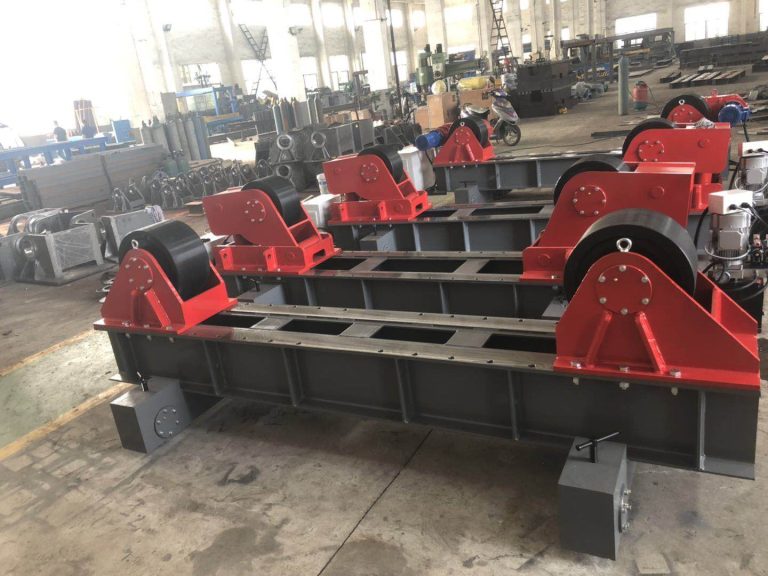
Start with the full shell manufacturing sequence: plate cutting and beveling, plate rolling, longitudinal seam welding, then girth welding of sections. Roller beds must be arranged so shells move between stations with the fewest possible crane lifts. Group roller beds in dedicated lanes for small, medium, and large diameters when the shop handles multiple shell sizes.
A frequent mistake is spacing roller beds evenly without accounting for section length. For onshore wind towers, diameters range from about 2 meters to 4 meters and lengths reach 30 meters. As a rule, set the center-to-center distance between two roller beds supporting a single shell at roughly 60 percent of the section length. That spacing keeps support under both ends and prevents sagging. For diameters below 2.5 meters, the spacing can be tighter, but keep one roller set within 3 meters of each shell end.
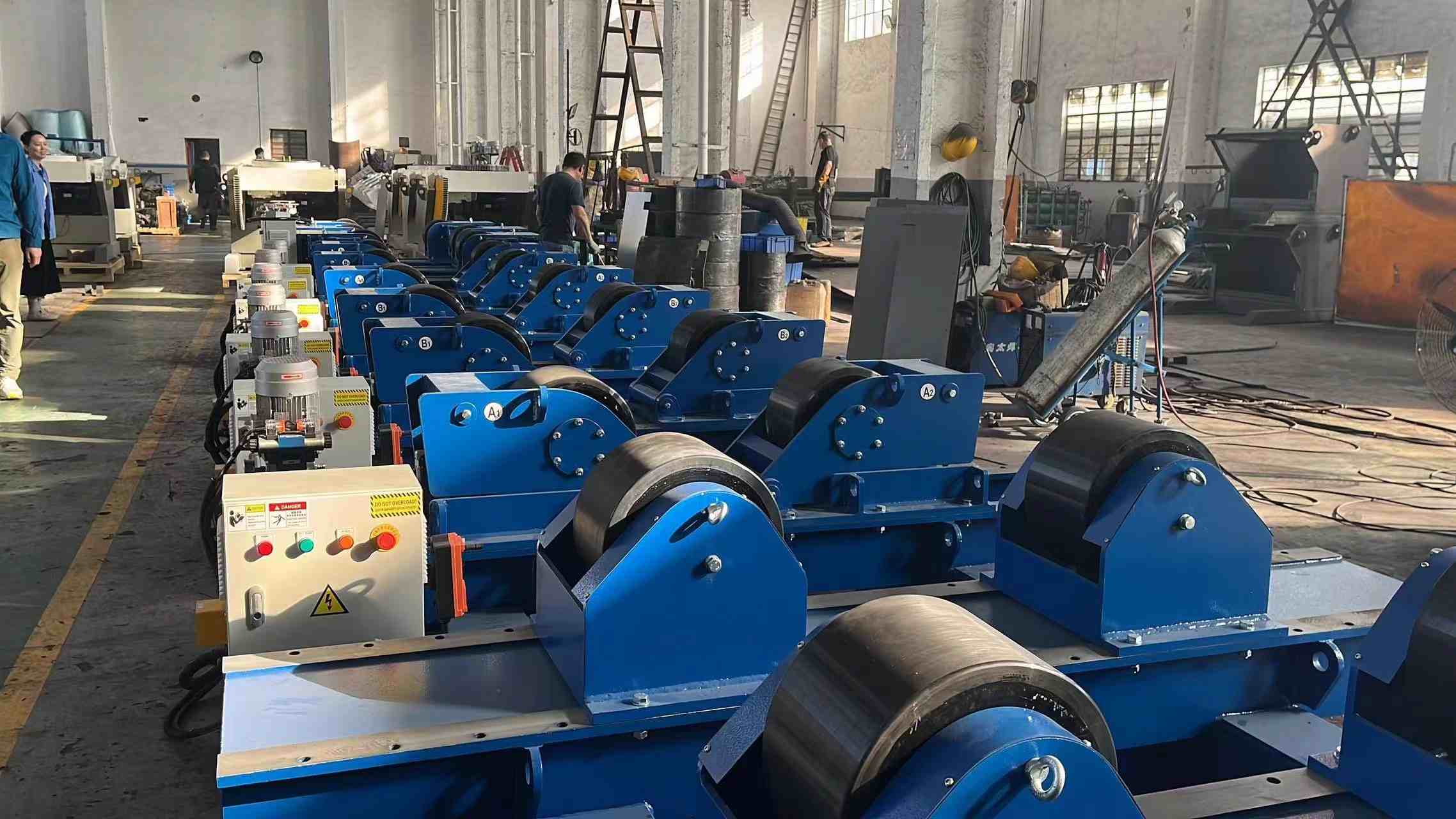
Mark clear traffic zones on the floor plan that show crane paths not crossing active rollers or welding stations. High-volume shops benefit from linear roller bed trains with cross transfers between parallel bays. Low-volume shops can share roller beds with movable support stands. Either way, the layout must give crane operators enough room to pick and place shells without hovering over workers.
Calculate Load Distribution and Foundation Requirements
Wind tower shell sections weigh anywhere from 20 tons to more than 80 tons, depending on diameter, wall thickness, and length. The roller bed system has to spread that weight across several wheels without exceeding the floor’s bearing capacity. Standard shop floors rated at 3 tons per square meter often need local strengthening under heavy roller stations. I have visited plants where foundation sinking inside the first year led to roller misalignment and increased motor wear.
A practical method is to take total shell weight, divide by the number of support rollers, and add a 25 percent dynamic margin for rotation forces. A 60-ton shell on four rollers puts 15 tons on each roller under static load, with the design load reaching roughly 18.75 tons per roller. Size the roller bed baseplate area so the peak contact pressure under any roller stays below the floor’s allowable bearing value.
| Shell Weight (tons) | Support Rollers | Max Load per Roller (tons) | Required Floor Bearing (tons/m²) |
|---|---|---|---|
| 20 | 2 | 12.5 | 3.5 |
| 40 | 4 | 12.5 | 3.5 |
| 60 | 4 | 18.75 | 5.0 |
| 80 | 6 | 16.67 | 4.5 |
Load calculations include a 25 percent dynamic factor and assume a roller bed baseplate area of 2 m² per wheel.
Wheel material also matters. Polyurethane rollers with a Shore hardness of 90A to 95A provide enough grip without marking blasted steel surfaces. Steel rollers carry heavier loads but can leave marks that add extra grinding. For most wind tower shops, PU rollers work well.
If your project involves shells heavier than 80 tons or calls for special surface coatings, confirming roller bed load ratings with the equipment supplier before pouring concrete avoids expensive rework. Reach us at [email protected] to verify load parameters for your specific shell weight and floor design.
Integrate Roller Beds with Welding and Crane Operations
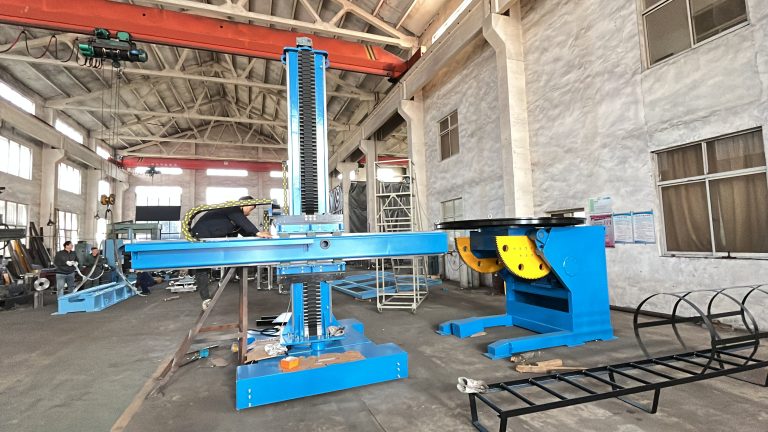
Layout works only when the roller beds talk to the welding stations and the cranes. A poor roller position forces the overhead crane to make extra picks, adding 15 to 20 minutes of handling time per section. I recommend placing roller beds beside the welding manipulator column so the shell can transfer straight onto the welding rotator. Install a fit-up rotator at the junction between roller lines and assembly points. That lets operators align shell edges for girth welding without a separate crane lift.
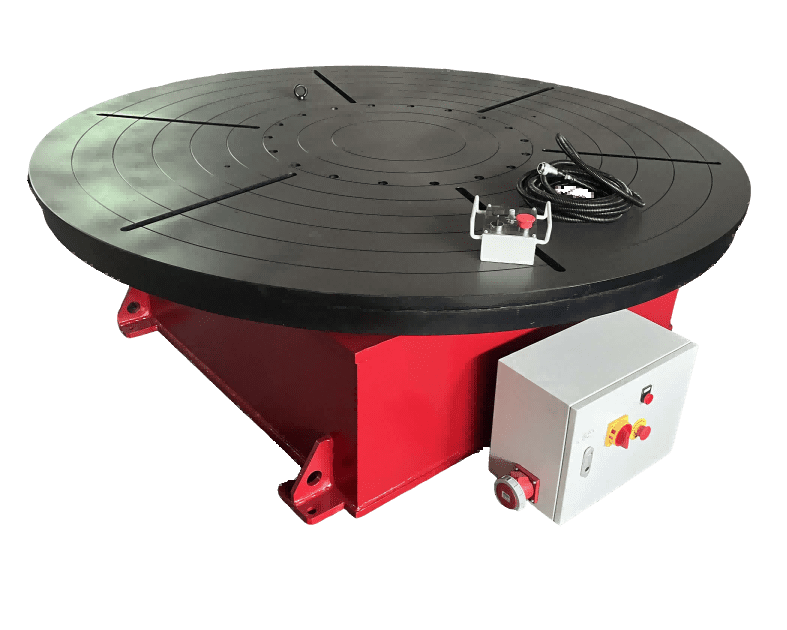
Keep at least 3 meters of clearance between the roller bed path and the crane runway’s projected drop zone. This buffer keeps workers out of the swing path and prevents interference when a crane is moving a shell. In the shops we have supported, painting “no walk” zones beside active roller beds cut near-miss reports significantly. Our team at ABOKE has supplied integrated roller bed and rotator packages to wind tower manufacturers that needed the handling stations and welding fixtures to share a common alignment reference from day one.
Implement Safety Measures to Prevent Shell Handling Hazards
Shell handling creates two main hazards: rollover and uncontrolled movement. Rollover can happen when the shell’s center of gravity shifts on rollers that are not level or evenly spaced. Uncontrolled movement may start during transfer if brakes fail or the floor has unexpected slope.
To stop rollover, hold roller height alignment to within ±1 mm across all wheels supporting the same shell. Check alignment with a laser when setting up and monthly afterward. Install side guide rollers at both ends, each rated for at least 10 percent of the shell weight, to catch lateral drift before a shell tips.
For uncontrolled movement, fit drive rollers with hydraulic or mechanical brakes and wire emergency stops at both ends of each bed section through a central safety relay. Anti-slip roller covers and proximity sensors that halt rotation after a set travel limit add another layer of protection. Operator training must cover two non‑negotiable rules: never stand in the roll path of a moving shell, and lock out power before any maintenance access.
Establish Preventive Maintenance to Keep Roller Beds Safe Long-Term
Roller beds in a wind tower environment take a beating from heavy loads, weld spatter, and abrasive dust. Skipping maintenance leads to uneven wheel wear, gearbox seizure, and handling conditions that are difficult to spot until something goes wrong. A disciplined schedule pays back in fewer unplanned stops.
Daily checks should cover a quick visual scan for roller surface damage and a function test of the emergency stop. Weekly, lubricate bearings, check gearbox oil level, and verify baseplate bolt torque. Monthly, recheck roller alignment with a laser or taut wire and inspect all electrical connections.
We recommend keeping spare roller wheels, gearbox bearings, and drive chains on site. For overseas projects, order the spare parts kit with the initial equipment so you are never waiting weeks on a delivery.
A roller bed system that is properly laid out, loaded within its ratings, and maintained on schedule forms the backbone of a reliable wind tower production line. When you are planning a new workshop or upgrading an existing line, work with a supplier that understands the full production flow from cutting to final assembly. Contact [email protected] or call +86 13616174307 to discuss your workshop layout and receive a handling equipment proposal matched to your production volume.
Common Questions on Roller Bed Layout and Shell Handling
How do we determine the right number of roller beds per shell section?
Two roller beds are enough for most sections up to 20 meters if they sit near the shell ends. For sections longer than 25 meters or with heavy wall thickness, add a third central support to keep deflection low. Always cross-check the roller manufacturer’s load chart with your actual shell weight and length before fixing the bed count.
Is steel the only reliable wheel material for heavy shells?
Steel rollers carry heavy loads but tend to leave surface marks that need extra finishing. Polyurethane with a Shore hardness of 90A to 95A is the more common choice in wind tower shops. PU wheels grip reliably, protect the shell surface, and dampen vibration during rotation. Steel wheels still have a place for the heaviest 80‑ton‑plus sections where marking is accepted as a necessary tradeoff.
Do roller beds need to be bolted to the floor?
The necessity depends on the shop floor and how permanent the layout is. In permanent shops, bolting the baseplates with chemical anchors prevents gradual shifting from repeated heavy cycles. Temporary workshops sometimes use large rubber‑backed baseplates without anchors, but then the equipment position must be checked weekly. When the floor’s bearing capacity is tight, anchoring also helps distribute load better across the slab.
How do we align roller beds for longitudinal seam welding?
Align the roller beds parallel to the welding manipulator rail, and hold the height difference between rollers to ±1 mm. Use a laser to set heights and recheck after the first week of production. The shell centerline should match the manipulator’s electrode path so the welding parameters stay consistent as the shell rotates. Misalignment here directly shows up as uneven weld penetration.
How often should roller bed safety systems be tested?
The most practical answer: run an emergency stop test and brake check at the start of every shift, because that is when a failed safety device will be caught before anyone is near the equipment. Test limit switches and proximity sensors monthly. Keep a log, and tag out any system that fails a functional test until it is repaired. For shops running multiple shifts, plan a supplier inspection every six months to validate the full safety chain. Share your production schedule with us to set a maintenance interval that fits your workload without interrupting output.
If you’re interested, check out these related articles:
H-Beam Assembly: Automated Web and Flange Fit-Up Precision
Automating Wind Tower Welding: Boost Productivity and Quality
CNC Flame Cutting: Precision Cutting for Heavy Plate Fabrication
Pipe Welding Rotator vs Manual Welding | Productivity and Cost Comparison