Welding History: From Forge Welding to Modern Automation
Table of Contents
- Why Does Welding History Still Matter in Modern Shops?
- How Did Welding History Move From Forge Fires to Electric Arcs?
- What Changed When Semiautomatic Welding Took Over Factory Work?
- Why Does Manual Welding Still Create Production Bottlenecks?
- How Do Welding Positioners and Rotators Close the Automation Gap?
- What Questions Do Shops Still Ask About Welding Automation?
- Why did welding shift from forge welding to electric arc methods?
- Is GTAW always a better choice than GMAW for welding?
- Does a small job shop need automation if it only welds short runs?
- How do positioners and rotators reduce weld defects rather than just speed up work?
Most welding history summaries stop at dates and patents, but the real story is a slow climb out of manual labor into controlled, repeatable automation. From forge welds made with hammers and fire to today’s positioners, rotators, and manipulators, the equipment has always shaped what a welding shop could produce. That arc from hand welding to mechanized systems matters for procurement and production teams because modern automation is not a separate jump; it is the next step in a history built on reducing variation and raising output.
Why Does Welding History Still Matter in Modern Shops?
For modern buyers and production planners, welding history is not a trivia list. It shows a clear pattern: every major shift, from forge welding to covered electrodes to wire feed systems, removed one source of human variation. Shops that understand that pattern make better equipment choices. The same joint that once depended on a blacksmith’s hammer later depended on a welder’s hand, then on a machine’s travel speed. Each step narrowed the gap between good and bad work. A fabrication team planning an upgrade today is doing the same thing weld shops did a century ago: replacing the most variable part of the process with a controlled system.
How Did Welding History Move From Forge Fires to Electric Arcs?
Welding history moves from fire and pressure to controlled electrical arcs. Forge welding joined heated metal with a hammer and flux; it required constant judgment and a strong arm. The first major break came in the 1880s, when carbon arc welding introduced an electric heat source that could melt and join metal without a forge. The covered electrode followed and made manual welding practical on steel buildings and ships, while oxy-fuel developed in parallel for heating, cutting, and repair. For the first time, a shop could join thick sections with consistent arc heat instead of repeated hammer blows. The change was not only about speed; it made weld quality repeatable from one joint to the next.
Several milestones show how each step added a new form of control.
| Development | Approximate Period | Shop Impact |
|---|---|---|
| Forge welding | Antiquity through 19th century | Heat and pressure only |
| Carbon arc welding | 1880s | First electric heat source |
| SMAW covered electrode | Early 1900s | Portable manual welding |
| Submerged arc welding | 1930s | Heavy deposition under flux |
| GTAW and GMAW | 1940s to 1950s | Precision and semiautomatic wire feed |
What Changed When Semiautomatic Welding Took Over Factory Work?
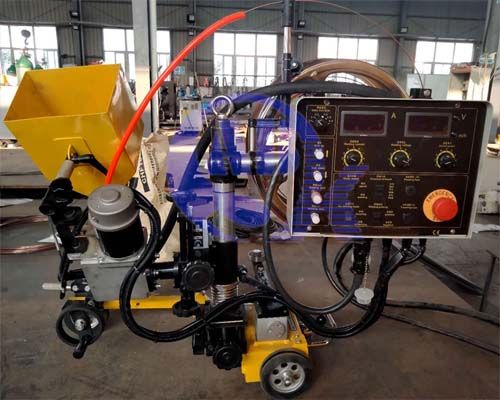
Submerged arc welding arrived in the 1930s with continuous wire, granular flux, and a moving head, and it showed that automatic deposition could outperform a manual operator on long seams. Gas tungsten arc welding followed in the 1940s for precise work on thin sections and reactive metals. Gas metal arc welding added a motorized wire feed and semiautomatic operation that cut the starting and stopping of stick electrodes. For pipelines, pressure vessels, and heavy plate, these processes changed factory economics. A semiautomatic setup could hold a steadier travel speed than a tired hand, fill a joint faster, and give inspectors a more repeatable result. The lesson from this part of welding history is that mechanization does not require removing the welder; it removes the inconsistency built into manual repetition.
Why Does Manual Welding Still Create Production Bottlenecks?
Manual welding still carries the oldest bottleneck in welding history: the operator must hold, move, or work around the part. A vertical or overhead joint deposits slower and is more likely to develop undercut, lack of fusion, or uneven bead shape. Heavy workpieces make the problem worse because repositioning by crane interrupts the weld and rarely gets a comfortable torch angle. In our work planning automated lines, I have seen a team gain more from a set of adjustable rotators than from any change in rod or gas. They moved long vessel seams into the flat position, and the weld repair rate dropped because travel speed stopped changing with arm fatigue. The bottleneck was not welder skill; it was load position, a problem equipment can solve.
If your parts are already piped, rolled, or assembled but the weld position stays stubbornly out of flat, it is worth confirming the workpiece diameter and current defect pattern before finalizing your layout. Send the part size and one repeating weld location to [email protected], and we can confirm whether a suitable positioner or rotator removes that specific limitation.
How Do Welding Positioners and Rotators Close the Automation Gap?
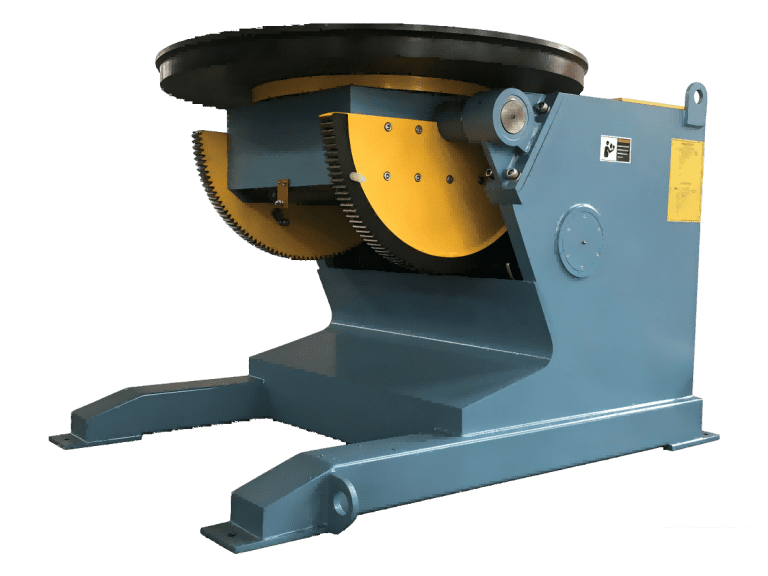
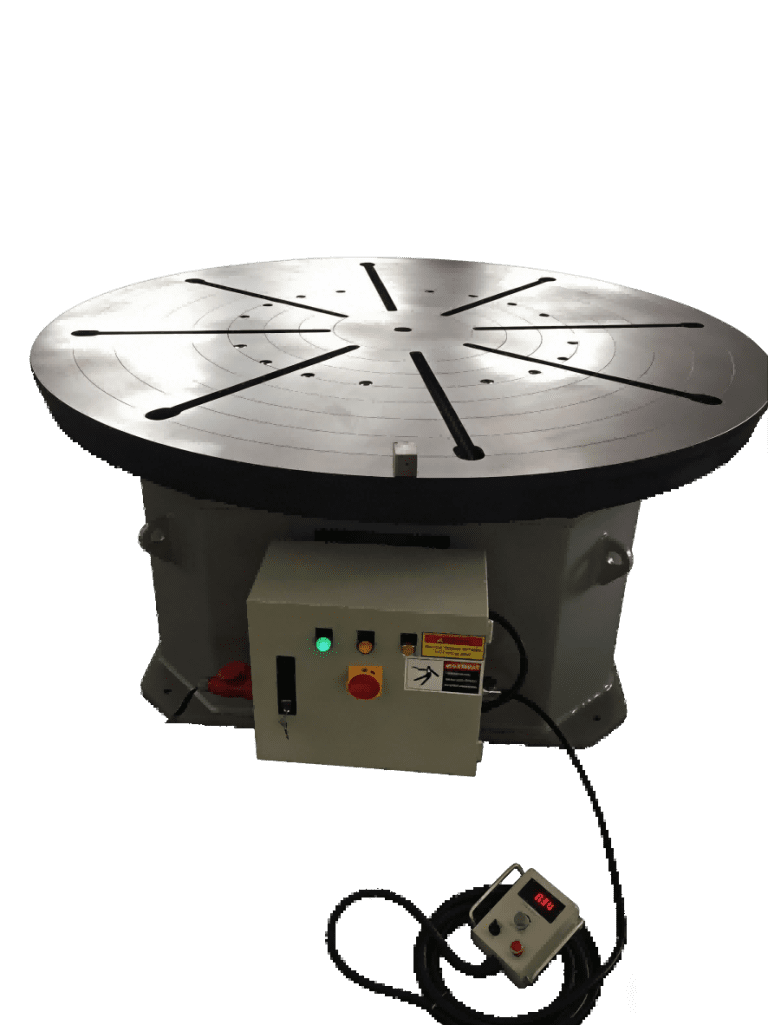
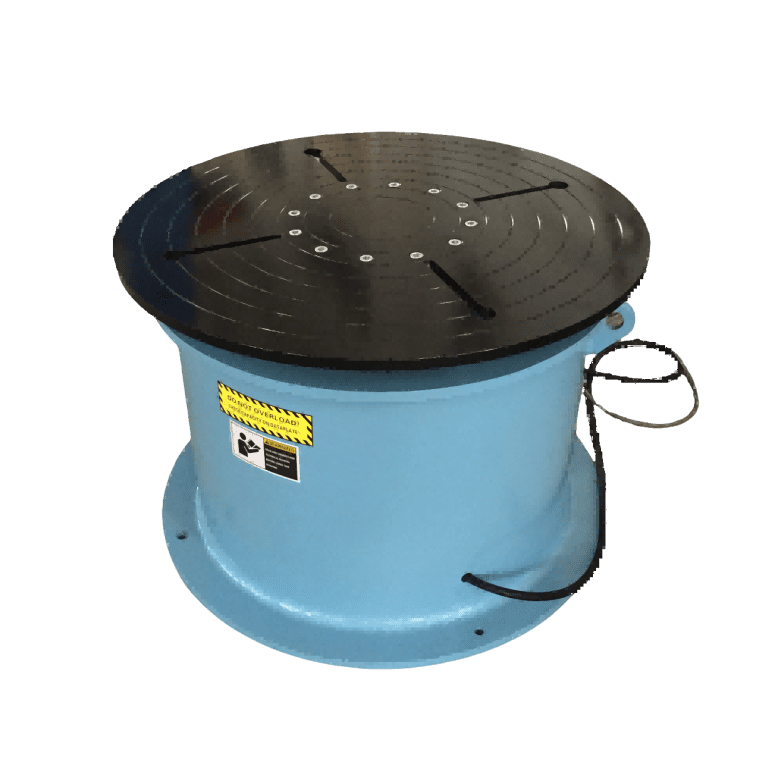
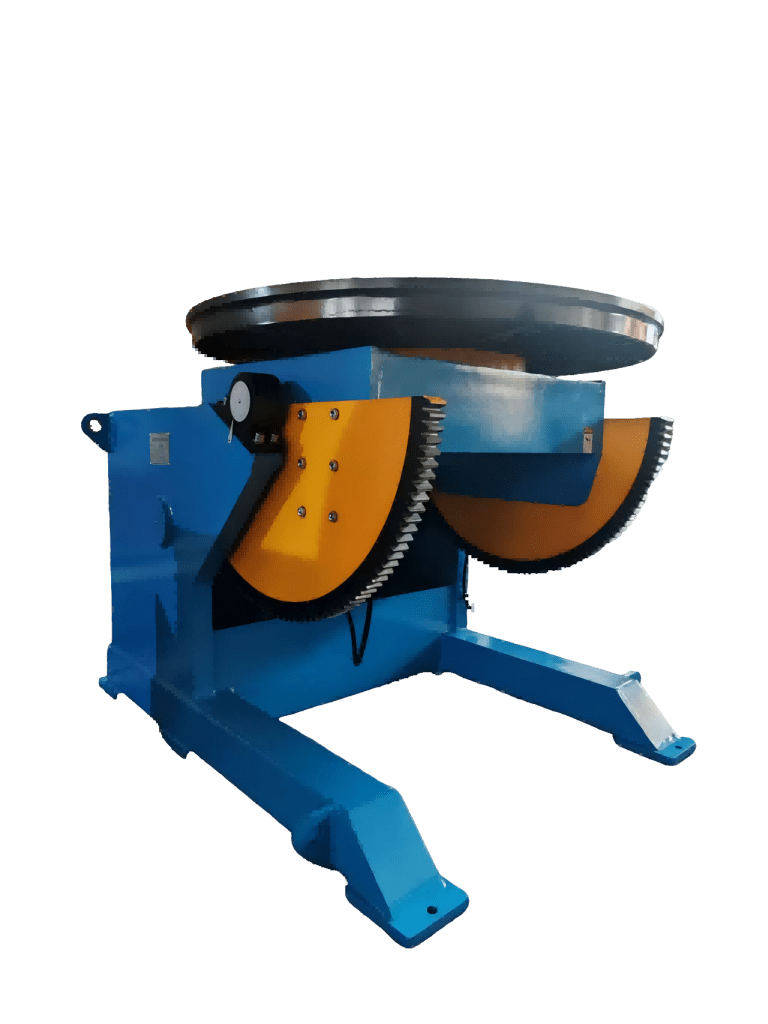
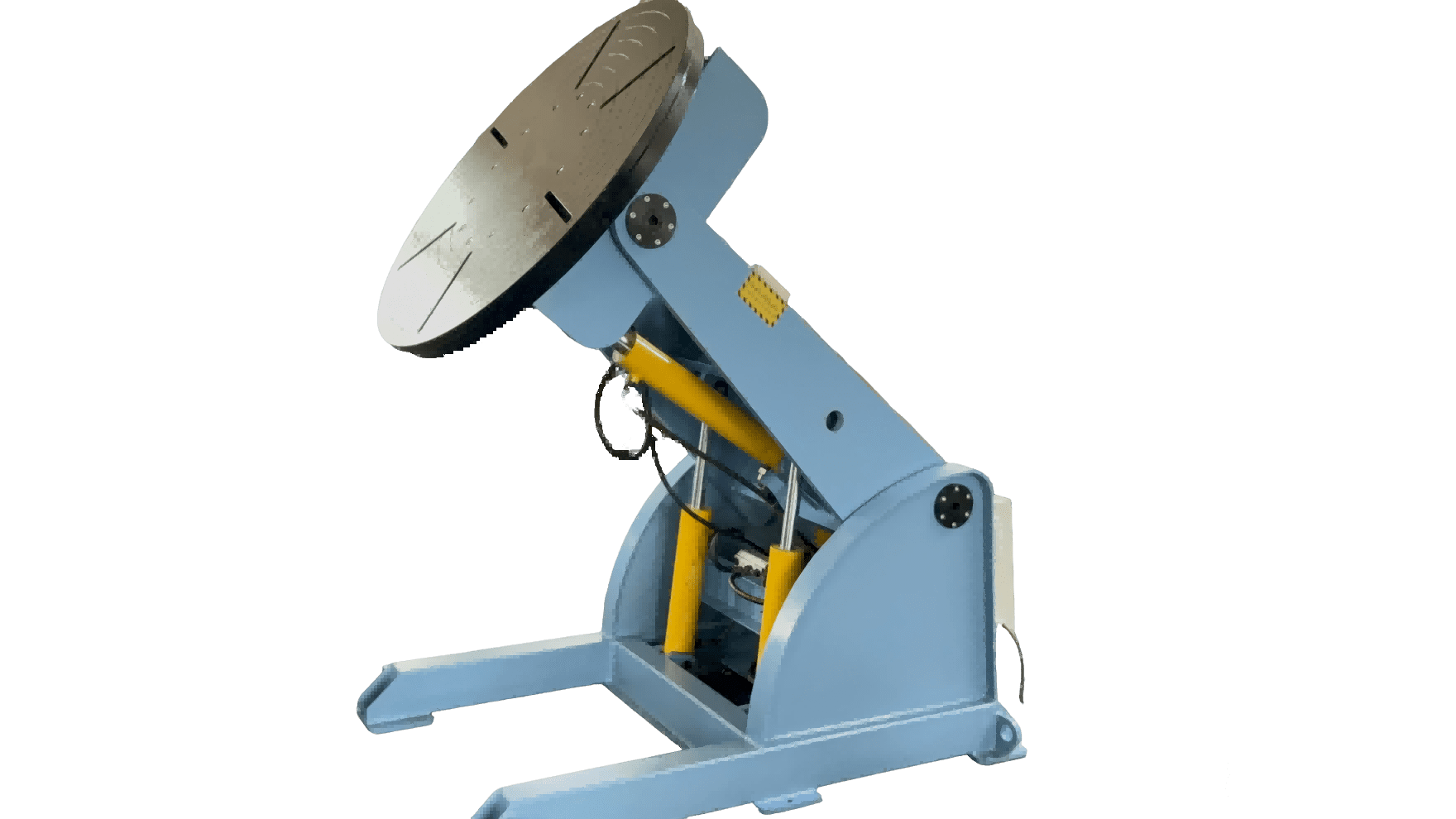
Welding positioners, rotators, and manipulators do not replace a good welder; they hold the workpiece so the welder can stay in the most effective position. Rotators turn pipes and vessels under a fixed torch or open arc and hold a steady travel speed even on long circular seams. Adjustable height and three-axis positioners let operators rotate and tilt heavy parts for flat, horizontal, or fillet passes without repeated crane lifts. For longitudinal seams, a column and boom manipulator combined with a submerged arc power source welds continuously, which cuts stops and makes bead appearance more uniform from end to end. The business gain is repeatability: a programmed rotation or travel speed removes the variable that manual hand movement introduces.
Wuxi ABOKE Machinery builds this class of equipment for pipeline welding, tank and vessel work, and plate cutting, with CE and ISO referenced design and support for clients in more than 40 countries. The harder question for most shops is configuration; load capacity and center of gravity matter more than a catalog size.
Before committing to automation, a shop should check three practical points. Maximum workpiece weight plus fixture needs to sit comfortably below the equipment rating. The weld position causing the most defects should be identified, because automation works best when it targets a real quality issue. Loading and unloading also matter; if the part already moves but the welding position does not, the cycle time gain is usually strongest.
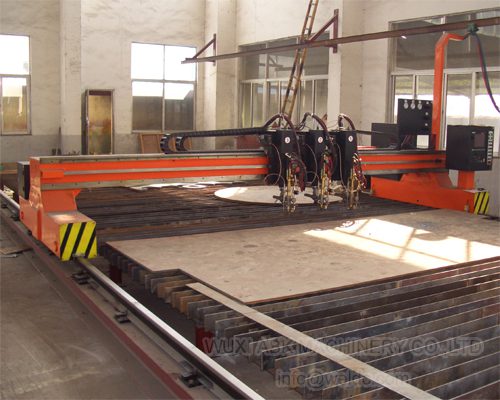
Edge preparation on plate and pipe sits upstream of nearly all of this. A CNC plasma or flame cutting machine that holds a consistent bevel angle keeps fit up predictable and gives automated welding a clean, repeatable joint to fill.
If your current bottleneck is weld position, part weight, or repeatability, send your part drawing, torch type, and one target joint to [email protected] or call +86 13616174307. We can confirm the rotator, positioner, or manipulator configuration that matches the load and weld sequence before you commit to a purchase.
What Questions Do Shops Still Ask About Welding Automation?
Why did welding shift from forge welding to electric arc methods?
Electric arc methods replaced forge welding because they concentrate heat at a small joint area and no longer depend on the hammer operator’s force. A carbon arc or covered electrode could reach deeper into a weld joint and produce a fusion weld without heating the whole workpiece. That widened the work to thicker steel sections and field joints. The offset was the need for a power source and, later, shielding gas. The gain in joint strength and repeatability made that added equipment worthwhile in most structural and repair work.
Is GTAW always a better choice than GMAW for welding?
A common assumption is that GTAW is always stronger or more precise, but that only holds for some materials and thicknesses. GTAW gives a clean, controlled puddle on thin sections and reactive metals, while GMAW deposits filler much faster and suits long production seams. For heavy plate or high volume work, GMAW or submerged arc usually wins on cost per meter, even if the weld appearance differs. The right choice follows joint design, production speed, and inspection criteria, not a simple best list. Each process has a place, but the conditions decide that place.
Does a small job shop need automation if it only welds short runs?
It depends on what actually limits the shop. If the workshop welds a few small brackets, manual welding may absorb the inconsistency without costing much. If the shop repeats a cylindrical or heavy part, one adjustable positioner or rotator can reduce handling time and keep work in the flat position, even without a full line. Automation is not only for high volume; it pays when it removes one persistent bottleneck. The practical step is to measure where time and defects actually occur, then apply the smallest machine that changes that point.
How do positioners and rotators reduce weld defects rather than just speed up work?
The more precise question is which defect comes from poor torch angle and travel speed. Positioners and rotators reduce undercut, lack of fusion, and uneven bead shape by holding the joint in a position that keeps arc length and travel speed consistent. When the workpiece rotates at a stable rate, the welder can focus on the puddle instead of fighting body position. That consistency shows up in fewer repair cuts and more predictable inspection results. If you can share your recurring defect location and workpiece diameter, we can confirm the right equipment fit at [email protected].
If you’re interested, check out these related articles:
CNC Water Jet Cutting: Precision, No Heat, Any Material
H-Beam Assembly: Automated Web and Flange Fit-Up Precision
Industrial Custom Welding Manipulators for Structural Fabrication
Boiler Production Lines: Tube to Panel Manufacturing Explained