J-B Weld Aluminum: What It Can and Cannot Do for Repairs
Table of Contents
- What Is J-B Weld Aluminum and How Does It Work?
- Where Does J-B Weld Aluminum Perform Well?
- What Are the Real Strength Limits of This Epoxy?
- When Should You Choose Welding Instead of Epoxy?
- Common Questions About J-B Weld Aluminum
- Does J-B Weld Aluminum Actually Work on Aluminum?
- How Long Does J-B Weld Aluminum Take to Cure?
- Is J-B Weld Aluminum Stronger Than the Aluminum It Repairs?
- Should You Use J-B Weld Aluminum on Load-Bearing Brackets?
When an aluminum pump housing, mounting ear, or valve cover cracks, maintenance teams often reach for J-B Weld Aluminum before calling a welder. That decision can work for a low-stress patch, but it becomes a risk when the part carries load, holds pressure, or cycles through heat. In my twelve years as a welding automation engineer, I have reviewed hundreds of repair decisions in workshops and on production lines. J-B Weld Aluminum fills a narrow, useful role. It cannot replace a proper aluminum weld on structural or fatigued components.
What Is J-B Weld Aluminum and How Does It Work?
J-B Weld Aluminum is an epoxy repair product formulated for aluminum surfaces. After mixing, it becomes a workable paste that cures to a machinable solid. Unlike a welded joint, which melts the base metal and fuses it with filler, this product forms an adhesive bond that can be sanded, drilled, and painted after full cure. The product is useful because aluminum forms a new oxide layer within minutes of cleaning, and this formulation is designed to hold to that prepared surface better than a general-purpose epoxy. The bond is still chemical and mechanical, not metallurgical. That distinction matters for every load and temperature decision that follows.
| Repair factor | J-B Weld Aluminum | Aluminum weld joint |
|---|---|---|
| Bond type | Adhesive and gap filler | Fused base metal with filler metal |
| Strength under load | Limited to low-stress applications | Matches or exceeds base metal when properly made |
| Temperature resistance | Degrades as temperature rises | Heat tolerance follows the base alloy |
| Fatigue behavior | Cracks and peels under repeated stress | Handles cyclic stress when full penetration is achieved |
| Typical use | Cosmetic, sealing, nonstructural patching | Structural, pressure, safety, and fatigue-loaded parts |
Where Does J-B Weld Aluminum Perform Well?
J-B Weld Aluminum works best on clean, low-stress surfaces that do not move much in service. A cracked cast-aluminum generator cover, a small hole in a belt guard, a stripped screw boss that only retains a nameplate, or a cosmetic crack in a non-pressurized gear case are reasonable applications. In these cases the repair is more of a formed filler than a load path. The part retains its shape and the epoxy keeps dirt or oil out. That is a real benefit, because welding a thin cosmetic cover often distorts the part more than the crack itself.
One repair our customers ask about is an oil pan. The product can slow a weeping crack long enough to order a replacement, but it is not a pressure repair. If the pan is cast aluminum and operates with baffles and thermal expansion, the epoxy will eventually separate. We treat it as a temporary field patch, not a permanent fix.
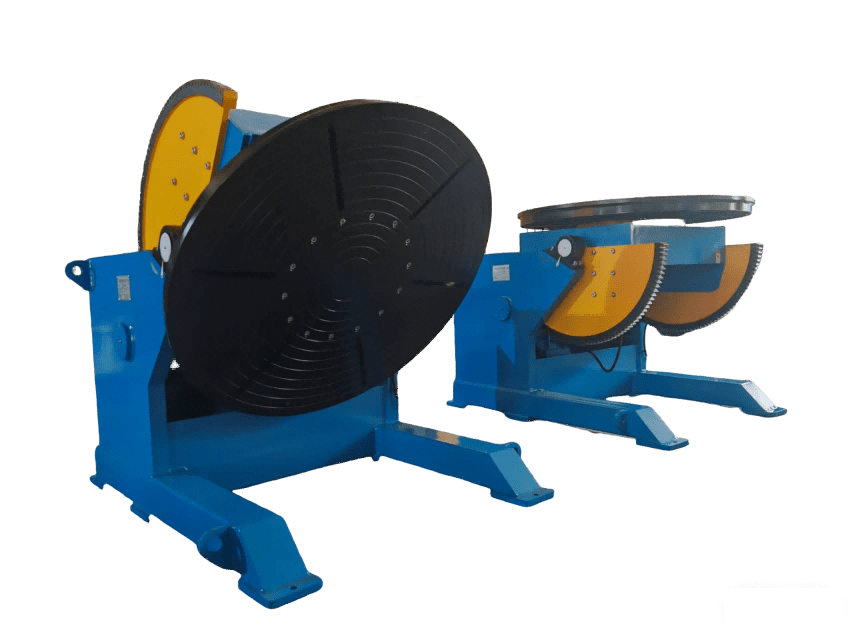
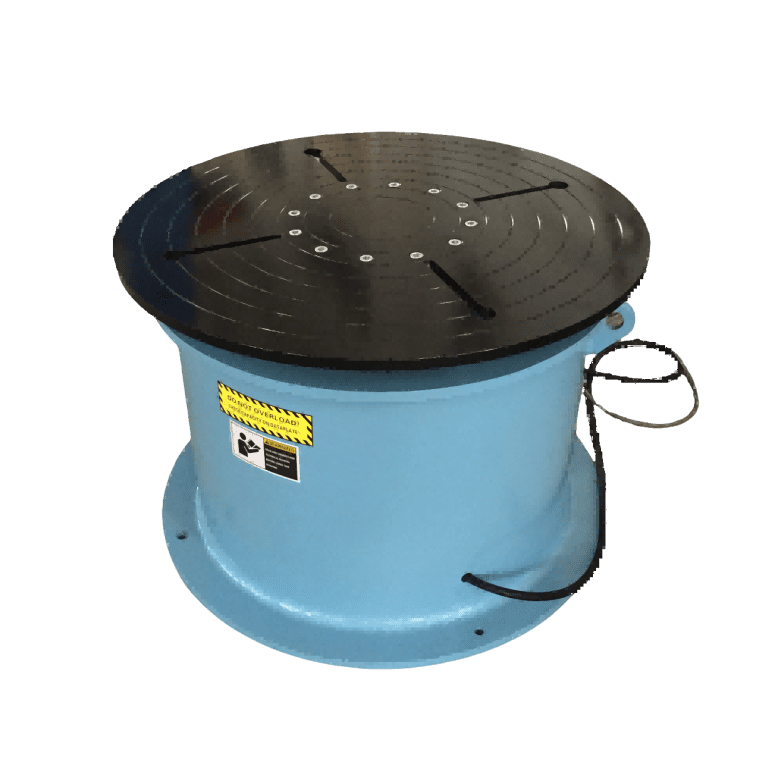
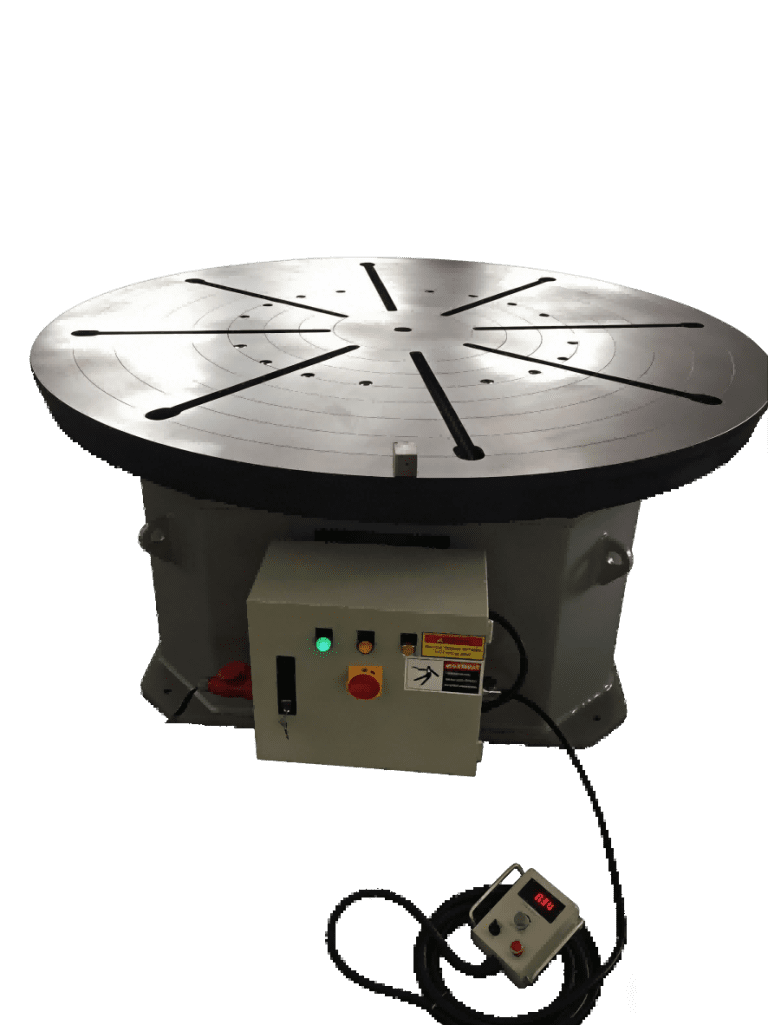
If your maintenance program keeps relying on epoxy for aluminum parts that actually need joining or fixturing, the repair cost should be compared against a small welding positioner. A bench turntable can make aluminum repair welds more repeatable and keep the joint in a stable position. Send your part drawing and batch volume to [email protected] before you standardize on a patch procedure.
What Are the Real Strength Limits of This Epoxy?
The most common failure I see is on an alternator bracket or front cover ear that cracked once and was filled with epoxy. The patch looks solid on the bench. After installation, the fastener preload plus belt tension plus engine vibration creates a stress concentration at the bond line. The epoxy is much more flexible than the surrounding aluminum, so it yields locally and begins to peel. Once dust, oil, or moisture works into the edge, the patch fails. This is not a marginal material problem. It is a joint design problem.
Temperature is another limit. The epoxy cannot match the heat tolerance of an aluminum weld, and long exposure to engine heat, steam, or hot oil softens the adhesive over time. Thin films may hold in a static test and then creep under continuous load. For any component where distortion, leakage, or failure would create a safety or production risk, the product is outside its application window.
When Should You Choose Welding Instead of Epoxy?
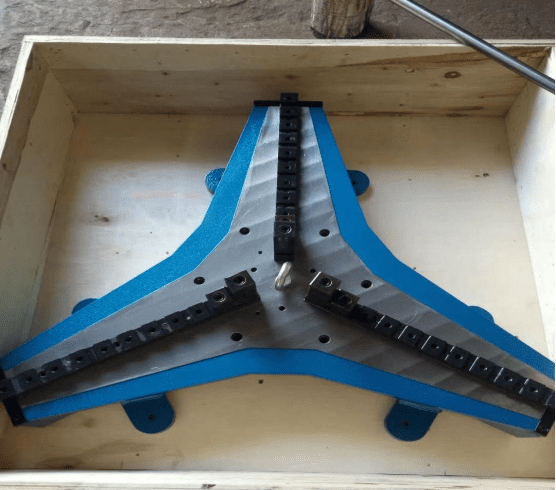
When the aluminum part is load-bearing, pressure-containing, safety-related, or subject to repeated bending and thermal cycles, welding is the correct repair path. A weld joint restores the load path through the metal itself instead of bridging it with a polymer. That matters on pump housings, oil pans, frame brackets, pressure vessels, and any repair that will be machined after bonding. Epoxy also contaminates the repair zone. A failed adhesive patch leaves residue that must be removed before a welder can produce a clean weld.
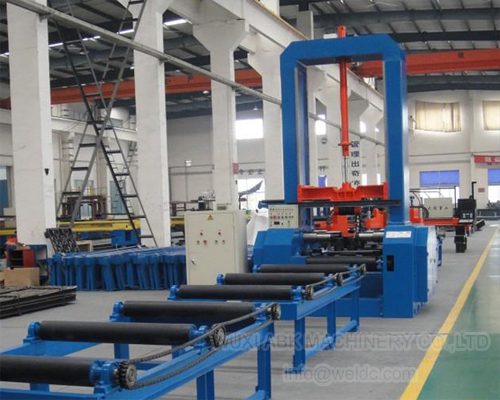
At WUXI ABK MACHINERY CO., LTD, we build welding positioners, rotators, and cutting systems for shops that repair and produce aluminum assemblies. Whether the part is a small cast housing or a long cylindrical vessel, the right positioner keeps the joint in a flat or horizontal position and improves weld quality. If your current repair route is a tube of epoxy because manual welding cannot reach the joint, the bottleneck is usually fixturing, not the process.
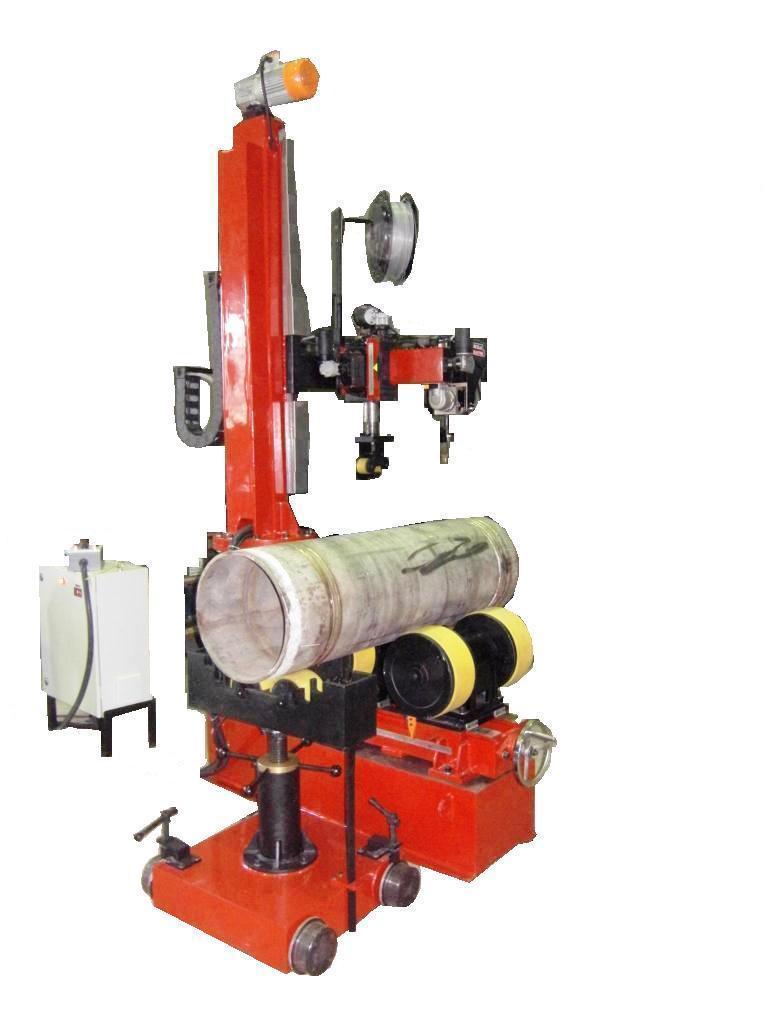
Send your part drawing, material grade, and load case to [email protected] or call +86 13616174307. We will review the joint configuration and recommend whether a welding positioner, rotator, or automated welding setup is the right next step. Use this route before a second epoxy patch turns a minor crack into a costly remanufacturing job.
Common Questions About J-B Weld Aluminum
Does J-B Weld Aluminum Actually Work on Aluminum?
Yes, but only inside its designed application window. The product bonds to prepared aluminum surfaces well enough for cosmetic repairs, sealing, thread fill in low-stress bosses, and temporary patches. The key condition is surface preparation: the aluminum must be clean, dry, and lightly abraded before the product is applied. If the part is oily, cold, or flexing, the bond will be far weaker. The real mistake is not choosing the wrong brand. It is treating an adhesive patch as a structural repair.
How Long Does J-B Weld Aluminum Take to Cure?
Cure time depends on temperature, mix ratio, and applied thickness. At room temperature, expect a workable set in a few hours and a practical full cure after 15 to 24 hours. Cold aluminum slows the reaction, while a thick section may cure faster but retains less strength at room temperature. Do not machine or load the part before the adhesive has reached its final hardness. This is one place where patience costs less than reinstalling a part too soon and watching the patch deform.
Is J-B Weld Aluminum Stronger Than the Aluminum It Repairs?
No. Even a properly mixed and fully cured epoxy is far below the tensile strength of a sound aluminum casting or extrusion. The product feels hard after cure, but hardness and strength are not the same property. More important, the bond is only as strong as the weak oxide-rich interface, and it cannot redistribute stress the way a welded aluminum joint can. Claiming that any epoxy is stronger than aluminum confuses hardness with load-carrying ability and leads to dangerous repair decisions.
Should You Use J-B Weld Aluminum on Load-Bearing Brackets?
In workshops I have visited, load-bearing bracket repairs with epoxy tend to return quickly. The first failure is a visible crack. The second failure is the same casting breaking behind the patch, with cured adhesive making the weld repair slower. For a bracket that holds any mounted component, welding or part replacement is the correct path. Keep the product for nonstructural covers and small sealing tasks. If the component can fall, jam, leak, or lock a moving part, send a photo and load case to [email protected] before the next repair; we can confirm whether welding equipment and fixturing should be part of the solution.
If you’re interested, check out these related articles:
Fixed vs Adjustable Welding Positioners: How to Choose the Right Tool
Shot Blasting Solutions for Steel Structure Surface Treatment
H-Beam Assembly: Automated Web and Flange Fit-Up Precision