Electro Gas Welding: How Vertical Mechanized Welding Works

August 23, 2026
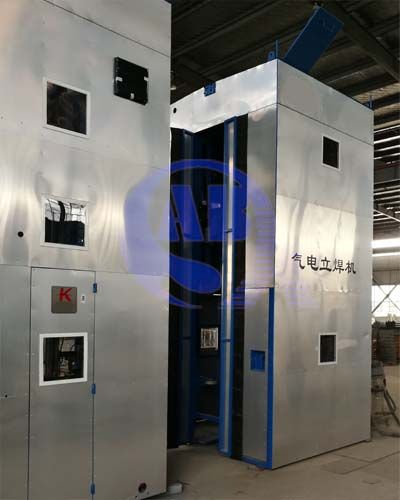
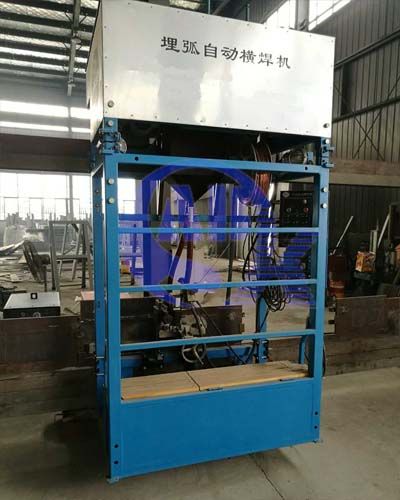
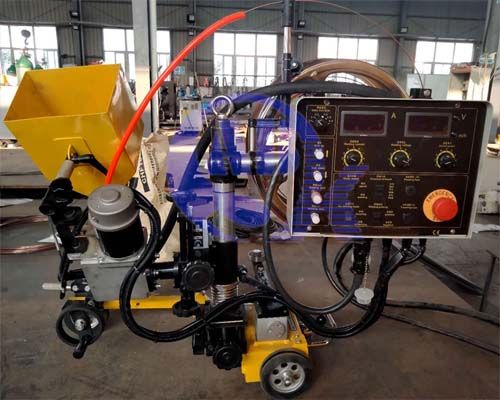
Thick vertical seams separate the shops that finish storage tanks and ship blocks on schedule from the shops that burn extra hours in rework. Electro Gas Welding closes that gap on long vertical butt joints in heavy plate, but it is not a general purpose process. I treat it as a vertical seam tool: the […]
Read More »

What Are End Rods Used for in Industrial Welding Fixtures?

August 23, 2026

End rods are load-bearing locating components at the ends of a welding fixture. Their job is to hold a workpiece at a defined position, set the rotational centerline, and carry clamping force without letting the part shift between weld passes. In practice, end rods decide whether a pipe or vessel keeps its alignment during rotation. […]

Read More »

Wire Welding Tips and Tricks for Industrial Fabricators

August 22, 2026

Wire welding tips and tricks only matter when they address what actually goes wrong on a production floor. Most failures in GMAW and flux-cored welding are not process mysteries; they are feed path problems, parameter mismatches, and workholding choices. After twelve years on industrial welding equipment projects, our position is clear: wire welding improves when […]

Read More »

Welding Evaluation: How to Verify Weld Quality in Production

August 22, 2026

Welding evaluation turns a weld into an accept, repair, or reject decision. Most shops treat it as the last step before shipment. In practice, evaluation starts earlier, with the acceptance criteria that define which discontinuities matter and which ones do not. At Wuxi ABOKE Machinery, we use welding evaluation to connect welding parameters, positioning equipment, […]

Read More »

Welding History: From Forge Welding to Modern Automation

August 22, 2026

Most welding history summaries stop at dates and patents, but the real story is a slow climb out of manual labor into controlled, repeatable automation. From forge welds made with hammers and fire to today’s positioners, rotators, and manipulators, the equipment has always shaped what a welding shop could produce. That arc from hand welding […]

Read More »

Types of Welding: How to Match Process to Industrial Work

August 22, 2026

Types of welding determine how much heat reaches a joint, how fast a weld is deposited, and what a fabricator can repeatedly pass. In procurement and production planning, choosing between GTAW, GMAW, FCAW, SMAW, and SAW is not a theoretical exercise. The right process shortens fit-up and reduces rework; the wrong one creates porosity, distortion, […]

Read More »

Welding Chuck Selection: Matching Jaw Type and Load Capacity

August 22, 2026

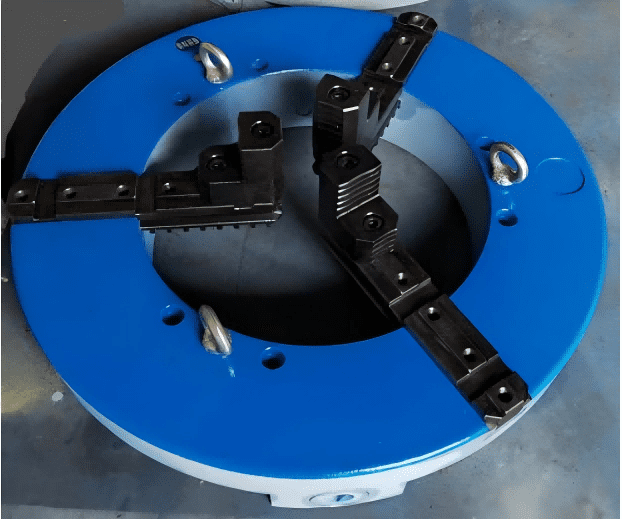
Welding chuck selection controls whether a pipe flange, shaft, or vessel end rotates true under the torch. I treat the chuck as a load bearing positioning interface, not as a simple gripper. If jaw contact, center height, or clamping range is wrong, the positioner cannot hold part alignment and the weld bead starts to wander. […]

Read More »

Flange Filler in Pipe Welding: Types, Uses and Tips

August 21, 2026

Flange filler selection is where many pipe welding programs lose time before the first arc is struck. A flange filler is the filler metal used to join a slip-on, weld neck, or socket weld flange to pipe, and the right choice depends on base material chemistry, service temperature, and the qualified welding procedure. We see […]

Read More »

Orbital Welding vs Manual Pipe Welding: Key Differences

August 21, 2026

Pipe fabricators rarely reject orbital welding because the weld quality is questionable. They hesitate because the real decision sits upstream: fit-up discipline, wall thickness range, operator training, and the documentation burden a project actually carries. Orbital welding produces repeatable, auditable welds, but it does not fix loose fit-up or unclear procedure control. Manual pipe welding […]

Read More »

FCAW vs MCAW: Key Process Differences and How to Choose

August 21, 2026

FCAW vs MCAW is not a contest between an old process and a new one. The practical question is whether the slag system and shielding requirements match the joint, the position, and the post-weld cleaning budget. In most indoor structural fabrication, metal cored wire delivers higher deposition and far less spatter. In field welding and […]

Read More »
1 16 17 18 39

Get Our Best Quotation

Contact