Welding Inspection Gauges in Practice: Key Types and Uses

September 16, 2026
Most weld quality disputes start with someone holding a cheap gauge the wrong way. Welding inspection gauges are not complicated instruments, but they only pay off when an inspector, QC supervisor, or shop lead knows which type to reach for and what the reading actually controls. A fillet weld gauge and a bridge cam gauge […]
Read More »

How Wind Turbines Work: Renewable Energy and Manufacturing

September 16, 2026

Wind turbines work by converting kinetic energy from moving air, a renewable resource, into mechanical rotation, then into grid-ready electricity through a generator. The part that decides whether a turbine reaches its full service life, however, is often not the aerodynamic design. It is the quality of the welded tower sections, foundation inserts, and nacelle […]

Read More »

Heat Exchanger Welding: Processes, Standards, and Equipment

September 16, 2026

Heat exchanger welding is less about laying a clean bead than about controlling root penetration, distortion, and closure in joints that must hold pressure and thermal cycling for years. In most shell-and-tube and tube-to-tubesheet work I have seen, the deciding factor is not the welding process alone; it is whether the grooves, fit-up, purging, and […]

Read More »

Welder Boom Basics: How to Select the Right Column and Boom

September 16, 2026

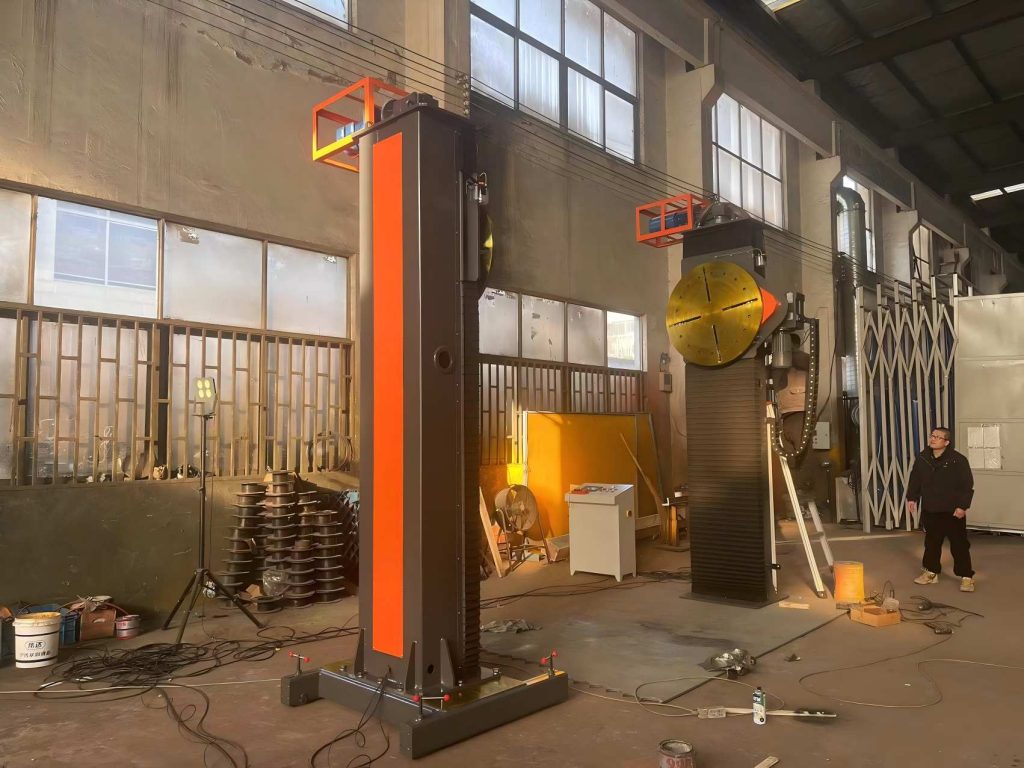
Welder boom systems determine how well a shop handles long longitudinal seams, circular girth welds, and repeatable heavy plate work. A column and boom holds the welding head at a controlled height, reach, and travel speed, so weld quality depends less on operator endurance and more on machine consistency. After twelve years in industrial welding […]

Read More »

Welding Gage Types, Uses, and Calibration for Inspectors

September 16, 2026

Welding gage inspection is not about making a weld look good. It is about proving that a joint will carry load the way the drawing and code expect. I have watched too many production teams accept a heavy fillet because it looked strong, then have it rejected when a bridge cam gage showed excess reinforcement […]

Read More »

Most Popular Welding Type: How to Choose the Right Process

September 15, 2026

The most popular welding type in industrial fabrication is not a single process. MIG welding, stick welding, TIG welding, and flux-cored welding each dominate different jobs based on material, joint access, and production volume. In my experience with industrial welding automation, the choice is rarely about which method is best in theory. It comes down […]

Read More »

What Is a Gas Metal Arc Welder Called? MIG and MAG Terms

September 15, 2026

A gas metal arc welder is the technical name for what many shops call a MIG welder, and the same equipment may be specified as a MAG welder when the shielding gas is active. The naming split is not trivial. It changes gas selection, filler metal classification, and the way equipment is quoted in export […]

Read More »

What MIG Weld Temperature Means for Penetration and Strength

September 15, 2026

MIG weld temperature is not a single dial setting. It is the heat result created by voltage, wire feed speed, travel speed, shielding gas, and base metal thickness. I treat MIG weld temperature as a heat input problem, not a thermometer problem. The arc core runs far hotter than the weld pool, the heat-affected zone, […]

Read More »

High Purity Orbital Welding: Avoiding Rejected Tube Welds

September 15, 2026

High purity orbital welding gets specified for one reason: the tube side of a process line cannot carry even a small batch of rejected welds. In semiconductor, pharmaceutical, and biotech systems, one weld with heat tint, oxidation, or porosity can stop a qualification batch. I have spent more than twelve years on automated welding lines, […]

Read More »

Welders Chalk: Practical Grades, Uses and Marking Tips

September 15, 2026

A layout mark that disappears halfway through a fit-up costs more than a box of welders chalk. In shop work, the choice of marking material is part of weld preparation, not a finishing detail. Welders chalk, usually a talc-based soapstone, gives fabricators a visible, heat-tolerant reference line that does not need to be removed before […]

Read More »
1 2 35

Get Our Best Quotation

Contact