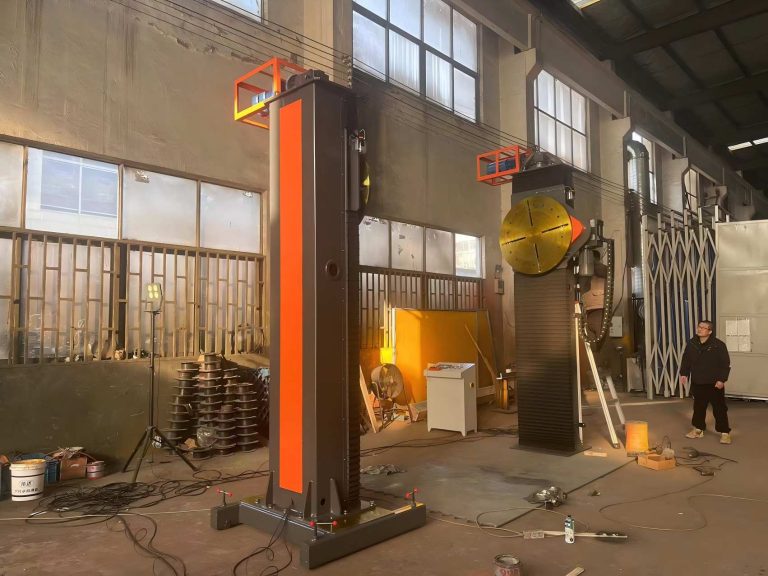
10-Ton Adjustable Welding Positioner: Main Specifications & Buying Tips
Table of Contents
- Core Specs of a 10-Ton Welding Positioner
- Applications for 10-Ton Adjustable Positioners
- Adjustable vs. Fixed Height: Stability Trade-Offs
- How to Evaluate a 10-Ton Positioner Before Buying
- Sourcing a Reliable 10-Ton Welding Positioner Supplier
- Questions When Buying a 10-Ton Welding Positioner
- What does a 10-ton adjustable positioner typically cost?
- Can a 10-ton positioner safely handle workpieces weighing exactly 10 tons?
- How do I choose between an L-type positioner and a head and tail setup?
- How long does delivery take for a custom 10-ton positioner?
- What maintenance does an adjustable welding positioner require?
A 10-ton adjustable welding positioner can transform a fabrication shop’s ability to handle large, heavy components, but the selection process demands more than matching a load rating to a workpiece weight. The difference between a machine that holds tight tolerances at full tilt and one that introduces weld defects lies in structural rigidity, gearbox backlash, and control responsiveness—factors rarely highlighted in spec sheets. Drawing on over a decade of experience specifying positioners for pressure vessels, wind towers, and heavy machinery, this article outlines the key specifications, practical evaluation methods, and sourcing considerations that engineers and buyers need to make a confident purchase.
Core Specs of a 10-Ton Welding Positioner
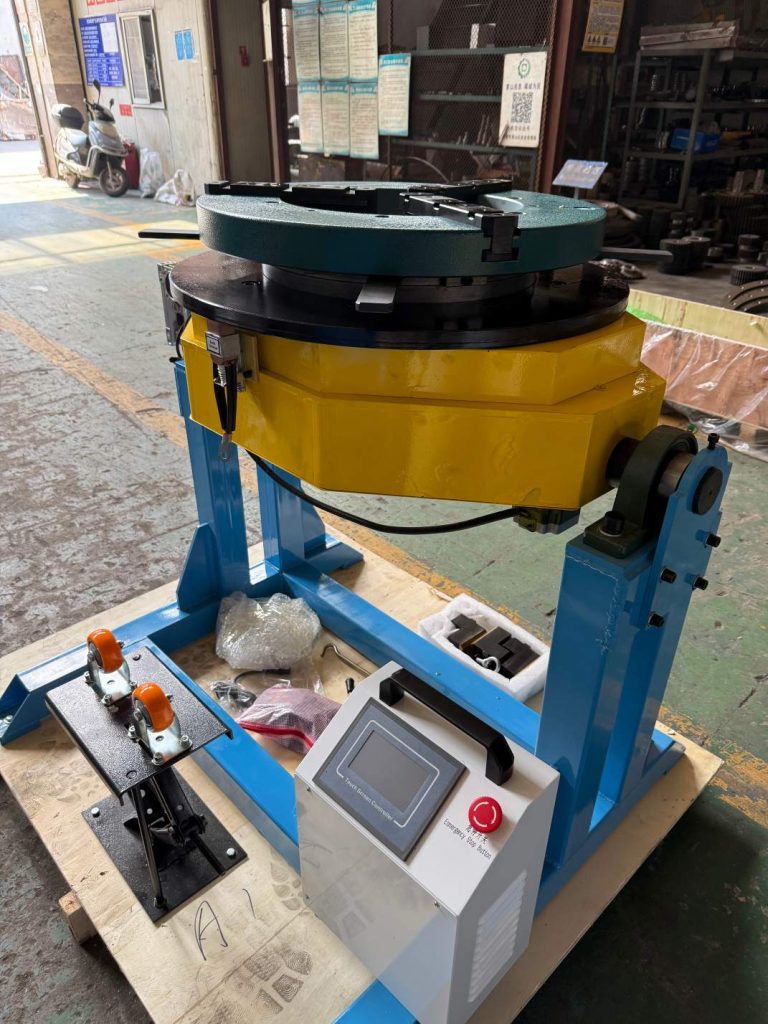
A 10-ton adjustable positioner is built around a rotating table carried on a tilting column, with the column height adjustable via a hydraulic cylinder or motorized screw jack. While load capacity and table diameter dominate the spec sheet, the drive and brake system matter just as much for weld quality. Below are the typical values you should confirm for any model under consideration.
| Specification | Typical Value |
|---|---|
| Load capacity | 10,000 kg (10 tons) |
| Table diameter | 1,200 – 1,600 mm |
| Tilt angle | -90° to +90° |
| Rotation speed | 0.1 – 2.0 rpm, stepless via VFD |
| Motor & drive | AC motor with self-locking worm gear and fail-safe brake |
| Control | Pendant with emergency stop; foot pedal optional |
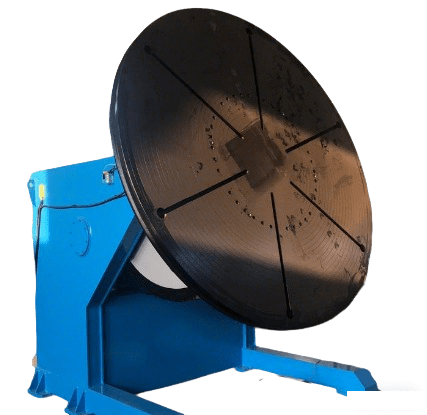
Manufacturers vary these figures—table diameter can reach 2,000 mm on some models, and the column elevation stroke is typically 500–1,000 mm. Confirm the motor power matches your supply voltage and that the controller supports external speed commands if you plan to integrate the positioner into an automated cell.
Applications for 10-Ton Adjustable Positioners
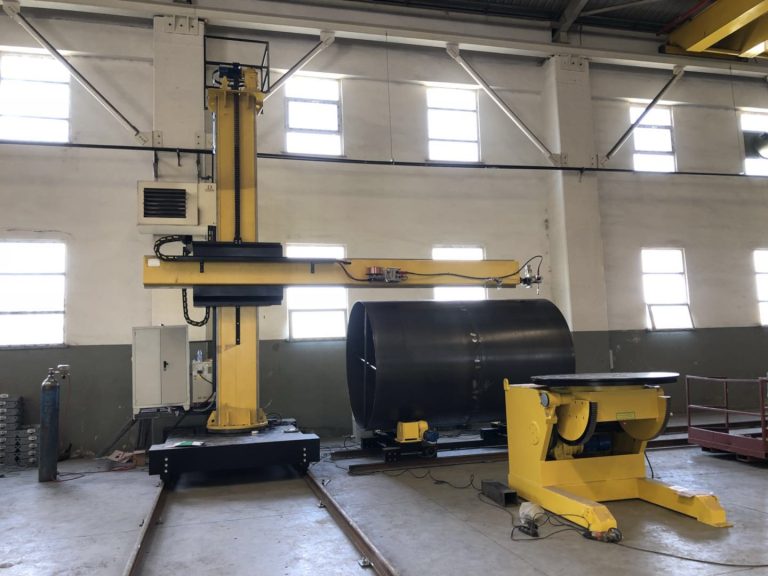
These machines cover heavy fabrication jobs where large cylindrical or irregular workpieces need multiple welding positions. Typical jobs include pressure vessel shells, wind tower sections, large diameter pipe spools, heavy flanges, and structural columns. The adjustable table height lets operators position the weld seam at a comfortable working level—especially useful when vessel diameters range from 1 to 3 meters. A three-jaw self-centering chuck or custom fixture plate secures the workpiece, and for exceptionally long parts the positioner can work in tandem with a tailstock or welding rotator.
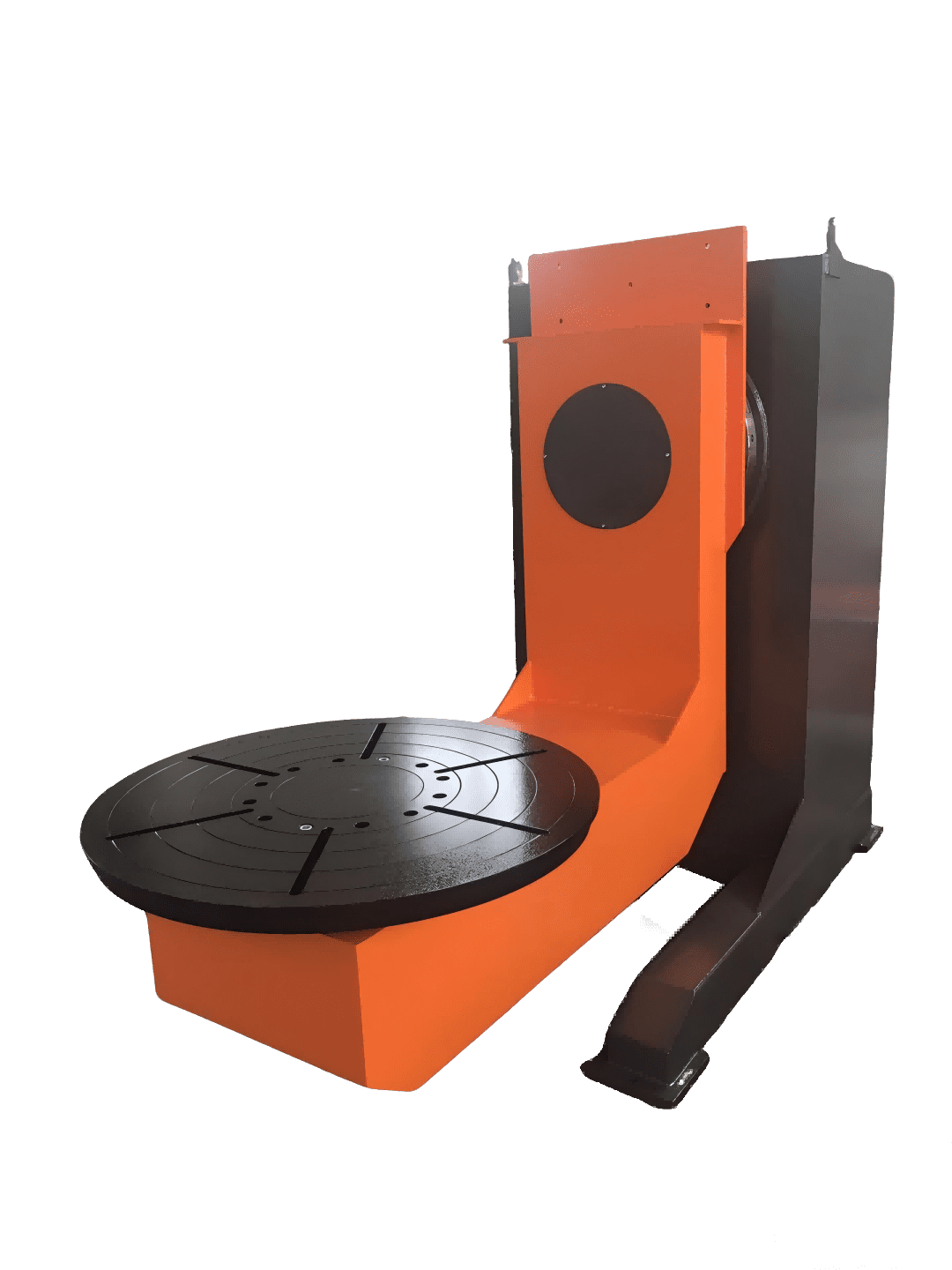
Shops that shift between short, compact flanges and longer cylindrical pieces quickly appreciate the height adjustment. Without it, operators either work at awkward angles or build a raised platform around a fixed-height base, adding setup time.
Adjustable vs. Fixed Height: Stability Trade-Offs
Adjustable height positioners offer clear flexibility for shops handling mixed workpiece sizes, but that adjustability comes with a stability penalty. A fixed-height positioner, with its rigid base and thick column, will always deflect less under eccentric loading. On an adjustable unit, the elevation mechanism—whether hydraulic or motorized screw jack—introduces additional joints and clearances. I have seen cases where a 10-ton adjustable positioner, when extended to full height and tilted 90°, exhibited enough table deflection to cause weld pool wandering. A positioner that claims 10-ton capacity but uses a slender column will struggle with off-center loads.
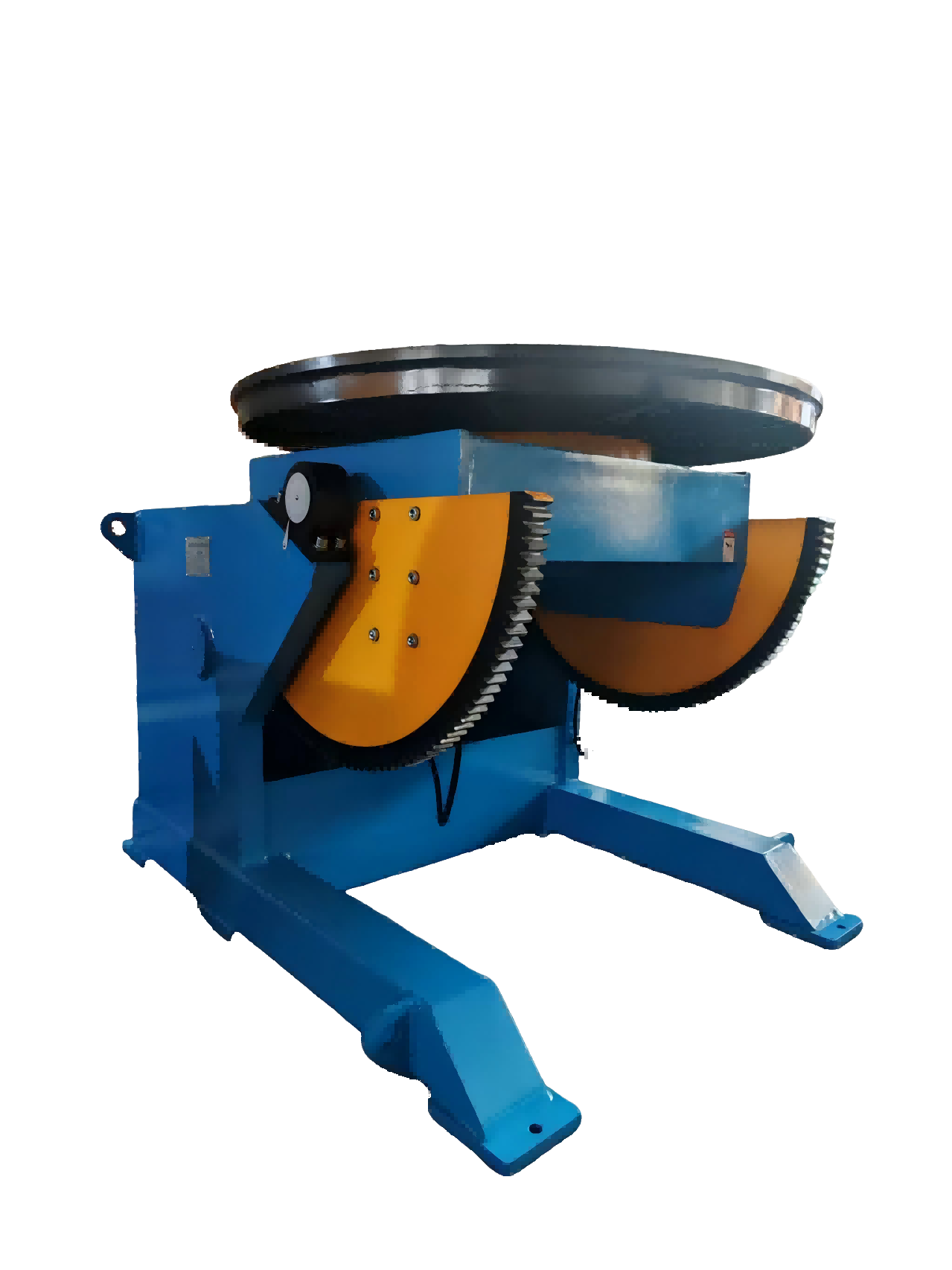
If your workpiece sizes rarely change, a fixed height unit may deliver better consistency. However, for shops with varying diameters, the adjustable feature is indispensable—provided you verify the column’s rigidity at full extension. Ask the manufacturer for deflection measurements under maximum load at the most extended height, not just at the column’s shortest position.
If your production mix includes both small and large vessels, the adjustable vs. fixed decision requires balancing flexibility against stability—contact [email protected] with your workpiece dimensions and we can help you evaluate the deflection you should expect.
How to Evaluate a 10-Ton Positioner Before Buying
Catalog specs only tell part of the story. When evaluating a positioner, I recommend a few specific checks that reveal real-world performance.
Rigidity test: Load the table to full capacity at maximum tilt and measure deflection at the table edge. A displacement exceeding 1–2 mm with a concentrated load indicates compliance that will show up in the weld bead.
Gearbox backlash: Rotate the table by hand with power off and note any free play. Excessive backlash causes sync issues between rotation and torch position during automated welding.
Tilt brake reliability: The tilt lock must hold position under load without creep. Hydraulic systems with counterbalance valves are preferred because they lock positively and provide smooth deceleration.
Control smoothness: Run the rotation speed from minimum to maximum and back; jerky motion indicates poor drive tuning or encoder noise.
Welding ground path: Ensure the positioner has a dedicated grounding lug and the bearing is protected from weld current—arcing through the bearing destroys the race.
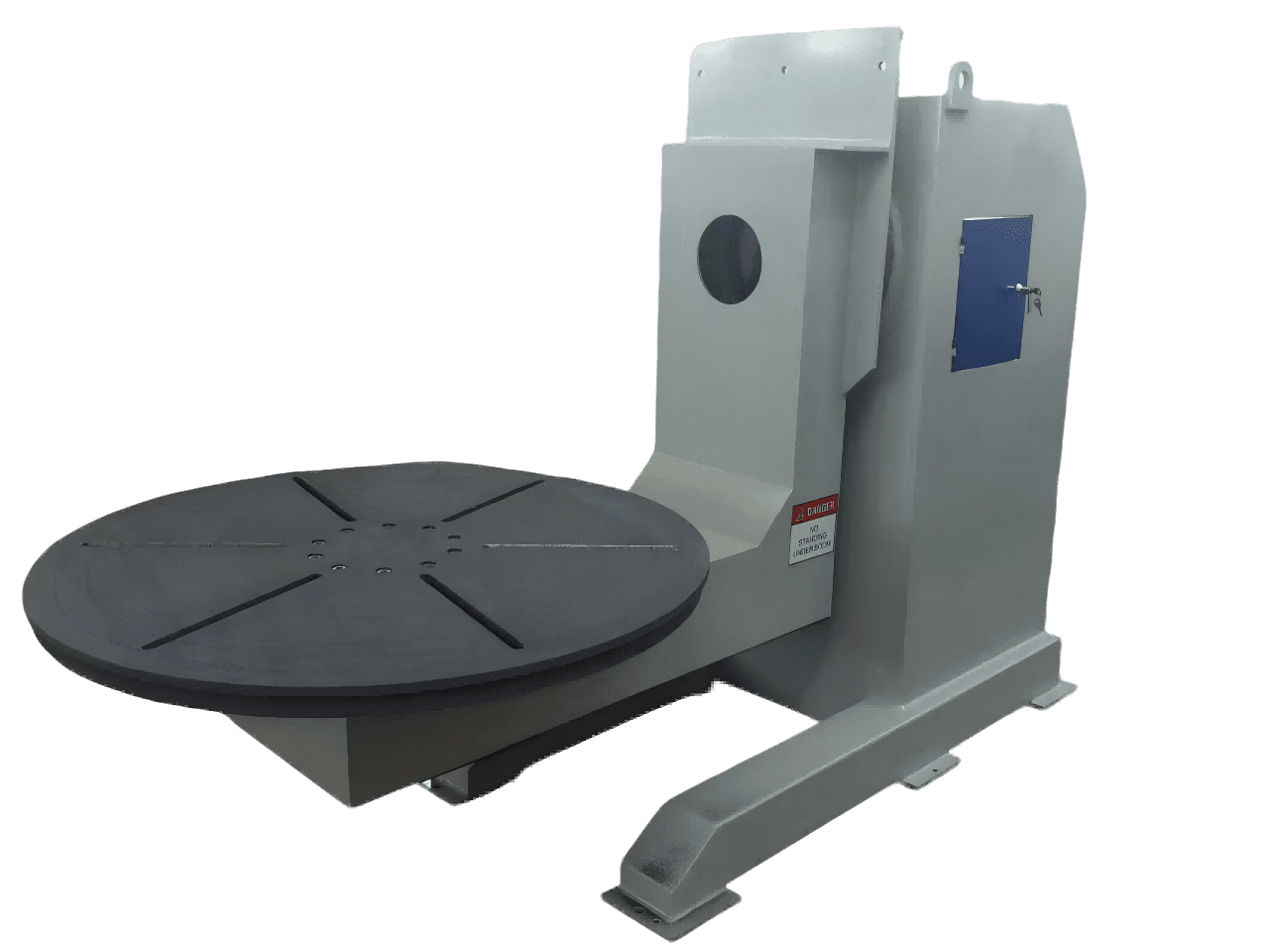
Build quality: Inspect weld seams on the frame, machining finish on trunnion bores, and weather sealing on electrical enclosures. If you plan to integrate the positioner into a robotic cell, verify the controller supports analog or fieldbus speed and position commands. A factory visit or third-party inspection can confirm these details. We routinely guide clients through these evaluation points to avoid costly rework.
Sourcing a Reliable 10-Ton Welding Positioner Supplier
Beyond the machine itself, the supplier relationship matters. Look for manufacturers with ISO 9001 certification, CE marking, and a track record of exporting to your region. Ideally, they should be willing to provide a factory audit report and references from previous international projects. Customization capability is another key factor—you may need non-standard table slots, special chuck jaws, or an extended height range. A partner like Wuxi ABOKE Machinery, with 20+ years of experience in welding automation equipment, can design positioners tailored to specific workpiece geometries and production lines. Clarify the warranty terms, availability of spare parts, and the level of remote or on-site installation support before placing an order. A low initial price that ignores long-term service costs is rarely a bargain.
Choosing a 10-ton adjustable welding positioner is a decision that impacts production throughput and weld quality for years. If you are evaluating options and need help verifying that a particular model can meet your load and stability requirements, share your workpiece details and production goals with us. Our engineering team can review your specifications and provide guidance on the right configuration. Reach out at [email protected] or call +86 13616174307—we will work with you to confirm every critical specification.
Questions When Buying a 10-Ton Welding Positioner
What does a 10-ton adjustable positioner typically cost?
A basic unit with electric tilt and manual column adjustment falls in the mid-range of industrial welding equipment, while a fully hydraulic, programmable model costs considerably more. Final pricing also depends on customization, export packaging, and shipping. Rather than focusing on the purchase price alone, evaluate the cost per year of reliable operation—a cheaper unit that requires frequent repairs or causes weld rework quickly becomes the more expensive choice.
Can a 10-ton positioner safely handle workpieces weighing exactly 10 tons?
It is a common misconception that the rated load is an absolute limit for any workpiece shape. In practice, load ratings are defined for a specific center of gravity distance. An eccentric load creates an overturning moment that reduces the effective capacity. If your workpiece is near the rating limit, check the manufacturer’s load diagram for off-center positions. Overloading can deform the structure, cause brake failure, and create a safety hazard. When in doubt, step up to the next capacity class.
How do I choose between an L-type positioner and a head and tail setup?
The better choice depends on your workpiece length. For short, heavy parts like large flanges or short vessel sections, an L-type positioner is efficient and compact—its single tilting table handles cantilevered loads well. For long cylindrical shapes such as wind tower cans or long shafts, a head and tail setup supports the workpiece at both ends and prevents sagging. A good rule: if the length exceeds three times the diameter, lean toward a head and tail configuration.
How long does delivery take for a custom 10-ton positioner?
Rather than asking only about lead time, consider when to involve the manufacturer. Lead times for a 10-ton positioner typically range from 8 to 14 weeks from order confirmation, but we find that projects where the client shares 3D workpiece drawings early often ship 2–3 weeks faster because the design team can anticipate fixturing needs. Ocean shipping and customs add another 4–6 weeks for international deliveries, so plan your production schedule accordingly.
What maintenance does an adjustable welding positioner require?
In our service experience, the column elevation mechanism is the most overlooked maintenance point on adjustable positioners. Dust and weld spatter accumulating in guides cause binding and eventual jerky motion. Hydraulic models need periodic hose inspections and oil changes; all models require daily function checks on emergency stops and limit switches. Following the manufacturer’s maintenance schedule prevents costly downtime. If you are comparing suppliers, ask for the recommended maintenance intervals and spare parts list—share your production environment details with us at [email protected] and we will outline the expected service requirements for your specific setup.
If you’re interested, check out these related articles:
Evaluate ROI of Welding Automation Business Investment
Storage Tank Fabrication: Core Equipment and Manufacturing Process
Automatic Welding Centers Improve Production Efficiency & Weld Quality