GMAW Process Explained: Benefits, Limits and Industrial Uses
Table of Contents
- The GMAW Process Starts With a Constant Voltage Arc
- Transfer Modes Control Bead Shape and Spatter
- The GMAW Process Delivers Speed on Thin and Medium Materials
- The GMAW Process Has Real Limits Sales Sheets Quietly Skip
- Equipment Choices Decide Whether GMAW Stays Consistent
- Common Questions About GMAW Process Selection
- Is GMAW the same as MIG and MAG welding?
- Does gas metal arc welding work in all positions?
- Which shielding gas should a production GMAW cell use for carbon steel?
- What should I prepare before requesting a GMAW positioning system quote?
The GMAW process is usually specified backward. Buyers compare power source amperage before the wire feed, shielding gas, and part positioning that actually decide whether a weld stays consistent hour after hour. The foundation is simple: a continuous wire electrode feeds through a torch into an arc protected by gas. Production consistency comes from the equipment around that arc. In the welding lines I have commissioned, GMAW earns its place only when transfer mode, material thickness, and joint orientation are matched deliberately. Getting those three links right matters more than chasing a higher headline output rating.
The GMAW Process Starts With a Constant Voltage Arc
Gas metal arc welding feeds a solid wire electrode continuously through the contact tip of a torch. The power source holds the output at a roughly constant voltage, and the wire feed speed sets the amperage. When the wire touches the workpiece, the short circuit collapses the arc and the current rises to melt the wire end. As the wire retracts, the arc restarts and the cycle either stabilizes into a spray or repeats as a short circuit. That self-correcting arc length is the reason GMAW is easier to mechanize than a process with a fixed length electrode.
Shielding gas does two jobs. It flushes oxygen and moisture away from the molten pool, and it shapes how the arc behaves. For carbon steel, active gas blends with CO2 or oxygen are the standard choice, so the steel variant is correctly called MAG. For aluminum and nickel alloys, an inert argon or helium mixture is required, so the same process becomes MIG. The terminology difference is not academic. Using the wrong gas on stainless steel changes arc stability, oxidation, and the mechanical properties of the deposit.
When I assess an existing GMAW cell with erratic arc starts, the first check is contact tip stickout and wire cast. A worn tip changes the electrical contact point and confuses the constant voltage behavior. The process degrades long before the power source shows a fault code. That is why tip replacement belongs in the shift checklist, not in a monthly maintenance plan.
Transfer Modes Control Bead Shape and Spatter
Every GMAW arc falls into one of a few transfer modes, and choosing the wrong one is the most common cause of spatter, cold lap, or burn-through in thin sheet.
| Transfer mode | Arc behavior | Typical thickness | Production role |
|---|---|---|---|
| Short circuit | Wire dips into the pool and the arc cycles rapidly | 1 to 6 mm | Sheet metal, out-of-position, root passes |
| Globular | Large droplets detach unevenly | 3 to 6 mm | Rarely selected because of high spatter |
| Spray | Fine droplets cross a stable arc | 6 mm and up, flat or horizontal | Heavy plate, high deposition |
| Pulsed spray | Spray-like transfer at lower average heat | Thin aluminum, stainless, out-of-position | Heat-sensitive alloys, automation |
Short circuit is the default for thin material because each wire-to-pool contact limits heat input. The trade is a noisier arc and more spatter when the parameters drift. Globular sits in an awkward middle band where the current is too high for short circuit but too low for spray. Large droplets fall under gravity and throw spatter, so most production engineers tune through this range rather than work in it.
Spray transfer appears once the current density passes the transition point. The arc turns smooth, deposition rate climbs, and the pool becomes large enough that gravity keeps the process restricted to flat and horizontal work. That is the practical reason spray GMAW gets paired with positioners and rotators instead of asking the welder to fight the part position.
Pulsed spray solves the heat problem by alternating a peak current that pinches off a droplet with a background current that holds the arc without overheating the pool. Pulsed GMAW has replaced straight short circuit on most automated stainless and aluminum cells I have specified. The lower average heat reduces burn-through and distortion, and the stable arc leaves far less spatter on tooling and shields.
The GMAW Process Delivers Speed on Thin and Medium Materials
The continuous wire electrode is the core productivity advantage. The torch never pauses for a rod change, so the duty cycle stays high on long seams. On carbon steel from roughly 3 mm to 12 mm, spray and pulsed spray GMAW hold deposition rates that hand SMAW cannot match over a full shift.
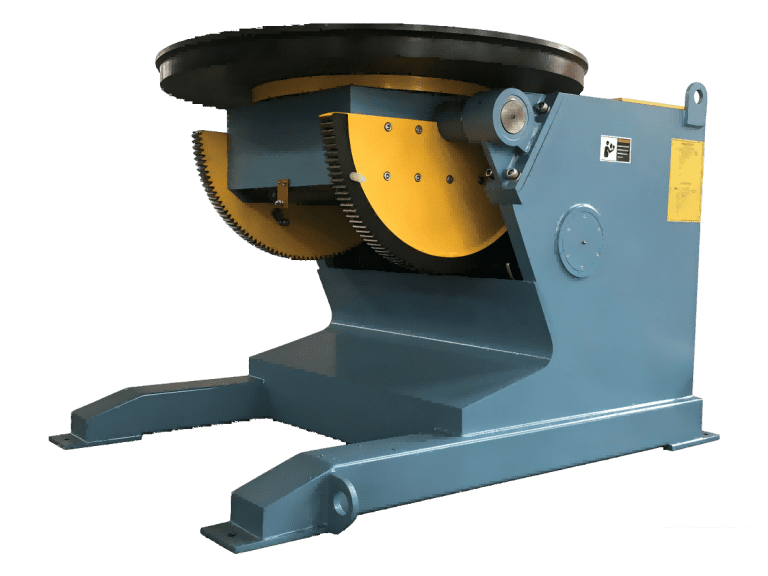
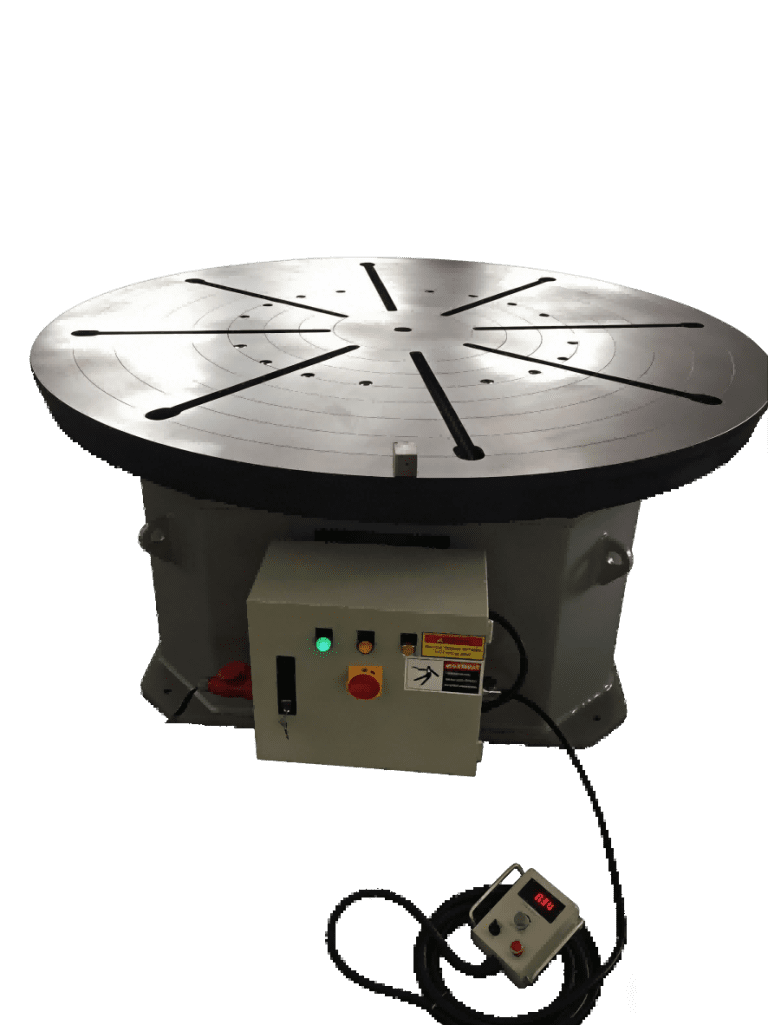
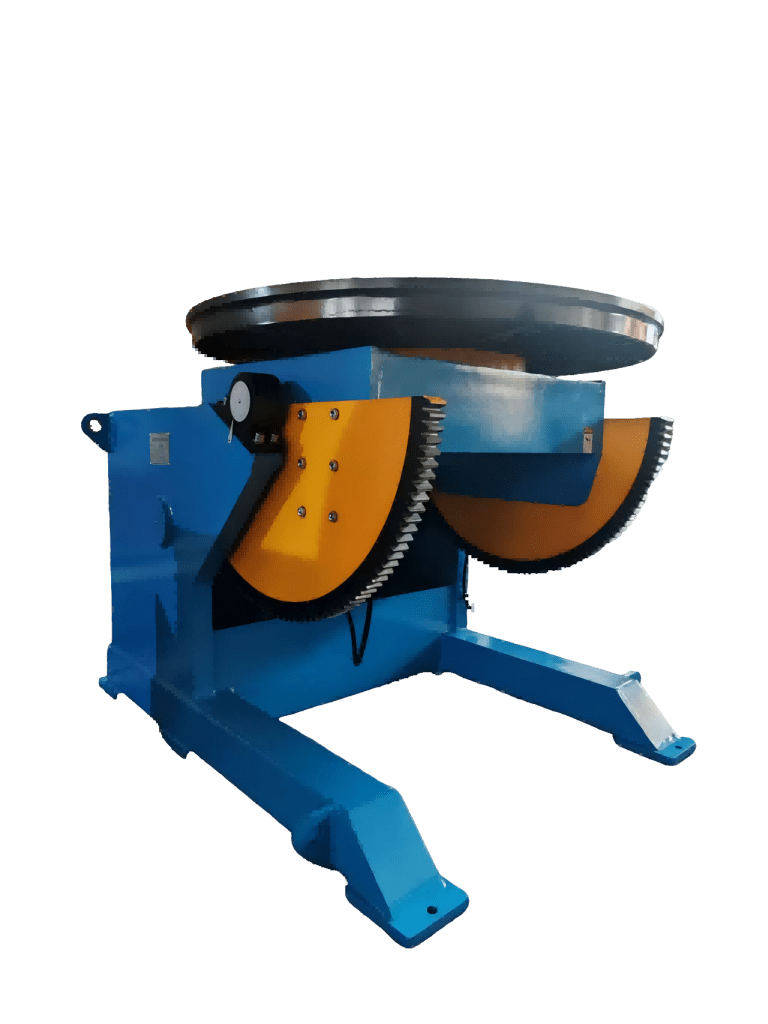
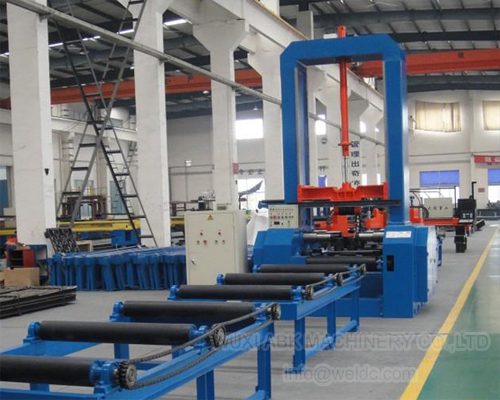
That speed only appears when the part is presented correctly. Spray transfer runs fast in the flat position because the pool stays controlled. The same parameters out of position create a pool that sags and a bead that runs ahead of the puddle. In an automated cell, the correction is mechanical, not manual. A welding positioner rotates the component to keep the joint flat or horizontal, and a manipulator carries the torch along the seam at a consistent travel speed.
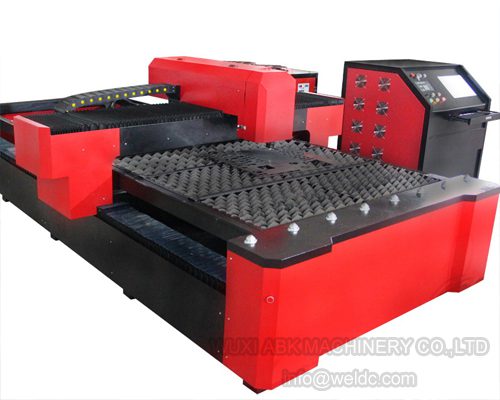
Fit-up quality also matters more in GMAW than in stick welding. A continuous wire feeds at a constant rate, so a changing root gap shows up immediately as an unstable arc or burn-through. Accurate cut edges from CNC cutting reduce that variation before the torch reaches the part. In a production line where cutting, assembly, and welding flow in sequence, upstream accuracy is what keeps the GMAW speed advantage from being spent on rework.
If your program involves automated GMAW on long seams or rotating vessels, it is worth confirming the positioner capacity and torch travel speed before finalizing your BOM, so send the part length and diameter to [email protected].
The GMAW Process Has Real Limits Sales Sheets Quietly Skip
GMAW is not a universal process, and the shielding gas that protects the pool is also its biggest outdoor weakness. A steady breeze can blow the gas envelope away and produce porosity before the welder notices. On open sites, a self-shielded flux cored wire or stick electrode usually holds up better. I have watched outdoor crews run GMAW on a windy day and then grind out scattered porosity that a flux cored wire would have avoided.
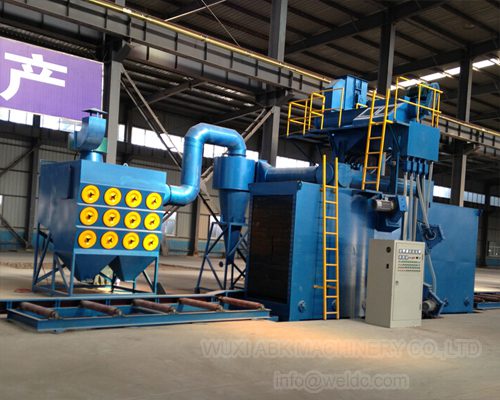
Surface condition is the second limit. GMAW tolerates mill scale, rust, and oil far less than flux cored welding does. The arc stays stable only when the base metal is clean, so production planning must budget grinding or blasting time that other processes would forgive.
Penetration is the third honest limit. A single GMAW pass on thick plate cannot match the depth of submerged arc welding or a large diameter flux cored wire. On heavy structural joints, GMAW often runs the root and fill passes while SAW handles the final passes. The short circuit failure mode is lack of fusion when wire speed and voltage are set too low for the joint thickness. The bead looks acceptable on the surface but never ties into the root.
Equipment Choices Decide Whether GMAW Stays Consistent
The power source is only the first purchase. In production, wire feeding and positioning matter as much as the arc itself. For aluminum, a push-pull torch or spool gun keeps the soft wire from bird-nesting at the drive rolls. For steel, drive roll type and tension have to match the wire diameter, or slip and erratic feed appear as an unstable arc.
Gas flow is another setting that gets copied from a reference sheet instead of verified at the nozzle. We check flow at the torch end because a kinked hose or undersized fitting quietly reduces coverage. Typical production rates run from 15 to 25 liters per minute, but the right number depends on nozzle diameter, stickout, and drafts in the bay.
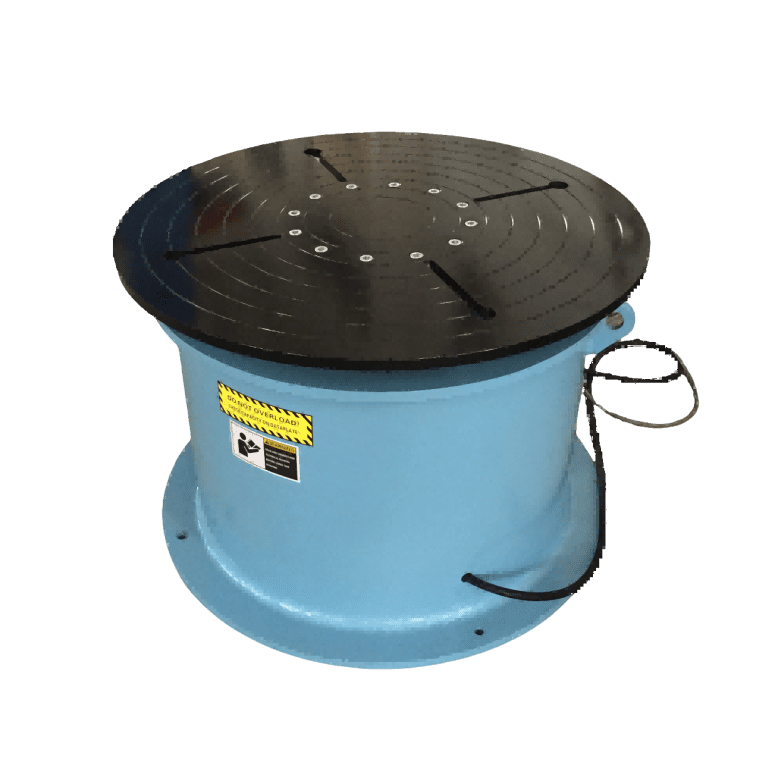
The part still has to stay in position. Spray and pulsed spray pools are fluid, so the joint must remain flat or horizontal while the torch moves. A positioner rotates the workpiece at a steady surface speed, and a column and boom manipulator keeps the torch distance constant over long seams. I have seen shops add this equipment after welder complaints accumulate. The better sequence is to plan part presentation before the line is built. At ABOKE we size a rotator by vessel diameter and maximum load, and a manipulator by seam length and required vertical travel. Both decisions follow the GMAW parameters, not a catalog category.
If the equipment does not match, the line shows it later: spatter on fixtures, a bead width that shifts with rotation speed, or a cycle time the cell cannot hold. If your project includes GMAW on long seams, vessels, or repetitive part families, send the material, thickness range, seam length, and daily output target to [email protected] or call +86 13616174307. We will confirm the transfer mode and positioning layout that fit the parts.
Common Questions About GMAW Process Selection
Is GMAW the same as MIG and MAG welding?
Yes, in practical terms. GMAW is the umbrella process name, while MIG and MAG describe the shielding gas type. MIG uses an inert gas, typically argon or helium for aluminum and nickel alloys. MAG uses an active gas, usually CO2 or an argon-CO2 blend for carbon and low-alloy steel. The distinction matters because the gas changes heat input, penetration profile, and spatter. Buyers who ask for MIG on carbon steel often mean MAG, and specifying the gas simply as MIG leaves the supplier guessing about the wire and parameters.
Does gas metal arc welding work in all positions?
It depends on the transfer mode and the alloy. Short circuit GMAW works out of position at low to moderate heat input, which is why it is common for root passes and thin sheet. Spray transfer creates a large, fluid pool that gravity controls, so it suits flat and horizontal welds and becomes difficult overhead or vertical unless pulsed spray is used. Pulsed spray extends out-of-position capability on aluminum and stainless steel by cutting average heat input. For a vertical or overhead production weld, confirm the pulsed parameters and the joint thickness before promising a stable process.
Which shielding gas should a production GMAW cell use for carbon steel?
A common wrong assumption is that pure CO2 is interchangeable with every steel mix. Pure CO2 gives deeper penetration and a lower gas cost but runs hotter with more spatter, which means more cleanup. An argon rich blend, usually argon with 8 to 25 percent CO2, produces a more stable spray or pulsed spray arc with less spatter and a better bead profile. The trade is gas price and slightly less penetration on thick sections. Most automated cells I have specified use the argon rich blend because the rework savings outweigh the gas cost.
What should I prepare before requesting a GMAW positioning system quote?
From the projects we have commissioned, the inputs that speed up a quotation are the material, thickness range, weld length, and part weight rather than a finished equipment list. Those inputs set the transfer mode, positioner capacity, and manipulator reach. Sharing part drawings and a daily output target lets the engineering team confirm whether a standard turning roll or a custom fit-up rotator is appropriate. If your program has long seams on rotating vessels, it is worth confirming the steady surface speed and torch travel range before ordering. Share your requirements with [email protected] and we will confirm which configuration fits.
If you’re interested, check out these related articles:
Adjustable Welding Rotator for Different Diameter Vessel Welding
Welding Positioner Selection for Pressure Vessels: Key Best Practices
Tube to Tube Automatic Welding for Boiler Header Joints