Cobot Roboter: Collaborative Welding Automation Explained
Table of Contents
- What Is a Cobot Roboter and Where Does It Fit in Welding?
- How Does a Cobot Differ From a Conventional Welding Robot?
- Can a Cobot Welding Cell Operate Without Full Fencing?
- Which Welding Tasks Actually Justify a Cobot Welding Cell?
- Can a Cobot Roboter Weld Thick Plate and Multi-Pass Joints?
- Why Does Part Fit-Up Matter More Than Programming Ease?
- How Do Cobot Welding Costs Compare With Conventional Automation?
- Where Do Buyers Usually Misjudge the Payback Period?
- What Do Buyers Miss Before Installing a Cobot Roboter?
- Why Does Tool Center Point Calibration Matter More Than the Arm Brand?
- What Should You Prepare Before Asking for a Cobot Quote?
- When Should You Talk to a Cobot Integration Supplier?
- What Do Welding Teams Ask Before Choosing a Cobot Roboter?
- Can a Cobot Roboter Run Safely Without Full Fencing?
- Can a Cobot Roboter Weld Thick Plate and Multi-Pass Joints?
- How Long Does It Take a Welder to Program a Cobot?
- Do We Still Need a Welding Positioner If We Buy a Cobot?
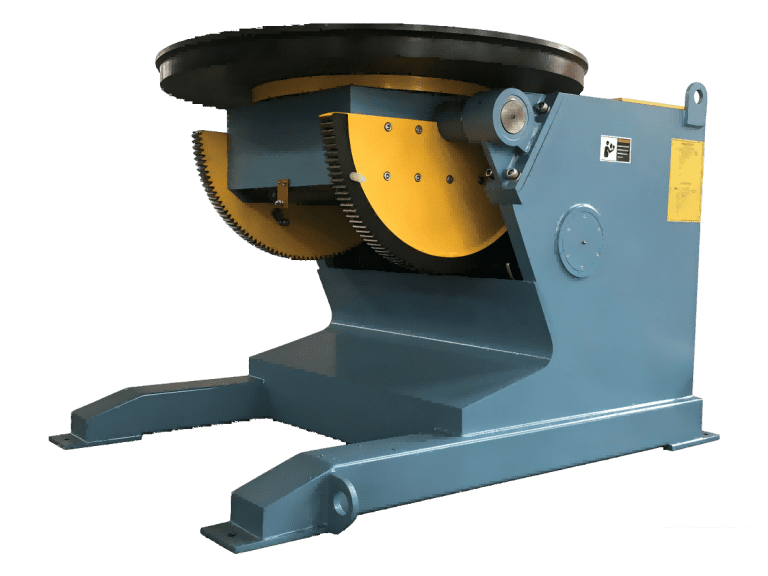
Welding shops are asking more often whether a Cobot Roboter should sit next to a conventional welding positioner or manipulator. In many cases, the honest answer is no, and in a narrow band of high-mix, small-batch work the answer is yes. A collaborative robot is not a universal replacement for proven industrial automation. It is a tool that handles frequent part changeovers and shorter welds with less guarding, while a column and boom or rotator still wins on long, heavy weldments. This article separates practical fit from vendor demo appeal.
What Is a Cobot Roboter and Where Does It Fit in Welding?
The term Cobot Roboter comes from German buyer inquiries, but the definition is the same across markets. A cobot is a six axis arm designed to work near people, with force sensing and safety-rated stop functions that reduce the need for hard guarding in some applications. In a welding cell, the arm is only one part. The torch, wire feeder, shielding gas, fume extraction and part clamping determine whether the cell produces acceptable welds.
How Does a Cobot Differ From a Conventional Welding Robot?
A conventional industrial welding robot is built for speed and repeatability inside a fully fenced cell. It expects stable part presentation and programmed paths. A cobot is built for interaction and shorter setup. It can be hand guided through a path, which is useful when a shop does small batches and wants a welder to record a path instead of writing code. The trade-off is usually reach and payload. Welding torches, cable packages and collision sensors consume a large share of the cobot’s rated capacity, leaving less margin for heavy water cooled torches.
Can a Cobot Welding Cell Operate Without Full Fencing?
Only after a risk assessment says it can. The collaborative mode applies mainly to the arm. Arc radiation, sparks, hot metal and welding fume still require arc screens, extraction and controlled access. I treat the term collaborative as a robot control feature, not a blank permission to remove guarding. ISO 10218-2 and ISO/TS 15066 give a useful basis, but the final decision belongs to the site risk assessment and local regulation.
Which Welding Tasks Actually Justify a Cobot Welding Cell?
A cobot makes the most sense where operators are welding many small parts in short runs and the joints are accessible with a straight torch. Typical candidates include brackets, bosses, small frames, thin sheet corners and fillets in the 3 mm to 12 mm range. If the part family changes every day and each batch is under a few hundred pieces, hand guided programming saves time. If the shop runs the same heavy weldment every shift, conventional automation is usually a better fit.
Can a Cobot Roboter Weld Thick Plate and Multi-Pass Joints?
It can, but only within narrow limits. Multi-pass heavy plate requires torch weaving, interpass temperature control, and enough reach to access root and cover passes from the correct angle. A low payload cobot with a compact torch may reach the joint but fail to hold the torch angle on a full penetration groove. In those cases I prefer a column and boom manipulator or a positioner that presents the part to a fixed torch. The cobot can still carry the torch, but the carrier and the part positioning must be solved first.
Why Does Part Fit-Up Matter More Than Programming Ease?
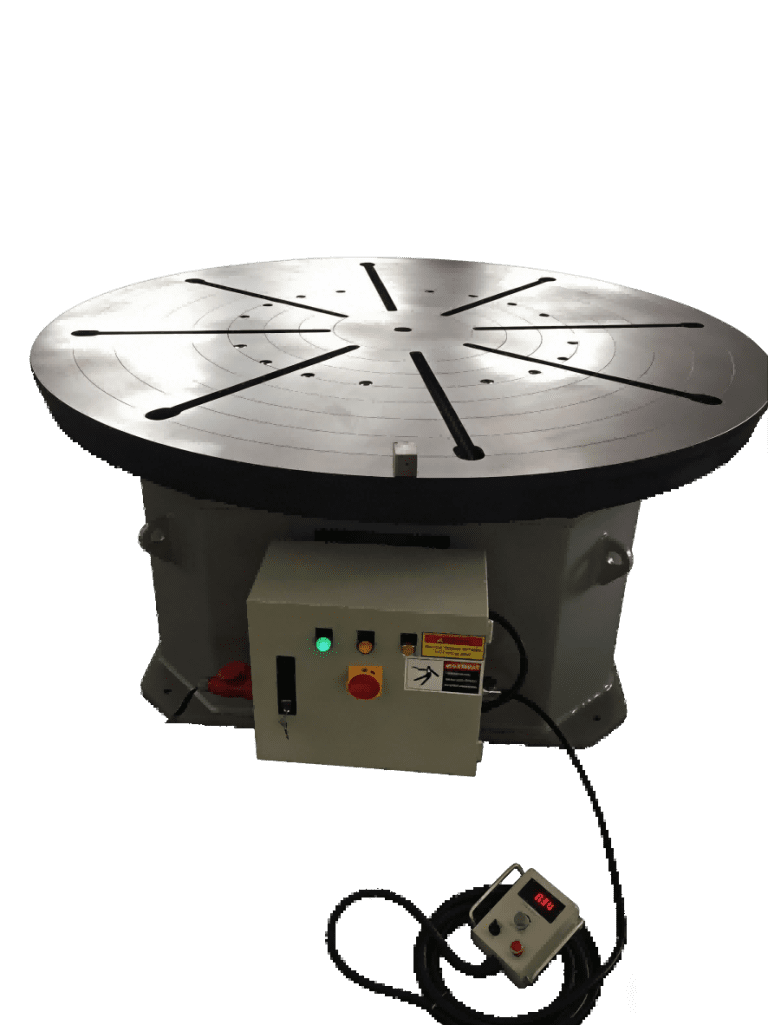
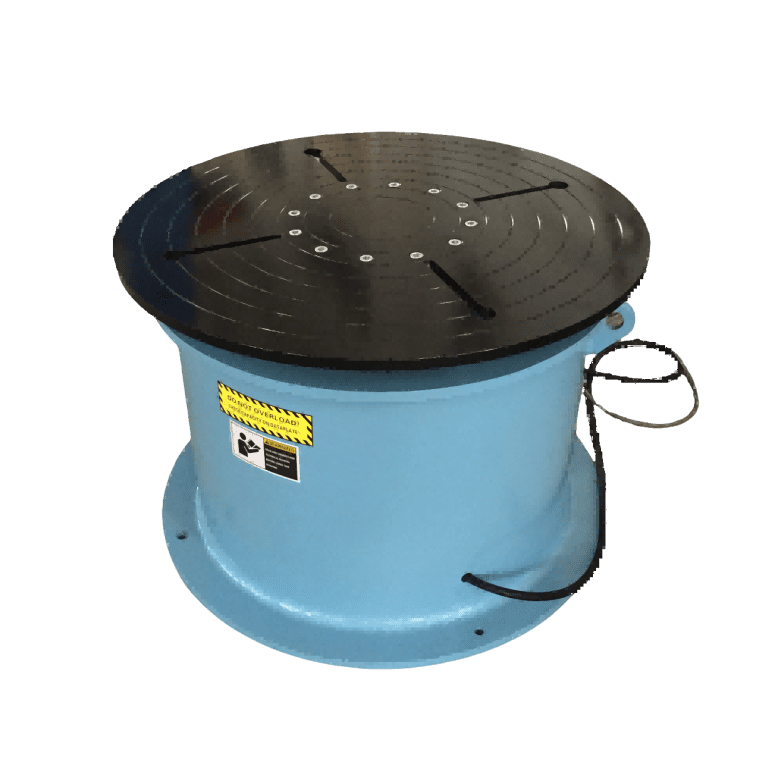
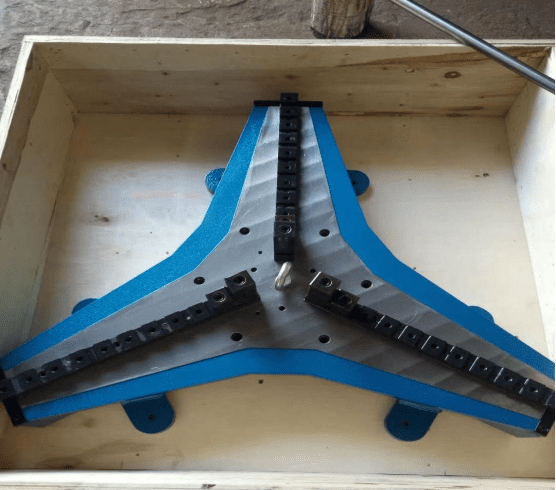
In our project reviews, the first question is not which cobot brand. It is whether the part repeats within approximately plus or minus 0.5 mm at the weld joint. If edges wander, the cobot path will not match the joint, and the welder spends more time correcting than the arm saves. A simple welding chuck or positioner that locks the part in the same position does more for weld quality than a more expensive teaching pendant.
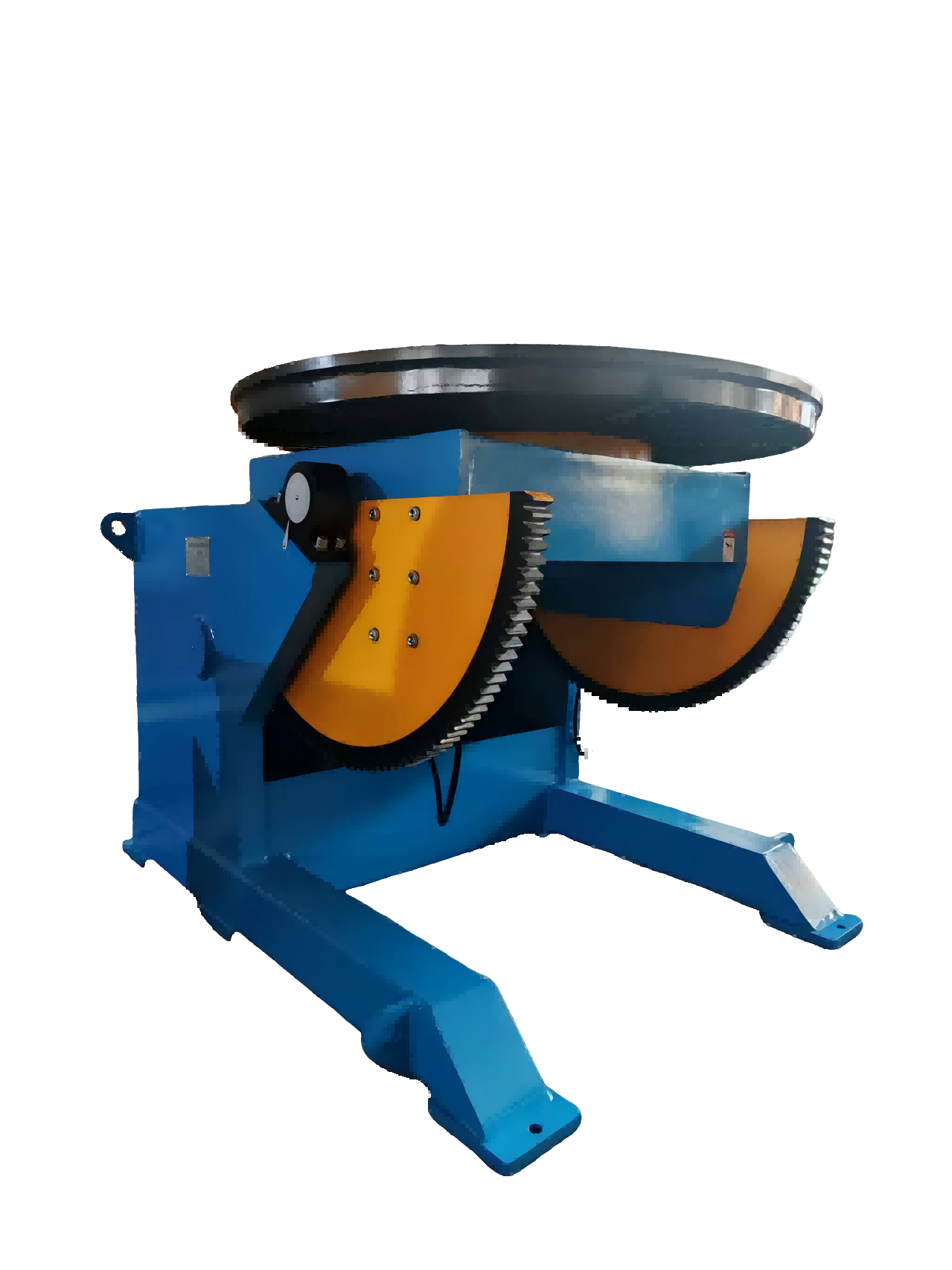
For cylindrical parts, the same logic applies. An adjustable welding rotator or head and tail positioner turns the part at a stable speed while the torch stays in one plane. The cobot is not the only source of travel. It coordinates with the workpiece axis. Shops that ignore this end up programming a moving arm around a part that should have been rotating underneath it.
How Do Cobot Welding Costs Compare With Conventional Automation?
Cost is not only the arm. A cobot cell includes the power source, torch, wire feeder, cable management, safety package, fixtures, and the time to qualify a welding procedure. Comparing that total against a positioner plus a manual MIG torch, or against a manipulator with a submerged arc head, requires a clear part mix.
| Approach | Programming | Best Fit | Main Limit |
|---|---|---|---|
| Cobot welding cell | Hand guided | High mix small parts | Torch package and joint access |
| Fixed height positioner plus manual MIG | Manual | Single repetitive seam | Operator handles torch |
| Column and boom manipulator | Semi-auto or programmed | Long heavy weldments | Frequent changeover slower |
| Adjustable welding rotator | Manual or semi-auto | Cylindrical parts and vessels | No torch path automation |
One pattern I see repeatedly is a shop budgeting for the arm and then discovering that fixtures, fume extraction and programming support cost more than the robot. The opposite mistake is buying heavy automation for part families that change every week. The right comparison is total cost per acceptable weld, not list price.
Where Do Buyers Usually Misjudge the Payback Period?
Payback improves when the cobot increases arc on time and reduces rework, not merely when it removes the welder from the torch. A cell that runs half loaded because the next part is not tacked or the fixture is not ready will not hit the projected return. I ask shops to calculate payback on three months of real part data: number of welds, average weld length, setup time between lots, and rework rate. If the data is not available, the payback claim is just a guess.
If your part mix includes small high mix brackets and long cylindrical weldments, it is worth confirming whether a standard welding positioner or welding manipulator can share your existing power source before splitting the budget. Send current part drawings and cycle time target to [email protected].
What Do Buyers Miss Before Installing a Cobot Roboter?
The most common miss is treating the cobot as a standalone machine instead of a cell. The arm arrives, but the welding table is not stable, the wire feeder is not mounted close enough, and the fume extraction duct blocks the torch. A cobot welding cell needs the same planning as any automated weld station, plus a few items specific to collaborative controls.
Why Does Tool Center Point Calibration Matter More Than the Arm Brand?
Tool center point, or TCP, tells the arm where the end of the torch is in space. A TCP error of a few millimetres can put the contact tip outside the joint or bury it into the plate. After a torch crash, a nozzle change, or a cable bend, the TCP must be checked. I have seen more reject welds from a skipped TCP check than from the difference between mid range cobot brands.
What Should You Prepare Before Asking for a Cobot Quote?
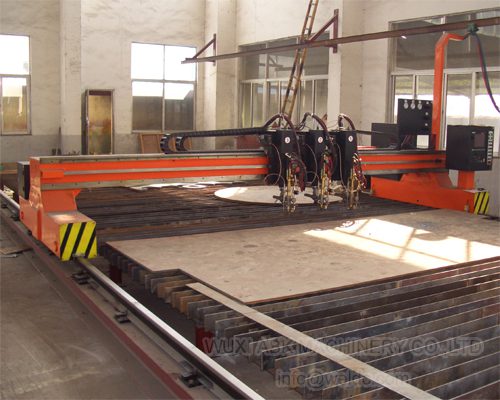
Bring part drawings, material and thickness, batch sizes, current weld times, expected fit-up tolerance, and the available power and gas supply. If you already have a CNC cutting process, confirm edge consistency. A plasma cut edge that varies by more than the joint tolerance will make any robot look inaccurate. The more precise the part blank, the better the cobot path holds.
Also ask for a written risk assessment and a list of excluded applications. If the supplier cannot explain when the cobot should not be used, keep looking. An honest integrator will identify the jobs that still belong on a conventional rotator or manipulator.
When Should You Talk to a Cobot Integration Supplier?
Most delays I see come from a gap between promised flexibility and the actual condition of the parts. It is cheaper to run a requirements review before the cell layout is drawn than to watch a team pay for guarding and programming that never matches the weld.
That is the point to bring in an integration partner. ABOKE builds welding positioners, manipulators, rotators and CNC cutting equipment, and our engineers review cobot inquiries against fixture and part reality before recommending a configuration. Send your part number, material, plate thickness, batch size and current weld time to [email protected] or call +86 13616174307. We will confirm whether a cobot, a welding positioner, or a manipulator fits before you commit to the BOM.
What Do Welding Teams Ask Before Choosing a Cobot Roboter?
Can a Cobot Roboter Run Safely Without Full Fencing?
No, not always. A welding cobot can operate with reduced guarding only when a risk assessment shows the tool, part and torch speed keep contact forces within safety limits. In a welding cell the main hazards are often the torch, arc radiation and fume exposure, not just the arm. I usually expect a light curtain, arc screen or area scanner around the cell. Collaborative mode does not cancel the need for fume extraction, a wire feeder guard where needed, or an emergency stop. The risk assessment, not the product name, decides the guarding level.
Can a Cobot Roboter Weld Thick Plate and Multi-Pass Joints?
Many buyers assume a six axis arm can weld anything an operator can. That is not how force, reach and torch access work. A cobot can weld thick plate if the torch package stays within the arm’s payload and the part is presented so each pass is reachable. In practice that often means adding a rotator or positioner to turn the workpiece. For long heavy grooves, a manipulator with a submerged arc or MIG head is usually more stable. I would not spec a cobot for thick plate unless the part geometry already forces a positioner interface.
How Long Does It Take a Welder to Program a Cobot?
It depends on the interface, the welder’s experience and the part family. A simple two dimensional fillet with hand guiding can be recorded in less than an hour. A multi layer weld with torch angle changes, weaving and multiple starts takes longer because the operator must set travel speed, voltage, wire feed and start and end points correctly. I count the real training time as two parts: learning the teach pendant and learning how to adjust a robotic weld sequence when the arc behaves differently. The second part takes longer than most demos suggest.
Do We Still Need a Welding Positioner If We Buy a Cobot?
In most cells we design, the positioner is not replaced by the cobot. It becomes part of the cell. A fixed positioner or rotator presents the part at a repeatable angle so the cobot can run shorter, simpler paths. For pipes, vessels and wide workpieces, rotation handles the long travel while the arm handles torch angle and oscillation. If your parts are cylindrical or need repositioning during a weld, send the diameter range and weld length to [email protected] and we will confirm whether a rotator or a head and tail positioner should sit under the arm.
If you’re interested, check out these related articles:
L-Type Welding Positioners: Applications and Load Capacity Guide
Adjustable Welding Rotator for Different Diameter Vessel Welding