SMAW Pipe Welding: Uses, Types and Practical Field Tips
Table of Contents
- Where Does SMAW Pipe Welding Perform Best?
- Which Electrodes Suit Different SMAW Pipe Welding Jobs?
- Which Procedure Variables Drive Pipe Weld Quality?
- What Goes Wrong in SMAW Pipe Welds and How Do You Fix It?
- Which SMAW Pipe Welding Equipment Should You Confirm Before Ordering?
- What Questions Do Buyers Ask About SMAW Pipe Welding?
- Can SMAW weld stainless steel pipe?
- Does E7018 always need an electrode oven?
- Which pipe position is hardest for a stick root?
- Is SMAW slower than MIG for pipe spools?
SMAW pipe welding remains the default choice for field pipe joints because it handles wind, dirty fit-up, and tight clearances without a shielding gas supply. In the pipeline spool shops and export fabrication projects we work with, the decision that determines whether a weld passes inspection is usually not the power source but the electrode class, storage method, and root-pass technique. This article covers where stick pipe welding fits, which electrode types carry root, fill, and cap passes, and the procedure variables and defect patterns that decide whether an inspector signs off. The direct point is simple: match the electrode to the code and position first, then set amperage.
Where Does SMAW Pipe Welding Perform Best?
SMAW pipe welding works best where shielding gas cannot stay put and where access limits bulky torches. Cross-country pipeline spreads still specify cellulosic electrodes such as E6010 or E7010-P1 for open-root passes under API 1104 because the fast-freeze slag holds the root in vertical-down progression. In plant work, process pipe welded to ASME B31.3 often mixes a cellulosic root with low-hydrogen fill and cap passes, especially on carbon steel up to the code’s preheat threshold. Tie-ins, repair sleeves, and compressor station piping favor stick because the electrode reaches into corners where a wire drive torch would fight the operator. The trade-off is speed: deposition rates fall below GMAW and FCAW on long, straight shop seams, and every pass needs slag removal. In the spool fabrication shops we work with, SMAW gets selected for open-root pipe because the welder can read the keyhole through the slag and adjust the arc length before a defect locks into the root.
Which Electrodes Suit Different SMAW Pipe Welding Jobs?
AWS classification is the first filter. For carbon steel, the system in AWS A5.1/A5.1M:2020 uses E plus four digits: the first two give minimum tensile strength in ksi, the third gives usable welding positions, and the fourth defines coating type and current. Stainless electrodes follow AWS A5.4. The practical decision comes down to root versus fill and the governing code.
| AWS Designation | Coating and Current | Pipe Application |
|---|---|---|
| E6010 | Cellulosic sodium, DC positive | Open-root and hot pass on carbon steel pipe; deep, fast-freeze arc |
| E7010-P1 | Cellulosic, DC positive | API 1104 pipeline root, hot, fill, and cap passes |
| E6011 | Cellulosic potassium, AC or DC positive | Field repair and tie-ins where only AC output is available |
| E7018 | Low-hydrogen iron powder, AC or DC positive | Fill and cap passes on process pipe to ASME B31.3 |
| E309L | Stainless, DC positive | Carbon steel to stainless steel spools and dissimilar joints |
E6010 and E7010-P1 tolerate field conditions well, but they introduce hydrogen. That is why many plant procedures restrict them to the root and hot pass, then require E7018 for fill and cap passes on thicker or higher-strength material. E7018 is the low-hydrogen workhorse for pipe work, yet it only stays low-hydrogen when kept in a heated electrode oven after the sealed container is opened. E6011 covers the same repair jobs as E6010 when the only machine on site is AC.
Which Procedure Variables Drive Pipe Weld Quality?
The procedure starts at the joint, not at the arc. In the shops and field projects we work with, we repeat the same sequence before any electrode is struck:
- Bevel the pipe end to the angle called out in the WPS, usually 30 to 37.5 degrees per side for a single-V butt joint.
- Set the root face or land and root gap so the keyhole stays controllable.
- Clean the bevel, the internal surface, and the adjacent pipe wall.
- Place tacks that will be ground, feathered, or consumed during the root pass.
- Run the root with a cellulosic electrode, keeping the keyhole open and moving at a steady rate.
- Follow with a hot pass to flush the root surface before the heavier fill sequence.
- Complete fill and cap passes with E7018 under the amperage and interpass temperature limits in the WPS.
Position changes the manipulation more than the physics. A 1G rolled pipe is the easiest because the welder holds a flat position while the pipe rotates. A 5G fixed horizontal joint forces the operator through flat, vertical, and overhead in one weld. The 6G fixed position at 45 degrees remains the familiar qualification test under ASME Section IX because it forces every position at once. Polarity, amperage, travel speed, and electrode angle then decide whether that sequence produces a clean root.
If your current pipe procedure calls out an electrode that cannot meet the hydrogen limits in the governing code, it is worth confirming the AWS classification and storage method before you finalize the weld map. Send the code and material grade to [email protected] and we will verify what needs to change.
What Goes Wrong in SMAW Pipe Welds and How Do You Fix It?
Most SMAW pipe weld defects trace back to a small set of mechanisms. Slag inclusion comes from a wide weave, excessive travel speed, or poor inter-run cleaning; the fix is to narrow the bead, slow down enough to let the molten slag float, and grind the toe lines between passes. Porosity on open pipe usually appears when wind strips the shielding gas away or when a cellulosic arc is held too long. On low-hydrogen work, porosity has a different source. The most common porosity call I have seen on pipe spools came from E7018 left open in a humid bay overnight. The electrodes still ran acceptably, but the root showed scattered wormhole porosity, and the entire joint had to be cut out.
Lack of fusion at the sidewall comes from low amperage, fast travel, or the wrong electrode angle in the 5G overhead position. Hydrogen cracking is the slow failure that tends to show up later on higher-strength or thick-wall pipe when low-hydrogen electrodes were not stored correctly or preheat was skipped. For each of these, the remedy is procedural before it is physical: confirm electrode class, re-dry low-hydrogen electrodes, maintain preheat, and adjust travel so the arc spends long enough on each sidewall.
Which SMAW Pipe Welding Equipment Should You Confirm Before Ordering?
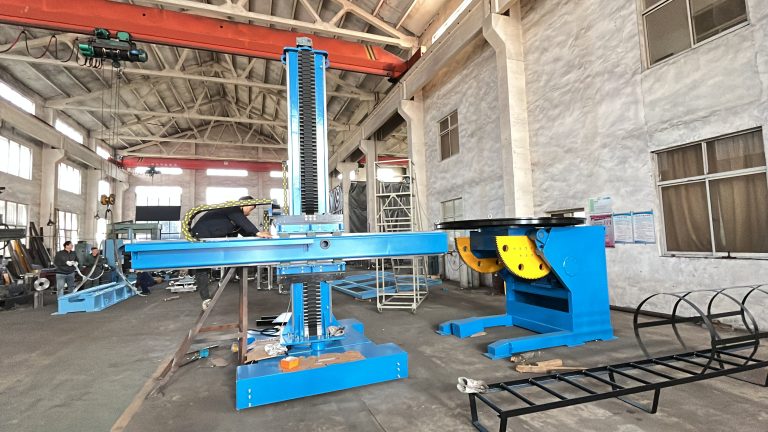
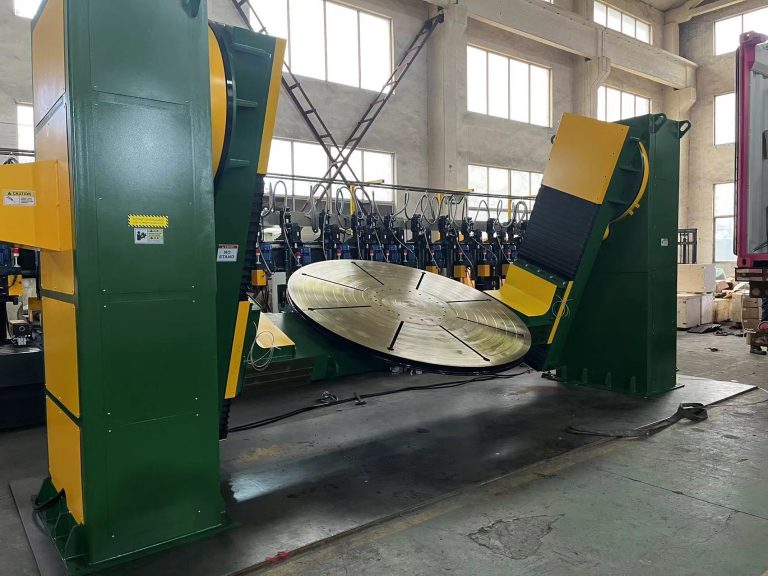
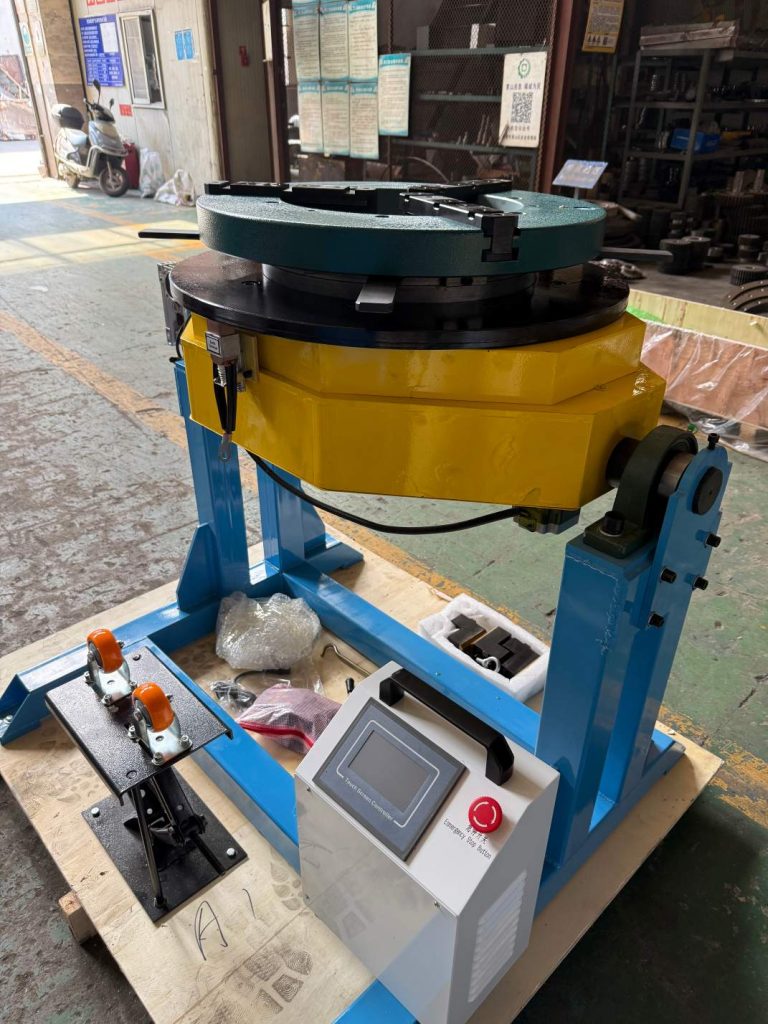
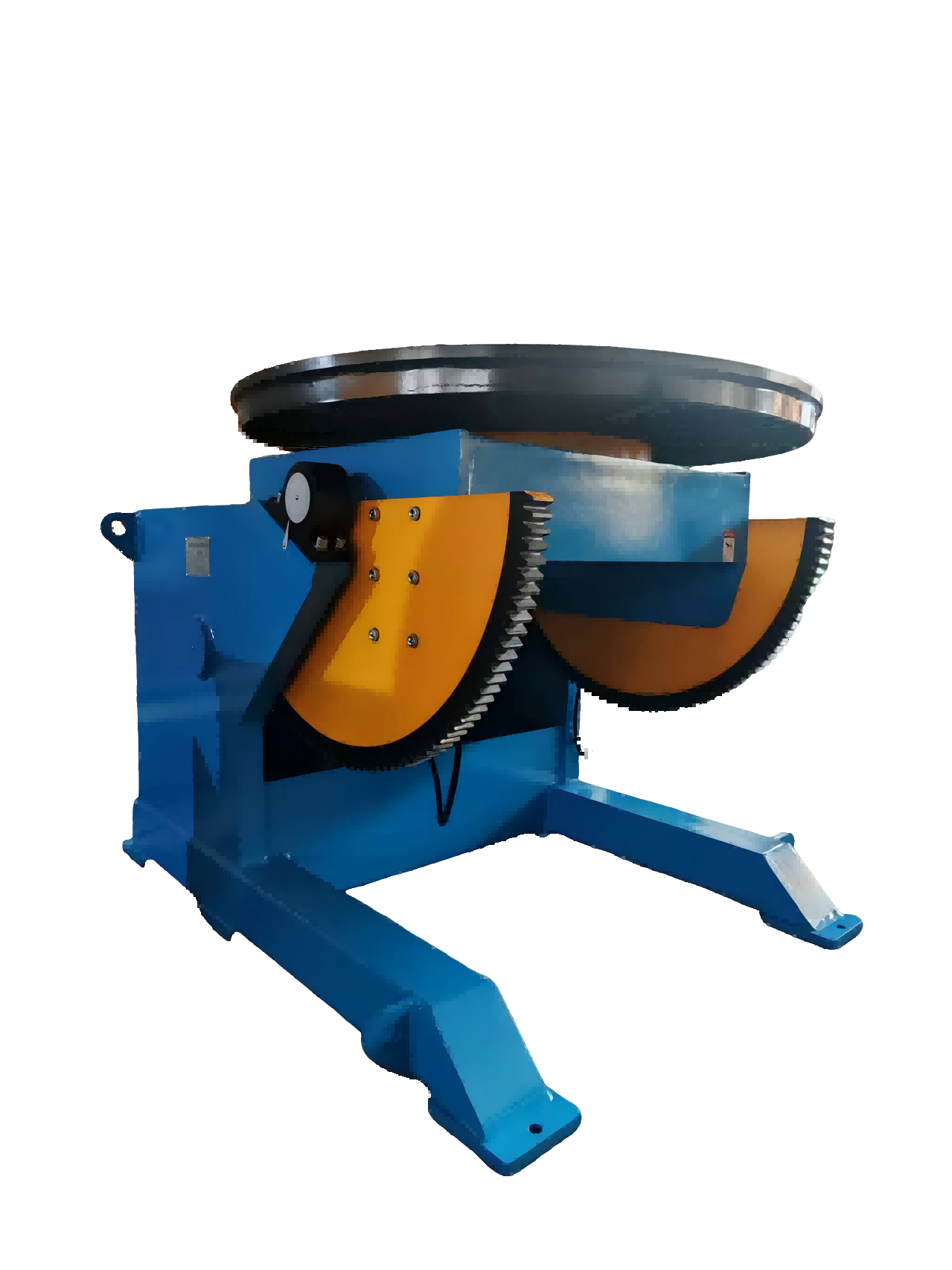
The most common sourcing mistake we see is buying a pipe positioner or welding rotator before the procedure and the spool dimensions are settled. A positioner helps on rolled 1G fill and cap passes because the welder can hold a flat bead instead of fighting the travel angle, but capacity has to match the heaviest spool, not the average diameter. Equally important is the power source: field spreads need DC output for E6010 root passes, and shop work benefits from a machine that runs E7018 smoothly on AC or DC positive. Electrode ovens, remote current controls, and proper grounding lugs are not accessories; they are part of the procedure.
Wuxi ABOKE Machinery reviews the same data we ask you to send: pipe diameter range, wall thickness, material grade, governing code, and monthly spool count. We use that to confirm the positioner class, rotation speed, and fixture arrangement that fits your pass sequence. Send those five details to [email protected] or call +86 13616174307 before you lock the equipment list, and we will come back with a specific recommendation rather than a catalog page.
What Questions Do Buyers Ask About SMAW Pipe Welding?
Can SMAW weld stainless steel pipe?
Yes. Stainless electrodes such as E308L and E309L under AWS A5.4 make it possible to weld stainless steel pipe with stick, and E309L is common for joining carbon steel to stainless spools. The process gives the same wind tolerance and portability that carbon steel stick work offers. The limitation is bead appearance and speed. GTAW usually produces a cleaner root and is preferred for sanitary or high-purity service. For structural or process pipe where appearance is secondary, SMAW with a stainless electrode works, provided the interpass temperature and cleaning discipline stay tight.
Does E7018 always need an electrode oven?
No, not before the hermetically sealed container is opened. As long as the container stays airtight, the electrodes remain in their controlled condition. After opening, the answer changes. E7018 is low-hydrogen only while it stays dry enough to meet the storage provisions tied to AWS A5.1 and the electrode maker’s handling data. Once the package has been open for several hours in a humid environment, the coating can absorb moisture, and the rods should go into a heated oven at the temperature and time the procedure requires rather than back onto the shelf.
Which pipe position is hardest for a stick root?
It depends on diameter and access. On large-diameter pipe in the field, the 5G fixed horizontal position is the usual daily challenge because the welder moves from flat to vertical to overhead in one pass. For qualification, most welders name 6G, the fixed 45-degree position, as the harder test because it combines every angle and requires constant body adjustment. Small-diameter pipe adds its own difficulty: the keyhole changes fast, and the electrode angle has to shift quickly around a tight radius.
Is SMAW slower than MIG for pipe spools?
In spool shops we have worked with, yes. SMAW cannot match the deposition rate of GMAW or FCAW on long, straight seams, and the slag removal between passes adds time. That said, many shops still keep stick on the root pass for open joints or position work, then switch to wire for fill and cap. The speed gap narrows when fit-up is uneven or the job requires frequent position changes. If your pipe material is outside the common carbon steel range, share the grade and code requirement with [email protected] and we will confirm the electrode class and preheat detail before you order.
If you’re interested, check out these related articles:
Offshore Wind Tower Fabrication: Key Equipment and Main Challenges
Fit-Up Rotator for Accurate Vessel Alignment & Stable Welding
Evaluate ROI of Welding Automation Business Investment
Automatic Welding Centers Improve Production Efficiency & Weld Quality