Pressure Welding: Types, Applications and Benefits
Table of Contents
- Understanding Pressure Welding Fundamentals
- Main Pressure Welding Processes
- Industrial Applications Across Sectors
- Advantages Over Traditional Fusion Welding
- Selecting the Right Process and Equipment
- Common Questions About Pressure Welding
- Can pressure welding join all metal combinations?
- How do I know which pressure welding process fits my parts?
- Does pressure welding require special surface preparation?
- Are pressure welds inspectable with conventional NDT?
- Is pressure welding more expensive than arc welding?
Pressure welding encompasses a family of solid-state joining processes where coalescence occurs without melting the base metals, relying instead on controlled heat and mechanical force to create a bond. From friction-welded automotive drive shafts to explosion-clad pressure vessel plates, these methods solve metallurgical challenges that fusion welding often creates, including heat-affected zone cracking and intermetallic embrittlement. In twelve years of specifying automation equipment for fabrication shops, I have seen how the right pressure welding setup can eliminate entire post-weld inspection steps while raising throughput. This article covers the main pressure welding processes, their industrial applications, and the equipment factors that determine whether a joint meets both quality and production targets.
Understanding Pressure Welding Fundamentals
The defining characteristic of all pressure welding processes is that they join materials in the solid state, below the melting point of the base metals. This removes problems associated with solidification, such as segregation, porosity, and solidification cracking. Instead of melting, the two surfaces are brought into intimate contact under pressure, sometimes with the aid of heat generated by friction, electrical resistance, or ultrasonic vibration.
Surface preparation is critical because the process relies on atomic diffusion across the interface. Oxides, contaminants, and surface roughness that would be tolerated in a fusion weld can prevent a proper pressure weld from forming. In a project we supported for a hydraulic cylinder manufacturer, switching from manual wire brushing to a controlled CNC-machined surface prep improved cold pressure weld consistency from roughly 80% to over 98% acceptance, simply because the interface flatness and cleanliness were predictable.
The mechanisms vary by method, but they share the same outcome: a joint that typically retains base-metal properties without the need for filler metal, flux, or shielding gas. This makes pressure welding valuable for dissimilar metal joints, reactive materials, and applications where thermal distortion must be minimized.
Main Pressure Welding Processes
The term pressure welding covers over a dozen distinct methods. The table below summarizes the six most commonly encountered in industrial production.
| Process | Heat Source | Pressure Applied | Typical Materials | Key Application |
|---|---|---|---|---|
| Cold Welding | None (ambient) | High, via dies or rolls | Aluminum, copper, gold | Electrical connections, hermetic seals |
| Friction Welding | Mechanical friction | Axial, with rotational speed | Steel, aluminum, titanium | Automotive shafts, aerospace components |
| Ultrasonic Welding | High-frequency vibration | Moderate, with oscillation | Thin sheet metals, plastics | Battery tabs, wire harnesses, packaging |
| Explosion Welding | Detonation | Extremely high in microseconds | Clad plate (steel-titanium, etc.) | Pressure vessel cladding, heat exchanger tube sheets |
| Diffusion Welding | Furnace or induction | Moderate, over minutes to hours | Titanium, nickel alloys, ceramics | Aerospace engine parts, nuclear fuel elements |
| Forge Welding | External furnace | Hammer or press, after heating | Steel, wrought iron | Traditional blacksmithing, some pipe manufacture |
Each process has a distinct operational envelope. Friction welding, for example, can join 100 mm diameter steel bars in under 30 seconds, but it requires one part to be symmetrical and rotatable. Explosion welding can clad entire 20-square-meter plates but demands remote-site safety planning and permits. A client I advised last year chose explosion cladding for a reactor vessel simply because diffusion bonding the same 12-meter-diameter head would have required a vacuum chamber too large to be economical.
Industrial Applications Across Sectors
Pressure welding appears in industries where joint integrity and material compatibility are non-negotiable.
In the automotive sector, friction welding is the standard process for joining driveshafts, axle tubes, and engine valves. It produces a full cross-section weld with a narrow heat-affected zone, so parts can be finish-machined before welding without losing dimensional accuracy.
In aerospace, diffusion bonding joins titanium compressor blades to disks, eliminating the weight and potential failure points of mechanical fasteners. The process is slow and capital-intensive, but when each engine contains thousands of airfoils, the reliability gain justifies the cost.
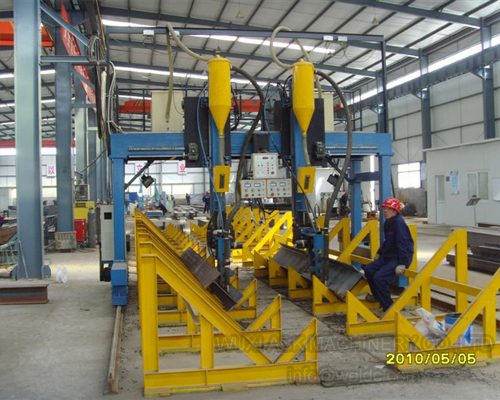
For heavy fabrication, explosion-clad plates provide a cost-effective way to combine a corrosion-resistant alloy layer with a structural carbon steel backing. Pressure vessel manufacturers specify such clad plate for urea reactors, hydrocrackers, and chemical storage tanks. The welding of the clad seams then requires careful equipment selection—column and boom manipulators with submerged arc welding heads are commonly used because they maintain the precise travel speed and stick-out needed to avoid diluting the cladding layer.
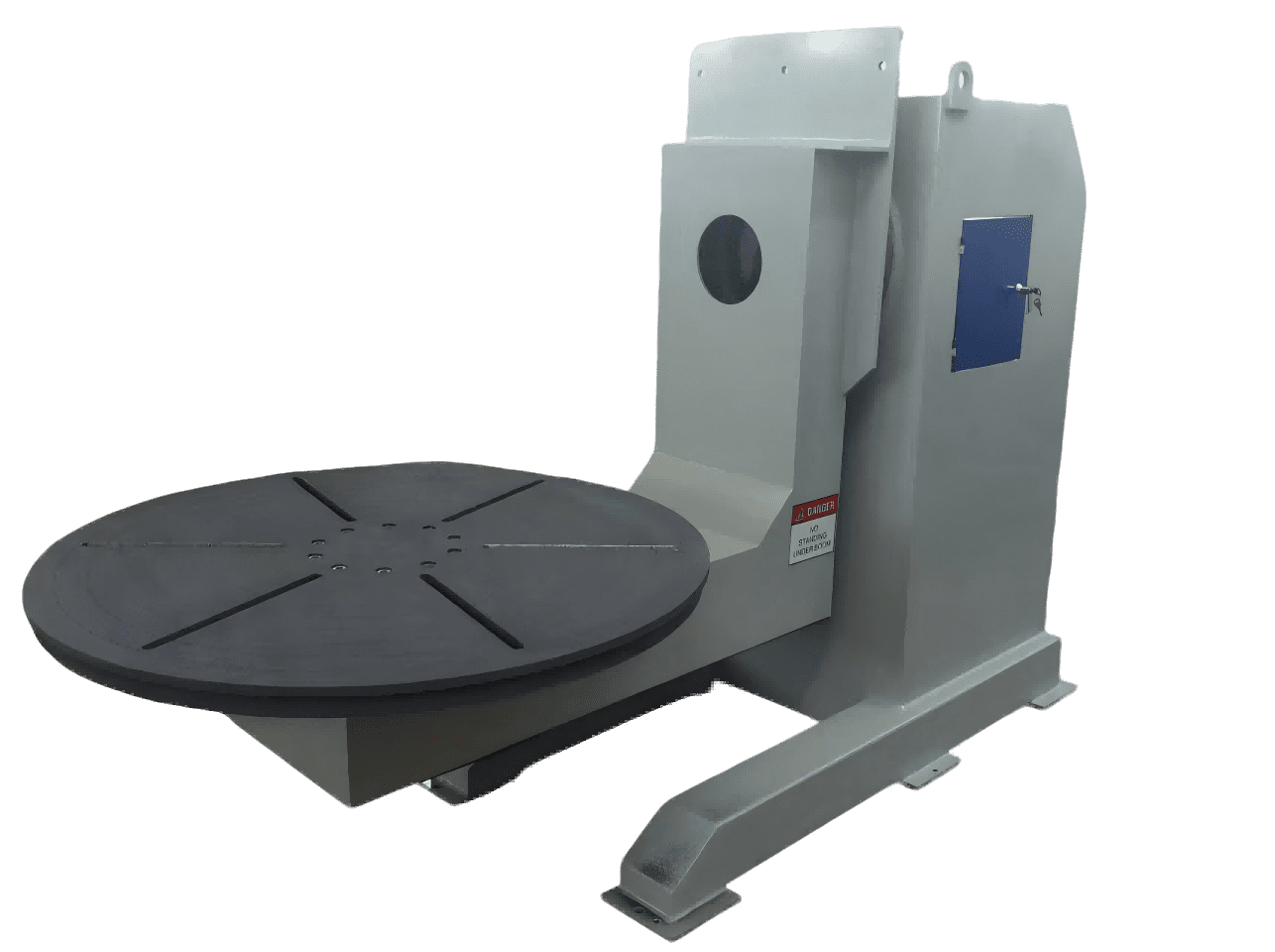
Ultrasonic welding dominates in battery pack assembly for electric vehicles, where it joins copper and aluminum tabs to busbars without the high heat that would damage nearby cells. The process cycles in under a second and leaves no fumes—a significant advantage in clean-room environments.
If your program involves joining materials that fusion welding has failed to qualify, it is worth confirming the pressure welding process parameters with the equipment manufacturer before finalizing your production plan—reach out at [email protected] for a consultation on automation integration.
Advantages Over Traditional Fusion Welding
The primary advantage of pressure welding is the absence of melting. Because the base metal never becomes liquid, problems such as hot cracking, porosity, and the formation of brittle intermetallic phases are either greatly reduced or eliminated entirely. This matters most when joining dissimilar metals: copper to aluminum in electrical connectors, or titanium to stainless steel in chemical plant components. In a copper-aluminum transition joint we tested for a power distribution client, a friction weld achieved tensile strength exceeding that of the aluminum parent material, while a TIG weld of the same pairing consistently failed along the fusion line.
Heat input is also dramatically lower. In fusion welding, the arc or flame can raise the temperature of the entire workpiece to several hundred degrees over a wide zone. Pressure welding confines the heating (if any) to the immediate interface. The result is near-zero distortion, which reduces downstream straightening, machining, and quality inspection. For a production line making long shafts, eliminating post-weld straightening alone can cut total cycle time by a quarter.
Shielding gas and filler metal are unnecessary, which simplifies both consumable management and environmental compliance. An automated pressure welding cell does not require gas bottles, wire feeders, or fume extraction to the same degree, though certain processes like friction welding still benefit from guarding against flash and noise.
These advantages translate into measurable cost savings when the production volume justifies the capital equipment. A conventional friction welder may cost more than a MIG power source, but if it eliminates radiographic inspection and reduces scrap rate from 3% to under 0.5%, the payback period can be under eighteen months.
Selecting the Right Process and Equipment
Matching a pressure welding method to a component requires evaluating three factors: joint design, material pairing, and production rate. A rotary friction welder works well for round parts but is useless for a flat plate; diffusion bonding can join complex surfaces but needs hours of cycle time and a vacuum environment.
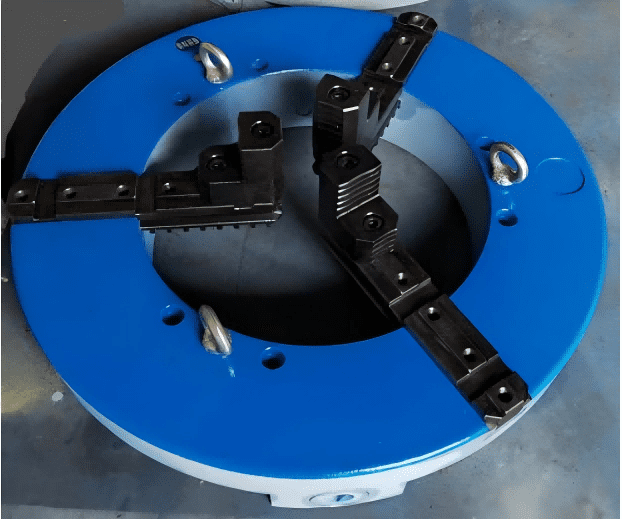
Equipment selection directly affects process stability. For friction welding, spindle rigidity and speed control determine whether the burn-off length is repeatable from part to part. For ultrasonic welding, the alignment of the sonotrode to the anvil determines if energy is coupled into the weld zone or lost to fixture resonance. In every case, the welding positioner or fixture must hold the parts with enough stiffness to prevent relative motion under the welding forces.
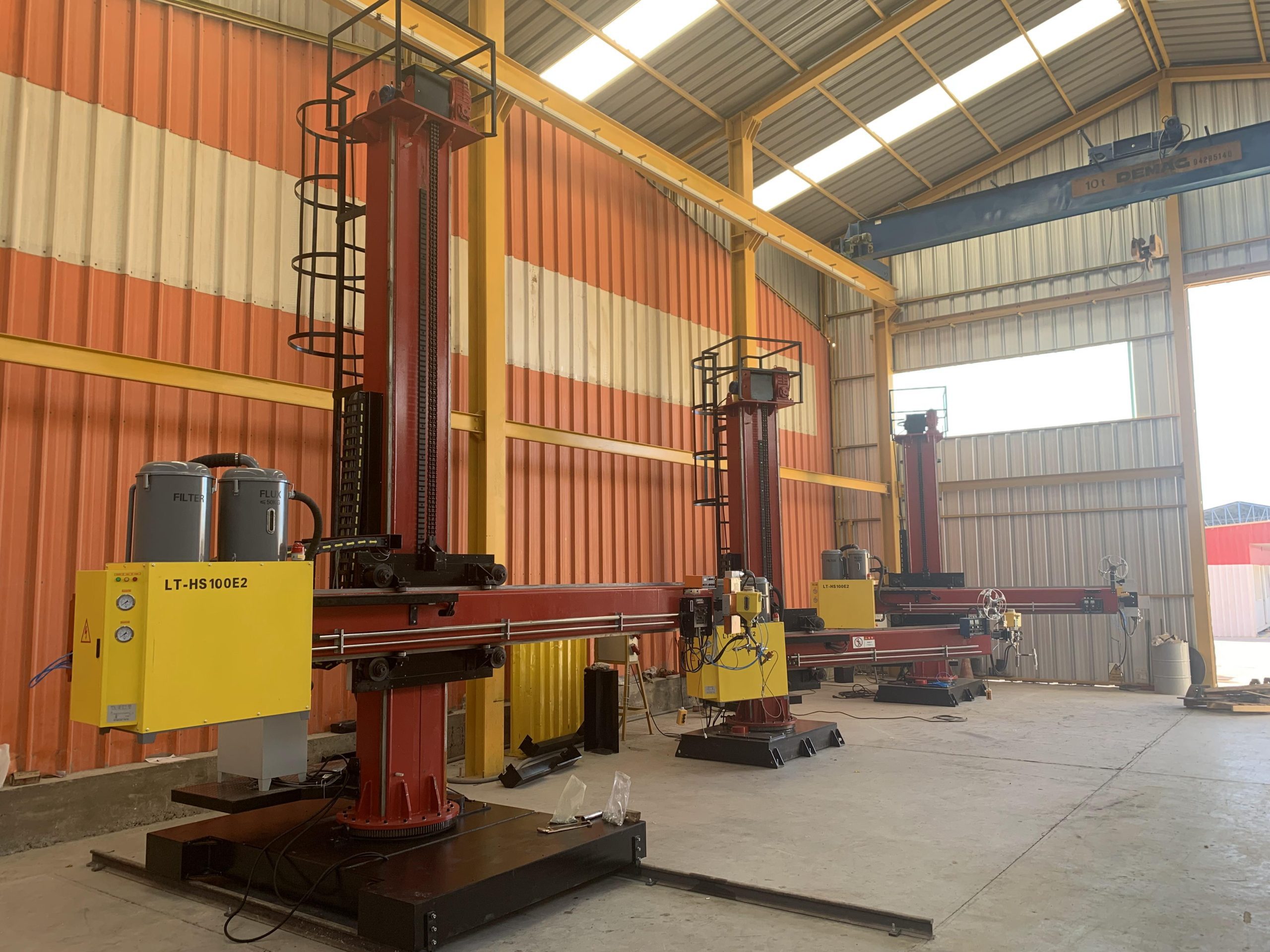
We have seen many RFQs that specify a welding method but omit the positioning and manipulation side. A customer planning to diffusion-bond titanium compressor wheels initially budgeted only for the hot press but overlooked the need for a fixture that could maintain micron-scale alignment at 900°C. Adding a purpose-built positioner with thermal compensation resolved alignment drift and brought the bond line deviation within 0.05 mm.
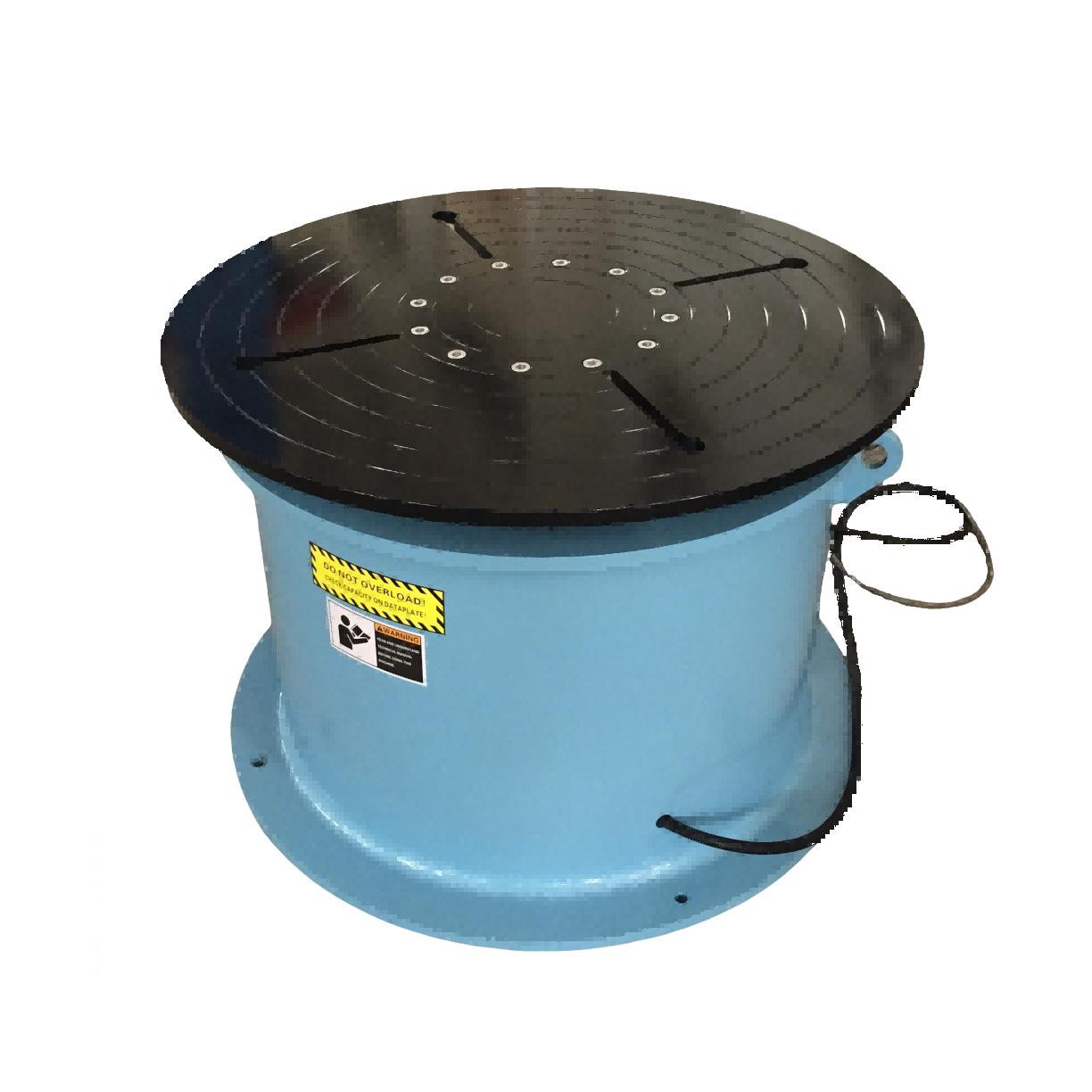
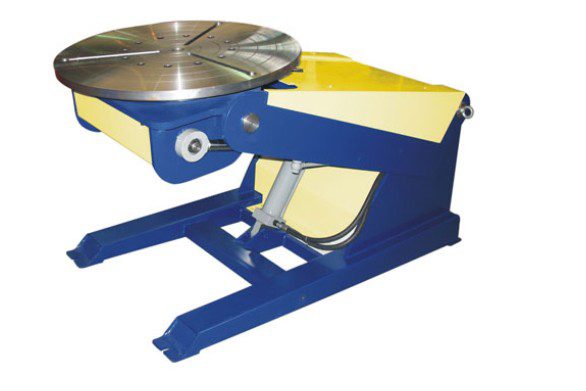
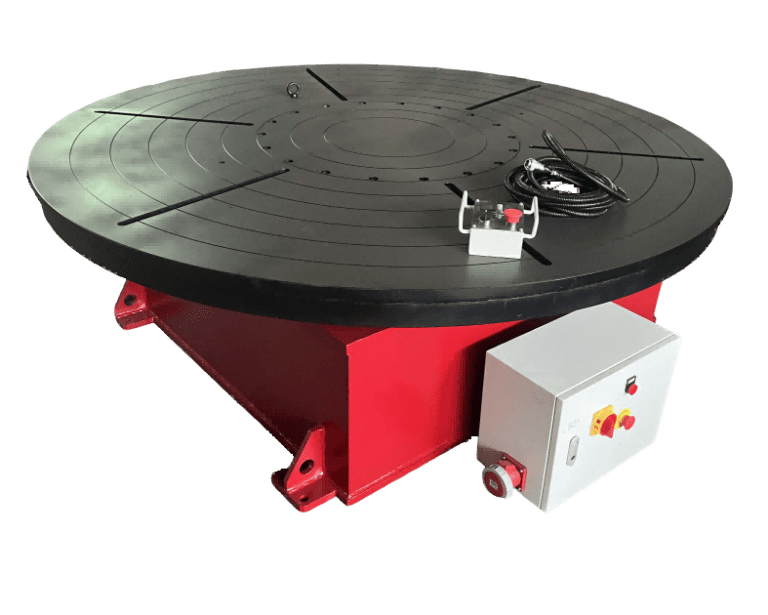
For shops that want to integrate pressure welding into an existing production flow, using a rotating welding table or a column and boom manipulator can simplify part handling and improve process time. At ABOKE, we have supplied automated welding manipulators with programmable motion paths that support both arc and solid-state welding cells, helping fabricators switch between weld types without rebuilding the workstation.
Common Questions About Pressure Welding
Can pressure welding join all metal combinations?
Not all combinations are possible, but pressure welding handles many pairings that fusion welding cannot. The limitation is not metallurgical incompatibility but the ability to generate sufficient interfacial deformation and diffusion. For example, aluminum-to-steel can be friction-welded because the intermetallic layer is kept thin by the rapid cycle, while the same joint would be impossible with arc welding due to excessive brittle phase formation. The key is identifying whether your material pair has been proven with a specific pressure welding method; if not, a feasibility study with coupon testing is a sensible step.
How do I know which pressure welding process fits my parts?
The shape of the joint area is usually the first filter. Rotary friction welding requires at least one cylindrical component. Ultrasonic welding works best on thin sections. Explosion welding is limited to large, flat or cylindrical cladding surfaces. Production volume then drives the choice: ultrasonic and friction welding are faster than diffusion bonding but have higher tooling costs per part family. I recommend starting with a set of dimensioned drawings and a target annual quantity, because a process that looks economical at 5,000 parts per year may not be at 500.
Does pressure welding require special surface preparation?
Yes, and the standard varies by method. Cold welding demands a near-mirror finish and oxide-free surface at the moment of joining, often achieved by wire brushing immediately before pressing. Friction welding is more forgiving because the initial rubbing action cleans the interface, though heavy scale or rust still causes inconsistent results. A consistent surface prep protocol, validated by peel or bend tests on sample coupons, prevents the majority of production rejections we investigate.
Are pressure welds inspectable with conventional NDT?
Most pressure welds are full-interface bonds, so ultrasonic testing (UT) is the primary inspection method. A good bond reflects little ultrasound, while an unbonded area reflects strongly. For processes like explosion cladding, the bond quality is verified across the entire plate using automated UT scanning. In friction welds, the flash geometry also provides a visual indicator of process consistency: a uniform flash ring around the weld usually correlates with a sound bond. Radiographic testing is rarely applicable because there is no fusion zone with a different density to image.
Is pressure welding more expensive than arc welding?
The capital equipment cost is generally higher, especially for automated friction or diffusion bonding systems. However, the operating cost per part often turns out lower when you account for the elimination of filler metal, shielding gas, weld preparation consumables, and the reduced need for post-weld heat treatment and inspection. For a manufacturer welding 200,000 driveshafts a year, the cost per joint with friction welding can be half that of a MIG weld when total quality costs are included. The economic case depends heavily on volume and material savings. Share your part specifications and production targets, and we can help you run a cost comparison specific to your application.
For a detailed evaluation of which pressure welding process suits your components, send your drawings and annual volume to [email protected] or call +86 13616174307. Our application engineers can recommend both the welding method and the positioning equipment to meet your output goals.
If you’re interested, check out these related articles:
Automating Wind Tower Welding: Boost Productivity and Quality
Automatic Welding Centers Improve Production Efficiency & Weld Quality
Welding Manipulators for Storage Tanks: Girth and Seam Automation