Sheet Metal MIG Welding: Settings and Distortion Control

August 29, 2026
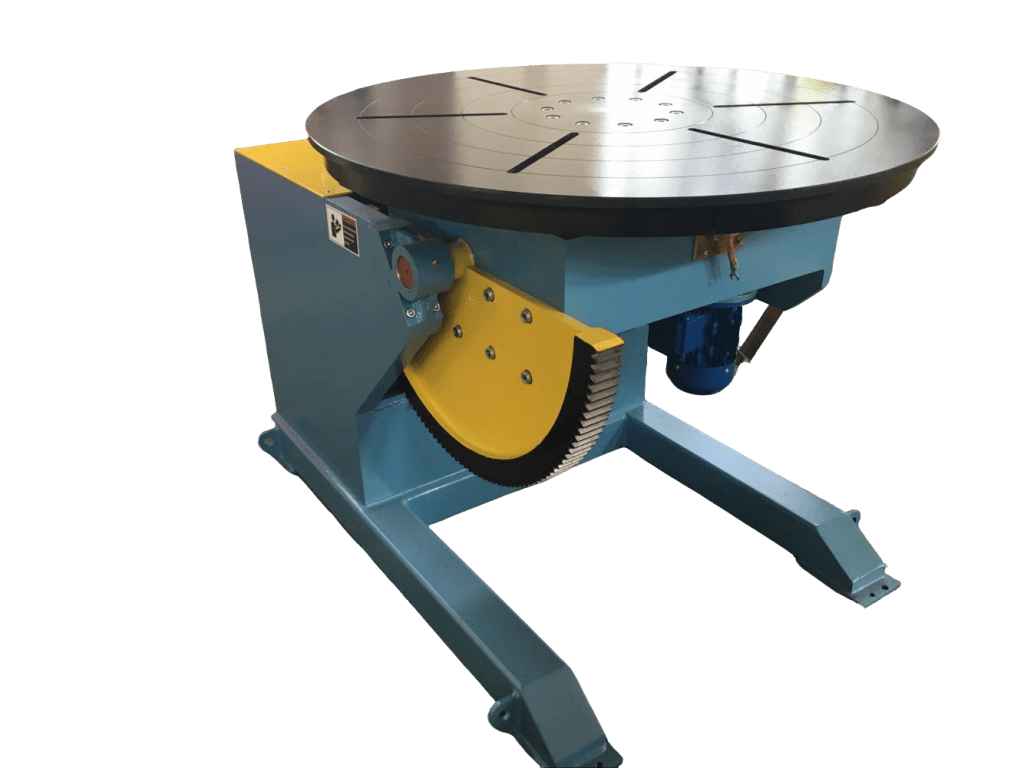
Sheet metal MIG welding looks straightforward until material thickness drops below 3 mm. Heat moves faster than the operator can react, so burnthrough and distortion become the real quality controls. Most guides stop at machine selection and basic benefits. In production, the outcome is decided earlier: joint design, fit-up, and heat management. I have spent […]
Read More »

Welding Robot: What a Schweißroboter Is and How It Works

August 29, 2026

A welding robot, called a Schweißroboter in German, is an automated system that positions a welding torch along a programmed path while coordinating motion with the workpiece. In heavy fabrication, the robot is only one part of the result: the positioner, rotator, fixtures, and welding power source must all work together. My experience with tank, […]

Read More »

How to Choose a Cobot Company for Welding Automation

August 29, 2026

Choosing a cobot company without first checking how the robot will hold and move your workpiece often produces a cell that welds clean in a demo and stalls on your parts. A cobot company should show more than payload and reach; it should explain how the robot, torch package, positioner, and operator work as one […]

Read More »

GMAW Process Explained: Benefits, Limits and Industrial Uses

August 29, 2026

The GMAW process is usually specified backward. Buyers compare power source amperage before the wire feed, shielding gas, and part positioning that actually decide whether a weld stays consistent hour after hour. The foundation is simple: a continuous wire electrode feeds through a torch into an arc protected by gas. Production consistency comes from the […]

Read More »

Modular Fixture Systems: A Welding Engineer’s Guide

August 29, 2026

A fabrication shop that welds thirty different brackets in a month instead of ten thousand of one bracket faces a tooling problem dedicated fixtures cannot solve. Modular fixture systems address this by replacing single-purpose tooling with a standardized base and reusable locating elements that reposition in minutes. After twelve years of integrating welding automation equipment […]

Read More »

Welding Current Settings: Amperage Chart and Setup Guide

August 28, 2026

Welding current settings control heat input, penetration, deposition rate, and bead shape, but a chart is only a starting point. The correct amperage depends on the process, electrode or wire diameter, base metal thickness, joint position, and the travel speed you intend to hold. I treat the published range as a reference window, then confirm […]

Read More »

Welders Soapstone: How to Choose and Use Marking Sticks

August 28, 2026

Welders soapstone remains the fastest layout marker for carbon steel because the mineral mark sits on the surface and stays visible through torch heat, grinding dust, and handling. I have watched a flat steel shop lose cut accuracy when a low-contrast line disappeared at the torch, and I have also traced intermittent porosity in a […]

Read More »

Ridgid B 500 Pipe Beveler: Function, Specs, and Limits

August 28, 2026

Ridgid B 500 pipe beveler is a cold machining tool used to put a precise weld prep on pipe ends without flame cutting or hand grinding. A crew can clamp it onto a pipe, set the bevel angle, and rotate the cutter head around the circumference until the land and angle are clean enough for […]

Read More »

Beginner Welder Projects That Build Real Welding Skills

August 28, 2026

Beginner welder projects teach more than motion. I have spent twelve years commissioning welding equipment and watching new welders find that clean cuts, good fit up, and a flat hand matter far more than the number of practice beads. The projects in this article move from flat coupons to load bearing frames so each hour […]

Read More »

Cutting Tools for Welding: A Practical Selection Guide

August 28, 2026

Cutting tools for welding shape the joint before welding begins, and that determines how much rework follows. Clean, accurate cuts make fit-up predictable; rough or inconsistent edges force welders to compensate with wider gaps, more filler, and extra passes. In production lines I have worked on, the difference between a good cutting process and a […]

Read More »
1 … 23 24 25 … 49

Get Our Best Quotation

Contact